
How to Grow and Care for Torch-ginger
Etlingera elatior
Written by Emilio Marruso · last checked
At a glance
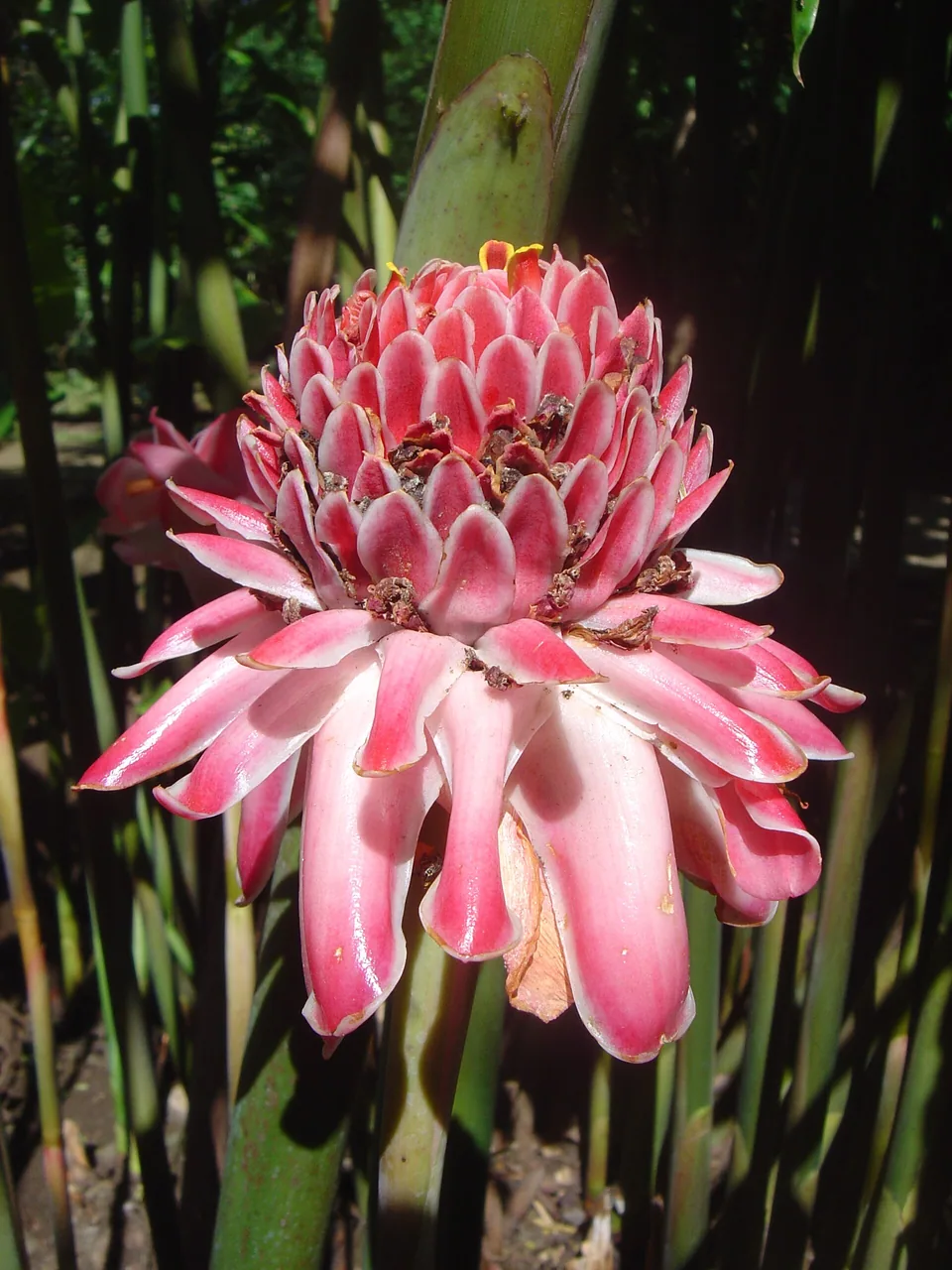
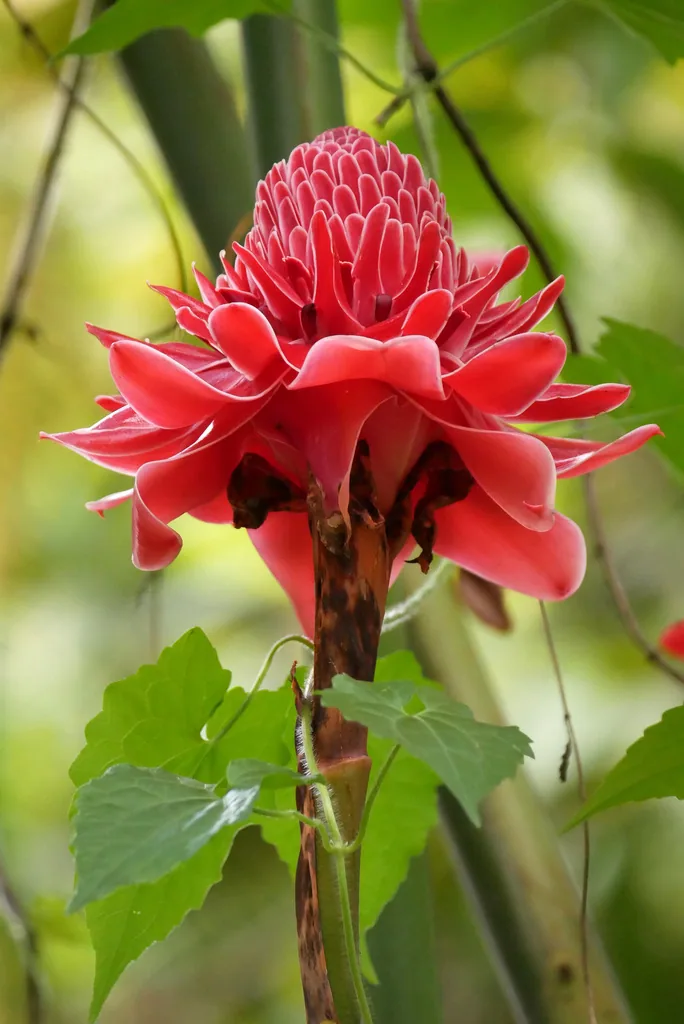
This plant offers a treat few gardens have: its unopened flowers are eaten raw, in stir-fries, in sauces and in stews, and you can pick them at any time. Give it partial shade or full sun and plenty of water, add mulch to keep the soil moist, and it will even grow happily in a container.
- Sun
Partial shade to full sun
- Water
Lots of water and mulch to keep soil moist; soggy or clay soil rots the roots
What the sources say (4)
Watering: Lots of water; consistently moist soil
| Water Preference | Lots of Water
— NParks | Etlingera elatior (Red) [5] It grows best in semi-shade in well-drained, consistently moist soil.
— NParks | Etlingera elatior (Red) [5] Watering notes: Apply mulch to maintain soil moisture; rhizomes can rot in waterlogged or clayey soil
Apply mulch to help maintain soil moisture.
— NParks | Etlingera elatior (Red) [5] Rhizomes can rot if there is water-logging or if the soil is clayey.
— Etlingera elatior | Torch ginger - Indian herbs | Garden plants [3] - Harvest
Pick closed flowers any time and eat them raw or cooked; ripe seed pods are eaten cooked
What the sources say (1)
Harvest: Immature flowers can be harvested at any time
Plants can be harvested for immature flowers at any time.
— Torch Ginger | GardeningSG [6] - Propagation
Divide the underground stems or sow seeds
- Containers
Grows in containers too
What the sources say (1)
In containers: Yes
so ensure that your pots drain well
— Torch Ginger | GardeningSG [6]
Overview
Torch ginger is a large rhizomatous perennial herb grown as an ornamental and for its edible flower buds. [5][6] It grows best in semi-shade in well-drained, consistently moist soil and is propagated by division of the rhizome. [5][6]
This record is incomplete: the sources we read do not cover every field yet.
Not yet covered by our sources: Hardiness, coldest zone, Hardiness, warmest zone, Pruning
Torch-ginger care
How to water Torch-ginger
Watering
Lots of water; consistently moist soil
Watering notes
Apply mulch to maintain soil moisture; rhizomes can rot in waterlogged or clayey soil
How much light Torch-ginger needs
How much cold Torch-ginger can take
Hardiness, coldest zone
Not stated in the sources we read.
Hardiness, warmest zone
Not stated in the sources we read.
Where to grow Torch-ginger
Yes
What the sources say (1)
so ensure that your pots drain wellHow to propagate Torch-ginger
Remedies
Each remedy shows what official sources say about it; traditional remedies without an official source are marked as such. Harmful ones are listed so you know to avoid them.
Treating the plant
aphids and mealybugs
pruning the infested parts Partly works
How: Mechanical pest control by pruning the infested parts manages these pests in the short term; resolving the underlying problem, such as root rot, prevents them in the long term.
Mechanical pest control methods like pruning the infested parts are the best methods for managing these pests in the short term, but resolving the underlying problem will prevent them in the long term.
— Torch Ginger | GardeningSG [6] What the evidence says Mechanical pest control methods like pruning the infested parts are the best methods for managing these pests in the short term, but resolving the underlying problem will prevent them in the long term.
— Torch Ginger | GardeningSG [6]
aphids
neem oil solution Not verified
Traditional remedy, not verified by an official source.
How: Aphid or grasshopper infestation is managed with an application of neem oil solution.
encouraging ladybugs Not verified
Traditional remedy, not verified by an official source.
How: Encourage natural predators, such as ladybugs, to keep little pests such as aphids under control.
Calendar
Harvest
Immature flowers can be harvested at any time
What the sources say (1)
Plants can be harvested for immature flowers at any time.Pruning
Not stated in the sources we read.
Months as given by the sources, which are mostly from the United States (northern hemisphere). In the southern hemisphere they shift by about six months.
Edibility
Reported by the source, quoted verbatim. Do not eat a plant on the basis of this page alone: identification mistakes can be dangerous.
Indicative values
Values from a secondary source, not checked word for word like the rest of this page. Use them as a starting point.
- Life cycle
- Herbaceous PerennialIndicative value, adapt it to your climate · Secondary source
- Mature height
- 182.9-457.2 cm (6-15 ft)Indicative value, adapt it to your climate · Secondary source
- Hours of sun
- 5-6 hoursIndicative value, adapt it to your climate · Secondary source
- Drought tolerant
- yesIndicative value, adapt it to your climate · Secondary source
- Soil pH
- 6-6.5Indicative value, adapt it to your climate · Secondary source
- USDA hardiness zones
- 10-12 [winter low −1.1 to 15.6 °C (30 to 60 °F)]Indicative value, adapt it to your climate · Secondary source
- Care level
- MediumIndicative value, adapt it to your climate · Secondary source
- Growth rate
- LowIndicative value, adapt it to your climate · Secondary source
- Pruning
- March, AprilIndicative value, adapt it to your climate · Secondary source
Similar plants
- Abies grandis Abies grandis
- Abraham Trachystemon orientalis
- Abyssinian banana Ensete ventricosum
- Acacia longifolia Acacia longifolia
- Acanthus hungaricus Acanthus hungaricus
- Aconite Aconitum napellus
- Adam's Needle Yucca flaccida
- Adriatic lizard orchid Himantoglossum adriaticum
Sources
Every value above is quoted from these documents. Links lead to the original publisher.
- Etlingera elatior - Useful Tropical Plants · tropical.theferns.info, consulted
- Etlingera elatior - Plant Detail - Tropical Plants Database - NTBG Database · ntbg.org, consulted
- Etlingera elatior | Torch ginger - Indian herbs | Garden plants · greencoverinitiative.com, consulted
- Etlingera elatior - Botany Brisbane · botanybrisbane.com, consulted
- NParks | Etlingera elatior (Red) · nparks.gov.sg, consulted
- Torch Ginger | GardeningSG · gardeningsg.nparks.gov.sg, consulted
- Etlingera (PROSEA) - Pl@ntUse · uses.plantnet-project.org, consulted
- The History and Cultivation of Etlingera – The Torch Gingers – at the Royal Botanic Garden Edinburgh | Sibbaldia: the International Journal of Botanic Garden Horticulture · journals.rbge.org.uk, consulted
Written by Emilio Marruso · last checked