
How to Grow and Care for Gomphocarpus fruticosus
Gomphocarpus fruticosus
Written by Emilio Marruso · last checked
Toxic to: Livestock, People · Why
At a glance
Narrow-leaf cotton bush is a striking plant for sunny spots, reaching 3 to 7 feet tall. Give it full sun and moderate watering, and you can grow new plants from seed. Watch for oleander aphids, and remember that the plant is toxic to people and livestock, so keep it away from curious mouths.
- Sun
Full sun
What the sources say (1)
Light: Full sun
| Light Preference | Full Sun | Water Preference | Moderate Water | Plant Growth Rate
— NParks | Gomphocarpus fruticosus [3] - Water
Moderate watering
What the sources say (1)
Watering: Moderate
| Light Preference | Full Sun | Water Preference | Moderate Water | Plant Growth Rate
— NParks | Gomphocarpus fruticosus [3] - Pests
Watch for oleander aphids
What the sources say (1)
Pests: oleander aphid (Aphis nerii)
los individuos de esta especie son intensa-mente atacados por el pulgón de la adelfa (Aphis nerii, Hemiptera: Aphidae)
— Atlas de las Plantas Alóctonas Invasoras en España [5] - Size
3 to 7 ft tall
What the sources say (1)
Mature height: 100-200 cm [39–79 in]
Arbusto erecto, perennifolio, con tallos de 1-2 m de altura y ramas
— Atlas de las Plantas Alóctonas Invasoras en España [5] - Propagation
Grow new plants from seed
What the sources say (1)
Propagation: Seed
| Propagation Method | Seed
— NParks | Gomphocarpus fruticosus [3] - Safety
Toxic to people and livestock: never eat any part of it
Overview
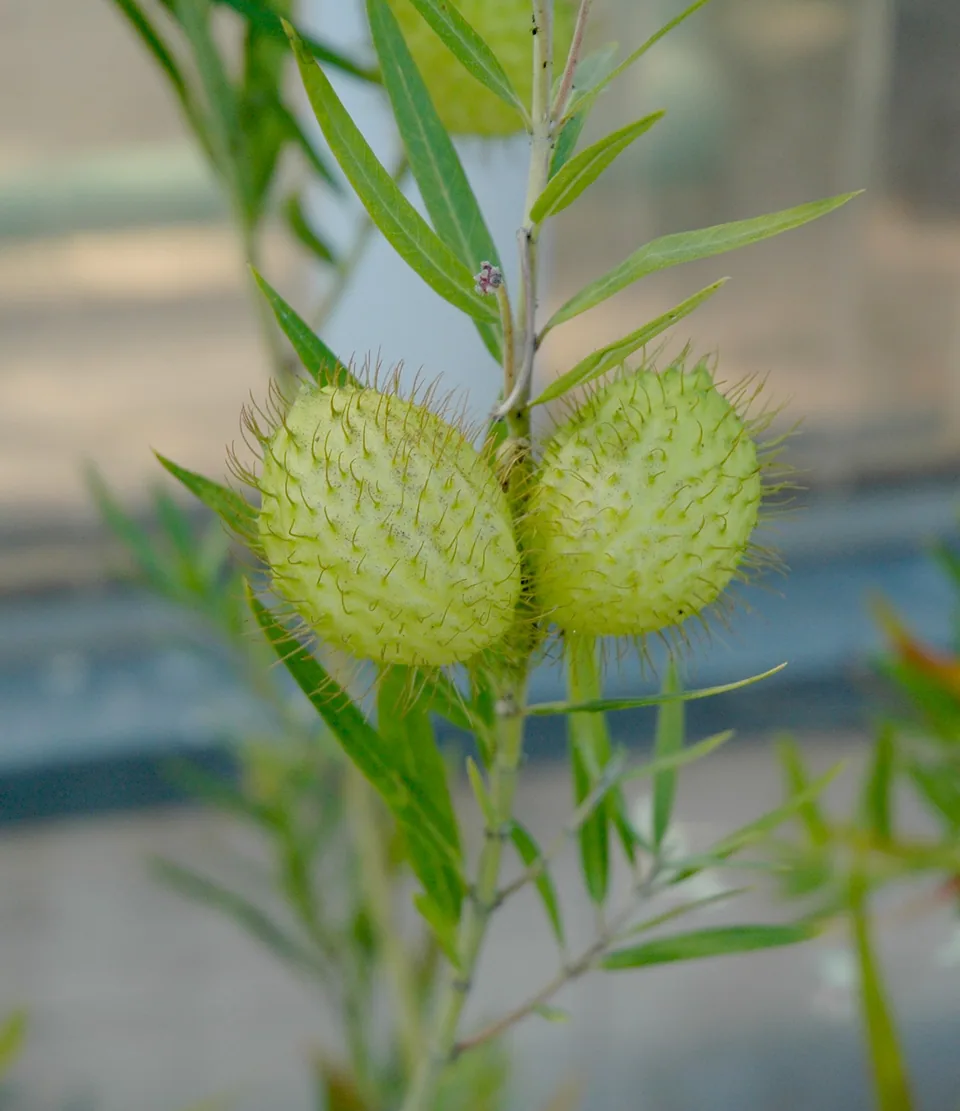
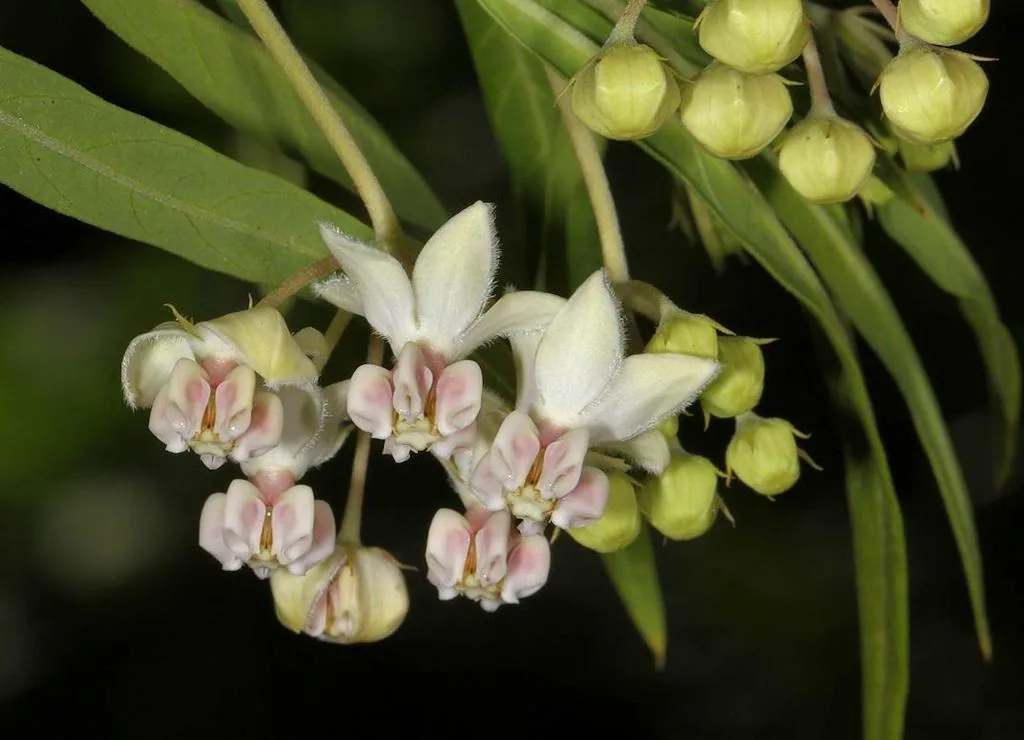
Gomphocarpus fruticosus is a shrub growing up to two metres [6.6 ft] tall. [1] It prefers full sun and moderate water, and is propagated by seed. [3] It contains cardiac glycosides that are toxic to humans and livestock. [1]
This record is incomplete: the sources we read do not cover every field yet.
Not yet covered by our sources: Hardiness, coldest zone, Hardiness, warmest zone, Pruning
Gomphocarpus fruticosus care
Measurements in square brackets are our conversion into the other unit system; the quoted text is unchanged.
How to water Gomphocarpus fruticosus
Moderate
What the sources say (1)
| Light Preference
| Full Sun
| Water Preference
| Moderate Water
| Plant Growth RateHow much light Gomphocarpus fruticosus needs
Full sun
What the sources say (1)
| Light Preference
| Full Sun
| Water Preference
| Moderate Water
| Plant Growth RateHow much cold Gomphocarpus fruticosus can take
Hardiness, coldest zone
Not stated in the sources we read.
Hardiness, warmest zone
Not stated in the sources we read.
How to propagate Gomphocarpus fruticosus
Seed
What the sources say (1)
| Propagation Method
| SeedHow to grow Gomphocarpus fruticosus
The plant
Family
Asclepiadaceae
What the sources say (1)
Family:
ASCLEPIADACEAE
Genus:
Gomphocarpus
Catalan common name:
Arbre de la seda.Mature height
100-200 cm [39–79 in]
What the sources say (1)
Arbusto erecto, perennifolio, con tallos de 1-2 m de altura y ramasPests and diseases
Pests
oleander aphid (Aphis nerii)
What the sources say (1)
los individuos de esta especie son intensa-mente atacados por el pulgón de la adelfa (Aphis nerii, Hemiptera: Aphidae)Remedies
Each remedy shows what official sources say about it; traditional remedies without an official source are marked as such. Harmful ones are listed so you know to avoid them.
First aid
First aid: not a substitute for a doctor
skin contact with sap
sap in the eyes
flush the eyes with water Official source, not independently tested
Call the NSW Poisons Information Centre on 13 11 26 for immediate support.
— schn.health.nsw.gov.au [9] How: Flush the eyes with clean, running water for 10-15 minutes.
flushing the eyes with clean, running water for 10-15 minutes
— schn.health.nsw.gov.au [9]
Treating the plant
aphids
insecticidal soap spray or stream of water Partly works
How: For severe infestations, spray the aphids with insecticide soap or dislodge them manually with a stream of water to reduce their population.
For severe infestations, aphids can be sprayed with insecticide soap or dislodged manually with a stream of water to reduce their population.
— purduelandscapereport.org [10] What the evidence says For severe infestations, aphids can be sprayed with insecticide soap or dislodged manually with a stream of water to reduce their population.
— purduelandscapereport.org [10] leave the aphids to natural predators Works
How: If left alone, natural predators such as lady beetles and parasitoid wasps move in and manage the aphids.
If left alone, natural predators such as lady beetles and parasitoid wasps will move in and manage aphids sufficiently.
— purduelandscapereport.org [10] What the evidence says If left alone, natural predators such as lady beetles and parasitoid wasps will move in and manage aphids sufficiently.
— purduelandscapereport.org [10]
Getting rid of it
invasive weed
mechanical removal of the whole root system Not verified
Traditional remedy, not verified by an official source.
How: Remove the plant mechanically, taking out most of the root system; repeated cultivation gives some control.
hand-pulling before fruiting, repeated for several years Not verified
Traditional remedy, not verified by an official source.
How: Early detection of infestations and manual removal of adult and young plants in summer, before fruiting.
Is Gomphocarpus fruticosus toxic to pets?
Reported by the source, quoted verbatim. This is not medical or veterinary advice: if a person or an animal may have eaten this plant, contact a poison control centre or a veterinarian.
Calendar
Pruning
Not stated in the sources we read.
Months as given by the sources, which are mostly from the United States (northern hemisphere). In the southern hemisphere they shift by about six months.
Similar plants
- Gomphocarpus physocarpus Gomphocarpus physocarpus
- Madagascar Jasmine Marsdenia floribunda
- Abies grandis Abies grandis
- Abraham Trachystemon orientalis
- Abyssinian banana Ensete ventricosum
- Acacia longifolia Acacia longifolia
- Acanthus hungaricus Acanthus hungaricus
- Aconite Aconitum napellus
Sources
Every value above is quoted from these documents. Links lead to the original publisher.
- Narrow leaf cotton bush: what you should know | Agriculture and Food · agric.wa.gov.au, consulted
- Gomphocarpus fruticosus • New Zealand Plant Conservation Network · nzpcn.org.nz, consulted
- NParks | Gomphocarpus fruticosus · nparks.gov.sg, consulted
- Gomphocarpus fruticosus (L.) Ait. f. - Herbari Virtual del Mediterrani Occidental · herbarivirtual.uib.cat, consulted
- Atlas de las Plantas Alóctonas Invasoras en España · miteco.gob.es, consulted
- Narrow Leaf Cotton Bush, Narrow-Leaved Cotton Bush, Narrowleaf Cottonbush, Swan Plant, Swanplant, Milk Weed, Milkweed, Cape Cotton, Duck Bush, Swan Bush, Wild Cotton - Weeds Australia · weeds.org.au, consulted
- VicFlora: Gomphocarpus fruticosus subsp. fruticosus · vicflora.rbg.vic.gov.au, consulted
- Gomphocarpus fruticosus | Plant Pono · plantpono.org, consulted
- schn.health.nsw.gov.au · schn.health.nsw.gov.au
- purduelandscapereport.org · purduelandscapereport.org
Written by Emilio Marruso · last checked