
How to Grow and Care for Gomphocarpus physocarpus
Gomphocarpus physocarpus
Written by Emilio Marruso · last checked
Toxic to: Cats, Dogs, Horses, People · Why
At a glance
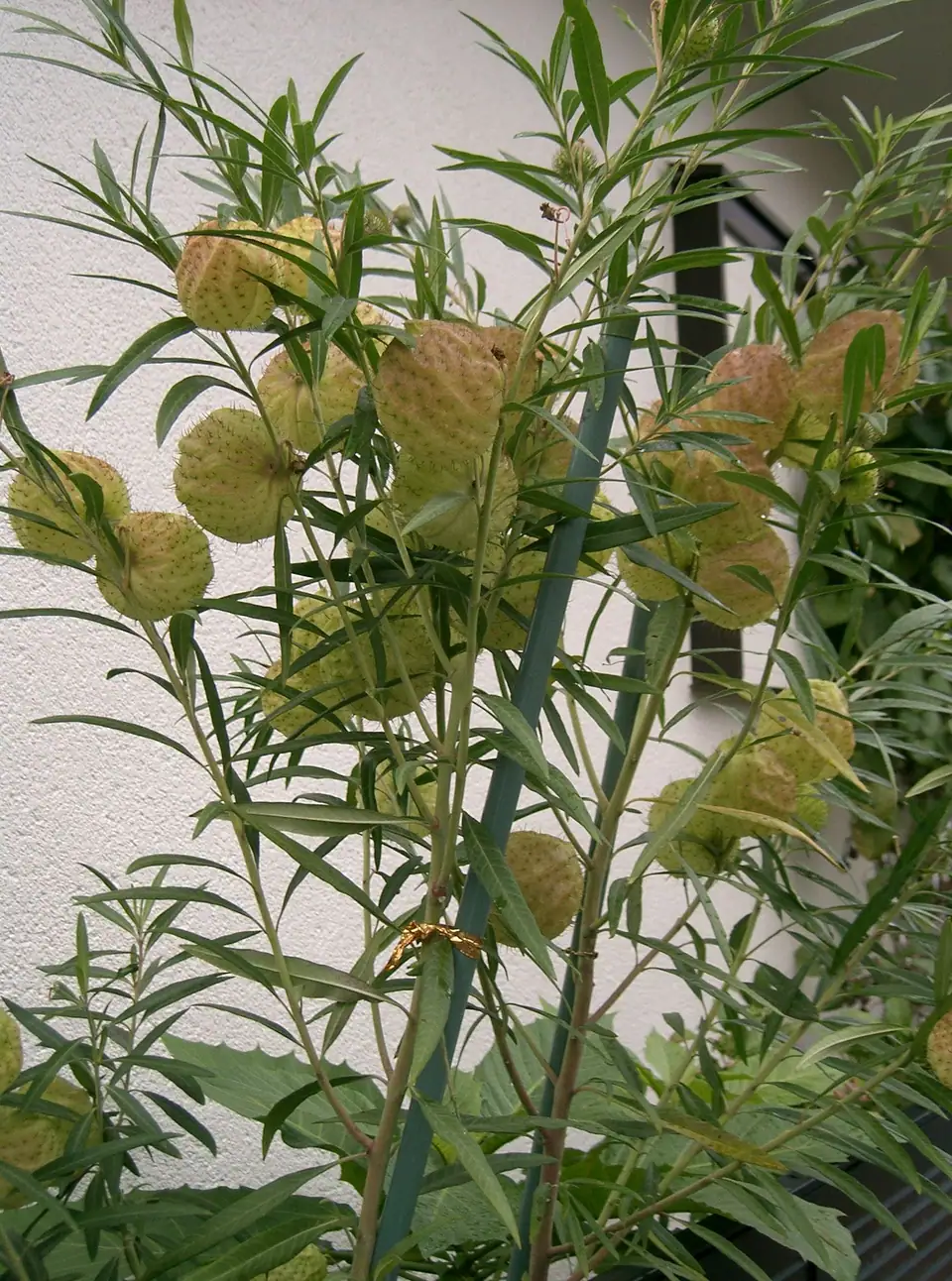
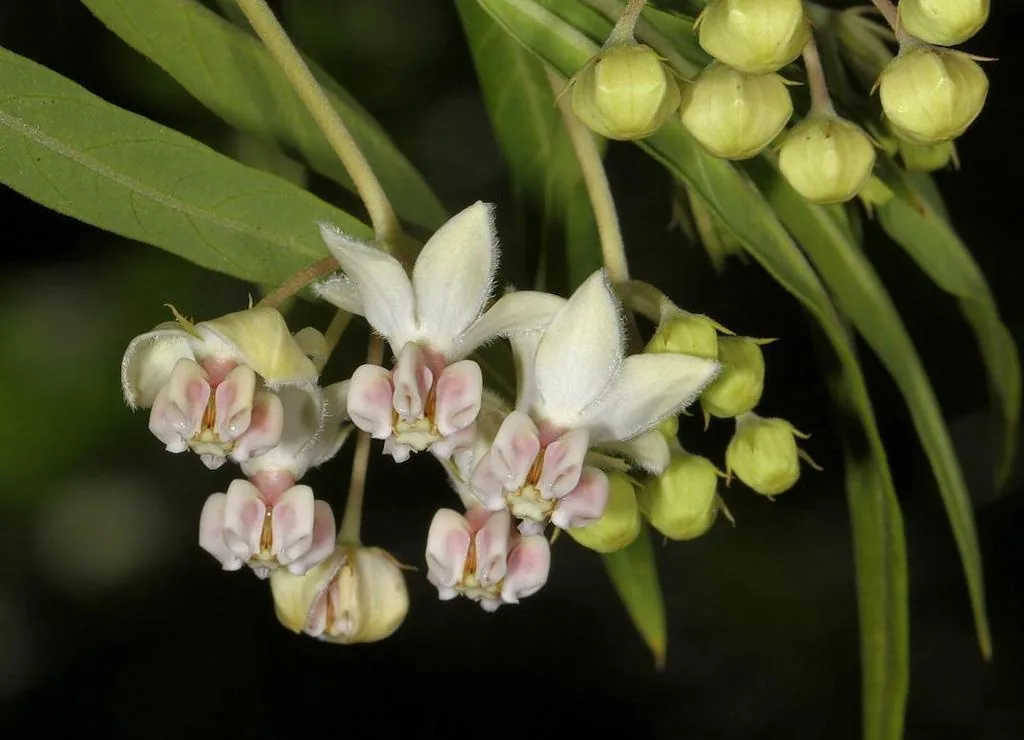
This tall, sun-loving perennial can grow over 6 feet and forms curious balloon-like fruits. Start the seeds indoors 6 to 8 weeks before the last frost, then plant out once the soil has warmed. Once established it tolerates drought, grows happily in containers too, and its leaves may even feed monarch caterpillars.
- Sun
Full sun
What the sources say (2)
Light: Full sun
Full sun (6 or more hours of direct sunlight a day)
— Balloon Milkweed - Gomphocarpus physocarpa | North Carolina Extension Gardener Plant Toolbox [3] Gomphocarpus prefers full sun and sandy, well-drained but moderately moist soil.
— A Horticulture Information article from the Wisconsin Master Gardener website, posted 5 Feb 2016 [1] - Water
Keep the soil moderately moist; drought tolerant once established
What the sources say (2)
Watering: Drought tolerant once established; moderately moist, well-drained soil
It is deer, drought and heat tolerant once established.
— Balloon Milkweed - Gomphocarpus physocarpa | North Carolina Extension Gardener Plant Toolbox [3] Gomphocarpus prefers full sun and sandy, well-drained but moderately moist soil.
— A Horticulture Information article from the Wisconsin Master Gardener website, posted 5 Feb 2016 [1] - Cold
Survives winters down to 10 °F (−12.2 °C)
Hardy in cold winters · USDA 8a · RHS H5 · Z8
What the sources say (2)
Hardiness, coldest zone: 8a [winter low −12.2 to −9.4 °C (10 to 15 °F)]
tender perennial (zones 8a to 10b)
— Balloon Plant, Gomphocarpus physocarpus – Wisconsin Horticulture [2] Hardiness, warmest zone: 10b [winter low 1.7 to 4.4 °C (35 to 40 °F)]
tender perennial (zones 8a to 10b)
— Balloon Plant, Gomphocarpus physocarpus – Wisconsin Horticulture [2] - Soil
Well-drained soil
What the sources say (2)
Watering: Drought tolerant once established; moderately moist, well-drained soil
It is deer, drought and heat tolerant once established.
— Balloon Milkweed - Gomphocarpus physocarpa | North Carolina Extension Gardener Plant Toolbox [3] Gomphocarpus prefers full sun and sandy, well-drained but moderately moist soil.
— A Horticulture Information article from the Wisconsin Master Gardener website, posted 5 Feb 2016 [1] - Planting
Plant out when the soil has warmed and all threat of frost is past
What the sources say (1)
Planting: Transplant into the ground when the soil has warmed and all threat of frost is past
Sow indoors 6 to 8 weeks before the last frost to transplant into the ground when the soil has warmed and all threat of frost is past.
— Balloon Plant, Gomphocarpus physocarpus – Wisconsin Horticulture [2] - Pests
Aphids can be a problem; monarch caterpillars may feed on the leaves
What the sources say (1)
Pests: aphids, monarch caterpillars
Monarch caterpillars may feed on the foliage, and aphids can sometimes infest plants
— Balloon Plant, Gomphocarpus physocarpus – Wisconsin Horticulture [2] - Size
Over 6 ft tall
What the sources say (1)
Mature height: over 183 cm (over 6 ft)
Balloon plant is an upright, tender herbaceous plant or shrub that can grow over 6 feet tall from the fibrous roots
— Balloon Plant, Gomphocarpus physocarpus – Wisconsin Horticulture [2] - Propagation
From seed or from stem or leaf cuttings
What the sources say (2)
- Sowing
Sow indoors 6–8 weeks before the last frost
What the sources say (1)
Sowing: Indoors 6 to 8 weeks before the last frost
Sow indoors 6 to 8 weeks before the last frost to transplant into the ground when the soil has warmed and all threat of frost is past.
— Balloon Plant, Gomphocarpus physocarpus – Wisconsin Horticulture [2] - Containers
Grows in containers too
What the sources say (1)
In containers: Yes
Balloon plant is an unusual addition to a mixed bed, the back of an annual border, as a specimen plant, or in large containers.
— A Horticulture Information article from the Wisconsin Master Gardener website, posted 5 Feb 2016 [1] - Safety
All parts have a milky sap, mildly poisonous if eaten; also a problem for dogs, cats and horses
Overview
Balloon plant is a tender perennial hardy in USDA zones 8a to 10b that is often used as an ornamental for its inflated fruits. [2] It prefers full sun and well-drained, moderately moist soil, and is drought tolerant once established. [3][1] All parts exude a milky latex that is mildly poisonous if ingested. [2]
This record is incomplete: the sources we read do not cover every field yet.
Not yet covered by our sources: Pruning
Gomphocarpus physocarpus care
How to water Gomphocarpus physocarpus
Drought tolerant once established; moderately moist, well-drained soil
What the sources say (2)
It is deer, drought and heat tolerant once established.Gomphocarpus prefers full sun and sandy, well-drained but moderately moist soil.How much light Gomphocarpus physocarpus needs
Full sun
What the sources say (2)
Full sun (6 or more hours of direct sunlight a day)Gomphocarpus prefers full sun and sandy, well-drained but moderately moist soil.How much cold Gomphocarpus physocarpus can take
Hardiness, coldest zone
8a [winter low −12.2 to −9.4 °C (10 to 15 °F)]
What the sources say (1)
tender perennial (zones 8a to 10b)Hardiness, warmest zone
10b [winter low 1.7 to 4.4 °C (35 to 40 °F)]
What the sources say (1)
tender perennial (zones 8a to 10b)Where to grow Gomphocarpus physocarpus
Yes
What the sources say (1)
Balloon plant is an unusual addition to a mixed bed, the back of an annual border, as a specimen plant, or in large containers.How to propagate Gomphocarpus physocarpus
How to grow Gomphocarpus physocarpus
The plant
Life cycle
perennial (tender perennial, zones 8a to 10b; grown as an annual in the Midwest)
What the sources say (1)
This quick-growing, short-lived species native to tropical Africa is grown as an annual in the Midwest , although it is actually a tender perennial (zones 8a to 10b)Family
Apocynaceae
What the sources say (1)
is a plant in the milkweed family (in the subfamily Asclepiadoideae of the Apocynaceae, formerly Asclepiadaceae)Mature height
over 183 cm (over 6 ft)
What the sources say (1)
Balloon plant is an upright, tender herbaceous plant or shrub that can grow over 6 feet tall from the fibrous rootsPests and diseases
Pests
aphids, monarch caterpillars
What the sources say (1)
Monarch caterpillars may feed on the foliage, and aphids can sometimes infest plantsGomphocarpus physocarpus pests and problems
Aphids and monarch caterpillars
Symptom: Monarch caterpillars may feed on the foliage, and aphids can sometimes be a problem.
What the sources say (1)
Monarch caterpillars may feed on the foliage, and aphids can sometimes be a problem.
— Balloon Milkweed - Gomphocarpus physocarpa | North Carolina Extension Gardener Plant Toolbox [3]
Remedies
Each remedy shows what official sources say about it; traditional remedies without an official source are marked as such. Harmful ones are listed so you know to avoid them.
First aid
First aid: not a substitute for a doctor
skin contact with milkweed sap
wash with soap and water Official source, not independently tested
If there is any persistent skin or eye pain, seek medical examination and treatment
— poison.org [7] If you suspect someone has been exposed to milkweed and is having a problem, use the web POISON CONTROL online tool to get help, or call your poison center
— poison.org [7] How: Immediately wash the affected area thoroughly with soap and water.
If your skin comes into contact with milkweed sap, you should immediately wash the affected area thoroughly with soap and water
— poison.org [7]
milkweed sap in the eye
rinse the eye with room-temperature water Official source, not independently tested
If there is any persistent skin or eye pain, seek medical examination and treatment
— poison.org [7] How: Gently rinse the eye with room-temperature water for 10-15 minutes.
If someone experiences eye irritation after getting sap in their eye, gently rinse the eye with room-temperature water for 10–15 minutes
— poison.org [7]
Treating the plant
oleander aphids
stream of water Official source, not independently tested
ensuring there are no desirable insects like monarch caterpillars)
— extension.colostate.edu [8] How: Wash off the aphids with a stream of water, ensuring there are no desirable insects like monarch caterpillars.
you can wash off the aphids with a stream of water (ensuring there are no desirable insects like monarch caterpillars), or even squish the masses
— extension.colostate.edu [8] squishing the aphid masses by hand Official source, not independently tested
How: Squish the masses of aphids.
you can wash off the aphids with a stream of water (ensuring there are no desirable insects like monarch caterpillars), or even squish the masses
— extension.colostate.edu [8] insecticidal soap Partly works
be very careful to check for desirable insects
— extension.colostate.edu [8] How: Use an insecticidal soap on the aphids, checking carefully for desirable insects; it will probably have to be repeated a few times during the growing season.
You could also use an insecticidal soap on the aphids, but be very careful to check for desirable insects. You’ll probably have to do this a few times during the growing season
— extension.colostate.edu [8] What the evidence says You could also use an insecticidal soap on the aphids, but be very careful to check for desirable insects. You’ll probably have to do this a few times during the growing season
— extension.colostate.edu [8]
Is Gomphocarpus physocarpus toxic to pets?
Reported by the source, quoted verbatim. This is not medical or veterinary advice: if a person or an animal may have eaten this plant, contact a poison control centre or a veterinarian.
Animals
#problem for dogs
[3]The source flags the risk for this animal but does not explain why.
#problem for cats
[3]The source flags the risk for this animal but does not explain why.
#problem for horses
[3]The source flags the risk for this animal but does not explain why.
People
Calendar
Sowing
Indoors 6 to 8 weeks before the last frost
What the sources say (1)
Sow indoors 6 to 8 weeks before the last frost to transplant into the ground when the soil has warmed and all threat of frost is past.Planting
Transplant into the ground when the soil has warmed and all threat of frost is past
What the sources say (1)
Sow indoors 6 to 8 weeks before the last frost to transplant into the ground when the soil has warmed and all threat of frost is past.Pruning
Not stated in the sources we read.
Months as given by the sources, which are mostly from the United States (northern hemisphere). In the southern hemisphere they shift by about six months.
Indicative values
Values from a secondary source, not checked word for word like the rest of this page. Use them as a starting point.
- Drought tolerant
- yesIndicative value, adapt it to your climate · Secondary source
- Soil pH
- 6-7.5Indicative value, adapt it to your climate · Secondary source
- Care level
- MediumIndicative value, adapt it to your climate · Secondary source
- Growth rate
- HighIndicative value, adapt it to your climate · Secondary source
- Pruning
- February, March, AprilIndicative value, adapt it to your climate · Secondary source
Similar plants
- Gomphocarpus fruticosus Gomphocarpus fruticosus
- Allamanda Allamanda cathartica
- Asiatic Jasmine Trachelospermum asiaticum
- Bladderflower Araujia sericifera
- Blue Star Amsonia ciliata
- Blue Star Amsonia hubrichtii
- Butterfly Weed Asclepias tuberosa
- Clasping Milkweed Asclepias amplexicaulis
Sources
Every value above is quoted from these documents. Links lead to the original publisher.
- A Horticulture Information article from the Wisconsin Master Gardener website, posted 5 Feb 2016 · mastergardener.extension.wisc.edu, consulted
- Balloon Plant, Gomphocarpus physocarpus – Wisconsin Horticulture · hort.extension.wisc.edu, consulted
- Balloon Milkweed - Gomphocarpus physocarpa | North Carolina Extension Gardener Plant Toolbox · plants.ces.ncsu.edu, consulted
- Gomphocarpus physocarpus E.Mey. | Plants of the World Online | Kew Science · powo.science.kew.org, consulted
- Balloon Plant Milkweed – Growing A Balloon Plants For Caterpillars | Gardening Know How · gardeningknowhow.com, consulted
- Gomphocarpus physocarpus • New Zealand Plant Conservation Network · nzpcn.org.nz, consulted
- poison.org · poison.org
- extension.colostate.edu · extension.colostate.edu
Written by Emilio Marruso · last checked