
How to Grow and Care for Southern Silky-oak
Grevillea robusta
Written by Emilio Marruso · last checked
Toxic to: People · Why
At a glance
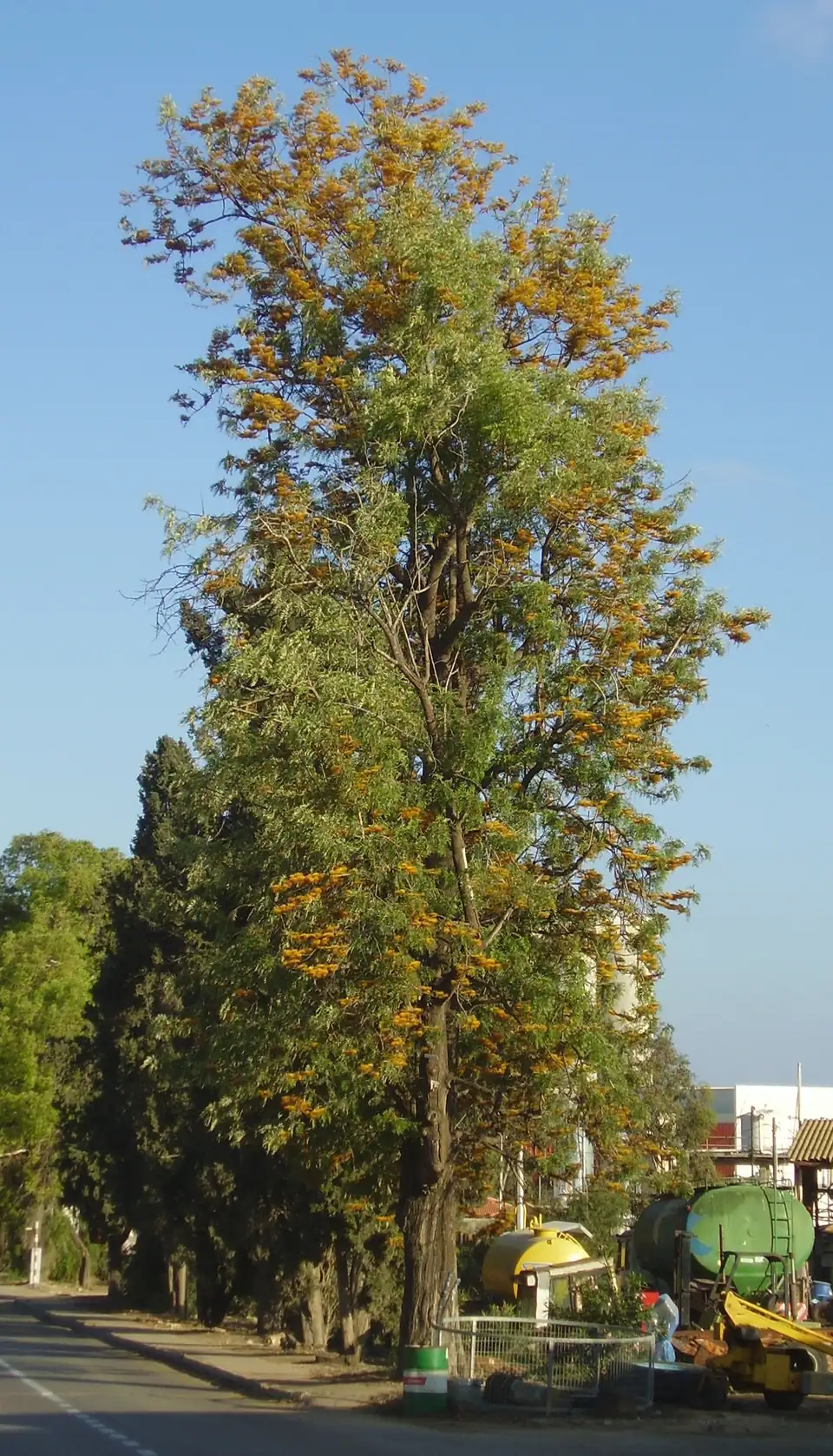
This grevillea is a sun lover that shrugs off dry spells and can grow into a stately tree 40–75 feet tall. Give it full sun and soil that drains well, and it asks for little watering. Its flowers are edible, and it also grows happily in a container, even indoors, so you can enjoy it wherever you live.
- Sun
Full sun
What the sources say (1)
Light: Full sun
Light requirement: full sun
— ENH444/ST285: Grevillea robusta: Silk-Oak [5] - Water
Handles drought well; never leave the soil soggy
What the sources say (2)
Watering: Quite tolerant of drought
Silk-oak thrives in heat and is quite tolerant of drought.
— ENH444/ST285: Grevillea robusta: Silk-Oak [5] Watering notes: Poorly drained, wet soils lead to mushroom root rot
developing mushroom root rot in poorly drained, wet soils.
— ENH444/ST285: Grevillea robusta: Silk-Oak [5] - Planting
Plant in late spring or early summer, after the last frosts
What the sources say (1)
Planting: Late spring or early summer, after the last expected frosts
Plant them out into their permanent positions in late spring or early summer, after the last expected frosts.
— Silky Oak (Grevillea robusta) — Practical Plants [6] - Harvest
The flowers are edible
- Pests
Caterpillars; wet, poorly drained soil causes root rot
What the sources say (2)
Pests: caterpillars
## Pests Caterpillars. ## Diseases Mushroom root rot on poorly-drained soils.
— ENH444/ST285: Grevillea robusta: Silk-Oak [5] Diseases: mushroom root rot
Quick-growing silk-oak requires full sun and sandy, well-drained soils to perform its best, developing mushroom root rot in poorly drained, wet soils.
— ENH444/ST285: Grevillea robusta: Silk-Oak [5] - Size
40–75 ft tall and 25–30 ft wide
What the sources say (2)
Mature height: 1219.2-2286 cm (40-75 ft)
Height: 40 to 75 feet Spread: 25 to 30 feet Crown uniformity: symmetrical
— ENH444/ST285: Grevillea robusta: Silk-Oak [5] Mature width: 762-914.4 cm (25-30 ft)
Height: 40 to 75 feet Spread: 25 to 30 feet Crown uniformity: symmetrical
— ENH444/ST285: Grevillea robusta: Silk-Oak [5] - Propagation
From seed, stem cuttings or grafting
- Sowing
Sow in February in a warm greenhouse
What the sources say (1)
Sowing: February (warm greenhouse)
Seed - sow February in a warm greenhouse.
— Silky Oak (Grevillea robusta) — Practical Plants [6] - Containers
Grows in containers, even indoors
What the sources say (2)
In containers: Yes
It is usually grown as a pot plant in Britain, though it rarely flowers here
— Silky Oak (Grevillea robusta) — Practical Plants [6] Indoors: Yes
Indoor plants should be placed in a sunny location, watered thoroughly and fertilised regularly.
— NParks | Grevillea robusta [8] - Safety
Can irritate skin and eyes
Overview
Silk-oak is a fast-growing evergreen tree native to coastal eastern Australia. [5] It needs full sun and well-drained soil and is quite tolerant of drought. [5] The sap, sawdust and fresh timber can cause contact dermatitis. [1]
This record is incomplete: the sources we read do not cover every field yet.
Not yet covered by our sources: Hardiness, coldest zone, Pruning
Southern Silky-oak care
How to water Southern Silky-oak
Watering
Quite tolerant of drought
What the sources say (1)
Silk-oak thrives in heat and is quite tolerant of drought.Watering notes
Poorly drained, wet soils lead to mushroom root rot
What the sources say (1)
developing mushroom root rot in poorly drained, wet soils.How much light Southern Silky-oak needs
Full sun
What the sources say (1)
Light requirement: full sunHow much cold Southern Silky-oak can take
Hardiness, coldest zone
Not stated in the sources we read.
Hardiness, warmest zone
11 [winter low 4.4 to 10 °C (40 to 50 °F)]
What the sources say (1)
USDA hardiness zones: 9B through 11 (Figure 2)Where to grow Southern Silky-oak
Indoors
Yes
What the sources say (1)
Indoor plants should be placed in a sunny location, watered thoroughly and fertilised regularly.In containers
Yes
What the sources say (1)
It is usually grown as a pot plant in Britain, though it rarely flowers hereHow to propagate Southern Silky-oak
How to grow Southern Silky-oak
The plant
Family
Proteaceae
What the sources say (1)
Common name(s): Silk-oak
Family: Proteaceae
USDA hardiness zones: 9B through 11 (Figure 2)
Origin: native to coastal eastern AustraliaMature height
1219.2-2286 cm (40-75 ft)
What the sources say (1)
Height: 40 to 75 feet
Spread: 25 to 30 feet
Crown uniformity: symmetricalMature width
762-914.4 cm (25-30 ft)
What the sources say (1)
Height: 40 to 75 feet
Spread: 25 to 30 feet
Crown uniformity: symmetricalPests and diseases
Pests
caterpillars
What the sources say (1)
## Pests
Caterpillars.
## Diseases
Mushroom root rot on poorly-drained soils.Diseases
mushroom root rot
What the sources say (1)
Quick-growing silk-oak requires full sun and sandy, well-drained soils to perform its best, developing mushroom root rot in poorly drained, wet soils.Southern Silky-oak pests and problems
Mushroom root rot
What to do: Avoid poorly drained, wet soils.
What the sources say (1)
Mushroom root rot on poorly-drained soils.
— ENH444/ST285: Grevillea robusta: Silk-Oak [5]
Remedies
Each remedy shows what official sources say about it; traditional remedies without an official source are marked as such. Harmful ones are listed so you know to avoid them.
First aid
First aid: not a substitute for a doctor
eye contact with sap or sawdust
rinse the eye with water Official source, not independently tested
The sap, sawdust or fresh timber can cause contact dermatitis. The reaction may be delayed several days. The sap or sawdust may cause eye irritation.
— childrens.health.qld.gov.au [9] How: For all eye exposures rinse the eye with water for 15 minutes. Seek medical assistance if irritation persists.
For all eye exposures rinse the eye with water for 15 minutes. Seek medical assistance if irritation persists.
— childrens.health.qld.gov.au [9]
Is Southern Silky-oak poisonous?
Reported by the source, quoted verbatim. This is not medical or veterinary advice: if a person or an animal may have eaten this plant, contact a poison control centre or a veterinarian.
Calendar
February (warm greenhouse)
What the sources say (1)
Seed - sow February in a warm greenhouse.Late spring or early summer, after the last expected frosts
What the sources say (1)
Plant them out into their permanent positions in late spring or early summer, after the last expected frosts.Not stated in the sources we read.
Months as given by the sources, which are mostly from the United States (northern hemisphere). In the southern hemisphere they shift by about six months.
Edibility
Reported by the source, quoted verbatim. Do not eat a plant on the basis of this page alone: identification mistakes can be dangerous.
Edible Plant Parts : Edible Flowers
[8]
Similar plants
- Pincushion Flower Leucospermum vestitum
- Abies grandis Abies grandis
- Abraham Trachystemon orientalis
- Abyssinian banana Ensete ventricosum
- Acacia longifolia Acacia longifolia
- Acanthus hungaricus Acanthus hungaricus
- Aconite Aconitum napellus
- Adam's Needle Yucca flaccida
Sources
Every value above is quoted from these documents. Links lead to the original publisher.
- Silky oak (Grevillea robusta) | Queensland Poisons Information Centre · poisonsinfo.health.qld.gov.au, consulted
- Grevillea robusta • New Zealand Plant Conservation Network · nzpcn.org.nz, consulted
- HortFlora · hortflora.rbg.vic.gov.au, consulted
- ENH444 · edis.ifas.ufl.edu, consulted
- ENH444/ST285: Grevillea robusta: Silk-Oak · ask.ifas.ufl.edu, consulted
- Silky Oak (Grevillea robusta) — Practical Plants · practicalplants.org, consulted
- Silk Oak - Nehrling Gardens · nehrlinggardens.org, consulted
- NParks | Grevillea robusta · nparks.gov.sg, consulted
- childrens.health.qld.gov.au · childrens.health.qld.gov.au
Written by Emilio Marruso · last checked