
How to Grow and Care for Giant rhubarb
Gunnera manicata
Written by Emilio Marruso · last checked
Toxic to: People · Why
At a glance
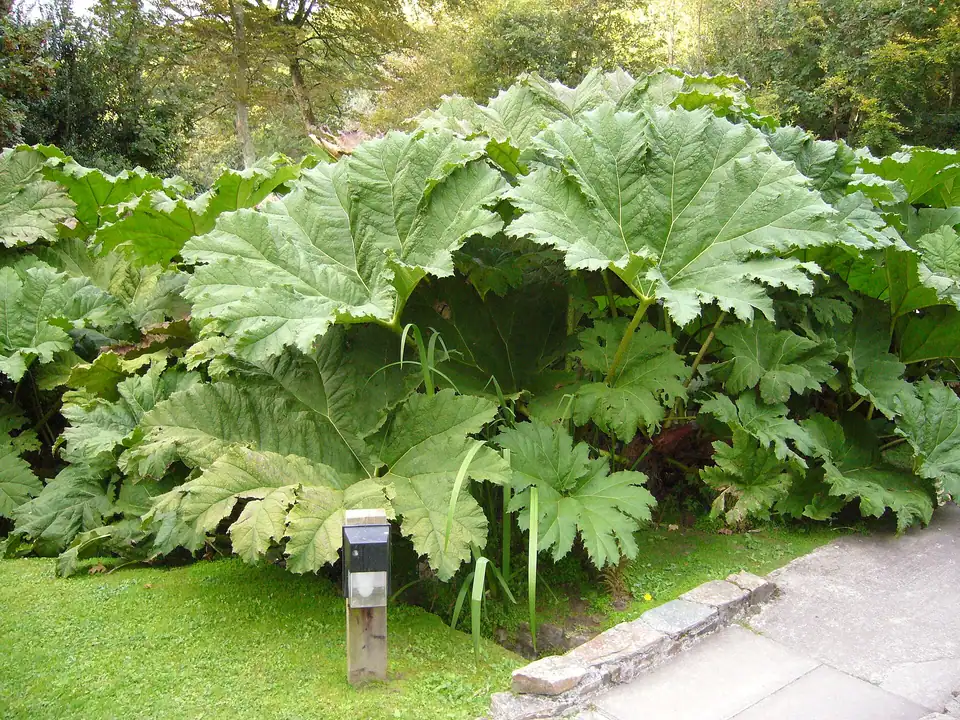
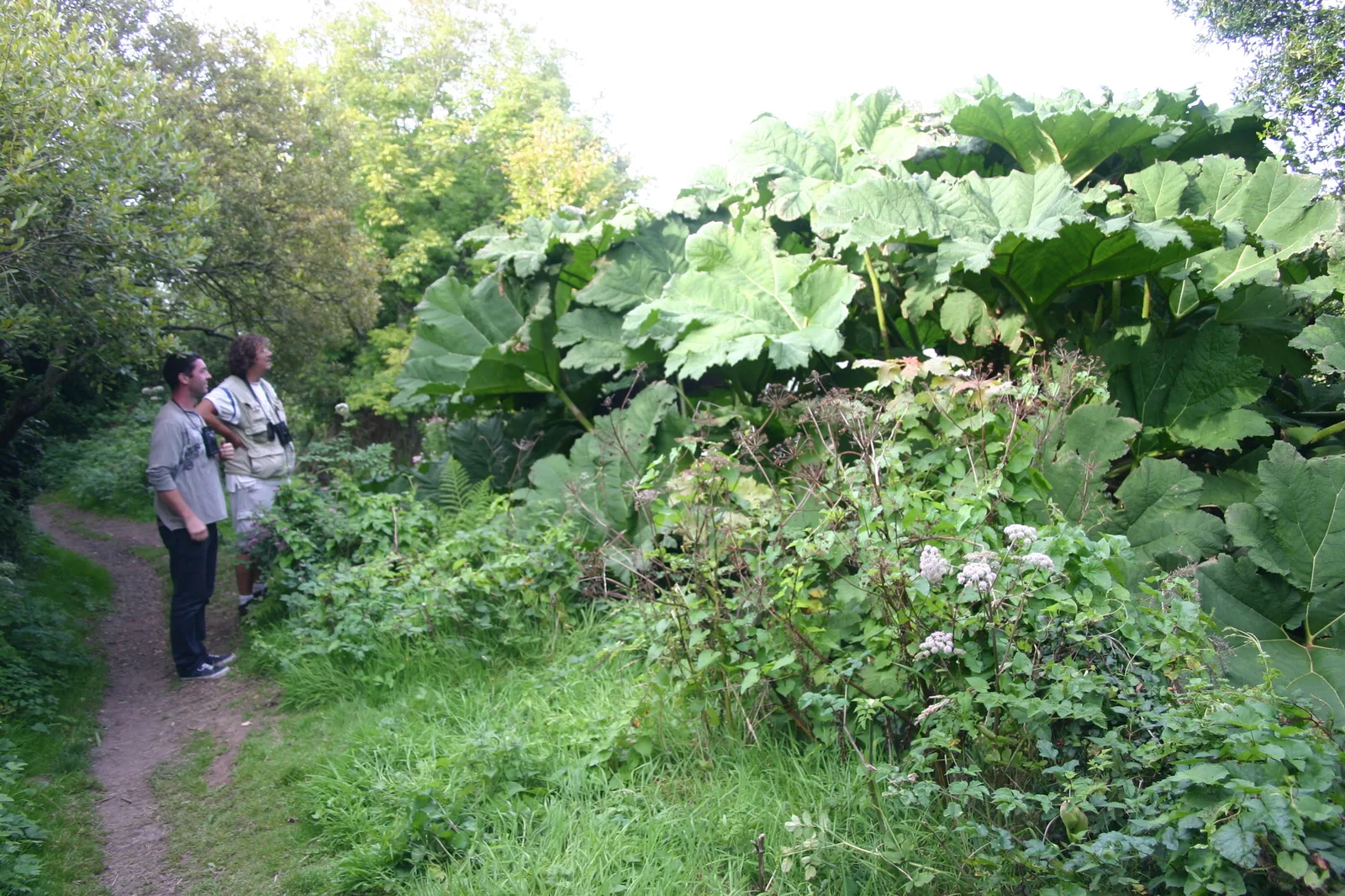
Gunnera brings real drama to a wet corner: a perennial giant that reaches 7 ft tall and thrives in full sun to dappled shade. Keep it wet at all times and even give its leaves a sprinkle, since they love moisture as much as the roots do. In winter, tuck the cut leaves over the crown, and it bounces back with new growth in spring.
- Sun
Full sun to dappled shade
- Water
Keep it wet at all times; a sprinkler on the leaves for an hour helps too
What the sources say (3)
Watering: Keep permanently wet; well-watered at all times
Gunnera loves moist and boggy ground and must be kept well-watered at all times.
— Gunnera Plant Information - How To Grow Gunnera Plants | Gardening Know How [7] It thrives in humus-rich, permanently wet soils, and is often planted alongside streams and ponds.
— Gunnera manicata (change text as verified by Angie as G. manicata. not hybrid) - Cambridge University Botanic Garden [2] Watering notes: A sprinkler set next to the plant for an hour or so wets the leaves, which like moisture as much as the roots do
Set a sprinkler next to the plant and let it go for an hour or so, as the leaves love moisture as much as the roots do.
— Gunnera Plant Information - How To Grow Gunnera Plants | Gardening Know How [7] - Cold
Survives winters down to 0 °F (−17.8 °C)
Hardy in very cold winters · USDA 7 · RHS H6 · Z7
- Spacing
At least 10 ft between plants
What the sources say (1)
Spacing: at least 304.8 cm (10 ft) (new plants cut from the crown)
Plant this new juvenile plant at least 10 feet (3 m.) away to give both plants room to grow.
— Gunnera Plant Information - How To Grow Gunnera Plants | Gardening Know How [7] - Planting
Plant in May–June
- Harvest
In its homeland, young leaf stalks are peeled and eaten like rhubarb
- Pests
Watch out for snails and slugs
- Watch out
Often sold mixed up with a banned invasive hybrid: cut the flower heads in summer before they set seed
- Size
Grows 7 ft tall
What the sources say (1)
Mature height: 200 cm (2 m)
Growing to 2m in height and sending up large, leathery, heavily veined and sharply toothed leaves on fleshy, prickly stems
— Gunnera manicata (change text as verified by Angie as G. manicata. not hybrid) - Cambridge University Botanic Garden [2] - Propagation
Leaf cuttings from the base in spring, or a wedge cut from the crown in April–May
What the sources say (2)
Propagation: Seed sown fresh; basal leaf cuttings in spring; a wedge cut from the crown (April-May)
Sow seed when fresh, and overwinter in a cool, frost-free location. Germination is slow. Take basal leaf cuttings in spring.
— Gunnera manicata - Fine Gardening [8] The best way to increase your Gunnera plot is by cutting out a portion of the crown much like you'd remove a wedge of pie. Do this in April or May before the main growth has begun.
— Gunnera Plant Information - How To Grow Gunnera Plants | Gardening Know How [7] - Sowing
Sow fresh seed in October–November
What the sources say (4)
Sowing: October-November
| Sow | | | | | | | | | | yes | yes |
— Gunnera manicata | BBC Gardeners World Magazine [5] Sow seed when fresh, and overwinter in a cool, frost-free location.
— Gunnera manicata - Fine Gardening [8] Propagation: Seed sown fresh; basal leaf cuttings in spring; a wedge cut from the crown (April-May)
Sow seed when fresh, and overwinter in a cool, frost-free location. Germination is slow. Take basal leaf cuttings in spring.
— Gunnera manicata - Fine Gardening [8] The best way to increase your Gunnera plot is by cutting out a portion of the crown much like you'd remove a wedge of pie. Do this in April or May before the main growth has begun.
— Gunnera Plant Information - How To Grow Gunnera Plants | Gardening Know How [7] - Safety
No toxic effects reported
Overview
Giant rhubarb is a very large herbaceous perennial that needs permanently moist, humus-rich soil and is often planted beside streams and ponds. [2] Plants grown under this name in Britain are mostly the hybrid Gunnera × cryptica, which is banned from new planting. [1] Its large leaf stalks are eaten peeled in its native region. [2]
This record is incomplete: the sources we read do not cover every field yet.
Not yet covered by our sources: Pruning
Giant rhubarb care
How to water Giant rhubarb
Watering
Keep permanently wet; well-watered at all times
What the sources say (2)
Gunnera loves moist and boggy ground and must be kept well-watered at all times.It thrives in humus-rich, permanently wet soils, and is often planted alongside streams and ponds.Watering notes
A sprinkler set next to the plant for an hour or so wets the leaves, which like moisture as much as the roots do
What the sources say (1)
Set a sprinkler next to the plant and let it go for an hour or so, as the leaves love moisture as much as the roots do.How much light Giant rhubarb needs
How much cold Giant rhubarb can take
Hardiness, coldest zone
7 [winter low −17.8 to −12.2 °C (0 to 10 °F)]
What the sources say (1)
Zones :
10, 7, 8, 9Hardiness, warmest zone
10 [winter low −1.1 to 4.4 °C (30 to 40 °F)]
What the sources say (1)
Zones :
10, 7, 8, 9Where to grow Giant rhubarb
at least 304.8 cm (10 ft) (new plants cut from the crown)
What the sources say (1)
Plant this new juvenile plant at least 10 feet (3 m.) away to give both plants room to grow.How to propagate Giant rhubarb
Seed sown fresh; basal leaf cuttings in spring; a wedge cut from the crown (April-May)
What the sources say (2)
Sow seed when fresh, and overwinter in a cool, frost-free location. Germination is slow. Take basal leaf cuttings in spring.The best way to increase your Gunnera plot is by cutting out a portion of the crown much like you'd remove a wedge of pie. Do this in April or May before the main growth has begun.How to grow Giant rhubarb
The plant
Life cycle
perennial
What the sources say (1)
Gunnera manicata (syn. G . x cryptica ) is one of the largest hardy herbaceous perennials for cultivation outside in the British Isles.Mature height
200 cm (2 m)
What the sources say (1)
Growing to 2m in height and sending up large, leathery, heavily veined and sharply toothed leaves on fleshy, prickly stemsGiant rhubarb pests and problems
Hybrid identity and legal restrictions
Symptom: Plants sold as Gunnera manicata are most likely Gunnera × cryptica, which is banned under invasive species rules
What to do: Existing plants may be retained; do not spread beyond the garden; cut flowerheads in summer before seed set
What the sources say (2)
The likely answer is yes, as this research suggests that the species Gunnera manicata appears no longer to be present in Britain and Ireland.
— Gunnera: your questions answered [1] Sales of Gunnera tinctoria and Gunnera manicata / Gunnera × cryptica are banned.
— Gunnera: Plant, Grow and Care For Gunnera | BBC Gardeners World Magazine [6] Frost damage
Symptom: Brown leaves and dieback in spring can be due to frost
What to do: Plant should bounce back, producing new growth; cover the crown with the cut leaves over winter
What the sources say (1)
Brown leaves and dieback in spring can be due to frost but the plant should bounce back, producing new growth.
— Gunnera: Plant, Grow and Care For Gunnera | BBC Gardeners World Magazine [6] Snails and slugs
Symptom: Snails and slugs
What to do: Not stated in the document
What the sources say (1)
Problems Snails and slugs.
— Gunnera manicata - Fine Gardening [8]
Remedies
Each remedy shows what official sources say about it; traditional remedies without an official source are marked as such. Harmful ones are listed so you know to avoid them.
Getting rid of it
invasive spread
digging out the plant Not verified
Traditional remedy, not verified by an official source.
How: Dig out the plant; seeds and rhizomes must go to greenwaste or landfill.
Is Giant rhubarb poisonous?
Reported by the source, quoted verbatim. This is not medical or veterinary advice: if a person or an animal may have eaten this plant, contact a poison control centre or a veterinarian.
Gunnera ‘Manicata’ has no toxic effects reported.
[5]
Calendar
Not stated in the sources we read.
Months as given by the sources, which are mostly from the United States (northern hemisphere). In the southern hemisphere they shift by about six months.
Edibility
Reported by the source, quoted verbatim. Do not eat a plant on the basis of this page alone: identification mistakes can be dangerous.
In its native homeland the young leaf stalks are peeled and eaten in similar fashion to the rhubarb with which we are familiar
[2]
Indicative values
Values from a secondary source, not checked word for word like the rest of this page. Use them as a starting point.
- Soil
- Humus richIndicative value, adapt it to your climate · Secondary source
- Soil pH
- 5.5-7Indicative value, adapt it to your climate · Secondary source
- Care level
- HighIndicative value, adapt it to your climate · Secondary source
- Growth rate
- HighIndicative value, adapt it to your climate · Secondary source
- Pruning
- February, March, April, MayIndicative value, adapt it to your climate · Secondary source
- Pests
- Pest resistant, Disease resistantIndicative value, adapt it to your climate · Secondary source
Similar plants
- Chilean gunnera Gunnera tinctoria
- Abies grandis Abies grandis
- Abraham Trachystemon orientalis
- Abyssinian banana Ensete ventricosum
- Acacia longifolia Acacia longifolia
- Acanthus hungaricus Acanthus hungaricus
- Achlys triphylla Achlys triphylla
- Aconite Aconitum napellus
Sources
Every value above is quoted from these documents. Links lead to the original publisher.
- Gunnera: your questions answered · rhs.org.uk, consulted
- Gunnera manicata (change text as verified by Angie as G. manicata. not hybrid) - Cambridge University Botanic Garden · botanic.cam.ac.uk, consulted
- Flora of New Zealand | Taxon Profile | Gunnera manicata · nzflora.info, consulted
- Brazilian Giant-rhubarb | NVBT · botanischetuinen.nl, consulted
- Gunnera manicata | BBC Gardeners World Magazine · gardenersworld.com, consulted
- Gunnera: Plant, Grow and Care For Gunnera | BBC Gardeners World Magazine · gardenersworld.com, consulted
- Gunnera Plant Information - How To Grow Gunnera Plants | Gardening Know How · gardeningknowhow.com, consulted
- Gunnera manicata - Fine Gardening · finegardening.com, consulted
Written by Emilio Marruso · last checked