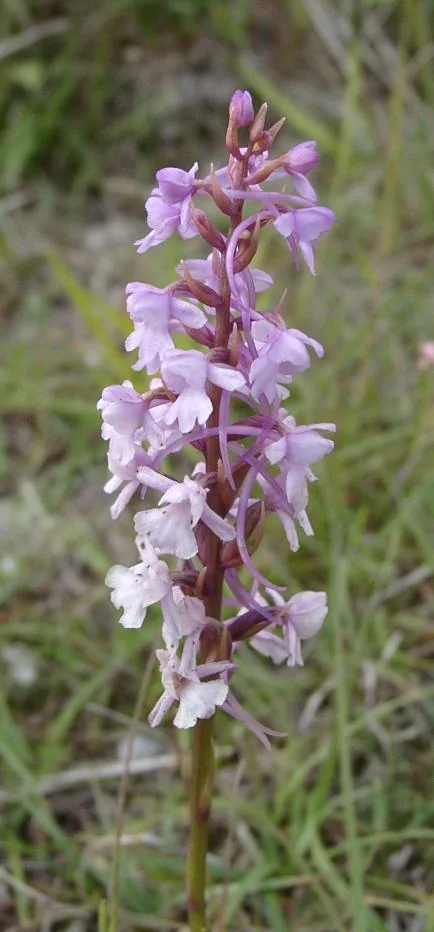
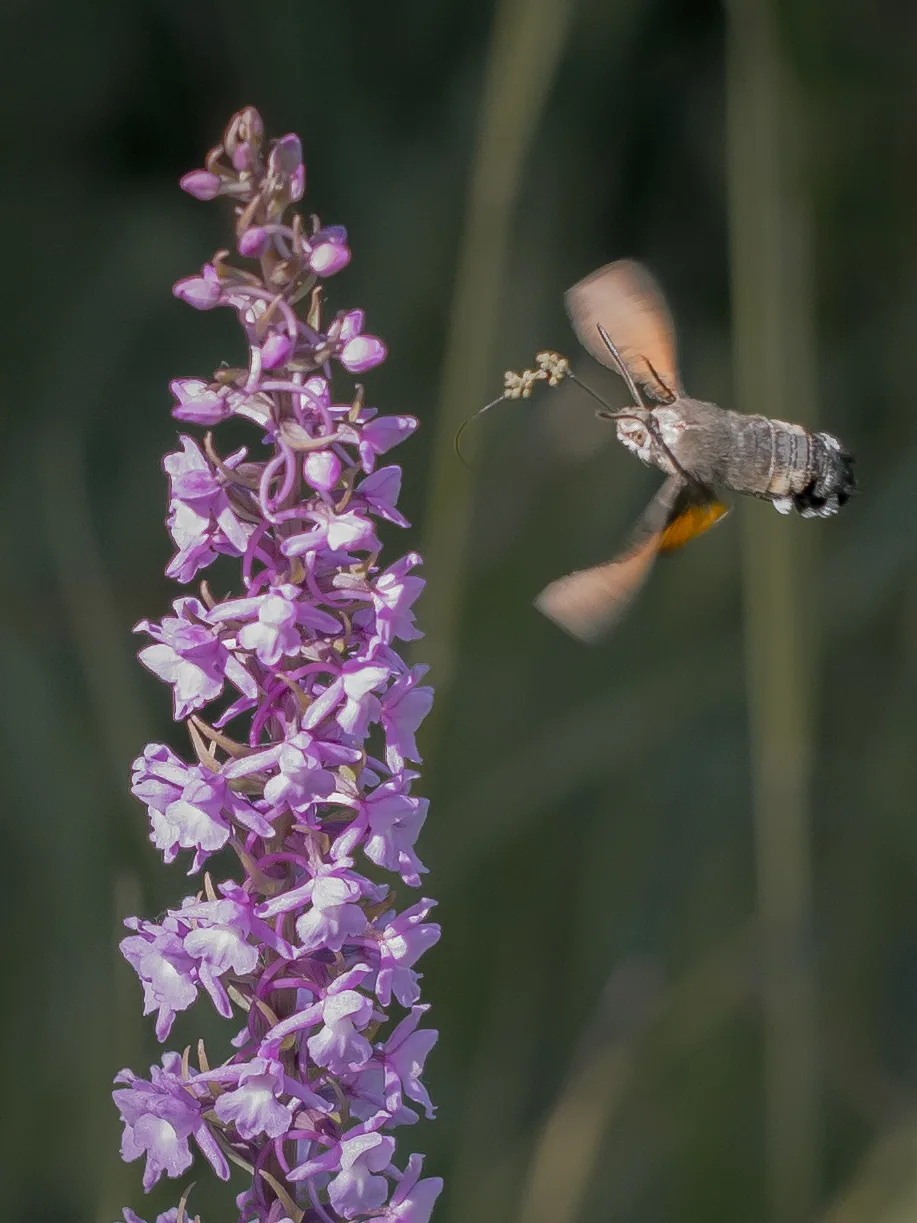

How to Grow and Care for Fragrant orchid
Gymnadenia conopsea
Written by Emilio Marruso · last checked
At a glance
This tuberous perennial is happy in full sun to light shade, as long as its soil stays moist and never dries out completely. It grows 8–20 inches tall and comes back year after year. Its tuber is very nutritious eaten cooked, and once dried and ground it becomes salep, a fine white flour.
- Sun
Full sun to light shade
What the sources say (2)
- Water
Keep the soil moist and never let it dry out completely; it can't stand drought
What the sources say (3)
Watering: Keep the soil moist; it must not dry out completely
Very easily grown in any good moist soil
— Fragrant Orchid (Gymnadenia conopsea) — Practical Plants [4] full sun to light shade, as long as the soil doesn't dry out completely
— Gymnadenia | Pacific Bulb Society [7] Watering notes: Drought intolerant
Tolerates Nutritionally Poor Soil No Drought intolerant
— Fragrant Orchid (Gymnadenia conopsea) — Practical Plants [4] - Cold
Survives winters down to 0 °F (−17.8 °C)
Hardy in very cold winters · USDA 7 · RHS H6 · Z7
What the sources say (1)
Hardiness, coldest zone: 7 [winter low −17.8 to −12.2 °C (0 to 10 °F)]
Shade tolerance light shade Water moderate Hardiness Zone 7+
— Fragrant Orchid (Gymnadenia conopsea) — Practical Plants [4] - Planting
Move or divide plants in autumn
What the sources say (1)
Planting: Autumn (moving or dividing plants)
any moving or dividing should be attempted in the autumn, keep a large ball of soil around the plant
— Fragrant Orchid (Gymnadenia conopsea) — Practical Plants [4] - Harvest
Dig the tuber as the plant dies back after setting seed; eat it cooked
What the sources say (1)
Harvest: As the plant dies down after flowering and setting seed (tuber, for salep)
The tuber, from which salep is prepared, should be harvested as the plant dies down after flowering and setting seed
— Fragrant Orchid (Gymnadenia conopsea) — Practical Plants [4] - Size
8–20 inches tall
What the sources say (1)
Mature height: 20-50 cm [8–20 in]
Stängel 20-50 cm hoch, beblättert. Blätter lanzettlich, 5-20 mm breit , aufrecht, etwas rinnig.
— Gymnadenia conopsea (L.) R. Br. [2] - Propagation
Divide plants in autumn, or split the tubers as the flowers fade
What the sources say (3)
Propagation: Seed (surface sown, with soil fungus from around established plants); division in autumn; division of the tubers as the flowers fade
Seed - surface sow, preferably as soon as it is ripe, in the greenhouse and do not allow the compost to dry out.
— Fragrant Orchid (Gymnadenia conopsea) — Practical Plants [4] Division in autumn. The plant is very intolerant of root disturbance
— Fragrant Orchid (Gymnadenia conopsea) — Practical Plants [4] Division of the tubers as the flowers fade
— Fragrant Orchid (Gymnadenia conopsea) — Practical Plants [4] - Sowing
Sow fresh seed on the surface in a greenhouse, with soil from around older plants
What the sources say (4)
Sowing: As soon as ripe, surface sown in the greenhouse
Seed - surface sow, preferably as soon as it is ripe, in the greenhouse and do not allow the compost to dry out.
— Fragrant Orchid (Gymnadenia conopsea) — Practical Plants [4] Propagation: Seed (surface sown, with soil fungus from around established plants); division in autumn; division of the tubers as the flowers fade
Seed - surface sow, preferably as soon as it is ripe, in the greenhouse and do not allow the compost to dry out.
— Fragrant Orchid (Gymnadenia conopsea) — Practical Plants [4] Division in autumn. The plant is very intolerant of root disturbance
— Fragrant Orchid (Gymnadenia conopsea) — Practical Plants [4] Division of the tubers as the flowers fade
— Fragrant Orchid (Gymnadenia conopsea) — Practical Plants [4]
Overview
In Italy it grows in open deciduous woods, mountain pinewoods, meadows and pastures. [1] In gardens it likes limestone grassland or calcareous marshes in full sun to light shade, provided the soil does not dry out completely. [7] The plant is very intolerant of root disturbance; moving or dividing should be done in autumn. [4]
This record is incomplete: the sources we read do not cover every field yet.
Not yet covered by our sources: Hardiness, warmest zone, Pruning
Fragrant orchid care
How to water Fragrant orchid
Watering
Keep the soil moist; it must not dry out completely
Watering notes
Drought intolerant
What the sources say (1)
Tolerates Nutritionally Poor Soil
No
Drought
intolerantHow much light Fragrant orchid needs
Full sun to light shade
How much cold Fragrant orchid can take
Hardiness, coldest zone
7 [winter low −17.8 to −12.2 °C (0 to 10 °F)]
What the sources say (1)
Shade tolerance
light shade
Water
moderate
Hardiness
Zone 7+Hardiness, warmest zone
Not stated in the sources we read.
How to propagate Fragrant orchid
Seed (surface sown, with soil fungus from around established plants); division in autumn; division of the tubers as the flowers fade
What the sources say (3)
Seed - surface sow, preferably as soon as it is ripe, in the greenhouse and do not allow the compost to dry out.Division in autumn. The plant is very intolerant of root disturbanceDivision of the tubers as the flowers fadeHow to grow Fragrant orchid
The plant
Life cycle
perennial (tuberous geophyte)
What the sources say (1)
The native range of this species is Europe to N. & Central Japan. It is a tuberous geophyte and grows primarily in the temperate biome.Mature height
20-50 cm [8–20 in]
What the sources say (1)
Stängel 20-50 cm hoch, beblättert. Blätter lanzettlich, 5-20 mm breit , aufrecht, etwas rinnig.Remedies
The sources we checked give no remedies for this plant.
Calendar
Sowing
As soon as ripe, surface sown in the greenhouse
What the sources say (1)
Seed - surface sow, preferably as soon as it is ripe, in the greenhouse and do not allow the compost to dry out.Planting
Autumn (moving or dividing plants)
What the sources say (1)
any moving or dividing should be attempted in the autumn, keep a large ball of soil around the plantHarvest
As the plant dies down after flowering and setting seed (tuber, for salep)
What the sources say (1)
The tuber, from which salep is prepared, should be harvested as the plant dies down after flowering and setting seedPruning
Not stated in the sources we read.
Months as given by the sources, which are mostly from the United States (northern hemisphere). In the southern hemisphere they shift by about six months.
Edibility
Reported by the source, quoted verbatim. Do not eat a plant on the basis of this page alone: identification mistakes can be dangerous.
Bulb - cooked. Very nutritious [12] [14] [15] . It is a source of 'salep', a fine white to yellowish-white powder that is obtained by drying the tuber and grinding it into a flour
[4]
Similar plants
- Abies grandis Abies grandis
- Abraham Trachystemon orientalis
- Abyssinian banana Ensete ventricosum
- Acacia longifolia Acacia longifolia
- Acanthus hungaricus Acanthus hungaricus
- Aconite Aconitum napellus
- Adam's Needle Yucca flaccida
- Adriatic lizard orchid Himantoglossum adriaticum
Sources
Every value above is quoted from these documents. Links lead to the original publisher.
- Gymnadenia conopsea (L.) R.Br. - Portale alla flora del Parco Nazionale delle Foreste Casentinesi, Monte Falterona e Campigna · dryades.units.it, consulted
- Gymnadenia conopsea (L.) R. Br. · infoflora.ch, consulted
- Gymnadenia conopsea (L.) R.Br. | Plants of the World Online | Kew Science · powo.science.kew.org, consulted
- Fragrant Orchid (Gymnadenia conopsea) — Practical Plants · practicalplants.org, consulted
- Gymnadenia conopsea - Chalk/Common Fragrant-orchid · first-nature.com, consulted
- Plant Crib 3 · bsbi.org, consulted
- Gymnadenia | Pacific Bulb Society · pacificbulbsociety.org, consulted
- IOSPE PHOTOS · orchidspecies.com, consulted
Written by Emilio Marruso · last checked