
How to Grow and Care for Shrubby yellowcrest
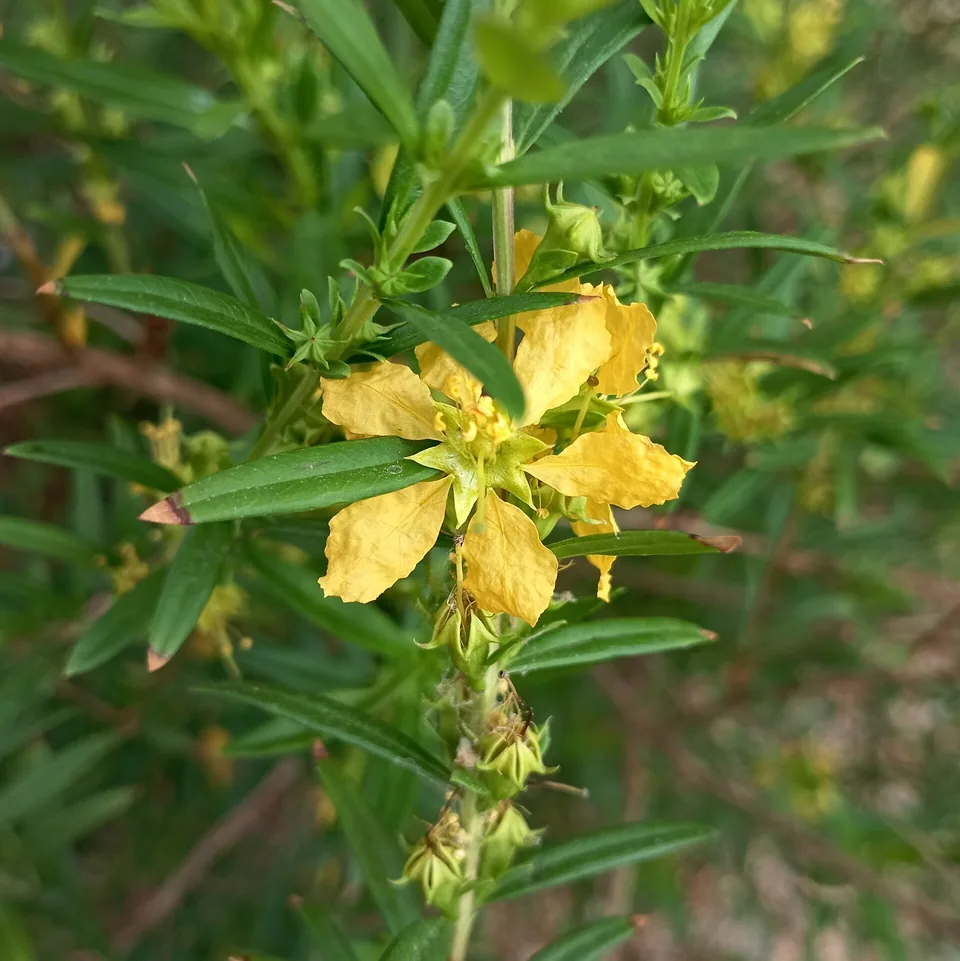
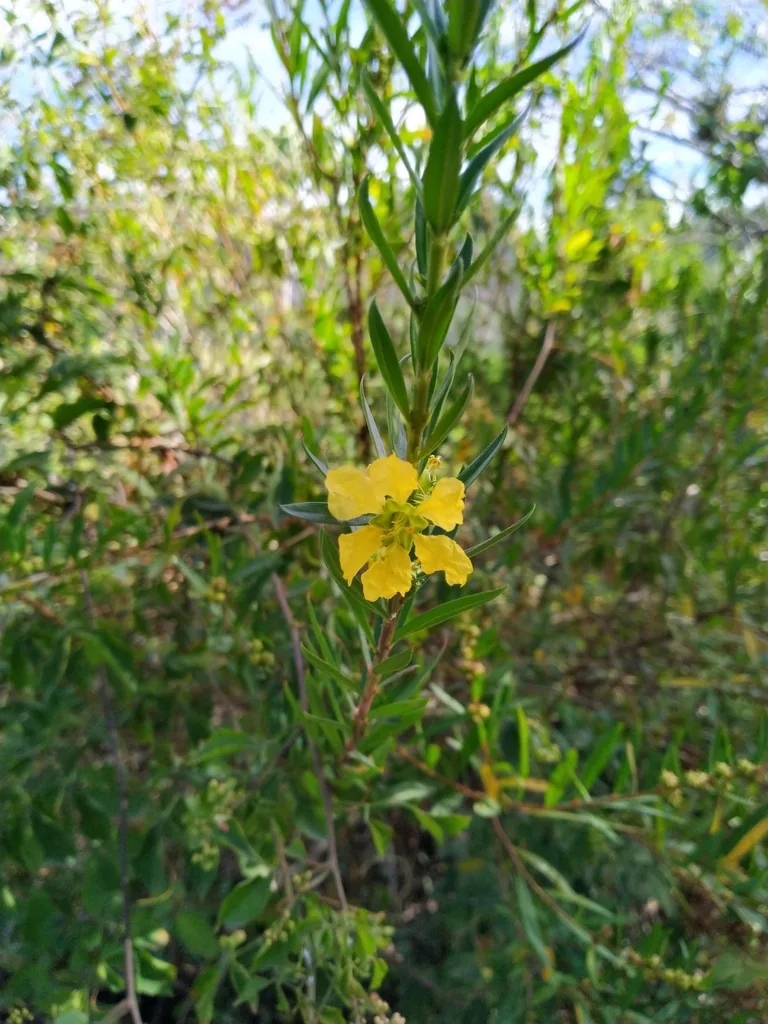
Heimia salicifolia
Written by Emilio Marruso · last checked
Toxic to: People · Why
At a glance
Heimia is a rewarding plant to grow and share: you can start new plants from seed in spring or from cuttings in midsummer. It is happy in a container too, and its needs are simple: never let the soil dry out completely, and prune it in early spring. A friendly choice for anyone who enjoys watching new plants take root.
- Water
Water so the soil never dries out completely
What the sources say (1)
Watering: Do not allow the soil to dry out completely
Do not allow soils to totally dry out.
— Heimia salicifolia - Native Plant Society of Texas [5] - Cold
Survives winters down to 10 °F (−12.2 °C)
Hardy in cold winters · USDA 8 · RHS H5 · Z8
What the sources say (1)
Hardiness, coldest zone: 8 [winter low −12.2 to −6.7 °C (10 to 20 °F)]
Hardiness Zone 8+
— Erva De Vida (Heimia salicifolia) — Practical Plants [2] - Pruning
Prune in early spring
What the sources say (1)
Pruning: Early spring
Any pruning is best carried out in early spring by removing excess growth at the base of the plant
— Heimia salicifolia - Useful Temperate Plants [1] - Propagation
Take cuttings of half-ripe stems in midsummer and root them in a cold frame
What the sources say (2)
Propagation: Seed (spring sowing in a greenhouse suggested); cuttings of half-ripe wood in mid summer in a frame
Cuttings of half-ripe wood, mid summer in a frame
— Heimia salicifolia - Useful Temperate Plants [1] Seed - we have no information for this species but suggest sowing the seed in spring in a greenhouse.
— Heimia salicifolia - Useful Temperate Plants [1] - Sowing
Sow seeds in spring, ideally in a greenhouse
What the sources say (2)
Propagation: Seed (spring sowing in a greenhouse suggested); cuttings of half-ripe wood in mid summer in a frame
Cuttings of half-ripe wood, mid summer in a frame
— Heimia salicifolia - Useful Temperate Plants [1] Seed - we have no information for this species but suggest sowing the seed in spring in a greenhouse.
— Heimia salicifolia - Useful Temperate Plants [1] - Containers
Grows in containers too
What the sources say (1)
In containers: Yes
Where not winter hardy, plants may be grown in pots and container gardens that are overwintered indoors in sunny locations.
— Heimia salicifolia - Native Plant Society of Texas [5] - Safety
No known hazards to people, but its leaves can be made into an intoxicating drink
Overview
Heimia salicifolia is a deciduous shrub native to Texas, Mexico and Central America that is best grown in sheltered sunny borders. [3][1] In cool climates the top growth may die back and regrow from the base each year. [1]
This record is incomplete: the sources we read do not cover every field yet.
Not yet covered by our sources: Hardiness, warmest zone
Shrubby yellowcrest care
How to water Shrubby yellowcrest
Do not allow the soil to dry out completely
What the sources say (1)
Do not allow soils to totally dry out.How much light Shrubby yellowcrest needs
How much cold Shrubby yellowcrest can take
Hardiness, coldest zone
8 [winter low −12.2 to −6.7 °C (10 to 20 °F)]
What the sources say (1)
Hardiness
Zone 8+Hardiness, warmest zone
Not stated in the sources we read.
Where to grow Shrubby yellowcrest
Yes
What the sources say (1)
Where not winter hardy, plants may be grown in pots and container gardens that are overwintered indoors in sunny locations.How to propagate Shrubby yellowcrest
Seed (spring sowing in a greenhouse suggested); cuttings of half-ripe wood in mid summer in a frame
Remedies
The sources we checked give no remedies for this plant.
Is Shrubby yellowcrest poisonous?
Reported by the source, quoted verbatim. This is not medical or veterinary advice: if a person or an animal may have eaten this plant, contact a poison control centre or a veterinarian.
## Known Hazards None known
[1]
Calendar
Pruning
Early spring
What the sources say (1)
Any pruning is best carried out in early spring by removing excess growth at the base of the plantMonths as given by the sources, which are mostly from the United States (northern hemisphere). In the southern hemisphere they shift by about six months.
Edibility
Reported by the source, quoted verbatim. Do not eat a plant on the basis of this page alone: identification mistakes can be dangerous.
An intoxicating and euphoric drink is made by crushing the wilted leaves in water and leaving the liquid in a sunny position for three days to ferment
[1]
Indicative values
Values from a secondary source, not checked word for word like the rest of this page. Use them as a starting point.
- Life cycle
- Perennial. Heimia salicifolia is a perennial plant species, meaning it lives for more than two years.Indicative value, adapt it to your climate · Secondary source
- Mature height
- 182.9-304.8 cm (6-10 ft)Indicative value, adapt it to your climate · Secondary source
- Hours of sun
- 6-8 hoursIndicative value, adapt it to your climate · Secondary source
- Soil pH
- 6-7.5Indicative value, adapt it to your climate · Secondary source
- Care level
- MediumIndicative value, adapt it to your climate · Secondary source
- Growth rate
- LowIndicative value, adapt it to your climate · Secondary source
Similar plants
- Aaron's Beard Hypericum calycinum
- Abies grandis Abies grandis
- Abraham Trachystemon orientalis
- Abyssinian banana Ensete ventricosum
- Acacia longifolia Acacia longifolia
- Acacia retinodes Acacia retinodes
- Acanthus hungaricus Acanthus hungaricus
- Achlys triphylla Achlys triphylla
Sources
Every value above is quoted from these documents. Links lead to the original publisher.
- Heimia salicifolia - Useful Temperate Plants · temperate.theferns.info, consulted
- Erva De Vida (Heimia salicifolia) — Practical Plants · practicalplants.org, consulted
- Lady Bird Johnson Wildflower Center - The University of Texas at Austin · wildflower.org, consulted
- Plant Heimia salicifolia (Lythraceae) | Dr. Duke's Phytochemical and Ethnobotanical Databases · phytochem.nal.usda.gov, consulted
- Heimia salicifolia - Native Plant Society of Texas · npsot.org, consulted
Written by Emilio Marruso · last checked