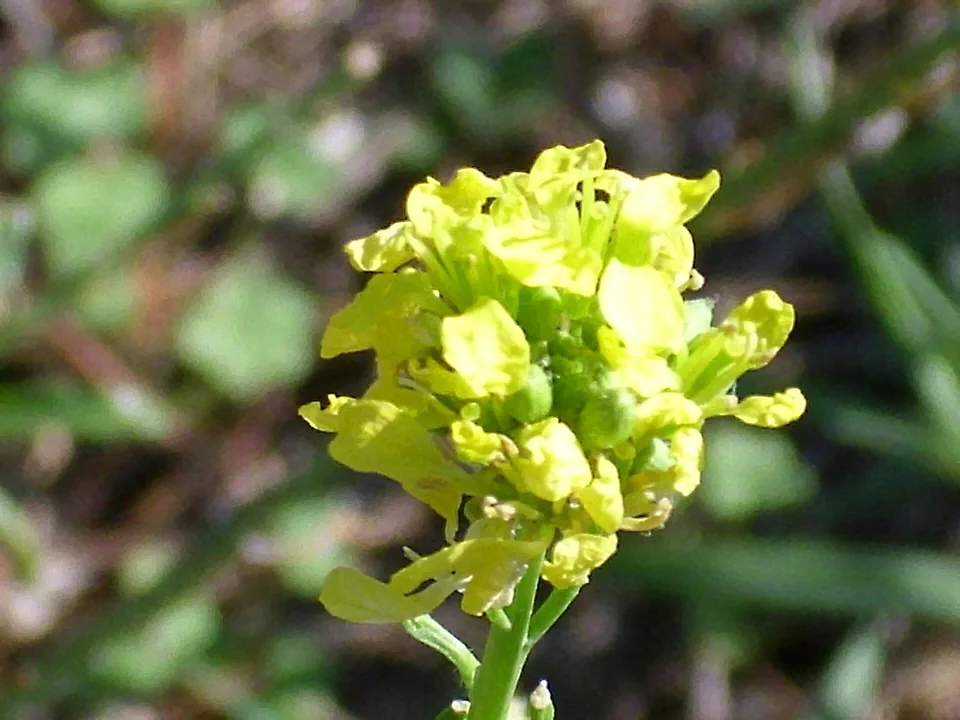
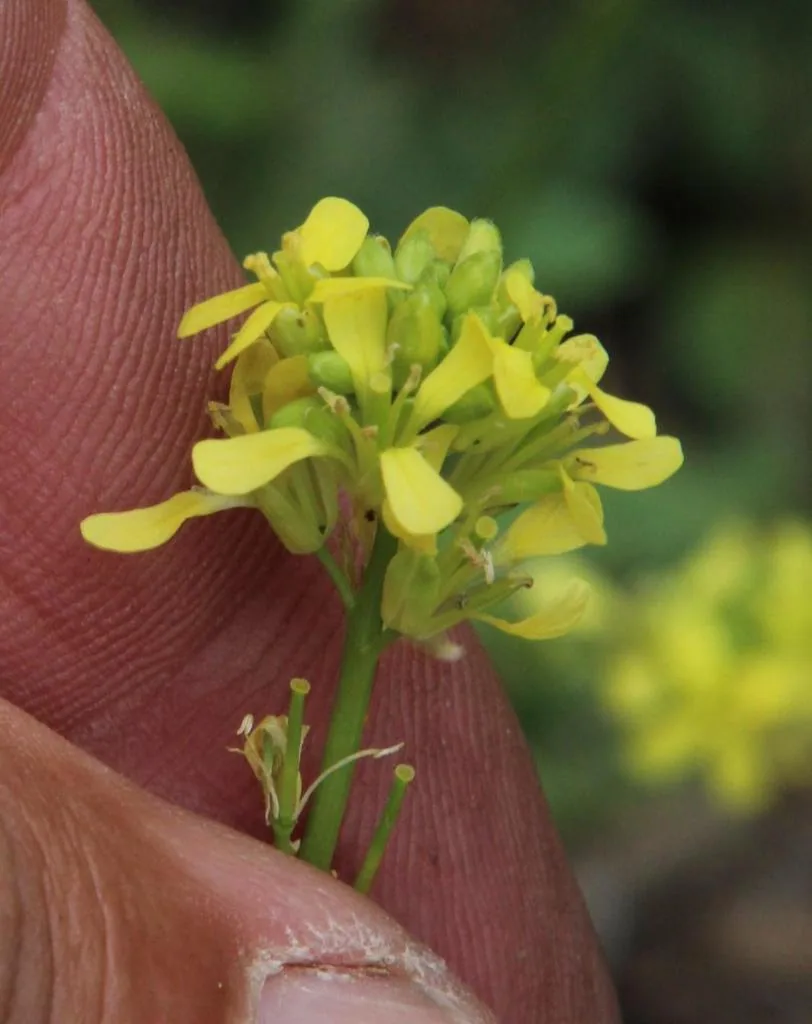

How to Grow and Care for Hoary mustard
Hirschfeldia incana
Written by Emilio Marruso · last checked
At a glance
Hoary mustard is a humble biennial with a surprising number of uses in the kitchen. In parts of Italy the plant is eaten as a green salad, in Greece the young plants are dressed with oil and lemon, and the young flower shoots can be cooked like broccoli. Just sow it in spring, right where you want it to grow.
- Harvest
Eat young plants as salad with oil and lemon; cook young flower shoots like broccoli
- Size
16–35 inches tall
What the sources say (1)
Mature height: 40-90 cm [16–35 in]
Adult plant: - Height: 40-90 cm. Plant hairy and whitish.
— Hirschfeldia incana [4] - Propagation
Grows from seed or from its rootstock
- Sowing
Sow in spring, right where it will grow
What the sources say (1)
Sowing: Spring, in situ
Seed - sow spring in situ.
— Hirschfeldia incana - Useful Temperate Plants [2]
Overview
Hoary mustard is a biennial or short-lived perennial of the mustard family that is native to the Mediterranean. [1] It is a weed of roadsides, pastures, orchards, vineyards and cereal crops, spreading by seed and regrowing from a perennial rootstock. [8] The young plant is eaten as a salad green in parts of Italy and Greece, and the young inflorescences can be eaten like broccoli. [4][7]
This record is incomplete: the sources we read do not cover every field yet.
Not yet covered by our sources: Light, Hardiness, coldest zone, Hardiness, warmest zone
Hoary mustard care
How much light Hoary mustard needs
Not stated in the sources we read.
How much cold Hoary mustard can take
Hardiness, coldest zone
Not stated in the sources we read.
Hardiness, warmest zone
Not stated in the sources we read.
How to propagate Hoary mustard
How to grow Hoary mustard
The plant
Life cycle
biennial
What the sources say (1)
IT : senape canuta ; PT : ineixas ; EN : hoary mustard ; Biological type: BiennialFamily
Cruciferae
What the sources say (1)
Classification: Cruciferae, Dicotyledonous Common name: hoary mustard Synonym(s) of Common name:Mature height
40-90 cm [16–35 in]
What the sources say (1)
Adult plant: - Height: 40-90 cm. Plant hairy and whitish.Remedies
Each remedy shows what official sources say about it; traditional remedies without an official source are marked as such. Harmful ones are listed so you know to avoid them.
Getting rid of it
weed
hand pulling with taproot Not verified
Traditional remedy, not verified by an official source.
Once pods are formed, seed will often mature even if the plant has been uprooted. Soil disturbance often leads to a flush of seedlings.
— Buchan Weed [8] How: Pull single plants by hand, removing as much of the taproot as possible, since plants re-shoot from root pieces left in the soil.
deep ploughing Not verified
Traditional remedy, not verified by an official source.
How: Deep ploughing buries the taproot; further cultivation is usually needed for the seedlings that emerge afterwards.
sow vigorous pasture Not verified
Traditional remedy, not verified by an official source.
How: Sow a vigorous pasture species to prevent re-infestation.
Calendar
Sowing
Spring, in situ
What the sources say (1)
Seed - sow spring in situ.Months as given by the sources, which are mostly from the United States (northern hemisphere). In the southern hemisphere they shift by about six months.
Edibility
Reported by the source, quoted verbatim. Do not eat a plant on the basis of this page alone: identification mistakes can be dangerous.
Plant eaten as green salad in some regions of Italy.
[4]The young plant is eaten with oil and lemon juice in parts of Greece
[2]They can be ground into powder then mixed with water and eaten
[2]The young inflorescences can be eaten like Broccoli.
[7]Stock will eat it when it is young, but it becomes tall, coarse and unpalatable at maturity.
[8]
Similar plants
- Abraham Trachystemon orientalis
- Abyssinian banana Ensete ventricosum
- Acacia longifolia Acacia longifolia
- African Blue Lily Agapanthus praecox
- African lily Dietes bicolor
- African lovegrass Eragrostis curvula
- African tuliptree Spathodea campanulata
- Agretti Soda inermis
Sources
Every value above is quoted from these documents. Links lead to the original publisher.
- Hirschfeldia incana Profile – California Invasive Plant Council · cal-ipc.org, consulted
- Hirschfeldia incana - Useful Temperate Plants · temperate.theferns.info, consulted
- Hirschfeldia incana • New Zealand Plant Conservation Network · nzpcn.org.nz, consulted
- Hirschfeldia incana · www2.dijon.inrae.fr, consulted
- Flora of New Zealand | Taxon Profile | Hirschfeldia incana · nzflora.info, consulted
- Online Flora of the Maltese Islands - Plant Family Index · maltawildplants.com, consulted
- VicFlora: Hirschfeldia incana · vicflora.rbg.vic.gov.au, consulted
- Buchan Weed · herbiguide.com.au, consulted
Written by Emilio Marruso · last checked