How to Grow and Care for Blue plantain lily
Hosta ventricosa
Written by Emilio Marruso · last checked
Toxic to: Cats, Dogs, Horses · Why
At a glance
This hosta is a forgiving perennial that grows anywhere from full sun to deep shade, and it is happiest with morning sun and shade the rest of the day. Keep the soil from drying out, and it grows into a leafy clump 20–24 inches tall and wider still. Its young leaves and leaf stems can even be eaten cooked.
- Sun
Full sun to deep shade; best with morning sun and shade the rest of the day
What the sources say (2)
Light: Full sun to deep shade; best with morning sun and shade the rest of the day
Succeeds in full sun as well as in deep shade, growing well in the semi-shade of a woodland
— Hosta ventricosa - Useful Temperate Plants [2] It usually grows best on sites with some direct sunlight in the morning, but shaded the rest of the day.
— Blue Plantain Lily (Hosta ventricosa) - bplant.org [4] - Water
Don't let the soil dry out; the more sun it gets, the moister the soil should be
What the sources say (4)
Watering: Keep soil from drying out; average moisture
Requires a rich soil that does not dry out readily
— Hosta ventricosa - Useful Temperate Plants [2] It prefers average moisture conditions; plants growing in shade are more tolerant of dry conditions.
— Blue Plantain Lily (Hosta ventricosa) - bplant.org [4] Watering notes: The sunnier the position, the moister the soil should be; plants in shade tolerate dry conditions better
In general, the sunnier the position the moister the soil should be
— Hosta ventricosa - Useful Temperate Plants [2] It prefers average moisture conditions; plants growing in shade are more tolerant of dry conditions.
— Blue Plantain Lily (Hosta ventricosa) - bplant.org [4] - Cold
Late frosts can destroy the young spring leaves
What the sources say (1)
Planting: Late spring or early summer, after the last expected frosts
Plant them out into their permanent positions in late spring or early summer, after the last expected frosts.
— Hosta ventricosa - Useful Temperate Plants [2] - Soil
Slightly acidic to neutral soil, pH 6.0–7.0
What the sources say (2)
Soil pH, minimum: 6.0
Prefers a pH between 6 and 7[ 200 Title The New RHS Dictionary of Gardening. 1992.
— Hosta ventricosa - Useful Temperate Plants [2] Soil pH, maximum: 7.0
Prefers a pH between 6 and 7[ 200 Title The New RHS Dictionary of Gardening. 1992.
— Hosta ventricosa - Useful Temperate Plants [2] - Spacing
2 ft between plants
What the sources say (1)
Spacing: 60 cm [24 in]
Plants should be spaced about 60cm apart each way
— Hosta ventricosa - Useful Temperate Plants [2] - Planting
Plant in late spring or early summer, after the last frosts
What the sources say (1)
Planting: Late spring or early summer, after the last expected frosts
Plant them out into their permanent positions in late spring or early summer, after the last expected frosts.
— Hosta ventricosa - Useful Temperate Plants [2] - Harvest
Young leaves and leaf stems can be eaten cooked
- Pests
Slugs and snails eat the young spring shoots; deer feed on it too
What the sources say (2)
- Watch out
In warm climates the thin leaves can scorch at the edges
- Size
20–24 in tall and 30–38 in wide
What the sources say (2)
Mature height: 51-61 cm (20-24 in)
H. ventricosa provides rich, dark green, heart-shaped leaves with a velvety sheen not found in many hostas. Mature mounds are 30 to 38 in. wide and 20 to 24 in. tall.
— Growing Hostas | CAES Field Report [1] Mature width: 76-97 cm (30-38 in)
H. ventricosa provides rich, dark green, heart-shaped leaves with a velvety sheen not found in many hostas. Mature mounds are 30 to 38 in. wide and 20 to 24 in. tall.
— Growing Hostas | CAES Field Report [1] - Propagation
Divide in early spring as growth starts, or in early fall if the soil isn't too dry
What the sources say (4)
Propagation: Seed (comes true, apomictic); division
According to Useful Temperate Plants (division): It is best carried out in early spring as growth commences or in early autumn if the soil is not too dry
— Hosta ventricosa - Useful Temperate Plants [2] Since this species produces its seed apomictically, it should breed true
— Hosta ventricosa - Useful Temperate Plants [2] Division is possible at almost any time of the year so long as there is sufficient moisture
— Hosta ventricosa - Useful Temperate Plants [2] A naturally occurring tetraploid. The only hosta known to come true from seed. Seeds are produced without fertilization by a process known as apomixis.
— Species - Hosta ventricosa from The Species - The Hosta Helper [3] - Sowing
Sow in spring in a greenhouse; seedlings come out like the parent plant
What the sources say (5)
Sowing: Spring (greenhouse)
Seed - sow spring in a lightly shaded position in a greenhouse and only just cover the seed. Germination usually takes place within 1 - 3 months at 10°c.
— Hosta ventricosa - Useful Temperate Plants [2] Propagation: Seed (comes true, apomictic); division
According to Useful Temperate Plants (division): It is best carried out in early spring as growth commences or in early autumn if the soil is not too dry
— Hosta ventricosa - Useful Temperate Plants [2] Since this species produces its seed apomictically, it should breed true
— Hosta ventricosa - Useful Temperate Plants [2] Division is possible at almost any time of the year so long as there is sufficient moisture
— Hosta ventricosa - Useful Temperate Plants [2] A naturally occurring tetraploid. The only hosta known to come true from seed. Seeds are produced without fertilization by a process known as apomixis.
— Species - Hosta ventricosa from The Species - The Hosta Helper [3] - Safety
All parts are toxic to cats, dogs and horses
Overview
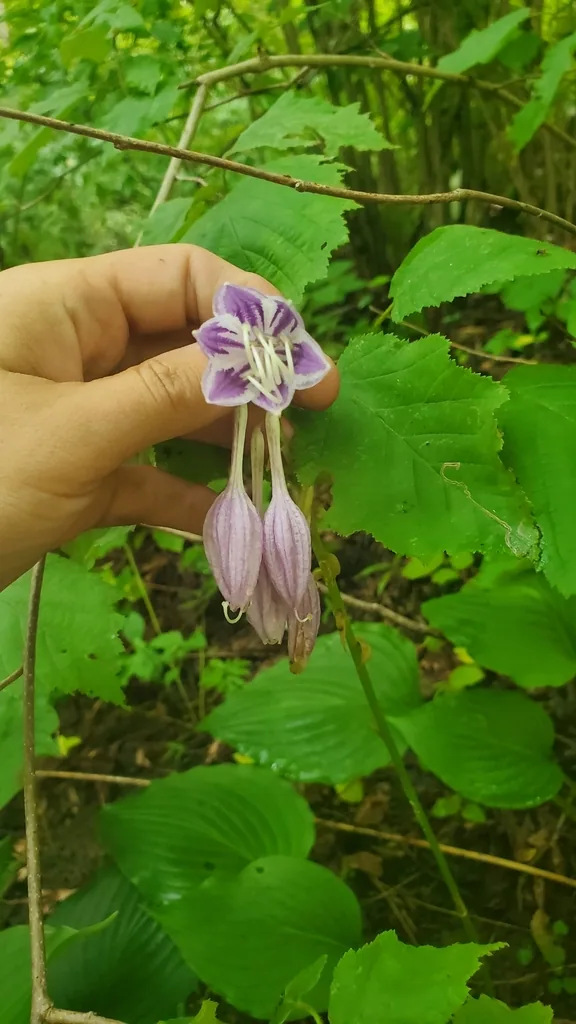
Hosta ventricosa is a perennial from China with dark green, glossy, heart-shaped leaves and purple to violet bell-shaped flowers in summer. [3][1] It succeeds from full sun to deep shade in rich, humus-rich soil that does not dry out readily. [2] It is the only hosta known to come true from seed, because its seed is produced by apomixis. [3]
This record is incomplete: the sources we read do not cover every field yet.
Not yet covered by our sources: Hardiness, coldest zone, Hardiness, warmest zone, Pruning
Blue plantain lily care
Measurements in square brackets are our conversion into the other unit system; the quoted text is unchanged.
How to water Blue plantain lily
Watering
Keep soil from drying out; average moisture
Watering notes
The sunnier the position, the moister the soil should be; plants in shade tolerate dry conditions better
How much light Blue plantain lily needs
Full sun to deep shade; best with morning sun and shade the rest of the day
What the sources say (2)
Succeeds in full sun as well as in deep shade, growing well in the semi-shade of a woodlandIt usually grows best on sites with some direct sunlight in the morning, but shaded the rest of the day.How much cold Blue plantain lily can take
Hardiness, coldest zone
Not stated in the sources we read.
Hardiness, warmest zone
Not stated in the sources we read.
Best soil for Blue plantain lily
Soil pH, minimum
6.0
What the sources say (1)
Prefers a pH between 6 and 7[ 200 Title
The New RHS Dictionary of Gardening. 1992.Soil pH, maximum
7.0
What the sources say (1)
Prefers a pH between 6 and 7[ 200 Title
The New RHS Dictionary of Gardening. 1992.Where to grow Blue plantain lily
60 cm [24 in]
What the sources say (1)
Plants should be spaced about 60cm apart each wayHow to propagate Blue plantain lily
Seed (comes true, apomictic); division
What each source says
According to Useful Temperate Plants (division): Early spring as growth commences, or early autumn if the soil is not too dry
What the sources say (4)
According to Useful Temperate Plants (division): It is best carried out in early spring as growth commences or in early autumn if the soil is not too drySince this species produces its seed apomictically, it should breed trueDivision is possible at almost any time of the year so long as there is sufficient moistureA naturally occurring tetraploid. The only hosta
known to come true from seed. Seeds are produced without fertilization by a
process known as apomixis.How to grow Blue plantain lily
The plant
Life cycle
perennial
What the sources say (1)
Hostas are quickly becoming one of the most popular perennial plants grown in our landscapes.Mature height
51-61 cm (20-24 in)
What the sources say (1)
H. ventricosa provides rich, dark green, heart-shaped leaves with a velvety sheen not found in many hostas. Mature mounds are 30 to 38 in. wide and 20 to 24 in. tall.Mature width
76-97 cm (30-38 in)
What the sources say (1)
H. ventricosa provides rich, dark green, heart-shaped leaves with a velvety sheen not found in many hostas. Mature mounds are 30 to 38 in. wide and 20 to 24 in. tall.Pests and diseases
Blue plantain lily pests and problems
Slugs and snails
Symptom: Young shoots eaten in spring
What the sources say (1)
Plants are very attractive to slugs and snails, the young shoots in spring are especially at risk
— Hosta ventricosa - Useful Temperate Plants [2] Leaf scorch
Symptom: Thin leaves scorch at the edges in warmer climates
What the sources say (1)
The very thin leaves can scorch at the edges in warmer climates, even if grown in full shade.
— Species - Hosta ventricosa from The Species - The Hosta Helper [3] Late frost damage
Symptom: Young spring leaves destroyed by frost
What the sources say (1)
Plants are in general fully hardy in Britain, but young leaves in spring can be destroyed by frost.
— Hosta ventricosa - Useful Temperate Plants [2]
Remedies
The sources we checked give no remedies for this plant.
Is Blue plantain lily toxic to pets?
Reported by the source, quoted verbatim. This is not medical or veterinary advice: if a person or an animal may have eaten this plant, contact a poison control centre or a veterinarian.
All parts of these plants are toxic to cats, dogs, and horses.
[6]Genus-level warning: refers to the whole genus, not documented for this species
The source flags the risk for this animal but does not explain why.
Calendar
Sowing
Spring (greenhouse)
What the sources say (1)
Seed - sow spring in a lightly shaded position in a greenhouse and only just cover the seed. Germination usually takes place within 1 - 3 months at 10°c.Planting
Late spring or early summer, after the last expected frosts
What the sources say (1)
Plant them out into their permanent positions in late spring or early summer, after the last expected frosts.Pruning
Not stated in the sources we read.
Months as given by the sources, which are mostly from the United States (northern hemisphere). In the southern hemisphere they shift by about six months.
Edibility
Reported by the source, quoted verbatim. Do not eat a plant on the basis of this page alone: identification mistakes can be dangerous.
Young leaves and leaf stems - cooked. The white part of the stem is boiled
[2]
Indicative values
Values from a secondary source, not checked word for word like the rest of this page. Use them as a starting point.
- USDA hardiness zones
- 3-8 [winter low −40 to −6.7 °C (−40 to 20 °F)]Indicative value, adapt it to your climate · Secondary source
- Care level
- MediumIndicative value, adapt it to your climate · Secondary source
- Growth rate
- LowIndicative value, adapt it to your climate · Secondary source
- Pruning
- February, March, April, MayIndicative value, adapt it to your climate · Secondary source
Similar plants
- Hosta Hosta plantaginea
- Hosta elata Hosta elata
- Abies grandis Abies grandis
- Abraham Trachystemon orientalis
- Abyssinian banana Ensete ventricosum
- Acacia longifolia Acacia longifolia
- Acanthus hungaricus Acanthus hungaricus
- Aconite Aconitum napellus
Sources
Every value above is quoted from these documents. Links lead to the original publisher.
- Growing Hostas | CAES Field Report · fieldreport.caes.uga.edu, consulted
- Hosta ventricosa - Useful Temperate Plants · temperate.theferns.info, consulted
- Species - Hosta ventricosa from The Species - The Hosta Helper · ahshostahelper.com, consulted
- Blue Plantain Lily (Hosta ventricosa) - bplant.org · bplant.org, consulted
- MyHostas Database: Info about Hosta ventricosa · myhostas.be, consulted
- Hosta (Hosta, Plantain Lily) | North Carolina Extension Gardener Plant Toolbox · plants.ces.ncsu.edu, consulted
Written by Emilio Marruso · last checked