
How to Grow and Care for Jacaranda
Jacaranda mimosifolia
Written by Emilio Marruso · last checked
Not toxic to cats and dogs, according to the sources · Sources
At a glance
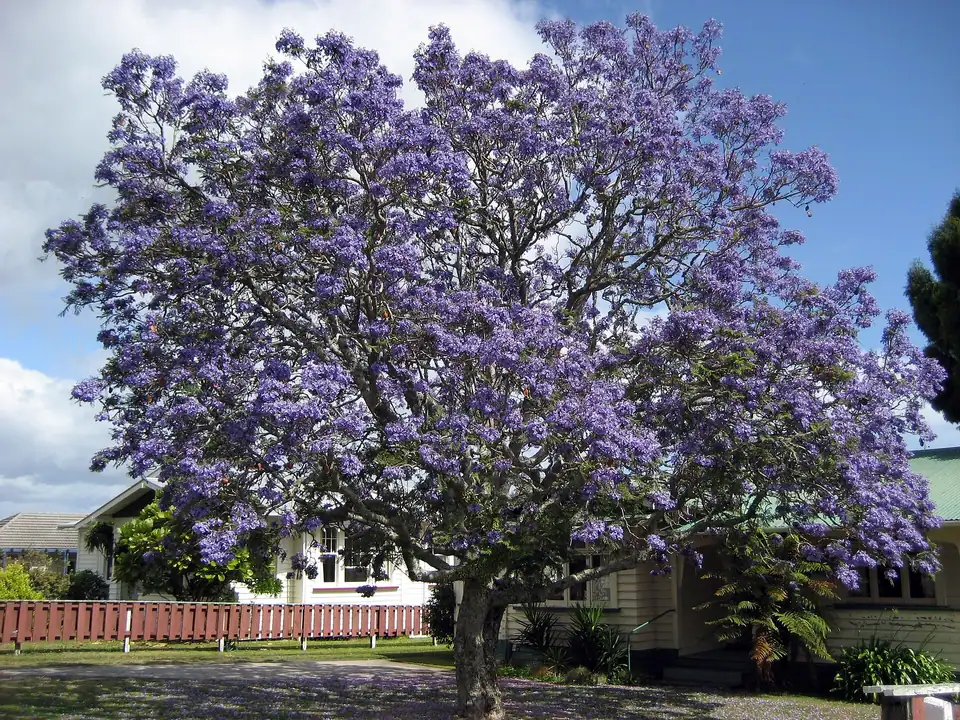
The jacaranda is a sun-loving tree that asks for very little water once established: in a dry spell you may not need to water it at all. It spreads 40–60 feet wide, so give it plenty of room, away from pools and patios where its falling flowers and leaves pile up. Good news for pet owners: it is safe for cats, dogs and horses.
- Sun
Full sun; young trees can take light shade
What the sources say (1)
Light: Full sun; young trees tolerate light shade
Plant jacaranda in sandy soil and full sun. Young trees will grow quickly and can tolerate light shade.
— Jacaranda – Gardening Solutions [4] - Water
Once established, water only in drought, if at all; wet soil rots the roots
What the sources say (4)
Watering: Very drought tolerant once established; water only in drought conditions, if at all
water it only in drought conditions until it is established and then only in drought conditions, if at all.
— Jacaranda – Gardening Solutions [4] Once established, jacaranda is very drought tolerant, but not salt tolerant.
— Jacaranda – Gardening Solutions [4] Watering notes: Prone to root rot in wet soils; does not tolerate heavy, poorly drained soil
In wet soils it is prone to root rot; water it only in drought conditions until it is established
— Jacaranda – Gardening Solutions [4] It can grow in clay and loam, but does not tolerate heavy, poorly drained soil.
— Jacaranda mimosifolia (Jacaranda) | North Carolina Extension Gardener Plant Toolbox [1] - Cold
Survives winters down to 25 °F (−3.9 °C)
Half hardy: mild winters or an unheated greenhouse · USDA 9b · RHS H3 · Z9
What the sources say (5)
Hardiness, coldest zone: 9b [winter low −3.9 to −1.1 °C (25 to 30 °F)]
9b, 10a, 10b, 11a, 11b, 12a, 12b, 13a, 13b
— Jacaranda mimosifolia (Jacaranda) | North Carolina Extension Gardener Plant Toolbox [1] It is well-adapted to USDA Hardiness Zones 9B through 11.
— Jacaranda – Gardening Solutions [4] Hardiness, warmest zone: 13b [winter low 18.3 to 21.1 °C (65 to 70 °F)]
According to NC State Extension: USDA Plant Hardiness Zone: 9b, 10a, 10b, 11a, 11b, 12a, 12b, 13a, 13b
— Jacaranda mimosifolia (Jacaranda) | North Carolina Extension Gardener Plant Toolbox [1] Florida: It is well-adapted to USDA Hardiness Zones 9B through 11.
— Jacaranda – Gardening Solutions [4] 9b, 10a, 10b, 11a, 11b, 12a, 12b, 13a, 13b
— Jacaranda mimosifolia (Jacaranda) | North Carolina Extension Gardener Plant Toolbox [1] - Soil
Well-drained soil, pH 6.0 or lower; avoid heavy, soggy soil
What the sources say (3)
Soil pH, maximum: 6.0
Clay Loam (Silt) Sand Soil pH: Acid (<6.0)
— Jacaranda mimosifolia (Jacaranda) | North Carolina Extension Gardener Plant Toolbox [1] Watering notes: Prone to root rot in wet soils; does not tolerate heavy, poorly drained soil
In wet soils it is prone to root rot; water it only in drought conditions until it is established
— Jacaranda – Gardening Solutions [4] It can grow in clay and loam, but does not tolerate heavy, poorly drained soil.
— Jacaranda mimosifolia (Jacaranda) | North Carolina Extension Gardener Plant Toolbox [1] - Pruning
Prune young trees to a single trunk with main branches well spaced
- Pests
Scale, aphids, root rot and a bacterial disease
What the sources say (3)
Pests: scale, aphids
Susceptible to a Jacaranda-specific bacteria. Also can be prone to scale and aphids.
— Jacaranda mimosifolia (Jacaranda) | North Carolina Extension Gardener Plant Toolbox [1] Diseases: root rot, bacterial disease (Jacaranda-specific bacteria)
In wet soils it is prone to root rot; water it only in drought conditions until it is established
— Jacaranda – Gardening Solutions [4] Susceptible to a Jacaranda-specific bacteria. Also can be prone to scale and aphids.
— Jacaranda mimosifolia (Jacaranda) | North Carolina Extension Gardener Plant Toolbox [1] - Watch out
Weak wood can split in storms; dropped flowers and leaves make a mess, so keep it away from pools and patios
- Size
40–60 ft wide
What the sources say (1)
Mature width: 1219-1829 cm (40-60 feet)
When properly pruned it forms an artistic, irregular crown, about 25-40 feet tall and 40-60 feet wide at maturity.
— Jacaranda – Gardening Solutions [4] - Propagation
From seed, stem cuttings or grafting
What the sources say (2)
Propagation: Seed, stem cuttings; grafted trees
Life Cycle: Perennial Woody Recommended Propagation Strategy: Seed Stem Cutting
— Jacaranda mimosifolia (Jacaranda) | North Carolina Extension Gardener Plant Toolbox [1] Choose grafted trees or rooted cuttings if you’d prefer not to wait for the tree to mature.
— Jacaranda – Gardening Solutions [4] - Containers
Can be grown indoors
What the sources say (1)
Indoors: Yes
In cold climates, the young plants make ornamental foliage plants. They may never flower indoors, but their fern-like leaves are much appreciated.
— Jacaranda mimosifolia (Jacaranda) | North Carolina Extension Gardener Plant Toolbox [1] - Safety
Not toxic to cats, dogs or horses
Overview
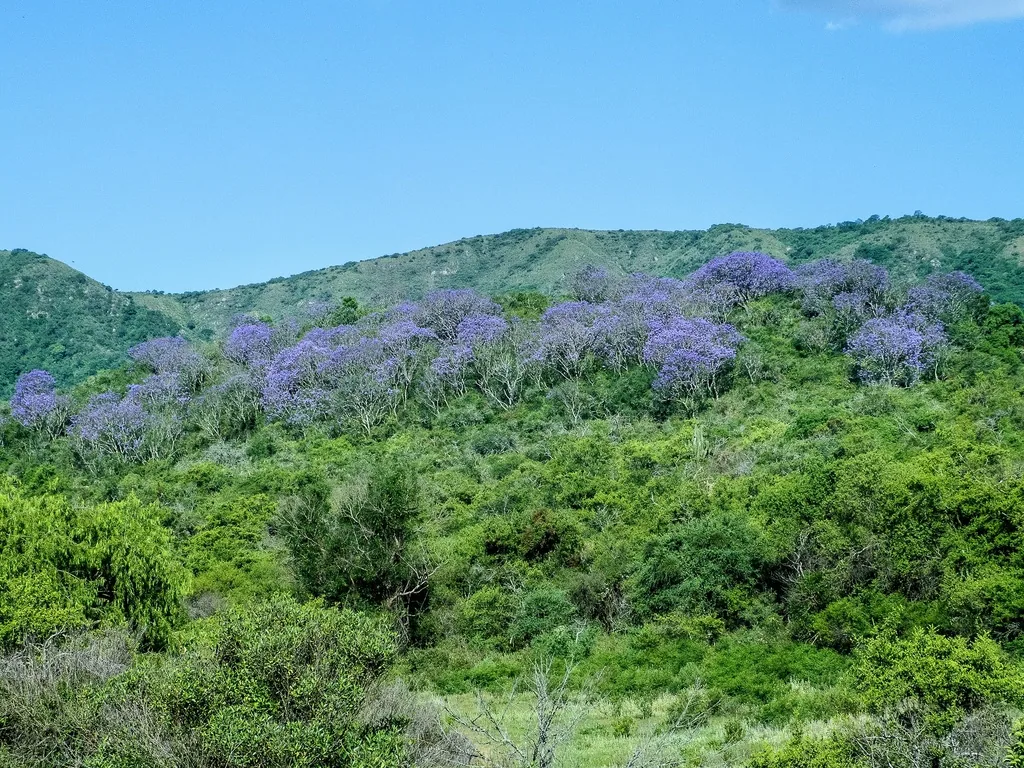
Jacaranda is a tropical deciduous tree native to Bolivia, Paraguay and northern Argentina, grown for its purple-blue spring flowers. [1] It grows best in a sunny location with well-draining, slightly sandy and acidic soil. [1] Once established it is very drought tolerant, but it is prone to root rot in wet soils. [4]
This record is incomplete: the sources we read do not cover every field yet.
Not yet covered by our sources: Pruning
Jacaranda care
How to water Jacaranda
Watering
Very drought tolerant once established; water only in drought conditions, if at all
Watering notes
Prone to root rot in wet soils; does not tolerate heavy, poorly drained soil
What the sources say (2)
In wet soils it is prone to root rot; water it only in drought conditions until it is establishedIt can grow in clay and loam, but does not tolerate heavy, poorly drained soil.How much light Jacaranda needs
Full sun; young trees tolerate light shade
What the sources say (1)
Plant jacaranda in sandy soil and full sun. Young trees will grow quickly and can tolerate light shade.How much cold Jacaranda can take
Hardiness, coldest zone
9b [winter low −3.9 to −1.1 °C (25 to 30 °F)]
Hardiness, warmest zone
13b [winter low 18.3 to 21.1 °C (65 to 70 °F)]
What each source says
According to NC State Extension: 13b [winter low 18.3 to 21.1 °C (65 to 70 °F)]
Florida: 11 [winter low 4.4 to 10 °C (40 to 50 °F)]
What the sources say (3)
According to NC State Extension: USDA Plant Hardiness Zone:
9b, 10a, 10b, 11a, 11b, 12a, 12b, 13a, 13bFlorida: It is well-adapted to USDA Hardiness Zones 9B through 11.9b, 10a, 10b, 11a, 11b, 12a, 12b, 13a, 13bBest soil for Jacaranda
6.0
What the sources say (1)
Clay
Loam (Silt)
Sand
Soil pH:
Acid (<6.0) Where to grow Jacaranda
Yes
What the sources say (1)
In cold climates, the young plants make ornamental foliage plants. They may never flower indoors, but their fern-like leaves are much appreciated.How to propagate Jacaranda
Seed, stem cuttings; grafted trees
What the sources say (2)
Life Cycle:
Perennial
Woody
Recommended Propagation Strategy:
Seed
Stem Cutting Choose grafted trees or rooted cuttings if you’d prefer not to wait for the tree to mature.How to grow Jacaranda
The plant
Family
Bignoniaceae (trumpetvine family)
What the sources say (1)
Jacaranda is a tropical, deciduous tree, native to Bolivia, Paraguay and northern Argentina. It belongs in the trumpetvine family (Bignoniaceae).Mature height
Mature width
1219-1829 cm (40-60 feet)
What the sources say (1)
When properly pruned it forms an artistic, irregular crown, about 25-40 feet tall and 40-60 feet wide at maturity.Pests and diseases
Pests
scale, aphids
What the sources say (1)
Susceptible to a Jacaranda-specific bacteria. Also can be prone to scale and aphids.Diseases
root rot, bacterial disease (Jacaranda-specific bacteria)
What the sources say (2)
In wet soils it is prone to root rot; water it only in drought conditions until it is establishedSusceptible to a Jacaranda-specific bacteria. Also can be prone to scale and aphids.Jacaranda pests and problems
Bacterial disease, scale and aphids
Symptom: Susceptible to a Jacaranda-specific bacteria; can be prone to scale and aphids
What the sources say (1)
Susceptible to a Jacaranda-specific bacteria. Also can be prone to scale and aphids.
— Jacaranda mimosifolia (Jacaranda) | North Carolina Extension Gardener Plant Toolbox [1] Root rot
Symptom: Prone to root rot in wet soils
What to do: Water only in drought conditions until established, and then only in drought conditions, if at all
What the sources say (1)
In wet soils it is prone to root rot; water it only in drought conditions until it is established
— Jacaranda – Gardening Solutions [4] Weak wood and storm damage
Symptom: The wood is weak and the tree can suffer storm damage; trees with poor structure have been known to split
What to do: Prune young trees to a single trunk with major limbs spaced apart
Messy flower and leaf drop
Symptom: Drops flowers and leaves, creating significant leaf litter
What to do: Do not plant next to a pool or patio
What the sources say (1)
This tree should not be grown adjacent to a pool or patio where the dropped flowers and shed leaves might be a problem.
— Jacaranda mimosifolia (Jacaranda) | North Carolina Extension Gardener Plant Toolbox [1]
Remedies
The sources we checked give no remedies for this plant.
Is Jacaranda poisonous?
Reported by the source, quoted verbatim. This is not medical or veterinary advice: if a person or an animal may have eaten this plant, contact a poison control centre or a veterinarian.
#non-toxic for cats #non-toxic for horses #non-toxic for dogs
[1]The source flags the risk for this animal but does not explain why.
Calendar
Pruning
Not stated in the sources we read.
Months as given by the sources, which are mostly from the United States (northern hemisphere). In the southern hemisphere they shift by about six months.
Indicative values
Values from a secondary source, not checked word for word like the rest of this page. Use them as a starting point.
- Life cycle
- PerennialIndicative value, adapt it to your climate · Secondary source
- Drought tolerant
- yesIndicative value, adapt it to your climate · Secondary source
- Care level
- MediumIndicative value, adapt it to your climate · Secondary source
- Growth rate
- HighIndicative value, adapt it to your climate · Secondary source
- Pruning
- May, June, July, May, June, JulyIndicative value, adapt it to your climate · Secondary source
Similar plants
- Abies grandis Abies grandis
- Abraham Trachystemon orientalis
- Abyssinian banana Ensete ventricosum
- Acacia longifolia Acacia longifolia
- Acanthus hungaricus Acanthus hungaricus
- Adam's Needle Yucca flaccida
- Adriatic lizard orchid Himantoglossum adriaticum
- Afghan Cherry Prunus jacquemontii
Sources
Every value above is quoted from these documents. Links lead to the original publisher.
- Jacaranda mimosifolia (Jacaranda) | North Carolina Extension Gardener Plant Toolbox · plants.ces.ncsu.edu, consulted
- Plant of the Week: Jacaranda Tree | Hort in the Home Landscape | Illinois Extension | Illinois · extension.illinois.edu, consulted
- Jacaranda - Jacaranda mimosifolia | North Carolina Extension Gardener Plant Toolbox · plants.ces.ncsu.edu, consulted
- Jacaranda – Gardening Solutions · gardeningsolutions.ifas.ufl.edu, consulted
Written by Emilio Marruso · last checked