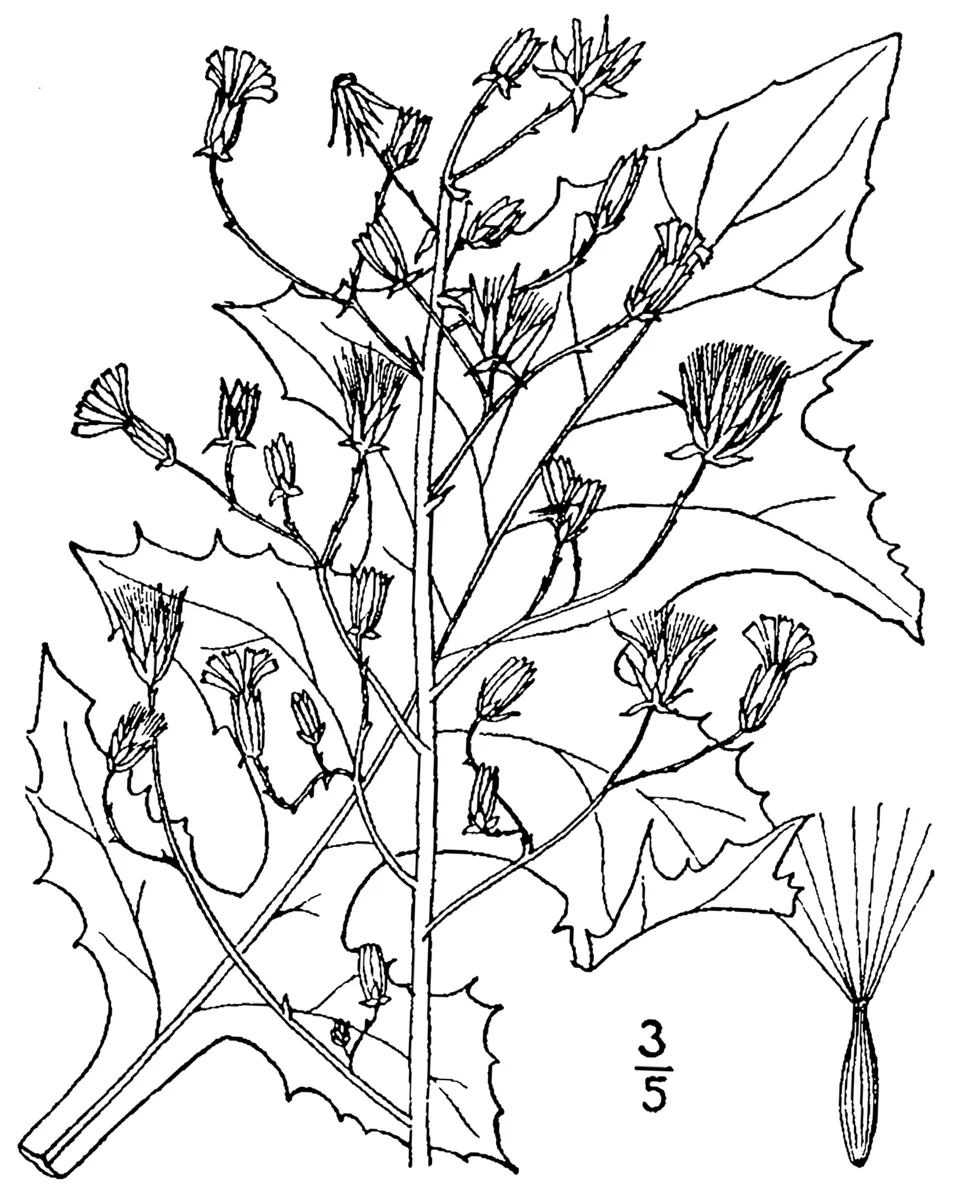


How to Grow and Care for Tall Blue Lettuce
Lactuca biennis
Written by Emilio Marruso · last checked
At a glance
Looking for something dramatic for a shady corner? This biennial loves partial to dappled shade and can soar 5 to 10 feet tall while staying just 1 to 2 feet wide. Give it moist, loamy, well-drained soil, keep it moist but never soggy, and start your own plants from seed.
- Sun
Partial to dappled shade
What the sources say (1)
Light: Partial to dappled shade
It prefers moist soil and partial to dappled shade.
— Lactuca biennis (Blue Wood Lettuce, Tall Blue Lettuce, Woodland Lettuce) | North Carolina Extension Gardener Plant Toolbox [1] - Water
Keep the soil moist but never waterlogged
What the sources say (1)
Watering: Keep the soil moist but not waterlogged
Keep the soil moist but not waterlogged.
— Lactuca biennis (Blue Wood Lettuce, Tall Blue Lettuce, Woodland Lettuce) | North Carolina Extension Gardener Plant Toolbox [1] - Cold
Survives winters down to −40 °F (−40 °C)
Very hardy · USDA 3a · RHS H7 · Z3
What the sources say (2)
Hardiness, coldest zone: 3a [winter low −40 to −37.2 °C (−40 to −35 °F)]
3a, 3b, 4a, 4b, 5a, 5b, 6a, 6b, 7a, 7b, 8a, 8b
— Lactuca biennis (Blue Wood Lettuce, Tall Blue Lettuce, Woodland Lettuce) | North Carolina Extension Gardener Plant Toolbox [1] Hardiness, warmest zone: 8b [winter low −9.4 to −6.7 °C (15 to 20 °F)]
3a, 3b, 4a, 4b, 5a, 5b, 6a, 6b, 7a, 7b, 8a, 8b
— Lactuca biennis (Blue Wood Lettuce, Tall Blue Lettuce, Woodland Lettuce) | North Carolina Extension Gardener Plant Toolbox [1] - Soil
Moist, loamy soil that drains well
What the sources say (1)
Watering notes: Prefers moist, loamy, well-drained soil
It prefers a loamy, moist, well-drained soil.
— Lactuca biennis (Blue Wood Lettuce, Tall Blue Lettuce, Woodland Lettuce) | North Carolina Extension Gardener Plant Toolbox [1] - Pests
Watch for aphids, spider mites, slugs and snails, powdery mildew and downy mildew
What the sources say (2)
Pests: aphids, spider mites, leaf miners, snails and slugs, scale, fungus gnats
Watch for aphids, spider mites, leaf miners, snails and slugs, scale and fungus gnats, Watch for downy mildew, powdery mildew, leaf spot diseases and lettuce mosaic virus.
— Lactuca biennis (Blue Wood Lettuce, Tall Blue Lettuce, Woodland Lettuce) | North Carolina Extension Gardener Plant Toolbox [1] Diseases: downy mildew, powdery mildew, leaf spot diseases, lettuce mosaic virus
Watch for aphids, spider mites, leaf miners, snails and slugs, scale and fungus gnats, Watch for downy mildew, powdery mildew, leaf spot diseases and lettuce mosaic virus.
— Lactuca biennis (Blue Wood Lettuce, Tall Blue Lettuce, Woodland Lettuce) | North Carolina Extension Gardener Plant Toolbox [1] - Size
5 to 10 ft tall and 1 to 2 ft wide
What the sources say (2)
Mature height: 152-305 cm (5-10 ft)
Dimensions: Height: 5 ft. 0 in. - 10 ft. 0 in. Width: 1 ft. 0 in. - 2 ft. 0 in.
— Lactuca biennis (Blue Wood Lettuce, Tall Blue Lettuce, Woodland Lettuce) | North Carolina Extension Gardener Plant Toolbox [1] Mature width: 30-61 cm (1-2 ft)
Dimensions: Height: 5 ft. 0 in. - 10 ft. 0 in. Width: 1 ft. 0 in. - 2 ft. 0 in.
— Lactuca biennis (Blue Wood Lettuce, Tall Blue Lettuce, Woodland Lettuce) | North Carolina Extension Gardener Plant Toolbox [1] - Propagation
Grows from seed
What the sources say (1)
Propagation: Seeds
Propagation is by seeds.
— Lactuca biennis (Blue Wood Lettuce, Tall Blue Lettuce, Woodland Lettuce) | North Carolina Extension Gardener Plant Toolbox [1]
Overview
Tall blue lettuce is a native biennial (sometimes annual) herb in the daisy family found in moist woods, thickets and stream banks across most of North America. [1] It prefers moist, loamy, well-drained soil and partial to dappled shade, and is propagated by seeds. [1] Despite its name it is not edible. [1]
This record is incomplete: the sources we read do not cover every field yet.
Not yet covered by our sources: Pruning
Tall Blue Lettuce care
How to water Tall Blue Lettuce
Watering
Keep the soil moist but not waterlogged
What the sources say (1)
Keep the soil moist but not waterlogged.Watering notes
Prefers moist, loamy, well-drained soil
What the sources say (1)
It prefers a loamy, moist, well-drained soil.How much light Tall Blue Lettuce needs
Partial to dappled shade
What the sources say (1)
It prefers moist soil and partial to dappled shade.How much cold Tall Blue Lettuce can take
Hardiness, coldest zone
3a [winter low −40 to −37.2 °C (−40 to −35 °F)]
What the sources say (1)
3a, 3b, 4a, 4b, 5a, 5b, 6a, 6b, 7a, 7b, 8a, 8bHardiness, warmest zone
8b [winter low −9.4 to −6.7 °C (15 to 20 °F)]
What the sources say (1)
3a, 3b, 4a, 4b, 5a, 5b, 6a, 6b, 7a, 7b, 8a, 8bHow to propagate Tall Blue Lettuce
Seeds
What the sources say (1)
Propagation is by seeds.How to grow Tall Blue Lettuce
The plant
Life cycle
biennial (sometimes annual)
What the sources say (1)
Tall blue lettuce is a native biennial (sometimes annual) herb in the daisy family (Asteraceae) found in most of North AmericaFamily
Asteraceae
What the sources say (1)
Tall blue lettuce is a native biennial (sometimes annual) herb in the daisy family (Asteraceae) found in most of North AmericaMature height
152-305 cm (5-10 ft)
What the sources say (1)
Dimensions:
Height: 5 ft. 0 in. - 10 ft. 0 in.
Width: 1 ft. 0 in. - 2 ft. 0 in.Mature width
30-61 cm (1-2 ft)
What the sources say (1)
Dimensions:
Height: 5 ft. 0 in. - 10 ft. 0 in.
Width: 1 ft. 0 in. - 2 ft. 0 in.Pests and diseases
Pests
aphids, spider mites, leaf miners, snails and slugs, scale, fungus gnats
What the sources say (1)
Watch for aphids, spider mites, leaf miners, snails and slugs, scale and fungus gnats, Watch for downy mildew, powdery mildew, leaf spot diseases and lettuce mosaic virus.Diseases
downy mildew, powdery mildew, leaf spot diseases, lettuce mosaic virus
What the sources say (1)
Watch for aphids, spider mites, leaf miners, snails and slugs, scale and fungus gnats, Watch for downy mildew, powdery mildew, leaf spot diseases and lettuce mosaic virus.Tall Blue Lettuce pests and problems
Insect and mite pests
Symptom: Watch for aphids, spider mites, leaf miners, snails and slugs, scale and fungus gnats
What the sources say (1)
Watch for aphids, spider mites, leaf miners, snails and slugs, scale and fungus gnats, Watch for downy mildew, powdery mildew, leaf spot diseases and lettuce mosaic virus.
— Lactuca biennis (Blue Wood Lettuce, Tall Blue Lettuce, Woodland Lettuce) | North Carolina Extension Gardener Plant Toolbox [1] Fungal and viral diseases
Symptom: Watch for downy mildew, powdery mildew, leaf spot diseases and lettuce mosaic virus
What the sources say (1)
Watch for aphids, spider mites, leaf miners, snails and slugs, scale and fungus gnats, Watch for downy mildew, powdery mildew, leaf spot diseases and lettuce mosaic virus.
— Lactuca biennis (Blue Wood Lettuce, Tall Blue Lettuce, Woodland Lettuce) | North Carolina Extension Gardener Plant Toolbox [1]
Remedies
The sources we checked give no remedies for this plant.
Calendar
Pruning
Not stated in the sources we read.
Months as given by the sources, which are mostly from the United States (northern hemisphere). In the southern hemisphere they shift by about six months.
Similar plants
- Florida Blue Lettuce Lactuca floridana
- Garden lettuce Lactuca sativa
- Prickly lettuce Lactuca serriola
- Blue lettuce Lactuca perennis
- Ageratum Ageratum houstonianum
- Appalachian Blazing Star Liatris squarrulosa
- Appalachian Ironweed Vernonia glauca
- Appalachian Sunflower Helianthus atrorubens
Sources
Every value above is quoted from these documents. Links lead to the original publisher.
- Lactuca biennis (Blue Wood Lettuce, Tall Blue Lettuce, Woodland Lettuce) | North Carolina Extension Gardener Plant Toolbox · plants.ces.ncsu.edu, consulted
- Tall blue lettuce - Cooperative Extension: Maine Wild Blueberries - University of Maine Cooperative Extension · extension.umaine.edu, consulted
- Tall Blue Lettuce - Lactuca biennis | North Carolina Extension Gardener Plant Toolbox · plants.ces.ncsu.edu, consulted
- Blue Wood Lettuce - Lactuca biennis | North Carolina Extension Gardener Plant Toolbox · plants.ces.ncsu.edu, consulted
Written by Emilio Marruso · last checked