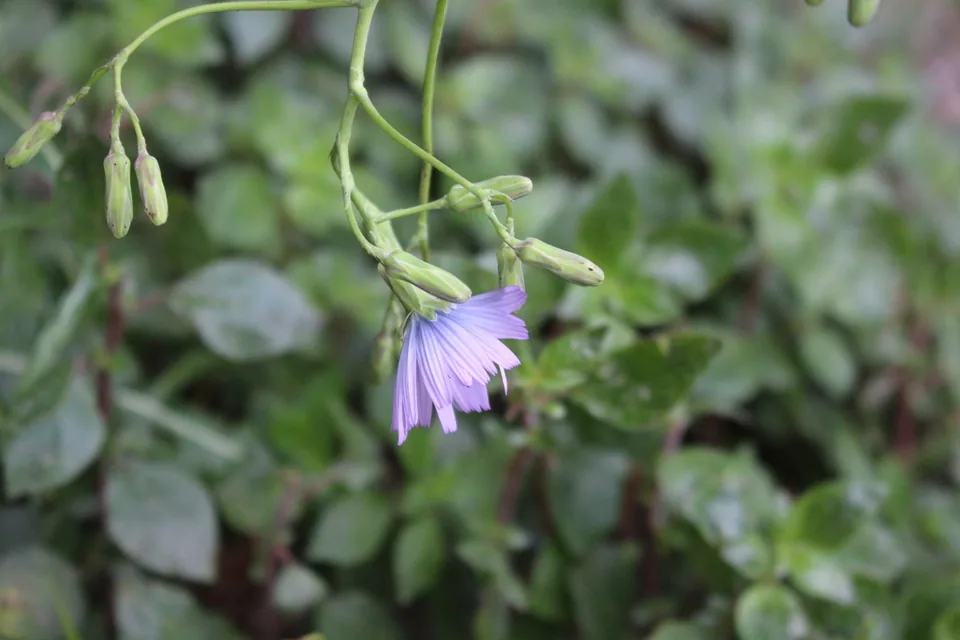
How to Grow and Care for Blue lettuce
Lactuca perennis
Written by Emilio Marruso · last checked
At a glance
Perennial lettuce is a wild salad green that loves a warm, sunny spot and dry, well-drained ground. Its basal leaves can be picked from September to May and are among the best wild salads: crunchy and mild, gentlest in late winter and spring. Eat them raw in salads, or blanch them to soften any bitterness.
- Sun
Full sun, in a warm spot
What the sources say (2)
Light: Full sun (warm, sunny position)
Prefers a light well-drained sandy loam and a warm, sunny position
— Lactuca perennis - Useful Temperate Plants [1] This is a wildflower of dry calcareous rocky habitats and favours sunny locations; it is found in hills and mountains at altitudes up to about 2000m.
— Lactuca perennis, Blue Lettuce: identification, distribution, habitat [2] - Water
Grows in dry places; the soil must drain well
What the sources say (2)
Watering notes: Needs well-drained soil; grows in dry places
Prefers a light well-drained sandy loam and a warm, sunny position
— Lactuca perennis - Useful Temperate Plants [1] This is a wildflower of dry calcareous rocky habitats and favours sunny locations; it is found in hills and mountains at altitudes up to about 2000m.
— Lactuca perennis, Blue Lettuce: identification, distribution, habitat [2] - Soil
Well-drained soil
What the sources say (2)
Watering notes: Needs well-drained soil; grows in dry places
Prefers a light well-drained sandy loam and a warm, sunny position
— Lactuca perennis - Useful Temperate Plants [1] This is a wildflower of dry calcareous rocky habitats and favours sunny locations; it is found in hills and mountains at altitudes up to about 2000m.
— Lactuca perennis, Blue Lettuce: identification, distribution, habitat [2] - Planting
Plant seedlings in late spring or early summer, after the last frosts; divisions in summer
What the sources say (2)
Planting: Seedlings: late spring or early summer, after the last expected frosts; divisions: summer
Plant them out into their permanent positions in late spring or early summer, after the last expected frosts.
— Lactuca perennis - Useful Temperate Plants [1] keep them in a lightly shaded position in a cold frame until they are growing away well. Plant them out in the summer.
— Lactuca perennis - Useful Temperate Plants [1] - Harvest
Pick the leaves from September to May; mildest in late winter and spring, great raw in salads
What the sources say (2)
Harvest: Basal leaves: September to May; mildest in late winter and spring, more bitter in summer
Basal rosette leaves gathered between September and May, one of the best wild salads, crunchy and mild.
— Lactuca perennis - wild in Provence [6] They are fairly acceptable raw in salads (even without being blanched), especially in late winter and spring when the flavour is quite mild
— Lactuca perennis - Useful Temperate Plants [1] - Propagation
From seed or by dividing the plant in spring
What the sources say (2)
Propagation: Seed; division in spring
Seed - sow mid spring in a greenhouse, only just covering the seed. Germination is usually fairly quick
— Lactuca perennis - Useful Temperate Plants [1] Division in spring. It is best to pot up the divisions and keep them in a lightly shaded position in a cold frame
— Lactuca perennis - Useful Temperate Plants [1] - Sowing
Sow in mid spring in a greenhouse, barely covering the seed
What the sources say (1)
Sowing: Mid spring, in a greenhouse, seed only just covered
Seed - sow mid spring in a greenhouse, only just covering the seed. Germination is usually fairly quick
— Lactuca perennis - Useful Temperate Plants [1]
Overview
Lactuca perennis is a perennial with violet-blue flowers that grows wild in dry, calcareous, rocky places of central and southern Europe. [2] It prefers a light, well-drained sandy loam in a warm, sunny position. [1] Its leaves are eaten raw or cooked, and are mildest in late winter and spring. [1]
This record is incomplete: the sources we read do not cover every field yet.
Not yet covered by our sources: Watering, Spacing
Blue lettuce care
How to water Blue lettuce
Watering
Not stated in the sources we read.
Watering notes
Needs well-drained soil; grows in dry places
What the sources say (2)
Prefers a light well-drained sandy loam and a warm, sunny positionThis is a wildflower of dry calcareous rocky habitats and favours sunny locations; it is found in hills and mountains at altitudes up to about 2000m.How much light Blue lettuce needs
Full sun (warm, sunny position)
What the sources say (2)
Prefers a light well-drained sandy loam and a warm, sunny positionThis is a wildflower of dry calcareous rocky habitats and favours sunny locations; it is found in hills and mountains at altitudes up to about 2000m.Where to grow Blue lettuce
Not stated in the sources we read.
How to propagate Blue lettuce
Seed; division in spring
What the sources say (2)
Seed - sow mid spring in a greenhouse, only just covering the seed. Germination is usually fairly quickDivision in spring. It is best to pot up the divisions and keep them in a lightly shaded position in a cold frameRemedies
The sources we checked give no remedies for this plant.
Calendar
Sowing
Mid spring, in a greenhouse, seed only just covered
What the sources say (1)
Seed - sow mid spring in a greenhouse, only just covering the seed. Germination is usually fairly quickPlanting
Seedlings: late spring or early summer, after the last expected frosts; divisions: summer
What the sources say (2)
Plant them out into their permanent positions in late spring or early summer, after the last expected frosts.keep them in a lightly shaded position in a cold frame until they are growing away well. Plant them out in the summer.Harvest
Basal leaves: September to May; mildest in late winter and spring, more bitter in summer
What the sources say (2)
Basal rosette leaves gathered between September and May, one of the best wild salads, crunchy and mild.They are fairly acceptable raw in salads (even without being blanched), especially in late winter and spring when the flavour is quite mildMonths as given by the sources, which are mostly from the United States (northern hemisphere). In the southern hemisphere they shift by about six months.
Edibility
Reported by the source, quoted verbatim. Do not eat a plant on the basis of this page alone: identification mistakes can be dangerous.
Similar plants
- Garden lettuce Lactuca sativa
- Florida Blue Lettuce Lactuca floridana
- Prickly lettuce Lactuca serriola
- Tall Blue Lettuce Lactuca biennis
- Abies grandis Abies grandis
- Abraham Trachystemon orientalis
- Abyssinian banana Ensete ventricosum
- Acacia longifolia Acacia longifolia
Sources
Every value above is quoted from these documents. Links lead to the original publisher.
- Lactuca perennis - Useful Temperate Plants · temperate.theferns.info, consulted
- Lactuca perennis, Blue Lettuce: identification, distribution, habitat · first-nature.com, consulted
- Search for species - Blauer Lattich (Lactuca perennis L.) · i-flora.com, consulted
- Lactuca perennis | Euro+Med-Plantbase · europlusmed.org, consulted
- Lactuca perennis – Native Plant Search · pfaf.org, consulted
- Lactuca perennis - wild in Provence · wildflowersprovence.fr, consulted
Written by Emilio Marruso · last checked