
How to Grow and Care for Florida Blue Lettuce
Lactuca floridana
Written by Emilio Marruso · last checked
At a glance
Looking for something to grow in a shady spot? This wild lettuce loves partial to full shade and soil that stays moist but never soggy, and it can reach 2 to 7 feet tall. Its leaves are edible too: pick the young ones raw for salads, and cook the older ones, since cooking in water softens their bitter taste.
- Sun
Partial to full shade
What the sources say (1)
Light: Partial to full shade
Prefers partial to full shade and moist to wet, fertile soil. It requires constant moisture, but not waterlogged.
— Lactuca floridana (False Lettuce, Florida Blue Lettuce, Florida Lettuce, Florida Wild Lettuce, Woodland Lettuce) | North Carolina Extension Gardener Plant Toolbox [1] - Water
Keep the soil always moist, but never waterlogged
What the sources say (1)
Watering: Requires constant moisture, but not waterlogged
Prefers partial to full shade and moist to wet, fertile soil. It requires constant moisture, but not waterlogged.
— Lactuca floridana (False Lettuce, Florida Blue Lettuce, Florida Lettuce, Florida Wild Lettuce, Woodland Lettuce) | North Carolina Extension Gardener Plant Toolbox [1] - Harvest
Eat young leaves raw in salads; cook the older leaves, which are bitter
What the sources say (1)
How to harvest: Use young leaves raw in salads and cook the older leaves
The leaves are edible but bitter in taste and resemble dandelion leaves. It is best to use young leaves raw in salads and cook the older leaves.
— Lactuca floridana (False Lettuce, Florida Blue Lettuce, Florida Lettuce, Florida Wild Lettuce, Woodland Lettuce) | North Carolina Extension Gardener Plant Toolbox [1] - Pests
Aphids, snails, slugs and whiteflies; watch for powdery and downy mildew
What the sources say (2)
Pests: aphids, snails, slugs, leafminers, whiteflies
No serious insect pests or diseases. Monitor for aphids, snails, slugs, leafminers, and whiteflies.
— Lactuca floridana (False Lettuce, Florida Blue Lettuce, Florida Lettuce, Florida Wild Lettuce, Woodland Lettuce) | North Carolina Extension Gardener Plant Toolbox [1] Diseases: powdery mildew, downy mildew, leaf spot, root rot, Botrytis, wilt, mosaic virus, blossom-end rot, Coryneum blight
May be susceptible to powdery mildew, downy mildew, leaf spot, root rot, Botrytis, wilt, mosaic virus, Blossom-end rot, and Coryneum blight.
— Lactuca floridana (False Lettuce, Florida Blue Lettuce, Florida Lettuce, Florida Wild Lettuce, Woodland Lettuce) | North Carolina Extension Gardener Plant Toolbox [1] - Size
2 to 7 ft tall
What the sources say (1)
Mature height: 61-213 cm (2 ft - 7 ft)
Dimensions: Height: 2 ft. 0 in. - 7 ft. 0 in. Width: 1 ft. 0 in. - 2 ft. 0 in.
— Lactuca floridana (False Lettuce, Florida Blue Lettuce, Florida Lettuce, Florida Wild Lettuce, Woodland Lettuce) | North Carolina Extension Gardener Plant Toolbox [1] - Propagation
Grows from seed
What the sources say (1)
Propagation: Seed
Recommended Propagation Strategy: Seed Country Or Region Of Origin: Central & Eastern Canada to Central & Eastern United States
— Lactuca floridana (False Lettuce, Florida Blue Lettuce, Florida Lettuce, Florida Wild Lettuce, Woodland Lettuce) | North Carolina Extension Gardener Plant Toolbox [1]
Overview
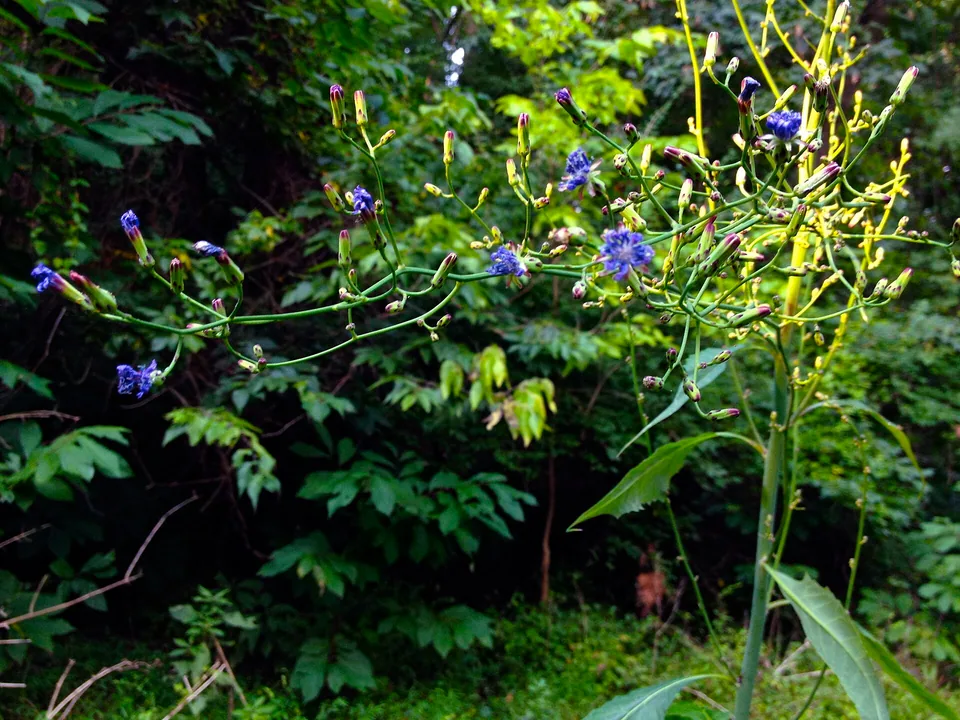
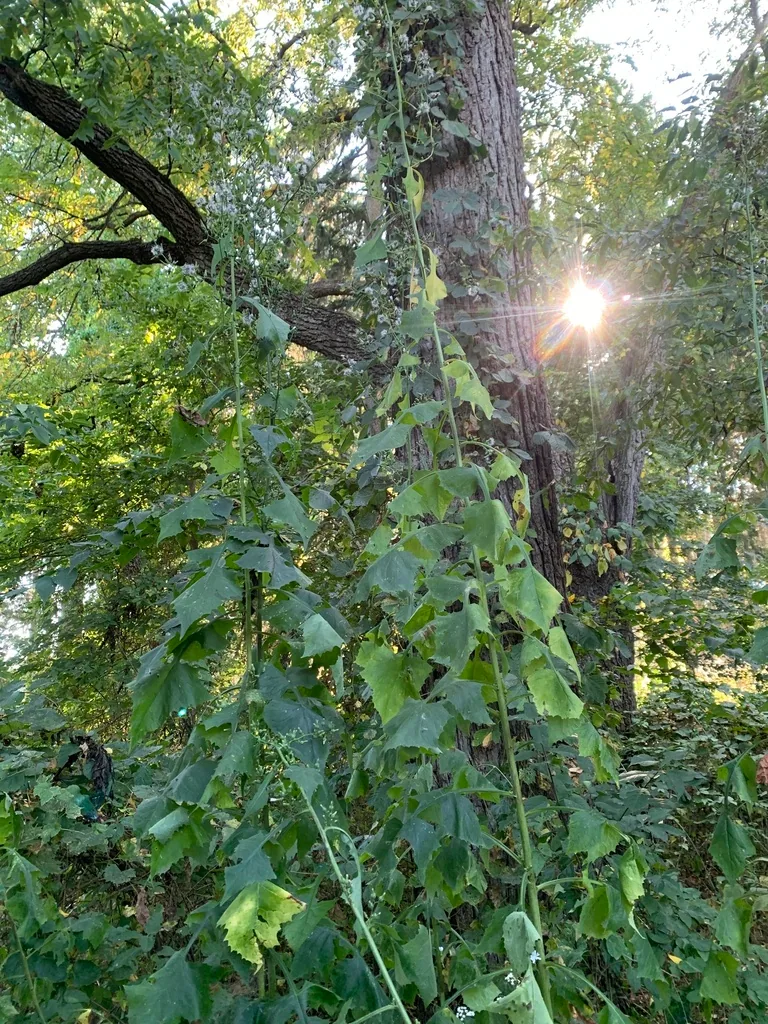
Florida blue lettuce is an annual/biennial native herb that grows 2-7 feet [0.6–2.1 m] tall. [1] It prefers partial to full shade and moist to wet, fertile soil with constant moisture but no waterlogging. [1] Its leaves are edible but bitter; young leaves are best used raw in salads and older leaves cooked. [1]
This record is incomplete: the sources we read do not cover every field yet.
Not yet covered by our sources: Hardiness, coldest zone, Hardiness, warmest zone, Pruning
Florida Blue Lettuce care
Measurements in square brackets are our conversion into the other unit system; the quoted text is unchanged.
How to water Florida Blue Lettuce
Requires constant moisture, but not waterlogged
What the sources say (1)
Prefers partial to full shade and moist to wet, fertile soil. It requires constant moisture, but not waterlogged.How much light Florida Blue Lettuce needs
Partial to full shade
What the sources say (1)
Prefers partial to full shade and moist to wet, fertile soil. It requires constant moisture, but not waterlogged.How much cold Florida Blue Lettuce can take
Hardiness, coldest zone
Not stated in the sources we read.
Hardiness, warmest zone
Not stated in the sources we read.
How to propagate Florida Blue Lettuce
Seed
What the sources say (1)
Recommended Propagation Strategy:
Seed
Country Or Region Of Origin:
Central & Eastern Canada to Central & Eastern United StatesHow to grow Florida Blue Lettuce
The plant
Life cycle
annual or biennial
What the sources say (1)
Species: floridana Family: Asteraceae Life Cycle: Annual Biennial Recommended Propagation Strategy: SeedFamily
Asteraceae
What the sources say (1)
Species: floridana Family: Asteraceae Life Cycle: Annual Biennial Recommended Propagation Strategy: SeedMature height
61-213 cm (2 ft - 7 ft)
What the sources say (1)
Dimensions: Height: 2 ft. 0 in. - 7 ft. 0 in. Width: 1 ft. 0 in. - 2 ft. 0 in.Harvest and storage
How to harvest
Use young leaves raw in salads and cook the older leaves
What the sources say (1)
The leaves are edible but bitter in taste and resemble dandelion leaves. It is best to use young leaves raw in salads and cook the older leaves.Pests and diseases
Pests
aphids, snails, slugs, leafminers, whiteflies
What the sources say (1)
No serious insect pests or diseases. Monitor for aphids, snails, slugs, leafminers, and whiteflies.Diseases
powdery mildew, downy mildew, leaf spot, root rot, Botrytis, wilt, mosaic virus, blossom-end rot, Coryneum blight
What the sources say (1)
May be susceptible to powdery mildew, downy mildew, leaf spot, root rot, Botrytis, wilt, mosaic virus, Blossom-end rot, and Coryneum blight.Florida Blue Lettuce pests and problems
Pests and diseases
Symptom: Possible aphids, snails, slugs, leafminers, whiteflies, powdery mildew, downy mildew, leaf spot, root rot, Botrytis, wilt, mosaic virus
What to do: Monitor for pests
What the sources say (1)
No serious insect pests or diseases. Monitor for aphids, snails, slugs, leafminers, and whiteflies. May be susceptible to powdery mildew, downy mildew, leaf spot, root rot, Botrytis, wilt, mosaic virus
— Lactuca floridana (False Lettuce, Florida Blue Lettuce, Florida Lettuce, Florida Wild Lettuce, Woodland Lettuce) | North Carolina Extension Gardener Plant Toolbox [1]
Remedies
Each remedy shows what official sources say about it; traditional remedies without an official source are marked as such. Harmful ones are listed so you know to avoid them.
Treating the plant
aphids
strong stream of water Not proven
How: Wash aphids from plants with a strong stream of water.
Wash aphids from plants with a strong stream of water. This may be ineffective on the low, dense foliage of lettuce.
— hortsense.cahnrs.wsu.edu [3] What the evidence says Wash aphids from plants with a strong stream of water. This may be ineffective on the low, dense foliage of lettuce.
— hortsense.cahnrs.wsu.edu [3] hand wiping Partly works
How: Hand-wipe to help control small, localized infestations.
Hand-wipe to help control small, localized infestations.
— hortsense.cahnrs.wsu.edu [3] What the evidence says Hand-wipe to help control small, localized infestations.
— hortsense.cahnrs.wsu.edu [3] row covers Official source, not independently tested
How: Home gardeners can use row covers or wash aphids from plants with a strong stream of water.
Home gardeners can use row covers or wash aphids from plants with a strong stream of water.
— pnwhandbooks.org [4] plant-derived essential oils Partly works
How: Plant-derived essential oils (rosemary, peppermint etc.) have some efficacy against aphids.
plant-derived essential oils (rosemary, peppermint etc.)-These have some efficacy against aphids. Some formulations are OMRI-listed for organic use.
— pnwhandbooks.org [4] What the evidence says plant-derived essential oils (rosemary, peppermint etc.)-These have some efficacy against aphids. Some formulations are OMRI-listed for organic use.
— pnwhandbooks.org [4] low-nitrogen fertilizer Official source, not independently tested
How: Provide proper nutrition; switch to a slow-release or low-nitrogen fertilizer when practical.
Provide proper nutrition. High levels of nitrogen in the foliage encourage aphid reproduction. Switch to a slow-release or low-nitrogen fertilizer when practical.
— hortsense.cahnrs.wsu.edu [3]
Getting rid of it
wild lettuce weed
hand pulling Not verified
Traditional remedy, not verified by an official source.
How: Pull wild lettuce when the soil is damp and dig down to get all of the tap roots.
hoeing or rototilling Works
How: Cultivation (rototilling or hoeing) eliminates plants.
Cultivation (rototilling or hoeing) will effectively eliminate plants.
— hortsense.cahnrs.wsu.edu [5] What the evidence says Cultivation (rototilling or hoeing) will effectively eliminate plants.
— hortsense.cahnrs.wsu.edu [5] mowing before seed set Works
mowing over wild lettuce is not a long-term control; the plant will just produce new stems and flowers.
— gardeningknowhow.com [6] How: Mowing to prevent seed production.
Mowing to prevent seed production is a very effective means of management.
— hortsense.cahnrs.wsu.edu [5] What the evidence says Mowing to prevent seed production is a very effective means of management.
— hortsense.cahnrs.wsu.edu [5] careful digging Official source, not independently tested
digging can carry undesirable weed seed to the surface and foster further germination.
— hortsense.cahnrs.wsu.edu [5] How: Careful digging is useful to manage weed populations.
Careful digging is useful to manage weed populations. However, digging can carry undesirable weed seed to the surface and foster further germination.
— hortsense.cahnrs.wsu.edu [5]
Calendar
Pruning
Not stated in the sources we read.
Months as given by the sources, which are mostly from the United States (northern hemisphere). In the southern hemisphere they shift by about six months.
Edibility
Reported by the source, quoted verbatim. Do not eat a plant on the basis of this page alone: identification mistakes can be dangerous.
Indicative values
Values from a secondary source, not checked word for word like the rest of this page. Use them as a starting point.
- Hours of sun
- 4-6 hoursIndicative value, adapt it to your climate · Secondary source
- Soil pH
- 6-7Indicative value, adapt it to your climate · Secondary source
- Care level
- MediumIndicative value, adapt it to your climate · Secondary source
- Growth rate
- LowIndicative value, adapt it to your climate · Secondary source
Similar plants
- Garden lettuce Lactuca sativa
- Prickly lettuce Lactuca serriola
- Tall Blue Lettuce Lactuca biennis
- Blue lettuce Lactuca perennis
- African Marigold Tagetes erecta
- Broad-leaved goldenrod Solidago flexicaulis
- Cocklebur Xanthium strumarium
- Green-and-Gold Chrysogonum virginianum
Sources
Every value above is quoted from these documents. Links lead to the original publisher.
- Lactuca floridana (False Lettuce, Florida Blue Lettuce, Florida Lettuce, Florida Wild Lettuce, Woodland Lettuce) | North Carolina Extension Gardener Plant Toolbox · plants.ces.ncsu.edu, consulted
- Lactuca (Lettuce, Wild Lettuce) | North Carolina Extension Gardener Plant Toolbox · plants.ces.ncsu.edu, consulted
- hortsense.cahnrs.wsu.edu · hortsense.cahnrs.wsu.edu
- pnwhandbooks.org · pnwhandbooks.org
- hortsense.cahnrs.wsu.edu · hortsense.cahnrs.wsu.edu
- gardeningknowhow.com · gardeningknowhow.com
Written by Emilio Marruso · last checked