How to Grow and Care for Lagunaria
Lagunaria patersonii
Written by Emilio Marruso · last checked
Toxic to: People · Why
At a glance
Lagunaria is a tree that asks for little: a sunny spot, well-drained soil and not much water. It grows up to 50 ft tall and accepts soils from acidic to alkaline, pH 5.5–8.5. Plant it in late winter, give it a shaping trim in March–April, and you'll have a tall, handsome tree to enjoy for years.
- Sun
Give it a sunny spot
What the sources say (1)
Light: Sunny position
It performs best in well drained soils in a sunny position.
— Lagunaria patersonia - Australian Native Plants Society (Australia) [4] - Water
Needs little water
What the sources say (1)
Watering: Low water needs
Sol: mucho. - Ambiente marítimo: mucho. Necesidades hídricas: pocas.
— Lagunaria partesonii (Andrews) G.Don. Árboles de hoja perenne [3] - Soil
Well-drained soil, pH 5.5–8.5, from acidic to alkaline
What the sources say (3)
Soil pH, minimum: 5.5
Preferencia de suelo: - pH: 5,5 - 8,5. - Calizos y salinos.
— Lagunaria partesonii (Andrews) G.Don. Árboles de hoja perenne [3] Soil pH, maximum: 8.5
Preferencia de suelo: - pH: 5,5 - 8,5. - Calizos y salinos.
— Lagunaria partesonii (Andrews) G.Don. Árboles de hoja perenne [3] Watering notes: Performs best in well drained soils
It performs best in well drained soils in a sunny position.
— Lagunaria patersonia - Australian Native Plants Society (Australia) [4] - Spacing
20 ft between trees
What the sources say (1)
Spacing: 600 cm (6 m)
Distancia mínima a infraestructuras: 2 m Distancia recomendable entre individuos: 6 m
— Lagunaria partesonii (Andrews) G.Don. Árboles de hoja perenne [3] - Planting
Plant in late winter
What the sources say (1)
Planting: Late winter
Apto para calles estrechas: SI Época plantación: final de invierno
— Lagunaria partesonii (Andrews) G.Don. Árboles de hoja perenne [3] - Pruning
Shape young trees with pruning in March–April
What the sources say (1)
Pruning: March to April (formative pruning)
si hiciera falta, poda de formación de marzo a abril.
— Lagunaria partesonii (Andrews) G.Don. Árboles de hoja perenne [3] - Size
Up to 50 ft tall
What the sources say (1)
Mature height: up to 1524 cm (50 ft)
Form: A small tree to 50 feet tall.
— Virginia Tech Dendrology Fact Sheet [1] - Propagation
Grow new plants from seed or cuttings
What the sources say (2)
Propagation: Seed; cuttings
Propagation from seed is relatively easy. No special pretreatment is needed
— Lagunaria patersonia - Australian Native Plants Society (Australia) [4] in contact with the skin. Cuttings also strike readily.
— Lagunaria patersonia - Australian Native Plants Society (Australia) [4] - Safety
Don't touch the seed pods: their hairs irritate the skin
Overview
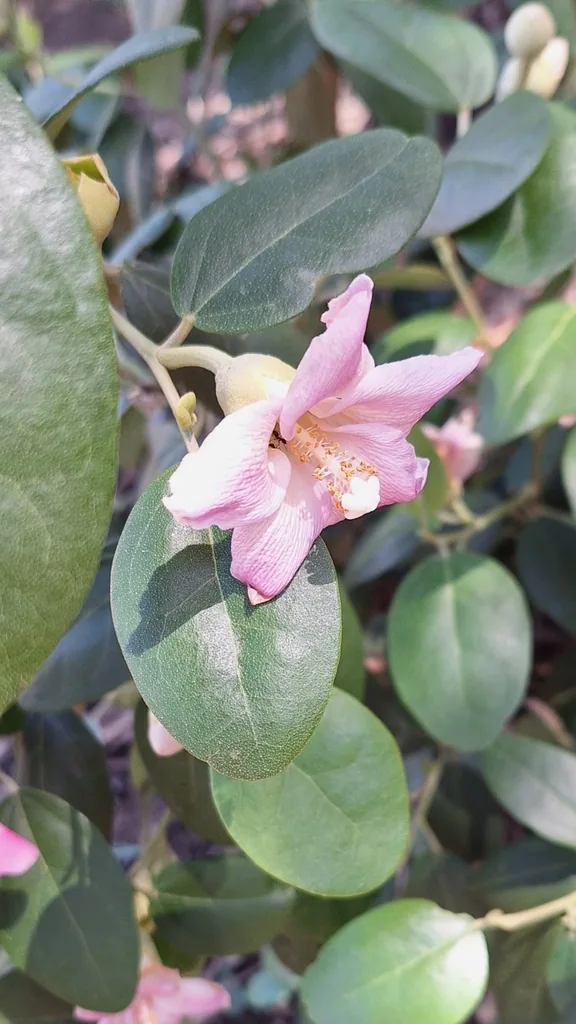
Norfolk Island hibiscus is a medium to large evergreen tree with pink to mauve hibiscus-like flowers. [4][2] It tolerates salt spray and coastal conditions, but the capsule hairs are an irritant on contact with skin. [4][2]
This record is incomplete: the sources we read do not cover every field yet.
Not yet covered by our sources: Hardiness, coldest zone, Hardiness, warmest zone
Lagunaria care
How to water Lagunaria
Watering
Low water needs
What the sources say (1)
Sol: mucho. - Ambiente marítimo: mucho. Necesidades hídricas: pocas.Watering notes
Performs best in well drained soils
What the sources say (1)
It performs best in well drained soils in a sunny position.How much light Lagunaria needs
Sunny position
What the sources say (1)
It performs best in well drained soils in a sunny position.How much cold Lagunaria can take
Hardiness, coldest zone
Not stated in the sources we read.
Hardiness, warmest zone
Not stated in the sources we read.
Best soil for Lagunaria
Soil pH, minimum
5.5
What the sources say (1)
Preferencia de suelo: - pH: 5,5 - 8,5. - Calizos y salinos.Soil pH, maximum
8.5
What the sources say (1)
Preferencia de suelo: - pH: 5,5 - 8,5. - Calizos y salinos.Where to grow Lagunaria
600 cm (6 m)
What the sources say (1)
Distancia mínima a infraestructuras: 2 m Distancia recomendable entre individuos: 6 mHow to propagate Lagunaria
Seed; cuttings
What the sources say (2)
Propagation from seed is relatively easy. No special pretreatment is neededin contact with the skin. Cuttings also strike readily.How to grow Lagunaria
The plant
Mature height
up to 1524 cm (50 ft)
What the sources say (1)
Form: A small tree to 50 feet tall.Remedies
Each remedy shows what official sources say about it; traditional remedies without an official source are marked as such. Harmful ones are listed so you know to avoid them.
Getting rid of it
weedy spread
digging out the plant Not verified
Traditional remedy, not verified by an official source.
Trees over 4 metres in height should be removed by a qualified arborist.
— tiakitamakimakaurau.nz [6] How: Dig out; seeds need disposal, remove to greenwaste or landfill if practical.
Is Lagunaria poisonous?
Reported by the source, quoted verbatim. This is not medical or veterinary advice: if a person or an animal may have eaten this plant, contact a poison control centre or a veterinarian.
Calendar
Late winter
What the sources say (1)
Apto para calles estrechas: SI Época plantación: final de inviernoMarch to April (formative pruning)
What the sources say (1)
si hiciera falta, poda de formación de marzo a abril.Months as given by the sources, which are mostly from the United States (northern hemisphere). In the southern hemisphere they shift by about six months.
Indicative values
Values from a secondary source, not checked word for word like the rest of this page. Use them as a starting point.
- Life cycle
- PerennialIndicative value, adapt it to your climate · Secondary source
- Hours of sun
- 6-8 hoursIndicative value, adapt it to your climate · Secondary source
- USDA hardiness zones
- 9-11 [winter low −6.7 to 10 °C (20 to 50 °F)]Indicative value, adapt it to your climate · Secondary source
- Care level
- MediumIndicative value, adapt it to your climate · Secondary source
- Growth rate
- LowIndicative value, adapt it to your climate · Secondary source
Similar plants
- Aaron's Beard Hypericum calycinum
- Abies grandis Abies grandis
- Abraham Trachystemon orientalis
- Abyssinian banana Ensete ventricosum
- Acacia longifolia Acacia longifolia
- Acacia retinodes Acacia retinodes
- Acanthus hungaricus Acanthus hungaricus
- Achlys triphylla Achlys triphylla
Sources
Every value above is quoted from these documents. Links lead to the original publisher.
- Virginia Tech Dendrology Fact Sheet · dendro.cnre.vt.edu, consulted
- Plantae > Tracheophyta > Magnoliopsida > Malvales > Malvaceae > Lagunaria > Lagunaria patersonia – Jardim da UAc · jardim.uac.pt, consulted
- Lagunaria partesonii (Andrews) G.Don. Árboles de hoja perenne · dipucadiz.es, consulted
- Lagunaria patersonia - Australian Native Plants Society (Australia) · anpsa.org.au, consulted
- Lagunaria patersonia, Norfolk Island hibiscus, primrose tree | Trees of Stanford & Environs · trees.stanford.edu, consulted
- tiakitamakimakaurau.nz · tiakitamakimakaurau.nz
Written by Emilio Marruso · last checked