
How to Grow and Care for Henna
Lawsonia inermis
Written by Emilio Marruso · last checked
Toxic to: People · Why
At a glance
Henna is a tough plant for sunny spots: it takes full sun, dry air and drought in stride, and grows in soils from quite acidic to alkaline. Start it from stem cuttings or seeds, and 12 months after planting it out you can make your first harvest, then two a year, or up to three with watering.
- Sun
Full sun
What the sources say (1)
Light: Full sun
under full sunlight
— Henna – UBD Botanical Research Centre [5] - Water
Handles drought and dry air; often grown without watering, extra water in the dry season
What the sources say (6)
Watering: Irrigated during the dry season in intensive commercial production; often grown without irrigation
North Africa (intensive commercial production): Under intensive commercial production, as in North Africa, the crop is irrigated during the dry season and heavily fertilized.
— Lawsonia inermis [1] India: In India, it is grown on a larger scale but less intensively, often without irrigation, and rarely fertilized.
— Lawsonia inermis [1] Under intensive commercial production, as in North Africa, the crop is irrigated during the dry season and heavily fertilized.
— Lawsonia inermis [1] In India, it is grown on a larger scale but less intensively, often without irrigation, and rarely fertilized.
— Lawsonia inermis [1] - Soil
Loamy soil, moist but well drained, pH 4.3–8
What the sources say (4)
Watering notes: Moist but well-drained loamy soil; can withstand low air humidity and drought
It prefers fertile, moist but well-drained loamy soil under full sunlight.
— Henna – UBD Botanical Research Centre [5] It can withstand low air humidity and drought.
— Lawsonia inermis [1] Soil pH, minimum: 4.3
optimum soil pH is 4.3-8
— Lawsonia inermis [1] Soil pH, maximum: 8
optimum soil pH is 4.3-8
— Lawsonia inermis [1] - Spacing
6 in between plants in a row
What the sources say (1)
Spacing: 15 cm [5.9 in] within a row (distance between rows varies with the production area)
Trees should be spaced at 15 cm within a row, with distance between the rows varying according to the production area
— Lawsonia inermis [1] - Harvest
First harvest 12 months after planting; then 2 a year, up to 3 with watering
What the sources say (1)
Harvest: First harvest 12 months after field planting; then 2 harvests a year under rainfed conditions, up to 3 with irrigation
The first harvest is taken 12 months after field planting by cutting the plant about 10-15 cm above ground level. Subsequently, 2 harvests are taken a year under rainfed conditions and 3 harvests may be possible with irrigation.
— Lawsonia inermis [1] - Propagation
From stem cuttings or seeds
- Safety
Generally safe for people, but those with G6PD deficiency should not use it
Overview
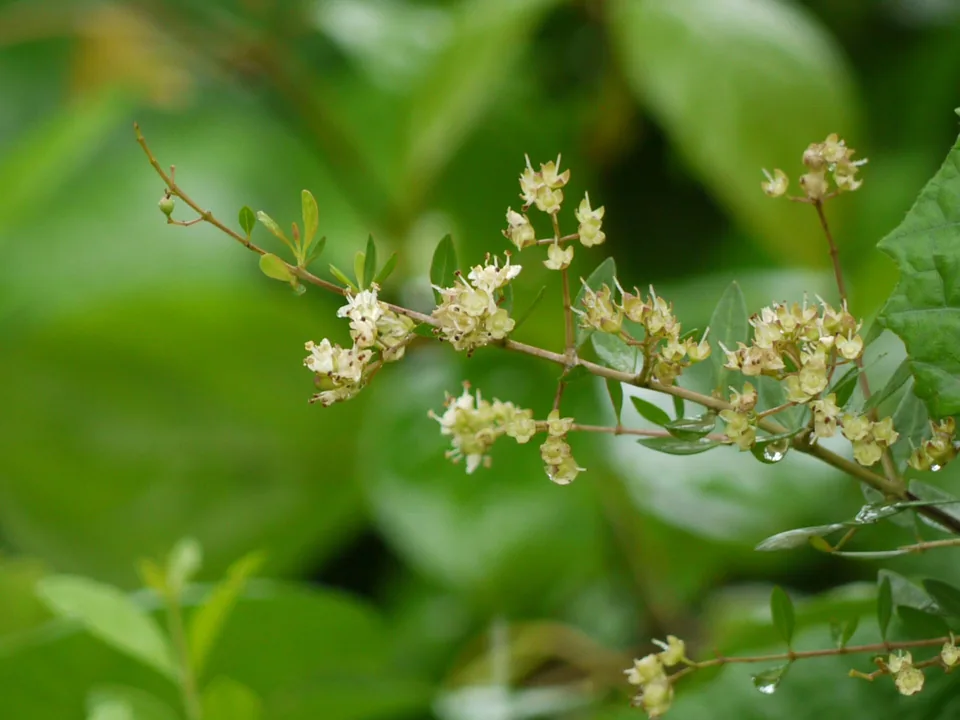
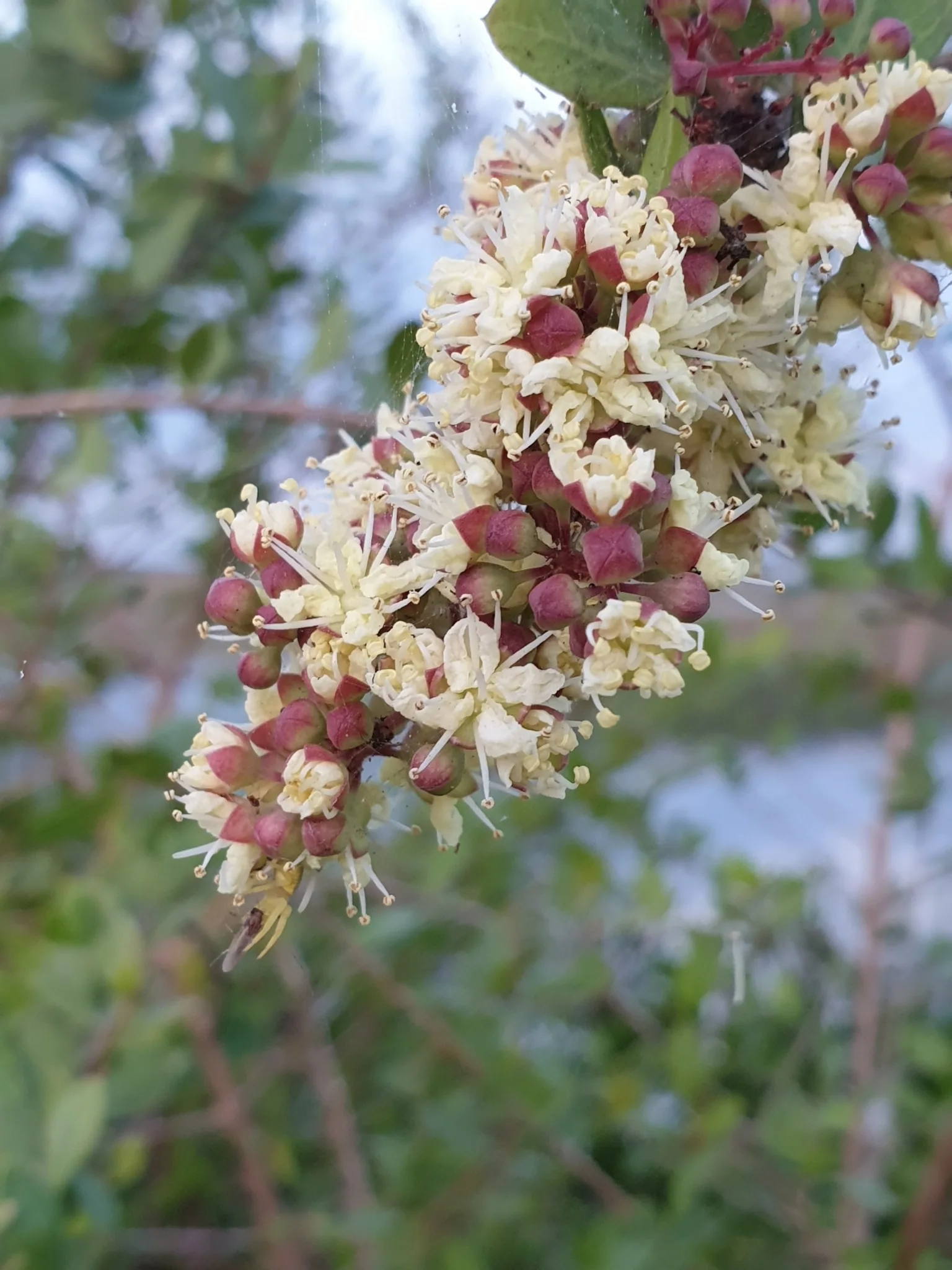
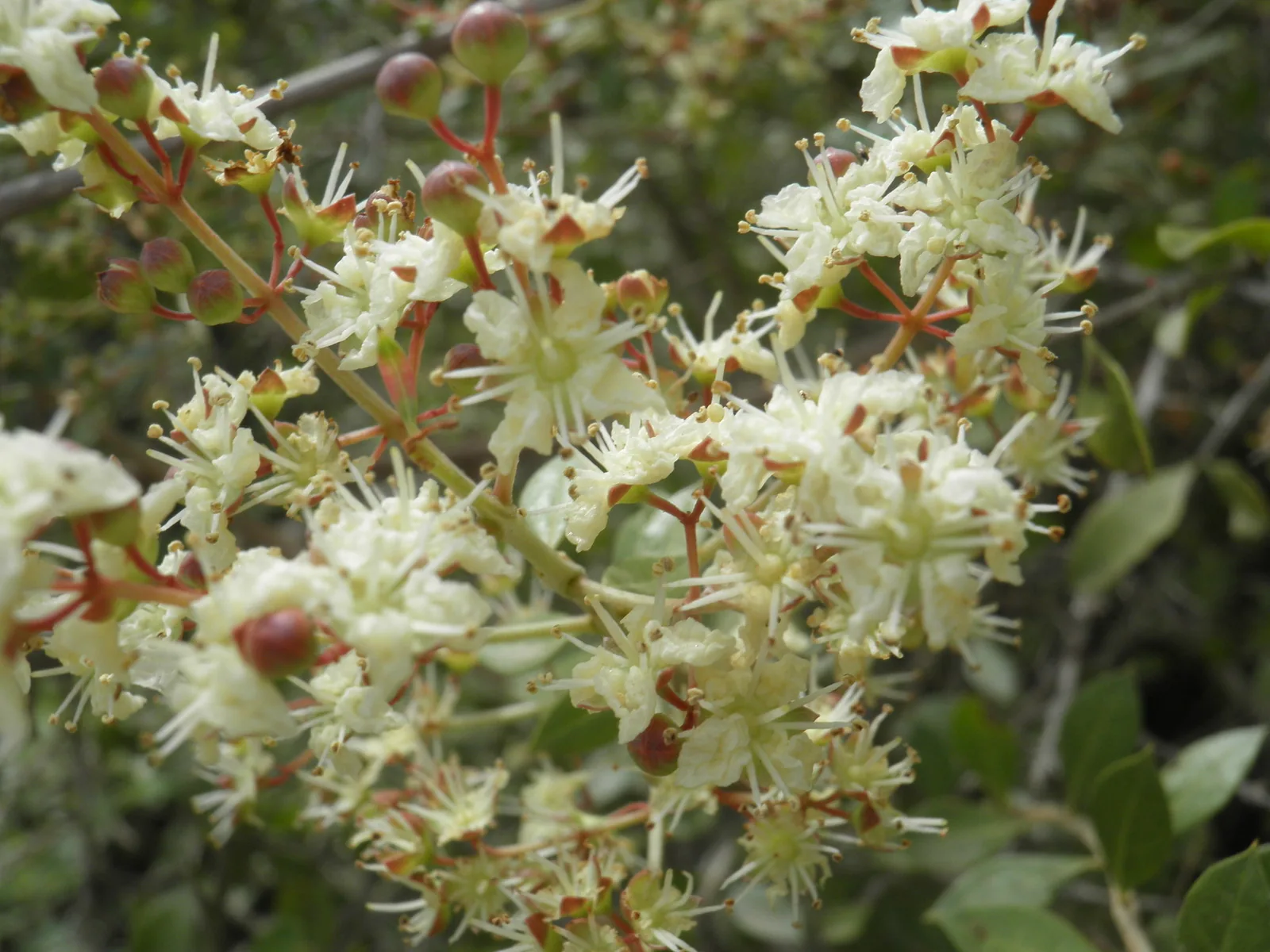
Lawsonia inermis (henna) is a much-branched shrub or small tree 2-6 m [6.6–19.7 ft] tall that may be spiny. [1] It prefers fertile, moist but well-drained loamy soil under full sunlight and is propagated by stem cuttings and seeds. [5] It is mainly grown for the orange-red dye obtained from the leaves and young shoots. [7]
This record is incomplete: the sources we read do not cover every field yet.
Not yet covered by our sources: Hardiness, coldest zone, Hardiness, warmest zone, Pruning
Henna care
Measurements in square brackets are our conversion into the other unit system; the quoted text is unchanged.
How to water Henna
Watering
Irrigated during the dry season in intensive commercial production; often grown without irrigation
What each source says
North Africa (intensive commercial production): Irrigated during the dry season
India: Often without irrigation
What the sources say (4)
North Africa (intensive commercial production): Under intensive commercial production, as in North Africa, the crop is irrigated during the dry season and heavily fertilized.India: In India, it is grown on a larger scale but less intensively, often without irrigation, and rarely fertilized.Under intensive commercial production, as in North Africa, the crop is irrigated during the dry season and heavily fertilized.In India, it is grown on a larger scale but less intensively, often without irrigation, and rarely fertilized.Watering notes
Moist but well-drained loamy soil; can withstand low air humidity and drought
How much light Henna needs
Full sun
What the sources say (1)
under full sunlightHow much cold Henna can take
Hardiness, coldest zone
Not stated in the sources we read.
Hardiness, warmest zone
Not stated in the sources we read.
Best soil for Henna
Where to grow Henna
15 cm [5.9 in] within a row (distance between rows varies with the production area)
What the sources say (1)
Trees should be spaced at 15 cm within a row, with distance between the rows varying according to the production areaHow to propagate Henna
Remedies
The sources we checked give no remedies for this plant.
Is Henna poisonous?
Reported by the source, quoted verbatim. This is not medical or veterinary advice: if a person or an animal may have eaten this plant, contact a poison control centre or a veterinarian.
Calendar
Harvest
First harvest 12 months after field planting; then 2 harvests a year under rainfed conditions, up to 3 with irrigation
What the sources say (1)
The first harvest is taken 12 months after field planting by cutting the plant about 10-15 cm above ground level. Subsequently, 2 harvests are taken a year under rainfed conditions and 3 harvests may be possible with irrigation.Pruning
Not stated in the sources we read.
Months as given by the sources, which are mostly from the United States (northern hemisphere). In the southern hemisphere they shift by about six months.
Edibility
Reported by the source, quoted verbatim. Do not eat a plant on the basis of this page alone: identification mistakes can be dangerous.
Indicative values
Values from a secondary source, not checked word for word like the rest of this page. Use them as a starting point.
- Life cycle
- PerennialIndicative value, adapt it to your climate · Secondary source
- Mature height
- 304.8-609.6 cm (10-20 ft)Indicative value, adapt it to your climate · Secondary source
- Drought tolerant
- yesIndicative value, adapt it to your climate · Secondary source
- USDA hardiness zones
- 10-12 [winter low −1.1 to 15.6 °C (30 to 60 °F)]Indicative value, adapt it to your climate · Secondary source
- Care level
- MediumIndicative value, adapt it to your climate · Secondary source
- Growth rate
- LowIndicative value, adapt it to your climate · Secondary source
- Pruning
- November, December, March, April, May, April, MayIndicative value, adapt it to your climate · Secondary source
Similar plants
- Abies grandis Abies grandis
- Abraham Trachystemon orientalis
- Abyssinian banana Ensete ventricosum
- Acacia longifolia Acacia longifolia
- Acanthus hungaricus Acanthus hungaricus
- Aconite Aconitum napellus
- Adam's Needle Yucca flaccida
- Adriatic lizard orchid Himantoglossum adriaticum
Sources
Every value above is quoted from these documents. Links lead to the original publisher.
- Lawsonia inermis · apps.worldagroforestry.org, consulted
- Lawsonia inermis · apps.worldagroforestry.org, consulted
- Ethnobotanical Plant Lawsonia inermis | Dr. Duke's Phytochemical and Ethnobotanical Databases · phytochem.nal.usda.gov, consulted
- Digital Garden :: UoK · keralauniversity.ac.in, consulted
- Henna – UBD Botanical Research Centre · brc.iber.ubd.edu.bn, consulted
- Henna – Mother Earth Gardener · motherearthgardener.com, consulted
- THE SPECIES · apps.worldagroforestry.org, consulted
- Lawsonia inermis Lythracea · apps.worldagroforestry.org, consulted
Written by Emilio Marruso · last checked