
How to Grow and Care for Mānuka
Leptospermum scoparium
Written by Emilio Marruso · last checked
Toxic to: People · Why
At a glance
Mānuka is a forgiving shrub for beginners: it likes the soil to dry out between waterings and shrugs off dry spells. Its fresh, fragrant leaves brew a refreshing tea, and it grows happily in a pot too. Plant it out after the last frosts, then give it a light trim after flowering to keep it full and shapely.
- Water
Normal watering; let the soil dry between waterings. It handles dry spells
What the sources say (1)
Watering: Normal water needs; let the soil dry between waterings; resists periods of drought
Necesidades hídricas: normales, dejar secar la tierra entre riegos. Resiste periodos de sequía.
— Leptospermum scoparium J.R.Forst. G.Forst. [8] - Cold
Survives winters down to 10 °F (−12.2 °C)
Hardy in cold winters · USDA 8 · RHS H5 · Z8
What the sources say (1)
Hardiness, coldest zone: 8 [winter low −12.2 to −6.7 °C (10 to 20 °F)]
Hardiness Zone 8+
— Tea Tree (Leptospermum scoparium) — Practical Plants [4] - Soil
Soil that drains well
- Spacing
3 ft between plants
What the sources say (1)
Spacing: 100 cm (1 m)
Distancia recomendable entre individuos: 1 m
— Leptospermum scoparium J.R.Forst. G.Forst. [8] - Planting
Plant out after the last frosts, in late spring or early summer
What the sources say (2)
Planting: After the last expected frosts (late spring or early summer for seedlings)
Época plantación: después del riesgo de heladas
— Leptospermum scoparium J.R.Forst. G.Forst. [8] Plant out in late spring or early summer, after the last expected frosts
— Tea Tree (Leptospermum scoparium) — Practical Plants [4] - Pruning
Trim after flowering, only if needed to keep it full and shapely
What the sources say (1)
Pruning: After flowering, if needed to keep density and shape
Gestión recomendada a la poda: después de la floración, si fuera necesaria para mantener la densidad y la forma.
— Leptospermum scoparium J.R.Forst. G.Forst. [8] - Harvest
Fresh leaves make a fragrant, refreshing tea
- Pests
Watch for scale insects; spray them with white oil
- Propagation
From seed or cuttings; named varieties only from cuttings
What the sources say (1)
Propagation: Seed or cuttings; cultivars from cuttings only
Propagation From seed or cuttings. Cultivars must be cutting-grown to retain clonal properties.
— Leptospermum scoparium [6] - Sowing
Sow in spring, in a greenhouse
What the sources say (1)
Sowing: Spring (in a greenhouse)
Seed - sow spring in a greenhouse and only just cover the seed.
— Tea Tree (Leptospermum scoparium) — Practical Plants [4] - Containers
Grows in containers too
What the sources say (1)
In containers: Yes
se usa en grupos arbustivos y en grandes macetas para adornar de patios y terrazas
— Leptospermum scoparium J.R.Forst. G.Forst. [8] - Safety
No known hazards for people
Overview
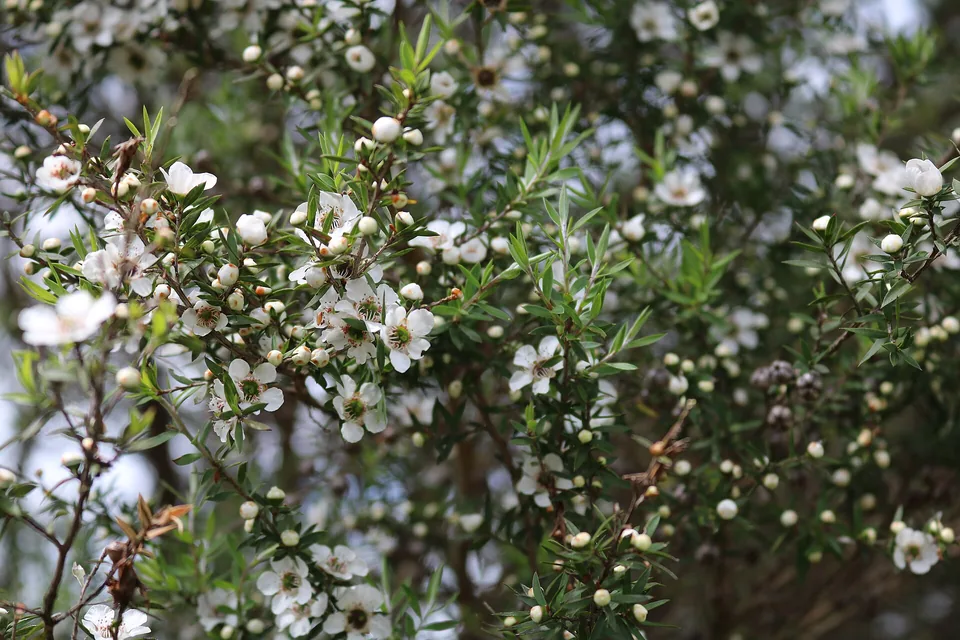
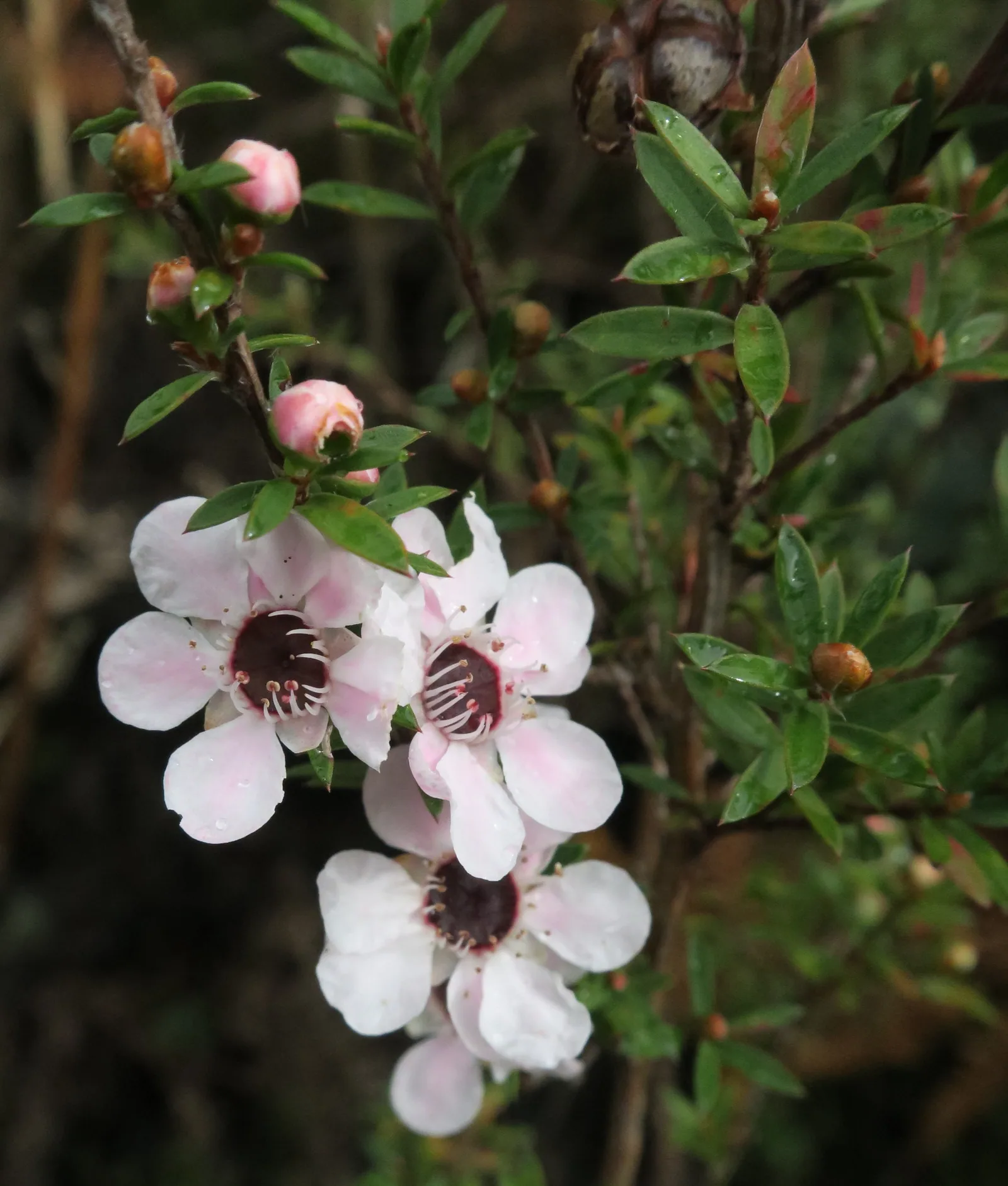
Leptospermum scoparium (manuka) is an evergreen shrub that usually grows around 2 metres [6.6 ft] tall but can reach 5 metres [16.4 ft]. [3] It is prone to scale insects and is used as a hedge or in large pots. [1][8]
This record is incomplete: the sources we read do not cover every field yet.
Not yet covered by our sources: Hardiness, warmest zone
Mānuka care
Measurements in square brackets are our conversion into the other unit system; the quoted text is unchanged.
How to water Mānuka
Watering
Normal water needs; let the soil dry between waterings; resists periods of drought
What the sources say (1)
Necesidades hídricas: normales, dejar secar la tierra entre riegos. Resiste periodos de sequía.How much light Mānuka needs
How much cold Mānuka can take
Hardiness, coldest zone
8 [winter low −12.2 to −6.7 °C (10 to 20 °F)]
What the sources say (1)
Hardiness
Zone 8+Hardiness, warmest zone
Not stated in the sources we read.
Where to grow Mānuka
In containers
Yes
What the sources say (1)
se usa en grupos arbustivos y en grandes macetas para adornar de patios y terrazasSpacing
100 cm (1 m)
What the sources say (1)
Distancia recomendable entre individuos: 1 mHow to propagate Mānuka
Seed or cuttings; cultivars from cuttings only
What the sources say (1)
Propagation From seed or cuttings. Cultivars must be
cutting-grown to retain clonal properties.How to grow Mānuka
Fertilizing
When
The sources give different values depending on region, zone or growing conditions.
What each source says
cultivar 'Wiri Susan': At planting time and every year in early spring as a side dressing
cultivar 'Wiri Kerry': In spring
What the sources say (2)
cultivar 'Wiri Susan': A general purpose fertiliser can be added at planting time mixed in with surrounding soil and annual ly in early spring as a side dressing.cultivar 'Wiri Kerry': For a natural shape use secateurs instead of hedge clippers. Apply a general purpose fertiliser in spring.How often
The sources give different values depending on region, zone or growing conditions.
What each source says
cultivar 'Wiri Susan': Once a year, in spring
What the sources say (1)
cultivar 'Wiri Susan': Except on very fertile soils an annual light dressing (50g/m2) of general purpose fertiliser in spring is beneficial. Sprinkle evenly and work into the top 2 to 3cm of the soil, taking care not to damage surface roots.Mineral fertilizers
The sources give different values depending on region, zone or growing conditions.
What each source says
cultivar 'Wiri Susan': General purpose fertiliser, a light dressing of 50 g/m² in spring worked into the top 2-3 cm [0.8–1.2 in] of soil, except on very fertile soils
cultivar 'Wiri Susan': Long-term slow-release fertiliser can be added to the planting hole
What the sources say (2)
cultivar 'Wiri Susan': Except on very fertile soils an annual light dressing (50g/m2) of general purpose fertiliser in spring is beneficial. Sprinkle evenly and work into the top 2 to 3cm of the soil, taking care not to damage surface roots.cultivar 'Wiri Susan': Dig a hole twice the diameter of the plants roots as soil is placed in the prepa red hole tread firmly to bring soil in close contact with the root-ball long term slow release fertilisers may be added at this stage.Mānuka pests and problems
Scale insects
What to do: Spraying white oil solution
What the sources say (1)
They are also prone to scale insects which is best treated by spraying white oil solution. This species is reported to be one of the more susceptible.
— Leptospermum scoparium | Australian Plants Society [1]
Remedies
Each remedy shows what official sources say about it; traditional remedies without an official source are marked as such. Harmful ones are listed so you know to avoid them.
Treating the plant
scale insects
white oil spray Not verified
Traditional remedy, not verified by an official source.
How: Spray white oil solution on the scale insects.
webbing caterpillars
removing infestations by hand Not verified
Traditional remedy, not verified by an official source.
How: Remove the infestations by hand.
Is Mānuka poisonous?
Reported by the source, quoted verbatim. This is not medical or veterinary advice: if a person or an animal may have eaten this plant, contact a poison control centre or a veterinarian.
Known Hazards None known
[3]
Calendar
Sowing
Spring (in a greenhouse)
What the sources say (1)
Seed - sow spring in a greenhouse and only just cover the seed.Planting
After the last expected frosts (late spring or early summer for seedlings)
Pruning
After flowering, if needed to keep density and shape
What the sources say (1)
Gestión recomendada a la poda: después de la floración, si fuera necesaria para mantener la densidad y la forma.Months as given by the sources, which are mostly from the United States (northern hemisphere). In the southern hemisphere they shift by about six months.
Edibility
Reported by the source, quoted verbatim. Do not eat a plant on the basis of this page alone: identification mistakes can be dangerous.
The fresh, pungent leaves are a fragrant and refreshing tea substitute
[4]
Indicative values
Values from a secondary source, not checked word for word like the rest of this page. Use them as a starting point.
- Life cycle
- PerennialIndicative value, adapt it to your climate · Secondary source
- Mature height
- 182.9-304.8 cm (6-10 ft)Indicative value, adapt it to your climate · Secondary source
- Drought tolerant
- yesIndicative value, adapt it to your climate · Secondary source
- Soil pH
- 5.5-6.5Indicative value, adapt it to your climate · Secondary source
- Care level
- MediumIndicative value, adapt it to your climate · Secondary source
- Growth rate
- HighIndicative value, adapt it to your climate · Secondary source
Similar plants
- Aaron's Beard Hypericum calycinum
- Abies grandis Abies grandis
- Abraham Trachystemon orientalis
- Abyssinian banana Ensete ventricosum
- Acacia longifolia Acacia longifolia
- Acacia retinodes Acacia retinodes
- Acanthus hungaricus Acanthus hungaricus
- Achlys triphylla Achlys triphylla
Sources
Every value above is quoted from these documents. Links lead to the original publisher.
- Leptospermum scoparium | Australian Plants Society · resources.austplants.com.au, consulted
- Leptospermum scoparium var. scoparium • New Zealand Plant Conservation Network · nzpcn.org.nz, consulted
- Leptospermum scoparium - Useful Temperate Plants · temperate.theferns.info, consulted
- Tea Tree (Leptospermum scoparium) — Practical Plants · practicalplants.org, consulted
- VicFlora: Leptospermum scoparium · vicflora.rbg.vic.gov.au, consulted
- Leptospermum scoparium · anbg.gov.au, consulted
- Leptospermum cultivation · anbg.gov.au, consulted
- Leptospermum scoparium J.R.Forst. G.Forst. · dipucadiz.es, consulted
- aucklandbotanicgardens.co.nz · aucklandbotanicgardens.co.nz
- aucklandbotanicgardens.co.nz · aucklandbotanicgardens.co.nz
Written by Emilio Marruso · last checked