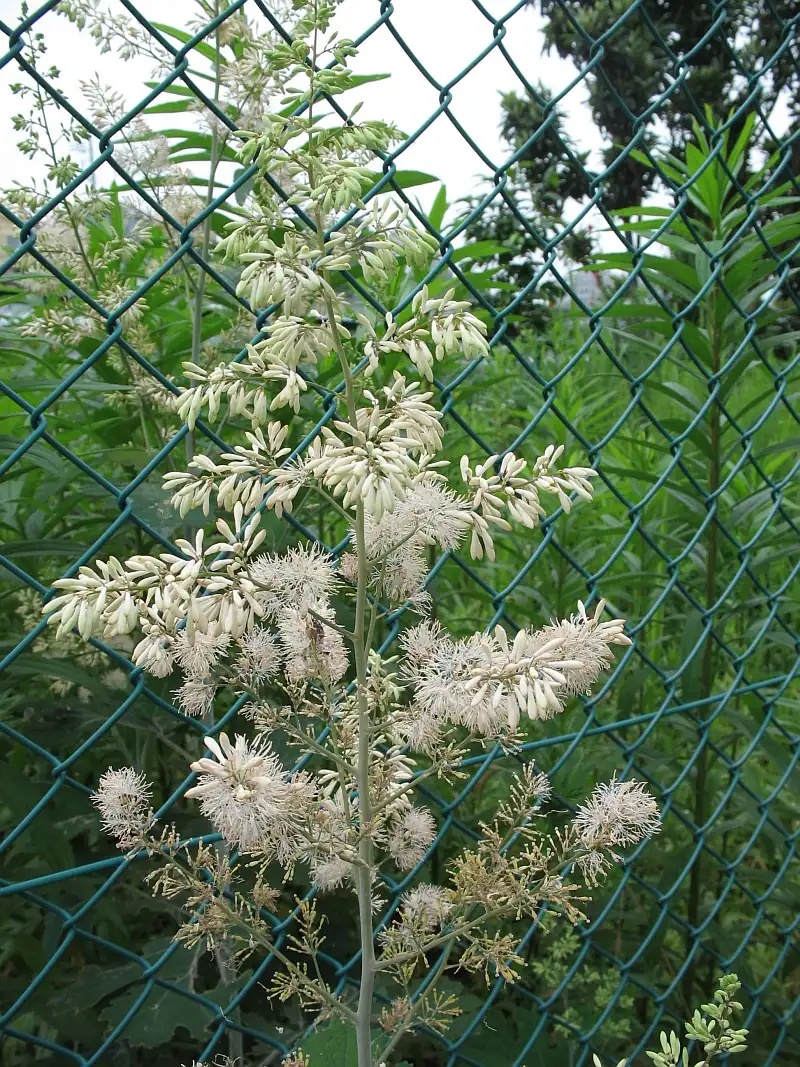

How to Grow and Care for Plume poppy
Macleaya cordata
Written by Emilio Marruso · last checked
Toxic to: Cats, Dogs, Horses, Livestock, People · Why
At a glance
This tall perennial makes a bold statement, reaching 6–8 ft high. Plant it from March to May or from September to November in moist but well-drained soil, cut it back in October or November, and it comes back year after year. You can share it by dividing the clumps, but keep it away from curious pets.
- Water
Keep the soil moist but well drained
What the sources say (1)
Watering: Moist but well-drained soil
does best in a fertile, moist yet well-drained sites
— Poppy, Plume [1] - Cold
Survives winters down to −30 °F (−34.4 °C)
Very hardy · USDA 4 · RHS H7 · Z4
What the sources say (2)
Hardiness, coldest zone: 4 [winter low −34.4 to −28.9 °C (−30 to −20 °F)]
This bold perennial is hardy from zones 4 through 10 and is well-adapted to a wide
— Poppy, Plume [1] Hardiness, warmest zone: 10 [winter low −1.1 to 4.4 °C (30 to 40 °F)]
This bold perennial is hardy from zones 4 through 10 and is well-adapted to a wide
— Poppy, Plume [1] - Planting
Plant from March to May or from September to November
What the sources say (1)
Planting: March-May; September-November
Jan | Feb | Mar | Apr | May | Jun | Jul | Aug | Sep | Oct | Nov | Dec | Plant | | | yes | yes | yes |
— Macleaya cordata (Five-Seeded Plume Poppy) | BBC Gardeners World Magazine [3] - Pruning
Prune in October or November
What the sources say (1)
Pruning: October-November
| Divide | | | yes | yes | | | | | | yes | yes | | Cut Back | | | | | | | | | | yes | yes |
— Macleaya cordata (Five-Seeded Plume Poppy) | BBC Gardeners World Magazine [3] - Size
6 to 8 ft tall
What the sources say (1)
Mature height: 183-244 cm (6-8 ft)
Plume poppy is a 6- to 8-foot tall herbaceous perennial of the poppy family that is one of two species native to China and Japan.
— Poppy, Plume [1] - Propagation
Divide clumps in spring or fall; root cuttings in winter, cuttings from the base in late spring
What the sources say (2)
Propagation: Division of clumps (spring or autumn); root cuttings (winter); basal cuttings (late spring)
Propagation can be carried out by dividing clumps in spring or autumn, or by taking root cuttings in winter.
— Macleaya cordata (Five-Seeded Plume Poppy) | BBC Gardeners World Magazine [3] Basal cuttings in late spring. Harvest the shoots with plenty of underground stem when they are about 8 - 10cm above the ground.
— Macleaya cordata - Useful Temperate Plants [2] - Safety
Harmful if eaten: upsets the stomach; keep away from cats, dogs and horses
Overview
Macleaya cordata is a vigorous herbaceous perennial grown mainly for its bold foliage, reaching 6 to 8 feet [1.8–2.4 m] tall. [3][1] It spreads aggressively by underground rhizomes and needs provision to control its spread. [1]
Plume poppy care
Measurements in square brackets are our conversion into the other unit system; the quoted text is unchanged.
How to water Plume poppy
Moist but well-drained soil
What the sources say (1)
does best in a fertile, moist yet well-drained sitesHow much light Plume poppy needs
The sources disagree:
Sun Exposure: Full shade, partial shade | Aspect:
[3]
What the sources say (3)
It will grow in full sun or light shade.For best results grow Macleaya cordata in full sun or partial shade in a deep, moist and well-drained soil,Easily grown in sun or partial shade[ 187 Title
Perennials. Volumes 1 and 2.How much cold Plume poppy can take
Hardiness, coldest zone
4 [winter low −34.4 to −28.9 °C (−30 to −20 °F)]
What the sources say (1)
This bold perennial is hardy from zones 4 through 10 and is well-adapted to a wideHardiness, warmest zone
10 [winter low −1.1 to 4.4 °C (30 to 40 °F)]
What the sources say (1)
This bold perennial is hardy from zones 4 through 10 and is well-adapted to a wideHow to propagate Plume poppy
Division of clumps (spring or autumn); root cuttings (winter); basal cuttings (late spring)
What the sources say (2)
Propagation can be carried out by dividing clumps in spring or autumn, or by taking root cuttings in winter.Basal cuttings in late spring. Harvest the shoots with plenty of underground stem when they are about 8 - 10cm above the ground.How to grow Plume poppy
The plant
Life cycle
perennial
What the sources say (1)
Plume poppy is a 6- to 8-foot tall herbaceous perennial of the poppy family that is
one of two species native to China and Japan.Mature height
183-244 cm (6-8 ft)
What the sources say (1)
Plume poppy is a 6- to 8-foot tall herbaceous perennial of the poppy family that is
one of two species native to China and Japan.Remedies
Each remedy shows what official sources say about it; traditional remedies without an official source are marked as such. Harmful ones are listed so you know to avoid them.
Getting rid of it
invasive spread
digging out rhizomes and pulling seedlings Not verified
Traditional remedy, not verified by an official source.
Wear gloves when you’re pulling up a plume poppy.
— makebesthome.pages.dev [5] How: Limit the spread of the rhizomes by digging them out, and pull any seedlings that emerge.
self-seeding
removing flowers before seed develops Not verified
Traditional remedy, not verified by an official source.
How: Grow the plants where the rhizomes will be contained, and remove the flowers so that no seed can develop.
Is Plume poppy toxic to pets?
Reported by the source, quoted verbatim. This is not medical or veterinary advice: if a person or an animal may have eaten this plant, contact a poison control centre or a veterinarian.
Animals
Macleaya ‘Cordata’ causes an upset stomach and is harmful if ingested. Toxic to: Is known to attract Cats
[3]The source flags the risk for this animal but does not explain why.
Toxic to: Is known to attract Cats Cats Is known to attract Dogs
[3]The source flags the risk for this animal but does not explain why.
Toxic to: Is known to attract Cats Cats Is known to attract Dogs Dogs Is known to attract Horses
[3]The source flags the risk for this animal but does not explain why.
Toxic to: Is known to attract Cats Cats Is known to attract Dogs Dogs Is known to attract Horses Horses Is known to attract Livestock
[3]The source flags the risk for this animal but does not explain why.
People
Toxic to: Is known to attract Cats Cats Is known to attract Dogs Dogs Is known to attract Horses Horses Is known to attract Livestock Livestock Is known to attract People People
[3]
Calendar
March-May; September-November
What the sources say (1)
Jan | Feb | Mar | Apr | May | Jun | Jul | Aug | Sep | Oct | Nov | Dec
| Plant | | | yes | yes | yes | October-November
What the sources say (1)
| Divide | | | yes | yes | | | | | | yes | yes |
| Cut Back | | | | | | | | | | yes | yes | Months as given by the sources, which are mostly from the United States (northern hemisphere). In the southern hemisphere they shift by about six months.
Indicative values
Values from a secondary source, not checked word for word like the rest of this page. Use them as a starting point.
- Hours of sun
- 6-8 hoursIndicative value, adapt it to your climate · Secondary source
- Drought tolerant
- yesIndicative value, adapt it to your climate · Secondary source
- Soil
- Rocky, gravelly, dry, Well-drainedIndicative value, adapt it to your climate · Secondary source
- Soil pH
- 6-7.5Indicative value, adapt it to your climate · Secondary source
- Care level
- MediumIndicative value, adapt it to your climate · Secondary source
- Growth rate
- HighIndicative value, adapt it to your climate · Secondary source
- Pests
- Slugs, snails, Disease resistant, Rabbit resistantIndicative value, adapt it to your climate · Secondary source
Similar plants
- Aaron's Beard Hypericum calycinum
- Abies grandis Abies grandis
- Abraham Trachystemon orientalis
- Abyssinian banana Ensete ventricosum
- Acacia longifolia Acacia longifolia
- Acacia retinodes Acacia retinodes
- Acanthus hungaricus Acanthus hungaricus
- Achlys triphylla Achlys triphylla
Sources
Every value above is quoted from these documents. Links lead to the original publisher.
- Poppy, Plume · uaex.uada.edu, consulted
- Macleaya cordata - Useful Temperate Plants · temperate.theferns.info, consulted
- Macleaya cordata (Five-Seeded Plume Poppy) | BBC Gardeners World Magazine · gardenersworld.com, consulted
- Plume Poppy (Macleaya cordata) - bplant.org · bplant.org, consulted
- makebesthome.pages.dev · makebesthome.pages.dev
Written by Emilio Marruso · last checked