
How to Grow and Care for Brazilian red-cloak
Megaskepasma erythrochlamys
Written by Emilio Marruso · last checked
At a glance
Megaskepasma is a flexible companion when it comes to light: it is happy in full sun and just as willing to settle into partial shade. That means you can give it a spot in a bright, open bed or in a corner that gets sun for only part of the day. Pick the place that suits your garden best, and let this plant make itself at home there.
- Sun
Full sun to partial shade
What the sources say (1)
Light: Full sun to partial shade
Full Sun – Prefers 6 or more hours of sun per day.
— Megaskepasma erythrochlamys (Megas, Brazilian red-cloak) - Plantinfo [4]
Overview
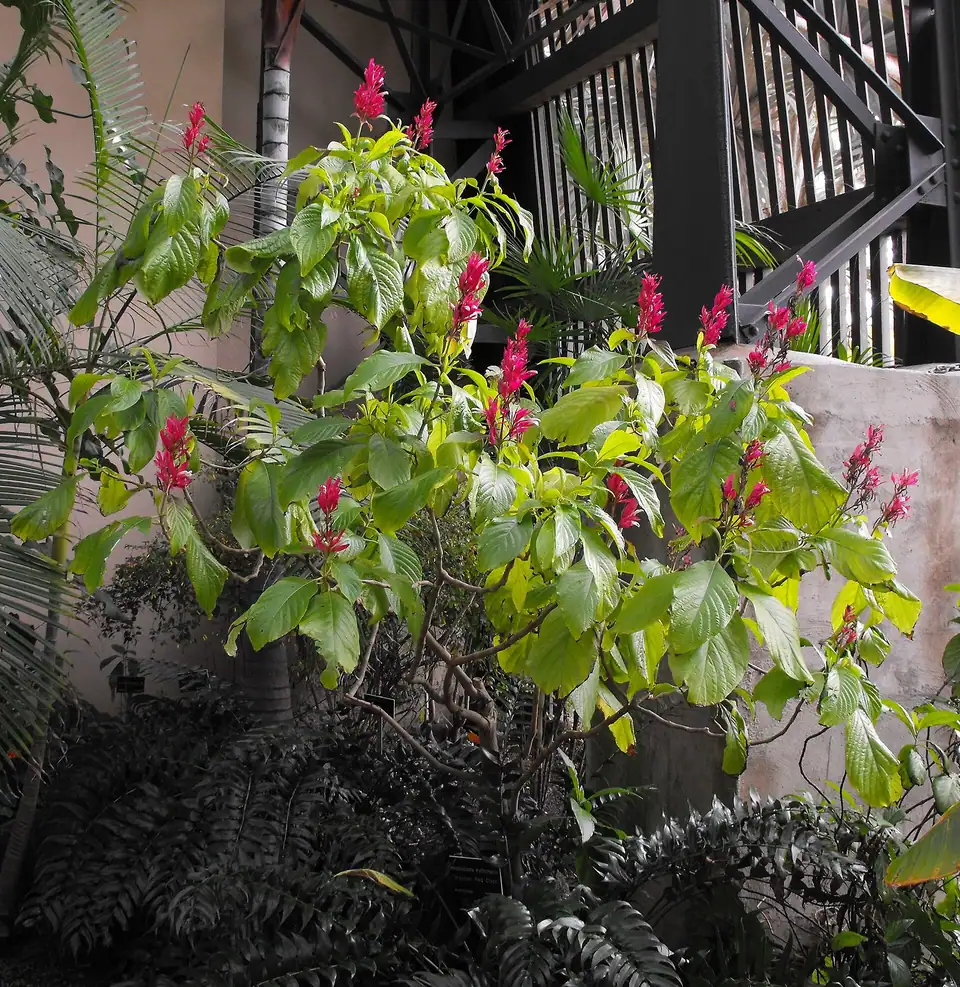
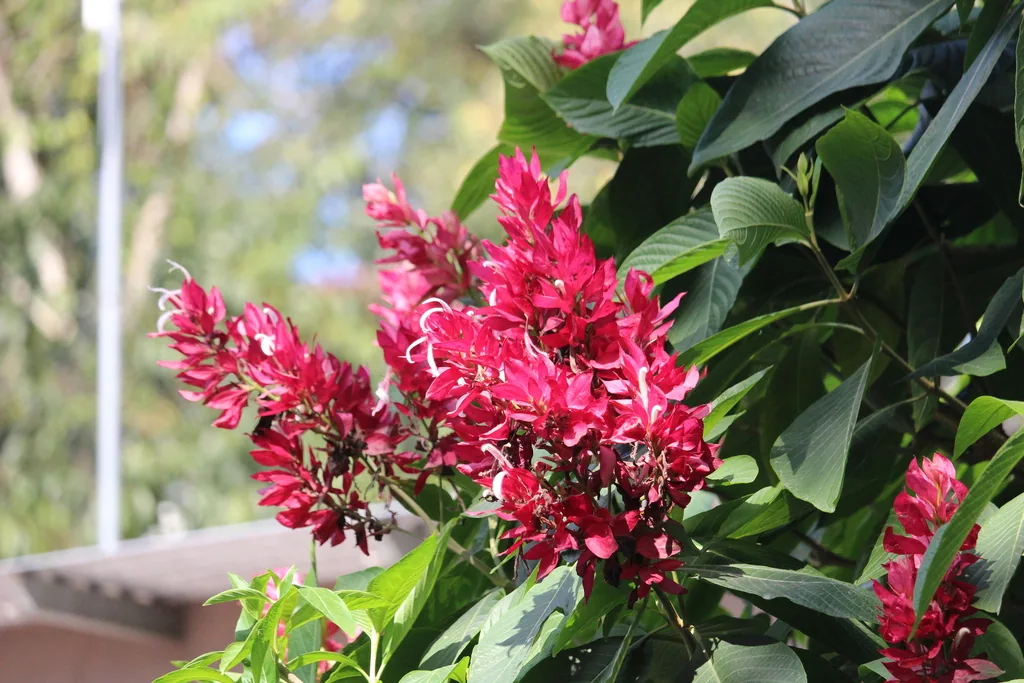
Megaskepasma erythrochlamys is a large tropical evergreen shrub native to Venezuela and Suriname, grown for its crimson-red bracts. [1] It is naturalized on Kauaʻi, Oʻahu and Hawaiʻi Island, where it is considered a high-risk species. [1]
This record is incomplete: the sources we read do not cover every field yet.
Not yet covered by our sources: Watering, Hardiness, coldest zone, Hardiness, warmest zone, Pruning, Propagation
Brazilian red-cloak care
How to water Brazilian red-cloak
Not stated in the sources we read.
How much light Brazilian red-cloak needs
Full sun to partial shade
What the sources say (1)
Full Sun – Prefers 6 or more hours of sun per day.How much cold Brazilian red-cloak can take
Hardiness, coldest zone
Not stated in the sources we read.
Hardiness, warmest zone
Not stated in the sources we read.
How to propagate Brazilian red-cloak
Not stated in the sources we read.
Remedies
The sources we checked give no remedies for this plant.
Calendar
Pruning
The sources give different values depending on region, zone or growing conditions.
What each source says
According to PlantInfo: Spring
What the sources say (1)
According to PlantInfo: Prune severely in spring.Months as given by the sources, which are mostly from the United States (northern hemisphere). In the southern hemisphere they shift by about six months.
Indicative values
Values from a secondary source, not checked word for word like the rest of this page. Use them as a starting point.
- Life cycle
- PerennialIndicative value, adapt it to your climate · Secondary source
- Mature height
- 182.9-243.8 cm (6-8 ft)Indicative value, adapt it to your climate · Secondary source
- Hours of sun
- 5-6 hoursIndicative value, adapt it to your climate · Secondary source
- Watering
- FrequentIndicative value, adapt it to your climate · Secondary source
- Soil pH
- 5.5-6.5Indicative value, adapt it to your climate · Secondary source
- USDA hardiness zones
- 10-11 [winter low −1.1 to 10 °C (30 to 50 °F)]Indicative value, adapt it to your climate · Secondary source
- Care level
- MediumIndicative value, adapt it to your climate · Secondary source
- Growth rate
- LowIndicative value, adapt it to your climate · Secondary source
- Propagation
- Stem Propagation, Air Layering Propagation, Division, Root CuttingIndicative value, adapt it to your climate · Secondary source
Similar plants
- Abies grandis Abies grandis
- Abraham Trachystemon orientalis
- Abyssinian banana Ensete ventricosum
- Acacia longifolia Acacia longifolia
- Acanthus hungaricus Acanthus hungaricus
- Achlys triphylla Achlys triphylla
- Aconite Aconitum napellus
- Adam's Needle Yucca flaccida
Sources
Every value above is quoted from these documents. Links lead to the original publisher.
- Megaskepasma erythrochlamys | Plant Pono · plantpono.org, consulted
- Megaskepasma erythrochlamys - Botany Brisbane · botanybrisbane.com, consulted
- Megaskepasma erythrochlamys (Brazil red cloak) · florafinder.org, consulted
- Megaskepasma erythrochlamys (Megas, Brazilian red-cloak) - Plantinfo · plantinfo.co.za, consulted
Written by Emilio Marruso · last checked