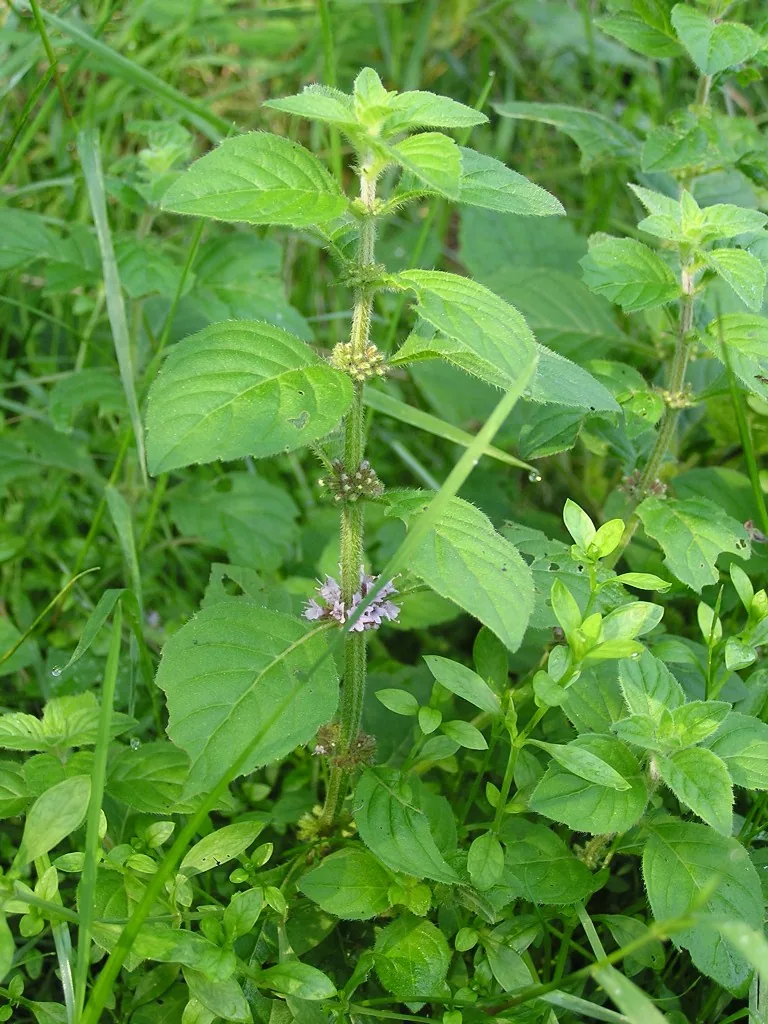
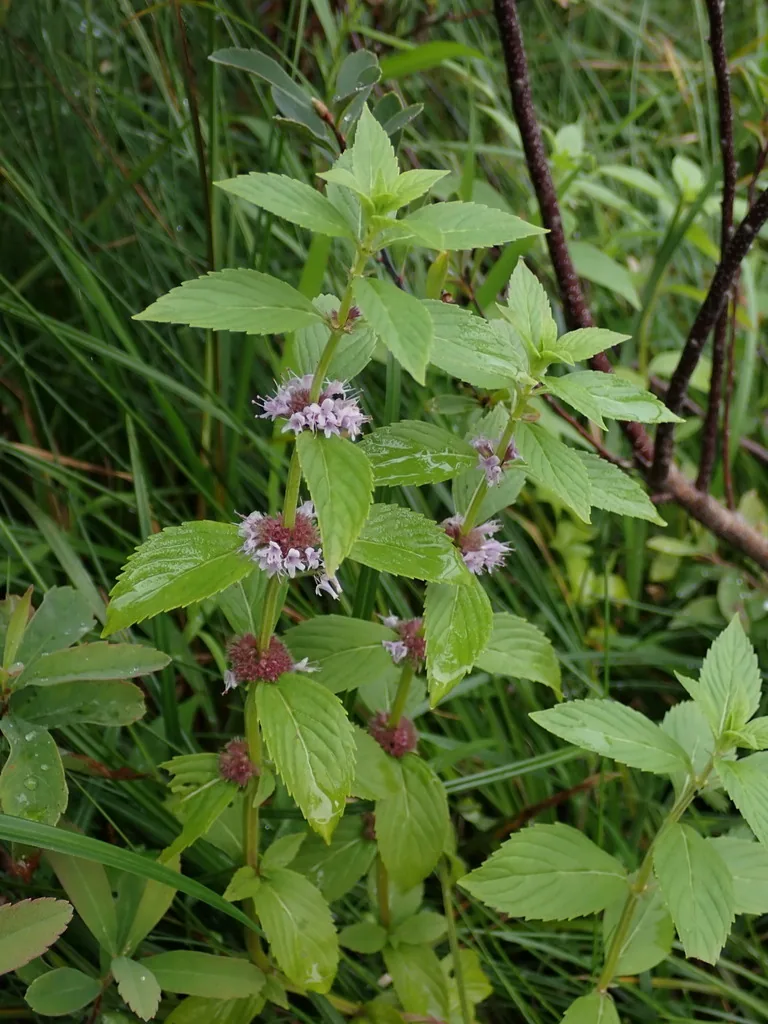

How to Grow and Care for Corn mint
Mentha arvensis
Written by Emilio Marruso · last checked
Toxic to: People · Why
At a glance
Wild mint gives you leaves with a strong minty flavor and a slight bitterness, lovely raw in salads or added to cooked dishes. It loves a sunny spot but also grows in partial shade, copes with drier soil than other mints, and is happy in a container. Start it in spring and move it outdoors in summer.
- Sun
Full sun is best for its fragrant oils; it also grows in partial shade
What the sources say (3)
Light: Sunny position best for essential oil production; also succeeds in partial shade
A sunny position is best for production of essential oils, but it also succeeds in partial shade
— Mentha arvensis - Useful Temperate Plants [2] It also grows well in full sun or partial shade.
— Plant Propagation Protocol for [Mentha arvensis] [6] Make sure your proposed planting site includes full sun, or almost full sun.
— Care Of Field Mint - Tips For Planting Wild Mint In The Garden | Gardening Know How [7] - Water
Don't let the soil get too dry, though it handles dryness better than other mints
What the sources say (3)
Watering: Soil should not be too dry; tolerates much drier conditions than other members of the genus
An easily grown plant, it succeeds in most soils and situations so long as the soil is not too dry
— Mentha arvensis - Useful Temperate Plants [2] This species tolerates much drier conditions than other members of the genus
— Mentha arvensis - Useful Temperate Plants [2] Mentha arvensis will do best if planted where soil remains fairly moist even though this species is more tolerant of dry conditions than other species in the genus.
— Plant Propagation Protocol for [Mentha arvensis] [6] - Cold
Survives winters down to −40 °F (−40 °C)
Very hardy · USDA 3 · RHS H7 · Z3
What the sources say (2)
Hardiness, coldest zone: 3 [winter low −40 to −34.4 °C (−40 to −30 °F)]
Mentha arvensis is suitable in USDA Hardiness Zone: 3-8.
— Plant Propagation Protocol for [Mentha arvensis] [6] Hardiness, warmest zone: 8 [winter low −12.2 to −6.7 °C (10 to 20 °F)]
Mentha arvensis is suitable in USDA Hardiness Zone: 3-8.
— Plant Propagation Protocol for [Mentha arvensis] [6] - Soil
Acidic to neutral soil, pH 5–7
- Planting
Start plants in spring and move them outdoors in summer
What the sources say (3)
Planting: Plants started in spring are outplanted in summer
According to University of Washington protocol: Plants should be started in the spring and outplanted in the summer.
— Plant Propagation Protocol for [Mentha arvensis] [6] Northern Vietnam (Japanese mint): Japanese mint is usually planted in northern Vietnam in January-April (spring).
— PROSEA - Plant Resources of South East Asia [1] Plants should be started in the spring and outplanted in the summer.
— Plant Propagation Protocol for [Mentha arvensis] [6] - Harvest
Eat the leaves raw or cooked, in salads or to flavor cooked dishes
- Propagation
Grow it from seed, by dividing clumps or from cuttings
What the sources say (5)
Propagation: Seed; division; cuttings
Seed - sow spring in a cold frame. Germination is usually fairly quick.
— Mentha arvensis - Useful Temperate Plants [2] Division can be easily carried out at almost any time of the year
— Mentha arvensis - Useful Temperate Plants [2] In Vietnam, new shoots of Mentha arvensis normally arise from cuttings within 5-10 days after planting
— PROSEA - Plant Resources of South East Asia [1] Propagates by rhizome cuttings or division of plants in spring or fall; by tip cuttings in spring
— Plant Description [5] Plant field mint seeds in the fall after the leaves have fallen from the trees
— Care Of Field Mint - Tips For Planting Wild Mint In The Garden | Gardening Know How [7] - Sowing
Sow in spring in a cold frame
What the sources say (3)
Sowing: Spring (in a cold frame)
According to Useful Temperate Plants: Seed - sow spring in a cold frame. Germination is usually fairly quick.
— Mentha arvensis - Useful Temperate Plants [2] According to Gardening Know How: Plant field mint seeds in the fall after the leaves have fallen from the trees, or store them in the refrigerator vegetable bin for at least three months before planting them in the spring.
— Care Of Field Mint - Tips For Planting Wild Mint In The Garden | Gardening Know How [7] Seed - sow spring in a cold frame. Germination is usually fairly quick.
— Mentha arvensis - Useful Temperate Plants [2] - Containers
Grows in containers too
What the sources say (1)
In containers: Yes
The easiest and least expensive way to prevent this from happening is by planting all mint plants in containers and never putting them in the garden itself.
— Care Of Field Mint - Tips For Planting Wild Mint In The Garden | Gardening Know How [7] - Safety
Avoid concentrated mint oil: large doses are toxic, risky for young children and in pregnancy
Overview
Mentha arvensis is an erect to ascending herbaceous perennial growing from a spreading rhizomatous rootstock. [2] It succeeds in most soils and situations as long as the soil is not too dry, and tolerates drier conditions than other mints. [2] It is cold hardy in USDA zones 3-8 and tolerates a soil pH of 5 to 7. [6][5]
This record is incomplete: the sources we read do not cover every field yet.
Not yet covered by our sources: Harvest
Corn mint care
Measurements in square brackets are our conversion into the other unit system; the quoted text is unchanged.
How to water Corn mint
Soil should not be too dry; tolerates much drier conditions than other members of the genus
What the sources say (3)
An easily grown plant, it succeeds in most soils and situations so long as the soil is not too dryThis species tolerates much drier conditions than other members of the genusMentha arvensis will do best if planted where soil remains fairly moist even though this species is more tolerant of dry conditions than other species in the genus.How much light Corn mint needs
Sunny position best for essential oil production; also succeeds in partial shade
What the sources say (3)
A sunny position is best for production of essential oils, but it also succeeds in partial shadeIt also grows well in full sun or partial shade.Make sure your proposed planting site includes full sun, or almost full sun.How much cold Corn mint can take
Hardiness, coldest zone
3 [winter low −40 to −34.4 °C (−40 to −30 °F)]
What the sources say (1)
Mentha arvensis is suitable in USDA Hardiness Zone: 3-8.Hardiness, warmest zone
8 [winter low −12.2 to −6.7 °C (10 to 20 °F)]
What the sources say (1)
Mentha arvensis is suitable in USDA Hardiness Zone: 3-8.Best soil for Corn mint
Soil pH, minimum
5
What the sources say (1)
Is adapted to medium and fine textured soils and can tolerate a pH ranging from 5 to 7Soil pH, maximum
7
What the sources say (1)
Is adapted to medium and fine textured soils and can tolerate a pH ranging from 5 to 7Where to grow Corn mint
In containers
Yes
What the sources say (1)
The easiest and least expensive way to prevent this from happening is by planting all mint plants in containers and never putting them in the garden itself.Spacing
The sources give different values depending on region, zone or growing conditions.
What each source says
Northern Vietnam (Japanese mint): Cuttings 12-20 cm [4.7–7.9 in] apart in furrows 45-60 cm [18–24 in] apart
What the sources say (1)
Northern Vietnam (Japanese mint): The cuttings are planted 12-20 cm apart in shallow furrows 7-10 cm deep and 45-60 cm apart.How to propagate Corn mint
Seed; division; cuttings
What the sources say (5)
Seed - sow spring in a cold frame. Germination is usually fairly quick.Division can be easily carried out at almost any time of the yearIn Vietnam, new shoots of Mentha arvensis normally arise from cuttings within 5-10 days after plantingPropagates by rhizome cuttings or division of plants in spring or fall; by tip cuttings in springPlant field mint seeds in the fall after the leaves have fallen from the treesHow to grow Corn mint
Fertilizing
When
The sources give different values depending on region, zone or growing conditions.
What each source says
Mentha in general: Early spring, as growth resumes
What the sources say (1)
Mentha in general: One early spring application of a slow release, complete fertilizer incorporated into the soil will supply adequate nutrients for mint. Use one teaspoon of a 16-16-16 fertilizer per plant as growth resumes in the spring.How often
The sources give different values depending on region, zone or growing conditions.
What each source says
Mentha in general: One application per season
Mentha in general: One application per season
What the sources say (2)
Mentha in general: One early spring application of a slow release, complete fertilizer incorporated into the soil will supply adequate nutrients for mint.Mentha in general: If you choose to fertilize, follow the directions carefully; most of the time a single application of a slow-release fertilizer is enough for the season.Natural fertilizers
The sources give different values depending on region, zone or growing conditions.
What each source says
Mentha in general: Compost or rotted manure worked into the soil before planting
Mentha in general: Compost or rotted manure worked into the soil before planting
What the sources say (2)
Mentha in general: Mint will thrive in a rich, moist soil that receives full to partial sun. Add an inch or two of compost, peat moss or rotted manure before planting.Mentha in general: If you fertilize with compost, apply no more than 1 inch of well-composted organic matter per 100 square feet of garden area.Mineral fertilizers
The sources give different values depending on region, zone or growing conditions.
What each source says
Mentha in general: Slow-release complete fertilizer, 16-16-16, 4.9 mL per plant
What the sources say (1)
Mentha in general: One early spring application of a slow release, complete fertilizer incorporated into the soil will supply adequate nutrients for mint. Use one teaspoon of a 16-16-16 fertilizer per plant as growth resumes in the spring.Avoid
The sources give different values depending on region, zone or growing conditions.
What each source says
Mentha in general: Overwatering combined with heavy fertilizing, which promotes rust and lowers mint oil production; over-fertilizing
Mentha in general: Overwatering combined with heavy fertilizing, which promotes rust and lowers mint oil production; over-fertilizing
What the sources say (2)
Mentha in general: Use one teaspoon of a 16-16-16 fertilizer per plant as growth resumes in the spring. Over watering and fertilizing promotes rust and diminishes mint oil production.Mentha in general: Rotate planting areas, remove infected plants, and do not over fertilize plants.Remedies
Each remedy shows what official sources say about it; traditional remedies without an official source are marked as such. Harmful ones are listed so you know to avoid them.
Treating the plant
aphids
insecticidal soap or neem oil Works
How: insecticidal soaps or oils such as neem or canola oil; check the product label before use
insecticidal soaps or oils such as neem or canola oil are usually the best method of control; always check the labels of the products for specific usage guidelines prior to use
— plantvillage.psu.edu [11] What the evidence says insecticidal soaps or oils such as neem or canola oil are usually the best method of control
— plantvillage.psu.edu [11] strong jet of water Official source, not independently tested
How: sturdy plants can be sprayed with a strong jet of water to knock aphids from leaves
sturdy plants can be sprayed with a strong jet of water to knock aphids from leaves
— plantvillage.psu.edu [11]
spider mites
strong jet of water Partly works
How: spraying plants with a strong jet of water
In the home garden, spraying plants with a strong jet of water can help reduce buildup of spider mite populations
— plantvillage.psu.edu [11] What the evidence says In the home garden, spraying plants with a strong jet of water can help reduce buildup of spider mite populations
— plantvillage.psu.edu [11] insecticidal soap Official source, not independently tested
How: apply insecticidal soap to plants if mites become problematic
if mites become problematic apply insecticidal soap to plants; certain chemical insecticides may actually increase mite populations by killing off natural enemies
— plantvillage.psu.edu [11]
powdery mildew
picking off affected leaves Partly works
How: carefully pick off affected leaves as soon as symptoms are evident, and bag them to avoid spreading spores
Disease can be minimized by avoiding overcrowded spacing of plants and by carefully picking off affected leaves as soon as symptoms are evident.
— portal.ct.gov [12] What the evidence says Disease can be minimized by avoiding overcrowded spacing of plants and by carefully picking off affected leaves as soon as symptoms are evident.
— portal.ct.gov [12]
rust
hot water treatment of roots Partly works
How: roots immersed in hot water at 44°C (111°F) for 10 minutes, cooled using cool water and then planted as usual
heat treatment of roots may help to control the disease; roots should be immersed in hot water at 44°C (111°F) for 10 minutes, cooled using cool water and then planted as usual
— plantvillage.psu.edu [11] What the evidence says heat treatment of roots may help to control the disease
— plantvillage.psu.edu [11]
Getting rid of it
invasive spreading
digging out rhizomes Not verified
Traditional remedy, not verified by an official source.
How: dig up the plants and remove as many of the spreading rhizomes as possible
smothering with tarp or cardboard Not verified
Traditional remedy, not verified by an official source.
How: cover the soil with tarps or cardboard and leave the covering in place for at least 6 to 8 weeks in summer
boiling water Not verified
Traditional remedy, not verified by an official source.
Don’t use boiling water near plants you want to keep.
— almanac.com [13] How: pour boiling water over the plants’ stems and roots, carefully
horticultural vinegar Not verified
Traditional remedy, not verified by an official source.
horticultural vinegar can burn skin, so always wear proper safety gear and don’t apply it in windy weather.
— almanac.com [13] How: spray small patches; you may need to spray a few times
Is Corn mint poisonous?
Reported by the source, quoted verbatim. This is not medical or veterinary advice: if a person or an animal may have eaten this plant, contact a poison control centre or a veterinarian.
Although no records of toxicity have been seen for this species, large quantities of some members of this genus, especially when taken in the form of the extracted essential oil, can cause abortions so some caution is advised.
[2]- Toxic principle
especially when taken in the form of the extracted essential oil, can cause abortions
[2]
Mint oil is not without toxicity. High doses of menthol are toxic; there is a risk of spasm of the glottis (asphyxia) in young children and asthmatic patients.
[1]- Toxic principle
High doses of menthol are toxic; there is a risk of spasm of the glottis (asphyxia) in young children and asthmatic patients.
[1]
Calendar
Sowing
Spring (in a cold frame)
What each source says
According to Useful Temperate Plants: Spring, in a cold frame
According to Gardening Know How: Fall after leaf drop, or spring after at least three months in the refrigerator
What the sources say (3)
According to Useful Temperate Plants: Seed - sow spring in a cold frame. Germination is usually fairly quick.According to Gardening Know How: Plant field mint seeds in the fall after the leaves have fallen from the trees, or store them in the refrigerator vegetable bin for at least three months before planting them in the spring.Seed - sow spring in a cold frame. Germination is usually fairly quick.Planting
Plants started in spring are outplanted in summer
What each source says
According to University of Washington protocol: Started in spring, outplanted in summer
Northern Vietnam (Japanese mint): January-April (spring)
What the sources say (3)
According to University of Washington protocol: Plants should be started in the spring and outplanted in the summer.Northern Vietnam (Japanese mint): Japanese mint is usually planted in northern Vietnam in January-April (spring).Plants should be started in the spring and outplanted in the summer.Harvest
The sources give different values depending on region, zone or growing conditions.
What each source says
Vietnam (Japanese mint): First harvest 100-130 days after planting; second 80-100 days after the first; third 80-90 days after the second
What the sources say (1)
Vietnam (Japanese mint): The first harvest is 100-130 days after planting, when the lower leaves turn yellow and the crop is flowering, the second harvest is carried out 80-100 days after the first, and the third 80-90 days after the second.Months as given by the sources, which are mostly from the United States (northern hemisphere). In the southern hemisphere they shift by about six months.
Edibility
Reported by the source, quoted verbatim. Do not eat a plant on the basis of this page alone: identification mistakes can be dangerous.
Leaves - raw or cooked. A reasonably strong minty flavour with a slight bitterness, they are used as a flavouring in salads or cooked foods
[2]
Similar plants
- Horse mint Mentha longifolia
- Mentha cervina Mentha cervina
- Mint Mentha requienii
- Pennyroyal Mentha pulegium
- Spearmint Mentha spicata
- Water mint Mentha aquatica
- Peppermint Mentha piperita
- Apple mint Mentha suaveolens
Sources
Every value above is quoted from these documents. Links lead to the original publisher.
- PROSEA - Plant Resources of South East Asia · prosea.prota4u.org, consulted
- Mentha arvensis - Useful Temperate Plants · temperate.theferns.info, consulted
- Menta - EcuRed · ecured.cu, consulted
- Mentha species — Practical Plants · practicalplants.org, consulted
- Plant Description · acrre.ualberta.ca, consulted
- Plant Propagation Protocol for [Mentha arvensis] · courses.washington.edu, consulted
- Care Of Field Mint - Tips For Planting Wild Mint In The Garden | Gardening Know How · gardeningknowhow.com, consulted
- Mentha Plant Growing & Care Guide for Gardeners · gardenershq.com, consulted
- extension.usu.edu · extension.usu.edu
- ndsu.edu · ndsu.edu
- plantvillage.psu.edu · plantvillage.psu.edu
- portal.ct.gov · portal.ct.gov
- almanac.com · almanac.com
Written by Emilio Marruso · last checked