
How to Grow and Care for Fivespot
Nemophila maculata
Written by Emilio Marruso · last checked
At a glance
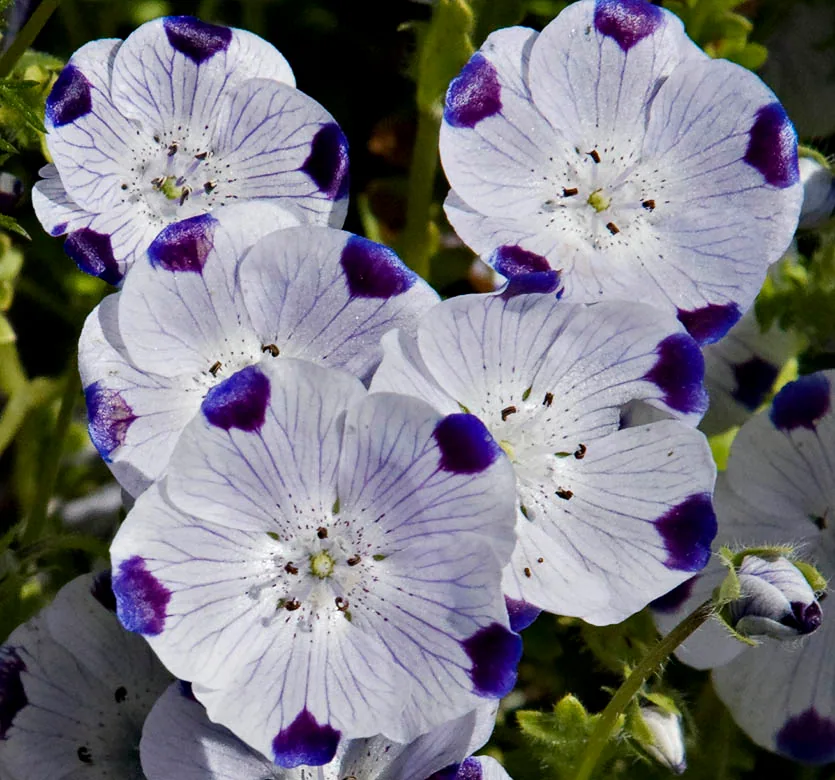
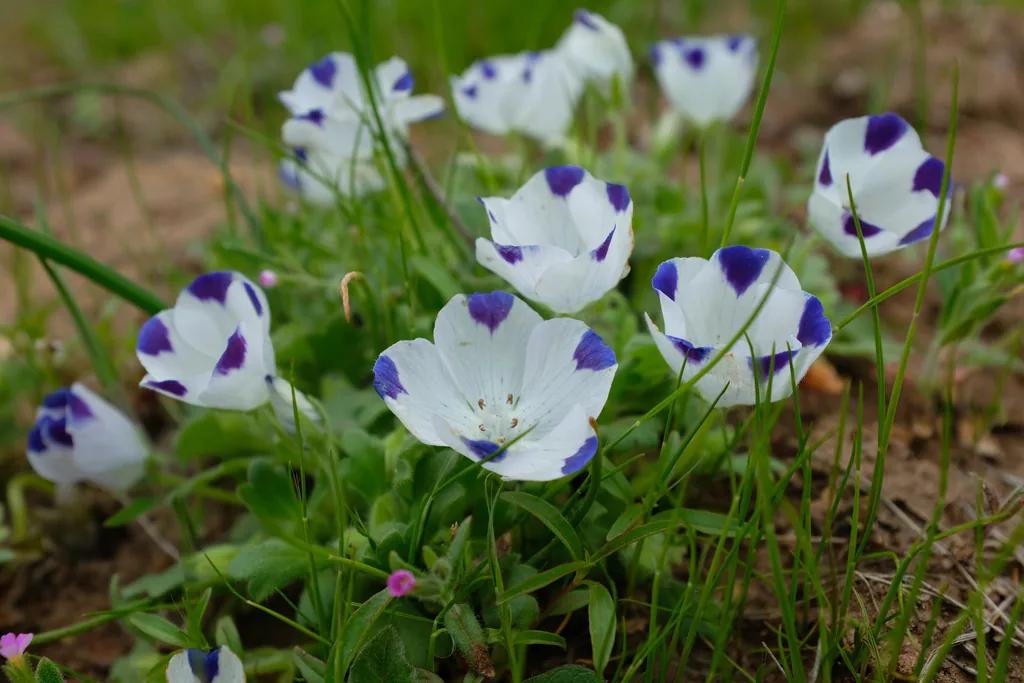
Fivespot is a cheerful little annual that stays just 6 inches tall, so it fits nicely in a pot or a small corner of the garden. Sow the seeds straight into the ground in early spring and give them regular watering. Even better, it seeds itself, so new plants can pop up on their own.
- Water
Water regularly
What the sources say (1)
Watering: Regular watering
After this, they need essentially no care, apart from regular watering.
— Nemophilia Flower Care: How To Grow Five Spot Wildflowers | Gardening Know How [4] - Size
A small annual, 6 inches tall
- Propagation
Grows from seed and also seeds itself
What the sources say (2)
Propagation: Seed (direct sowing); self-seeds
They do not transplant well, so direct sowing is recommended.
— Nemophilia Flower Care: How To Grow Five Spot Wildflowers | Gardening Know How [4] If allowed to flower and die back, however, they ought to seed naturally, and new plants should appear in the same spot the following spring.
— Nemophilia Flower Care: How To Grow Five Spot Wildflowers | Gardening Know How [4] - Sowing
Sow straight into the garden in early spring
What the sources say (1)
Sowing: Early spring, direct sown
Early in the spring, as temperatures are warming, sprinkle the seeds over the bare ground and then rake lightly to mix them with the soil.
— Nemophilia Flower Care: How To Grow Five Spot Wildflowers | Gardening Know How [4] - Containers
Grows in containers too
What the sources say (1)
In containers: Yes
Because of their compact size and vigorous blossoming, five spot wildflowers are perfect for hanging baskets
— Nemophilia Flower Care: How To Grow Five Spot Wildflowers | Gardening Know How [4]
Overview
Fivespot is a low-maintenance annual wildflower native to California that is grown from seed. [4] Seed is sown directly in early spring because the plants do not transplant well, and they need regular watering. [4]
This record is incomplete: the sources we read do not cover every field yet.
Not yet covered by our sources: Hardiness, coldest zone, Hardiness, warmest zone, Pruning
Fivespot care
How to water Fivespot
Regular watering
What the sources say (1)
After this, they need essentially no care, apart from regular watering.How much light Fivespot needs
The sources give different values depending on region, zone or growing conditions.
What each source says
According to Gardening Know How: Full sun to dappled shade
According to Utah State University Extension (EcoRestore): Low light
What the sources say (3)
According to Gardening Know How: They’ll tolerate most types of soil with full sun to dappled shade.According to Utah State University Extension (EcoRestore): Best Suited For These Conditions: Low Light
Best Suited For These Management Goals: Wildlife habitatThey’ll tolerate most types of soil with full sun to dappled shade.How much cold Fivespot can take
Hardiness, coldest zone
Not stated in the sources we read.
Hardiness, warmest zone
Not stated in the sources we read.
Where to grow Fivespot
Yes
What the sources say (1)
Because of their compact size and vigorous blossoming, five spot wildflowers are perfect for hanging basketsHow to propagate Fivespot
Seed (direct sowing); self-seeds
What the sources say (2)
They do not transplant well, so direct sowing is recommended.If allowed to flower and die back, however, they ought to seed naturally, and new plants should appear in the same spot the following spring.How to grow Fivespot
The plant
Life cycle
annual
What the sources say (1)
Plant type: Forb, Herb
Growing Season: Cool
Life Cycle: Annual
Cover: LowMature height
15.2 cm (0.5 ft)
What the sources say (1)
Acceptable Soil Conditions: No information found
Max Plant Height (in ft): 0.5Remedies
Each remedy shows what official sources say about it; traditional remedies without an official source are marked as such. Harmful ones are listed so you know to avoid them.
Treating the plant
aphids
firm spray of water Works
How: Address aphids with a firm spray of the hose, followed by neem oil.
Address aphids and spider mites with a firm spray of the hose followed by treatment with organic insecticidal neem oil.
— gardenerspath.com [5] What the evidence says On sturdy plants, aphids can be knocked off with a strong stream of water.
— ipm.ucanr.edu [6] neem oil spray Partly works
Neem can harm beneficial insects as well as pests.
— extension.unh.edu [7] neem oil can damage plants by burning their foliage. Do not use on recent transplants or otherwise stressed plants.
— extension.unh.edu [7] How: Treat aphids with organic insecticidal neem oil after a firm spray of the hose.
Address aphids and spider mites with a firm spray of the hose followed by treatment with organic insecticidal neem oil.
— gardenerspath.com [5] What the evidence says Neem oil can be used for certain insect and fungal disease issues. It kills insects by suffocation, covering their bodies with oil that blocks their breathing openings. It is most effective against immature insects.
— extension.unh.edu [7]
spider mites
firm spray of water and neem oil Not verified
Traditional remedy, not verified by an official source.
Neem can harm beneficial insects as well as pests.
— extension.unh.edu [7] neem oil can damage plants by burning their foliage. Do not use on recent transplants or otherwise stressed plants.
— extension.unh.edu [7] How: Address spider mites with a firm spray of the hose followed by neem oil.
slugs
food-grade diatomaceous earth Partly works
Diatomaceous earth is most effective when used in dry conditions and has little effect when it absorbs moisture.
— ask2.extension.org [8] How: Deter slugs with an application of food-grade diatomaceous earth.
Slugs like it cool and wet. Deter them with an application of food-grade diatomaceous earth
— gardenerspath.com [5] What the evidence says Diatomaceous earth (tiny fossilized skeletons of ancient aquatic diatoms) is moderately effective as a slug barrier.
— ask2.extension.org [8]
powdery mildew
neem oil spray Partly works
Neem can harm beneficial insects as well as pests.
— extension.unh.edu [7] neem oil can damage plants by burning their foliage. Do not use on recent transplants or otherwise stressed plants.
— extension.unh.edu [7] How: Treat powdery and downy mildew with neem oil; space plants well and avoid oversaturation.
Treat both with neem oil, which also acts as a fungicide.
— gardenerspath.com [5] What the evidence says Neem oil can also be used to manage some fungal disease issues, such as powdery mildew. It works by preventing the germination and penetration of fungal spores into leaf tissue.
— extension.unh.edu [7]
downy mildew
neem oil spray Not verified
Traditional remedy, not verified by an official source.
Neem can harm beneficial insects as well as pests.
— extension.unh.edu [7] neem oil can damage plants by burning their foliage. Do not use on recent transplants or otherwise stressed plants.
— extension.unh.edu [7] How: Treat powdery and downy mildew with neem oil; space plants well and avoid oversaturation.
Calendar
Sowing
Early spring, direct sown
What the sources say (1)
Early in the spring, as temperatures are warming, sprinkle the seeds over the bare ground and then rake lightly to mix them with the soil.Pruning
Not stated in the sources we read.
Months as given by the sources, which are mostly from the United States (northern hemisphere). In the southern hemisphere they shift by about six months.
Indicative values
Values from a secondary source, not checked word for word like the rest of this page. Use them as a starting point.
- Soil pH
- 6-7Indicative value, adapt it to your climate · Secondary source
- Care level
- MediumIndicative value, adapt it to your climate · Secondary source
- Growth rate
- LowIndicative value, adapt it to your climate · Secondary source
- Pruning
- March, April, May, June, July, August, September, MayIndicative value, adapt it to your climate · Secondary source
Similar plants
- Baby Blue Eyes Nemophila menziesii
- Aaron's Beard Hypericum calycinum
- Abies grandis Abies grandis
- Abraham Trachystemon orientalis
- Abyssinian banana Ensete ventricosum
- Acacia longifolia Acacia longifolia
- Acacia retinodes Acacia retinodes
- Acanthus hungaricus Acanthus hungaricus
Sources
Every value above is quoted from these documents. Links lead to the original publisher.
- danielle_test | USU · extension.usu.edu, consulted
- Fivespot (Nemophila maculata) - bplant.org · bplant.org, consulted
- How to Grow and Care for Nemophila · harvesttotable.com, consulted
- Nemophilia Flower Care: How To Grow Five Spot Wildflowers | Gardening Know How · gardeningknowhow.com, consulted
- gardenerspath.com · gardenerspath.com
- ipm.ucanr.edu · ipm.ucanr.edu
- extension.unh.edu · extension.unh.edu
- ask2.extension.org · ask2.extension.org
Written by Emilio Marruso · last checked