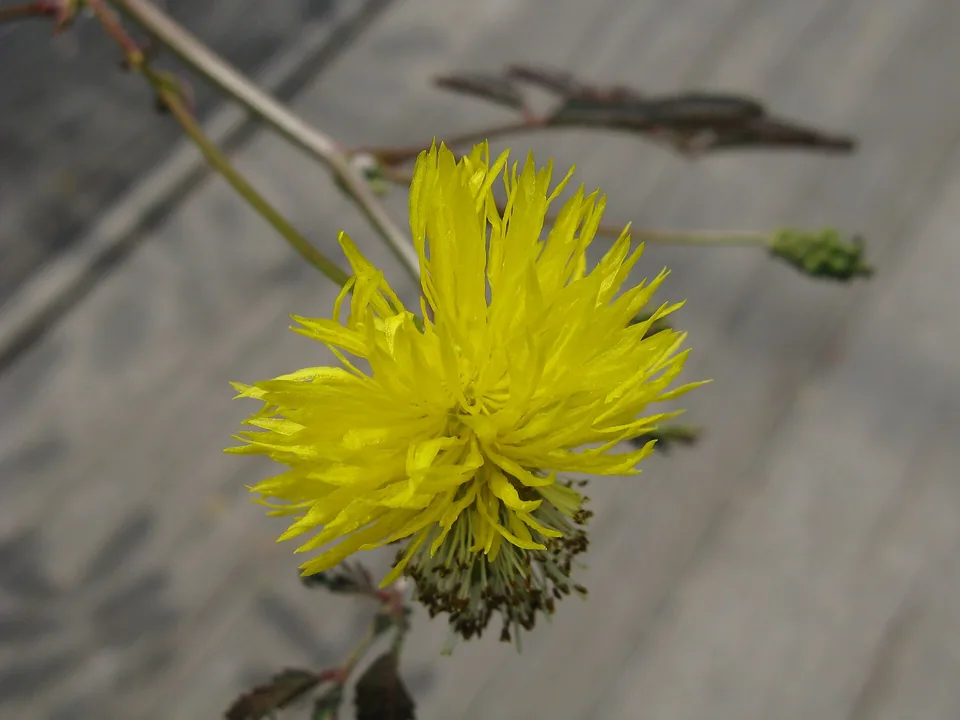

How to Grow and Care for Water Mimosa
Neptunia oleracea
Written by Emilio Marruso · last checked
At a glance
Water mimosa is a vegetable that grows right in the water: give it full sun and shallow, slow-moving water, and it does the rest. Your first harvest of tender young shoots comes just 3–4 weeks after planting, then every 5–7 days for 4–6 months. Enjoy them raw, cooked, or fried, straight from your own water garden.
- Sun
Full sun; shade slows its growth
What the sources say (2)
- Water
Grows in shallow, slow-moving fresh water 12–31 inches deep; salty water harms it
What the sources say (4)
Watering: Shallow, slow-moving water 30-80 cm [12–31 in] deep; lots of water
The plant prefers 30-80 cm depth of slow-moving water, full sun and hot and humid conditions.
— PROSEA - Plant Resources of South East Asia [1] Light Preference | Full Sun | Water Preference | Lots of Water
— NParks | Neptunia oleracea [6] Watering notes: Water level raised to and kept at 50 cm [20 in] one week after planting (rice-field cultivation, Thailand); shade, brackish water and saline soil adversely affect growth
One week after planting, the water level is raised and kept at 50 cm.
— PROSEA - Plant Resources of South East Asia [1] Shade, brackish water and saline soil adversely affect plant growth.
— PROSEA - Plant Resources of South East Asia [1] - Spacing
3 ft by 7 ft between plants
What the sources say (2)
Spacing: 100 x 200 cm (1 m x 2 m [6.6 ft])
Thailand (inundated rice fields): and 3-5 stem cuttings, 50-150 cm long are directly planted at a spacing of 1 m x 2 m.
— PROSEA - Plant Resources of South East Asia [1] and 3-5 stem cuttings, 50-150 cm long are directly planted at a spacing of 1 m x 2 m.
— PROSEA - Plant Resources of South East Asia [1] - Planting
Plant at the start of the rainy season
What the sources say (2)
Planting: Beginning of the rainy season (May, Thailand)
Thailand: In Thailand, water mimosa is usually grown at the beginning of the rainy season (May).
— PROSEA - Plant Resources of South East Asia [1] In Thailand, water mimosa is usually grown at the beginning of the rainy season (May).
— PROSEA - Plant Resources of South East Asia [1] - Harvest
Pick young shoots 3–4 weeks after planting, then every 5–7 days; eat them raw, cooked or fried
What the sources say (1)
Harvest: First harvest 3-4 weeks after planting, then every 5-7 days during a 4-6 month cropping season
The first harvest can be done 3-4 weeks after planting and subsequently at intervals of 5-7 days during the 4-6 months cropping season.
— PROSEA - Plant Resources of South East Asia [1] - Pests
Caterpillars of a leaf roller can attack the soft stems
- Watch out
Even small bits of stem take root: it can spread into ponds and streams
- Propagation
Grow new plants from stem cuttings or from seed
What the sources say (1)
Propagation: Stem cuttings (conventional method); seed
Water mimosa can be propagated by seed, but the conventional method is by stem cuttings.
— PROSEA - Plant Resources of South East Asia [1]
Overview
Water mimosa is a perennial aquatic herb that floats or grows prostrate at the water edge and is grown as a vegetable in South-East Asia. [1] It prefers shallow, slow-moving water, full sun and hot, humid conditions. [1] It is propagated mostly by stem cuttings, and shoots can be harvested from 3-4 weeks after planting. [1]
Water Mimosa care
Measurements in square brackets are our conversion into the other unit system; the quoted text is unchanged.
How to water Water Mimosa
Watering
Shallow, slow-moving water 30-80 cm [12–31 in] deep; lots of water
Watering notes
Water level raised to and kept at 50 cm [20 in] one week after planting (rice-field cultivation, Thailand); shade, brackish water and saline soil adversely affect growth
How much light Water Mimosa needs
Full sun; shade adversely affects growth
Where to grow Water Mimosa
100 x 200 cm (1 m x 2 m [6.6 ft])
What each source says
Thailand (inundated rice fields): 100 x 200 cm (1 m x 2 m [6.6 ft])
What the sources say (2)
Thailand (inundated rice fields): and 3-5 stem cuttings, 50-150 cm long are directly planted at a spacing of 1 m x 2 m.and 3-5 stem cuttings, 50-150 cm long are directly planted at a spacing of 1 m x 2 m.How to propagate Water Mimosa
Stem cuttings (conventional method); seed
What the sources say (1)
Water mimosa can be propagated by seed, but the conventional method is by stem cuttings.Water Mimosa pests and problems
Leaf roller larvae
Symptom: The larvae of the leaf roller Synclita sp. may attack the spongy tissue and stem.
What to do: Synthetic pyrethroid insecticides are recommended for the control of this insect.
What the sources say (1)
The larvae of the leaf roller Synclita sp. may attack the spongy tissue and stem. Synthetic pyrethroid insecticides are recommended for the control of this insect.
— PROSEA - Plant Resources of South East Asia [1] Invasive spread from stem fragments
Symptom: It reproduces and spreads vegetatively from stem fragments and can establish in freshwater habitats.
What the sources say (1)
Its ability to reproduce and spread vegetatively from stem fragments increases the risk of accidental establishment in wetlands, streams, taro patches, and other freshwater habitats.
— Neptunia oleracea | Plant Pono [5]
Remedies
Each remedy shows what official sources say about it; traditional remedies without an official source are marked as such. Harmful ones are listed so you know to avoid them.
Getting rid of it
invasive plant removal
physical removal of all plant parts Official source, not independently tested
It is important to remove all parts of the plant because it can easily regrow from stem fragments.
— NSW WeedWise [4] How: All parts of the plant need to be removed from the soil and water body, repeated regularly until the plants stop re-growing.
All parts of the plant need to be removed from the soil and water body to stop the plant re-growing and spreading. This will need to be done regularly until the plants stop re-growing.
— NSW WeedWise [4]
Calendar
Planting
Beginning of the rainy season (May, Thailand)
What each source says
Thailand: Beginning of the rainy season (May)
What the sources say (2)
Thailand: In Thailand, water mimosa is usually grown at the beginning of the rainy season (May).In Thailand, water mimosa is usually grown at the beginning of the rainy season (May).Harvest
First harvest 3-4 weeks after planting, then every 5-7 days during a 4-6 month cropping season
What the sources say (1)
The first harvest can be done 3-4 weeks after planting and subsequently at intervals of 5-7 days during the 4-6 months cropping season.Months as given by the sources, which are mostly from the United States (northern hemisphere). In the southern hemisphere they shift by about six months.
Edibility
Reported by the source, quoted verbatim. Do not eat a plant on the basis of this page alone: identification mistakes can be dangerous.
Water mimosa is mainly gathered and cultivated for its young shoots, which are consumed as a vegetable, raw, cooked, or fried.
[1]
Indicative values
Values from a secondary source, not checked word for word like the rest of this page. Use them as a starting point.
- Life cycle
- Herbaceous PerennialIndicative value, adapt it to your climate · Secondary source
- Mature height
- 7.6-15.2 cm (0.25-0.5 ft)Indicative value, adapt it to your climate · Secondary source
- Hours of sun
- 6-8 hoursIndicative value, adapt it to your climate · Secondary source
- Soil pH
- 6-7.5Indicative value, adapt it to your climate · Secondary source
- USDA hardiness zones
- 9-12 [winter low −6.7 to 15.6 °C (20 to 60 °F)]Indicative value, adapt it to your climate · Secondary source
- Care level
- MediumIndicative value, adapt it to your climate · Secondary source
- Growth rate
- LowIndicative value, adapt it to your climate · Secondary source
- Pruning
- March, April, May, June, JulyIndicative value, adapt it to your climate · Secondary source
Similar plants
- Abraham Trachystemon orientalis
- Abyssinian banana Ensete ventricosum
- Acacia longifolia Acacia longifolia
- African Blue Lily Agapanthus praecox
- African lily Dietes bicolor
- African lovegrass Eragrostis curvula
- African tuliptree Spathodea campanulata
- Agretti Soda inermis
Sources
Every value above is quoted from these documents. Links lead to the original publisher.
- PROSEA - Plant Resources of South East Asia · prosea.prota4u.org, consulted
- Neptunia oleracea - Useful Tropical Plants · tropical.theferns.info, consulted
- Water mimosa · weeds.brisbane.qld.gov.au, consulted
- NSW WeedWise · weeds.dpi.nsw.gov.au, consulted
- Neptunia oleracea | Plant Pono · plantpono.org, consulted
- NParks | Neptunia oleracea · nparks.gov.sg, consulted
- Plants of Hawai'i | Bishop Museum · plantsofhawaii.org, consulted
Written by Emilio Marruso · last checked