
How to Grow and Care for Crowpoison
Nothoscordum bivalve
Written by Emilio Marruso · last checked
Toxic to: People · Why
At a glance
False garlic is a perennial, so it comes back year after year in your garden. Give it full sun or just a little shade, and it grows to a tidy 8 to 16 inches tall. You can start new plants from seed. Just remember it is not a garlic for the kitchen: enjoy it with your eyes, not on your plate.
- Sun
Full sun to a little shade
- Cold
Survives winters down to 10 °F (−12.2 °C)
Hardy in cold winters · USDA 8a · RHS H5 · Z8
What the sources say (2)
Hardiness, coldest zone: 8a [winter low −12.2 to −9.4 °C (10 to 15 °F)]
Hardiness: Zones 8A–10A Lifespan: Perennial Soil: Moist well-drained soils
—  [8] Hardiness, warmest zone: 10a [winter low −1.1 to 1.7 °C (30 to 35 °F)]
Hardiness: Zones 8A–10A Lifespan: Perennial Soil: Moist well-drained soils
—  [8] - Size
8 to 16 inches tall
What the sources say (1)
Mature height: 20.32-40.64 cm (8-16 in)
Plant type Forbs and Subshrubs Origin Native Lifecycle Perennial Height 8 to 16 inches Riparian No
— Nothoscordum bivalve - crowpoison | Yavapai County Native and Naturalized Plants [1] - Propagation
A perennial you can grow from seed
What the sources say (4)
Propagation: Seed
Propagation: Seed Garden tips: False garlic is generally not available commercially.
—  [8] Propagation Material: Seeds Seed Collection: Collect seed in May, June.
— Lady Bird Johnson Wildflower Center - The University of Texas at Austin [4] Life cycle: perennial
Plant type Forbs and Subshrubs Origin Native Lifecycle Perennial Height 8 to 16 inches Riparian No
— Nothoscordum bivalve - crowpoison | Yavapai County Native and Naturalized Plants [1] Base Flower Color White Duration Perennial Fruit Dehiscence Yes
— Nothoscordum bivalve / Species Page / Plant Atlas [2] - Safety
Not edible and may be toxic: don't eat it
Overview
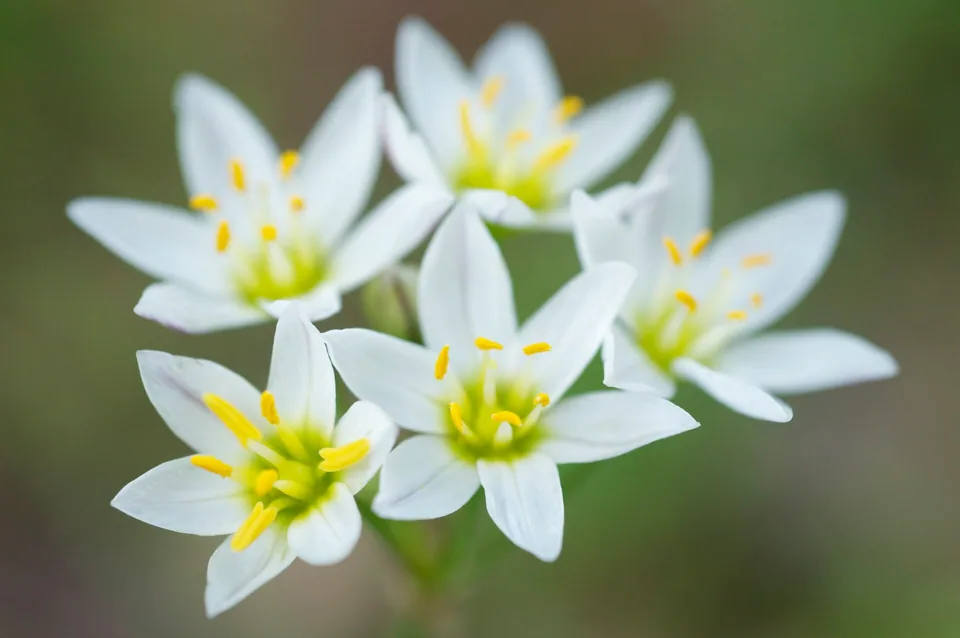
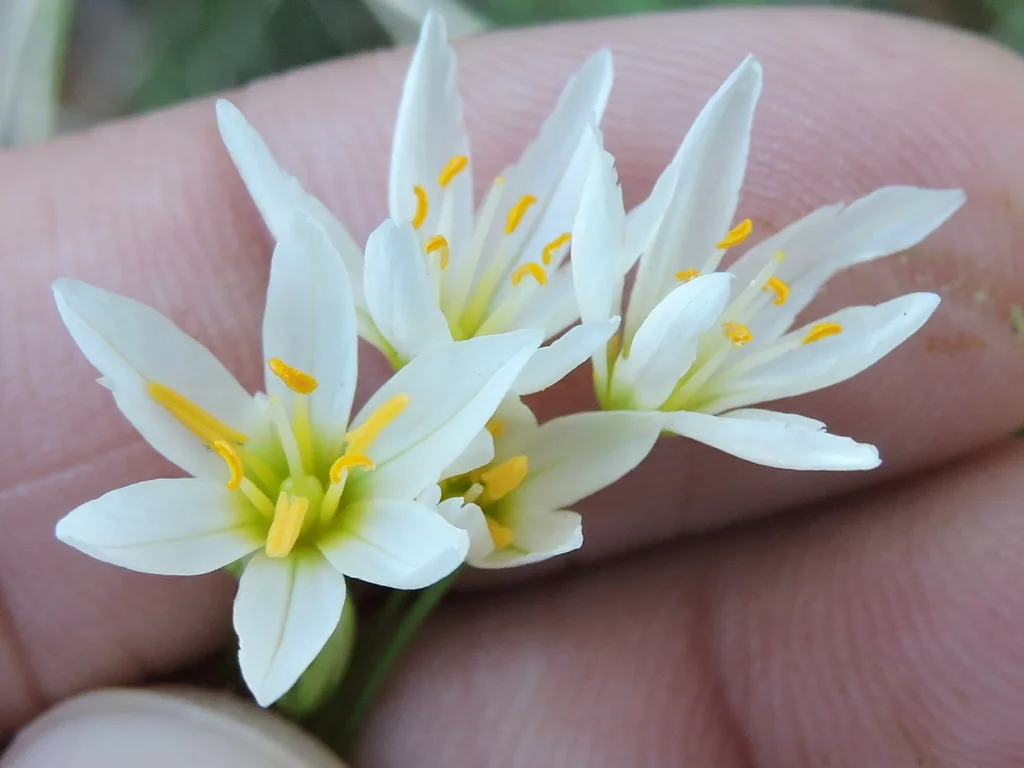
False garlic is a grasslike bulbous perennial with star-shaped flowers. [8] It occurs naturally in moist woodlands, grasslands and along roadsides in Florida. [8] It readily forms offset bulbils but is described as well-behaved and not weedy in the garden. [5]
This record is incomplete: the sources we read do not cover every field yet.
Not yet covered by our sources: Watering, Pruning
Crowpoison care
How to water Crowpoison
Not stated in the sources we read.
How much light Crowpoison needs
How much cold Crowpoison can take
Hardiness, coldest zone
8a [winter low −12.2 to −9.4 °C (10 to 15 °F)]
What the sources say (1)
Hardiness: Zones 8A–10A Lifespan: Perennial Soil: Moist well-drained soilsHardiness, warmest zone
10a [winter low −1.1 to 1.7 °C (30 to 35 °F)]
What the sources say (1)
Hardiness: Zones 8A–10A Lifespan: Perennial Soil: Moist well-drained soilsHow to propagate Crowpoison
How to grow Crowpoison
The plant
Life cycle
perennial
What the sources say (2)
Plant type Forbs and Subshrubs Origin Native Lifecycle Perennial Height 8 to 16 inches Riparian NoBase Flower Color White Duration Perennial Fruit Dehiscence YesFamily
Mature height
20.32-40.64 cm (8-16 in)
What the sources say (1)
Plant type Forbs and Subshrubs Origin Native Lifecycle Perennial Height 8 to 16 inches Riparian NoRemedies
Each remedy shows what official sources say about it; traditional remedies without an official source are marked as such. Harmful ones are listed so you know to avoid them.
Getting rid of it
unwanted false garlic
digging out whole plants instead of pulling Not verified
Traditional remedy, not verified by an official source.
most compost bins don’t get hot enough to kill the bulbs and seeds, so unless you’ve got a burning-hot compost system, put them in the trash.
— gardenerd.com [9] It may take several passes over several seasons to fully eradicate it, but it’s worth being diligent.
— gardenerd.com [9] How: Dig plants out rather than pulling them; remove the bulbs and bulblets, throw them in the trash.
pulling plants by hand Not verified
Traditional remedy, not verified by an official source.
If using manual control, dig plants out rather than pulling them as pulling facilitates bulbs to split and multiply.
— cal-ipc.org [10] How: Manual removal by pulling.
Is Crowpoison poisonous?
Reported by the source, quoted verbatim. This is not medical or veterinary advice: if a person or an animal may have eaten this plant, contact a poison control centre or a veterinarian.
Calendar
Pruning
Not stated in the sources we read.
Months as given by the sources, which are mostly from the United States (northern hemisphere). In the southern hemisphere they shift by about six months.
Indicative values
Values from a secondary source, not checked word for word like the rest of this page. Use them as a starting point.
- Hours of sun
- 8-10 hoursIndicative value, adapt it to your climate · Secondary source
- Watering
- MinimumIndicative value, adapt it to your climate · Secondary source
- Drought tolerant
- yesIndicative value, adapt it to your climate · Secondary source
- Soil pH
- 6-7.5Indicative value, adapt it to your climate · Secondary source
- Growth rate
- LowIndicative value, adapt it to your climate · Secondary source
- Pruning
- August, March, AprilIndicative value, adapt it to your climate · Secondary source
Similar plants
- Abies grandis Abies grandis
- Abraham Trachystemon orientalis
- Abyssinian banana Ensete ventricosum
- Acacia longifolia Acacia longifolia
- Acanthus hungaricus Acanthus hungaricus
- Aconite Aconitum napellus
- Adam's Needle Yucca flaccida
- Adriatic lizard orchid Himantoglossum adriaticum
Sources
Every value above is quoted from these documents. Links lead to the original publisher.
- Nothoscordum bivalve - crowpoison | Yavapai County Native and Naturalized Plants · yavapaiplants.extension.arizona.edu, consulted
- Nothoscordum bivalve / Species Page / Plant Atlas · tennessee-kentucky.plantatlas.usf.edu, consulted
- Nothoscordum bivalve / [Species detail] / Plant Atlas · florida.plantatlas.usf.edu, consulted
- Lady Bird Johnson Wildflower Center - The University of Texas at Austin · wildflower.org, consulted
- Nothoscordum | Pacific Bulb Society · pacificbulbsociety.org, consulted
- Nothoscordum bivalve page · missouriplants.com, consulted
- Lady Bird Johnson Wildflower Center - The University of Texas at Austin · wildflower.org, consulted
-  · flawildflowers.org, consulted
- gardenerd.com · gardenerd.com
- cal-ipc.org · cal-ipc.org
Written by Emilio Marruso · last checked