
How to Grow and Care for Indian plum
Oemleria cerasiformis
Written by Emilio Marruso · last checked
At a glance
This drought-tolerant plant asks for very little: water it now and then while it settles in, and after that it mostly takes care of itself. Plant it in late spring or early summer, once the last frosts are over, and prune it in late winter. As a bonus, its berries are edible, enjoyed fresh, cooked or dried in small amounts.
- Water
Handles drought; water now and then while it settles in, deep watering usually isn't needed
What the sources say (2)
Watering: Drought tolerant; periodic watering during establishment
Although indian plum is drought tolerant, periodic watering during establishment is necessary.
— Plant Data Sheet http://depts.washington.edu/propplnt/Plants/oemleria.htm [2] Watering notes: Deep watering may not be necessary due to its shallow, spreading root growth
Deep watering may not be necessary due to its shallow, spreading root growth
— Plant Data Sheet http://depts.washington.edu/propplnt/Plants/oemleria.htm [2] - Cold
Survives winters down to −10 °F (−23.3 °C)
Very hardy · USDA 6 · RHS H7 · Z6
What the sources say (2)
Hardiness, coldest zone: 6 [winter low −23.3 to −17.8 °C (−10 to 0 °F)]
USDA Hardiness Zone  6-9 RHS Hardiness Rating  H7
— Oemleria cerasiformis - Trees and Shrubs Online [3] Hardiness, warmest zone: 9 [winter low −6.7 to −1.1 °C (20 to 30 °F)]
USDA Hardiness Zone  6-9 RHS Hardiness Rating  H7
— Oemleria cerasiformis - Trees and Shrubs Online [3] - Spacing
4–6 ft between plants
What the sources say (1)
Spacing: 121.9-182.9 cm (4-6 ft)
Recommended planting density 4-6’ apart (2)
— Plant Data Sheet http://depts.washington.edu/propplnt/Plants/oemleria.htm [2] - Planting
Plant in late spring or early summer, after the last frosts
What the sources say (1)
Planting: Late spring or early summer, after the last expected frosts
Plant them out into their permanent positions in late spring or early summer, after the last expected frosts.
— Oemleria cerasiformis - Useful Temperate Plants [5] - Pruning
Prune in late winter
What the sources say (1)
Pruning: Late winter
Old plants can be rejuvenated by cutting them back hard into the old wood in late winter
— Oemleria cerasiformis - Useful Temperate Plants [5] - Harvest
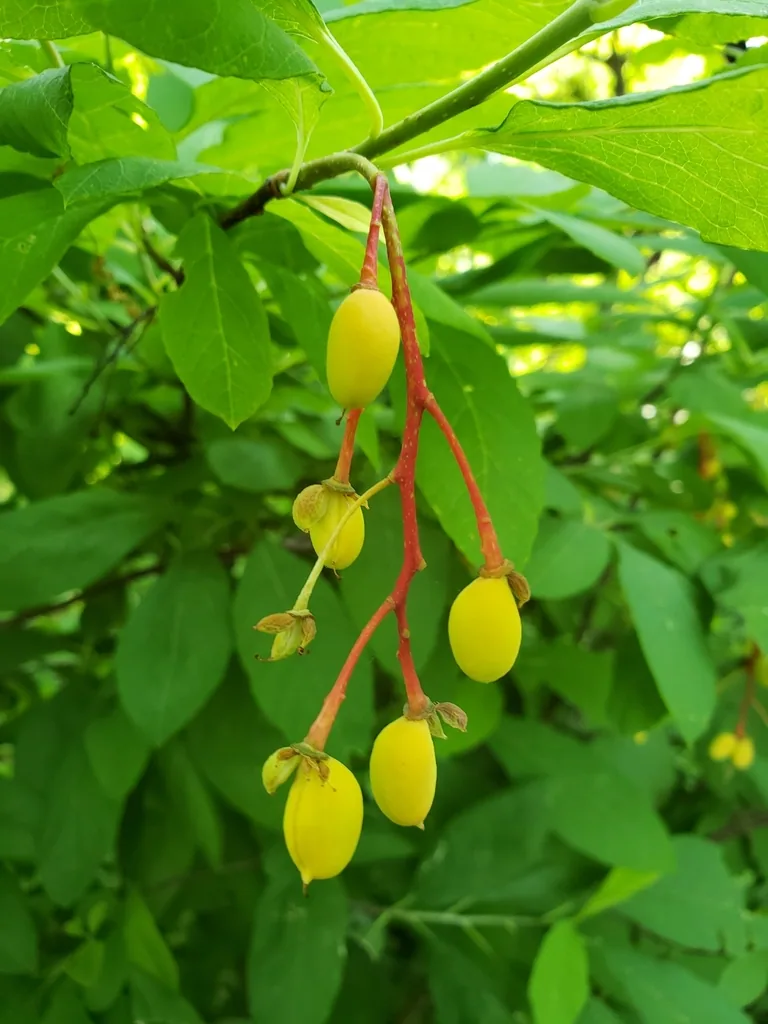
The berries are edible fresh, cooked or dried, in small amounts
- Propagation
Grow new plants from seed, cuttings or suckers
What the sources say (1)
Propagation: Seed; cuttings; suckers
Propagation from seed is successful. Vegetative propagation from cuttings and suckers is moderately successful
— Plant Data Sheet http://depts.washington.edu/propplnt/Plants/oemleria.htm [2] - Sowing
Sow in fall; for spring sowing, keep the seeds cold for four months first
What the sources say (2)
Sowing: Fall (seed dried whole after June collection); spring-sown seed germinates better after four months of cold stratification
It can then be dried whole and sown in the fall (6).
— Plant Data Sheet http://depts.washington.edu/propplnt/Plants/oemleria.htm [2] Germination of spring-sown seed is more successful if the seeds are cold stratified for four months
— Plant Data Sheet http://depts.washington.edu/propplnt/Plants/oemleria.htm [2]
Overview
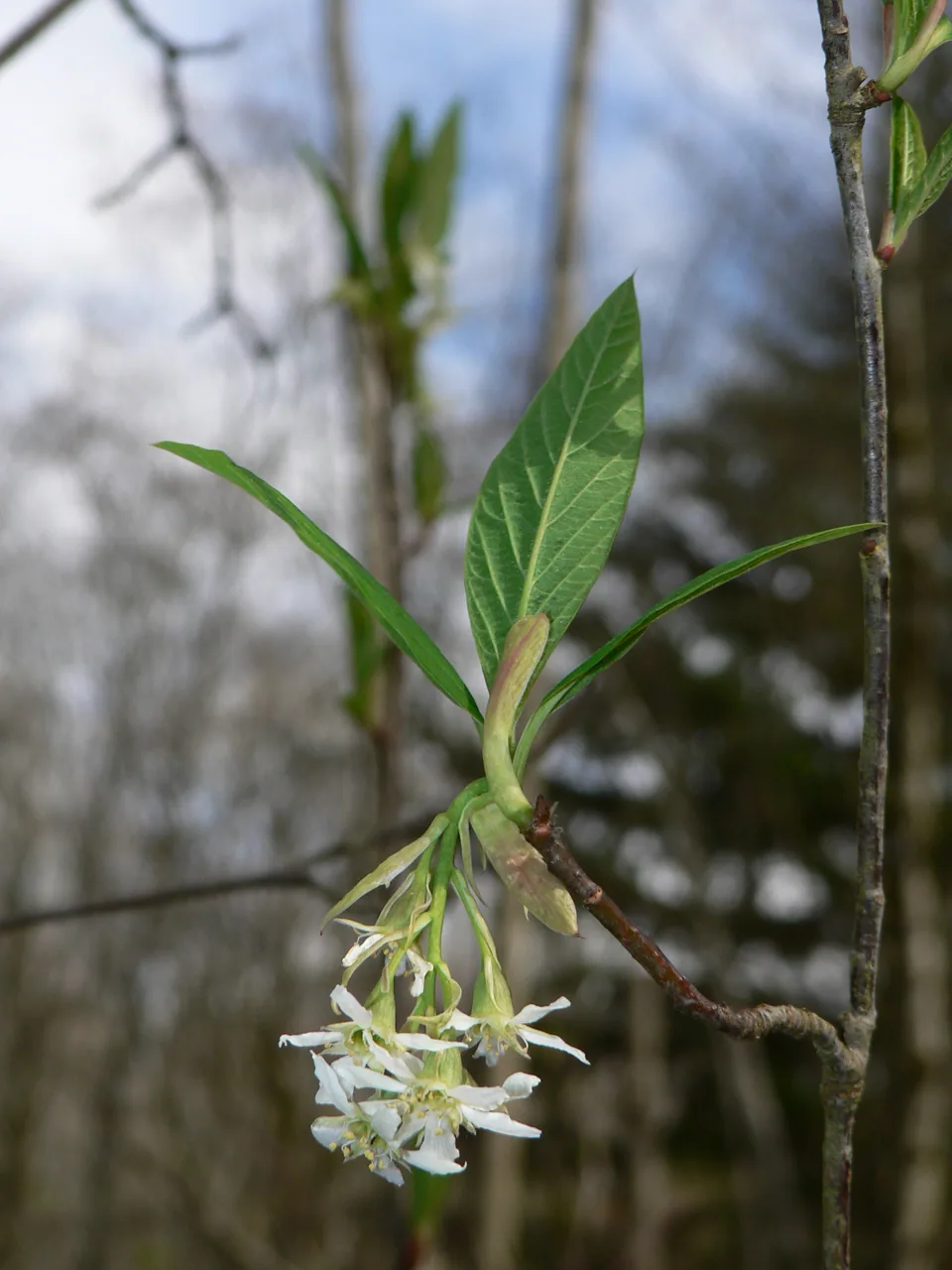
Oemleria cerasiformis is a large, suckering deciduous shrub or small tree known as a harbinger of spring. [3] It is dioecious, so male and female plants are needed for fruit. [3]
Indian plum care
How to water Indian plum
Watering
Drought tolerant; periodic watering during establishment
What the sources say (1)
Although indian plum is drought tolerant, periodic watering during establishment is necessary.Watering notes
Deep watering may not be necessary due to its shallow, spreading root growth
What the sources say (1)
Deep watering may not be necessary due to its shallow, spreading root growthHow much light Indian plum needs
The sources give different values depending on region, zone or growing conditions.
What each source says
According to Useful Temperate Plants (first report): Shady position
According to Useful Temperate Plants (another report): Sunny position
What the sources say (2)
According to Useful Temperate Plants (first report): Prefers a well-drained moisture retentive soil in a shady positionAccording to Useful Temperate Plants (another report): Requires a sunny position according to another reportHow much cold Indian plum can take
Hardiness, coldest zone
6 [winter low −23.3 to −17.8 °C (−10 to 0 °F)]
What the sources say (1)
USDA Hardiness Zone  6-9 RHS Hardiness Rating  H7Hardiness, warmest zone
9 [winter low −6.7 to −1.1 °C (20 to 30 °F)]
What the sources say (1)
USDA Hardiness Zone  6-9 RHS Hardiness Rating  H7Where to grow Indian plum
121.9-182.9 cm (4-6 ft)
What the sources say (1)
Recommended planting density 4-6’ apart (2)How to propagate Indian plum
Seed; cuttings; suckers
What the sources say (1)
Propagation from seed is successful. Vegetative propagation from cuttings and suckers is moderately successfulRemedies
The sources we checked give no remedies for this plant.
Calendar
Sowing
Fall (seed dried whole after June collection); spring-sown seed germinates better after four months of cold stratification
What the sources say (2)
It can then be dried whole and sown in the fall (6).Germination of spring-sown seed is more successful if the seeds are cold stratified for four monthsPlanting
Late spring or early summer, after the last expected frosts
What the sources say (1)
Plant them out into their permanent positions in late spring or early summer, after the last expected frosts.Pruning
Late winter
What the sources say (1)
Old plants can be rejuvenated by cutting them back hard into the old wood in late winterMonths as given by the sources, which are mostly from the United States (northern hemisphere). In the southern hemisphere they shift by about six months.
Edibility
Reported by the source, quoted verbatim. Do not eat a plant on the basis of this page alone: identification mistakes can be dangerous.
Many Coast Salish groups would eat the berries cooked, dried, or fresh in small quantities.
[4]
Indicative values
Values from a secondary source, not checked word for word like the rest of this page. Use them as a starting point.
- Life cycle
- PerennialIndicative value, adapt it to your climate · Secondary source
- Mature height
- 243.8-609.6 cm (8-20 ft)Indicative value, adapt it to your climate · Secondary source
- Hours of sun
- 8-12 hoursIndicative value, adapt it to your climate · Secondary source
- Soil
- Loamy HumusIndicative value, adapt it to your climate · Secondary source
- Soil pH
- 5.5-7.5Indicative value, adapt it to your climate · Secondary source
- Care level
- MediumIndicative value, adapt it to your climate · Secondary source
- Growth rate
- HighIndicative value, adapt it to your climate · Secondary source
- Pests
- Fungal leaf spot, Pest resistant, Disease resistant, Drought resistantIndicative value, adapt it to your climate · Secondary source
Similar plants
- Aaron's Beard Hypericum calycinum
- Abies grandis Abies grandis
- Abraham Trachystemon orientalis
- Abyssinian banana Ensete ventricosum
- Acacia longifolia Acacia longifolia
- Acacia retinodes Acacia retinodes
- Acanthus hungaricus Acanthus hungaricus
- Achlys triphylla Achlys triphylla
Sources
Every value above is quoted from these documents. Links lead to the original publisher.
- Plant Data Sheet · depts.washington.edu, consulted
- Plant Data Sheet http://depts.washington.edu/propplnt/Plants/oemleria.htm · courses.washington.edu, consulted
- Oemleria cerasiformis - Trees and Shrubs Online · treesandshrubsonline.org, consulted
- Osoberry - North Creek Wetland · uwb.edu, consulted
- Oemleria cerasiformis - Useful Temperate Plants · temperate.theferns.info, consulted
- Virginia Tech Dendrology Fact Sheet · dendro.cnre.vt.edu, consulted
Written by Emilio Marruso · last checked