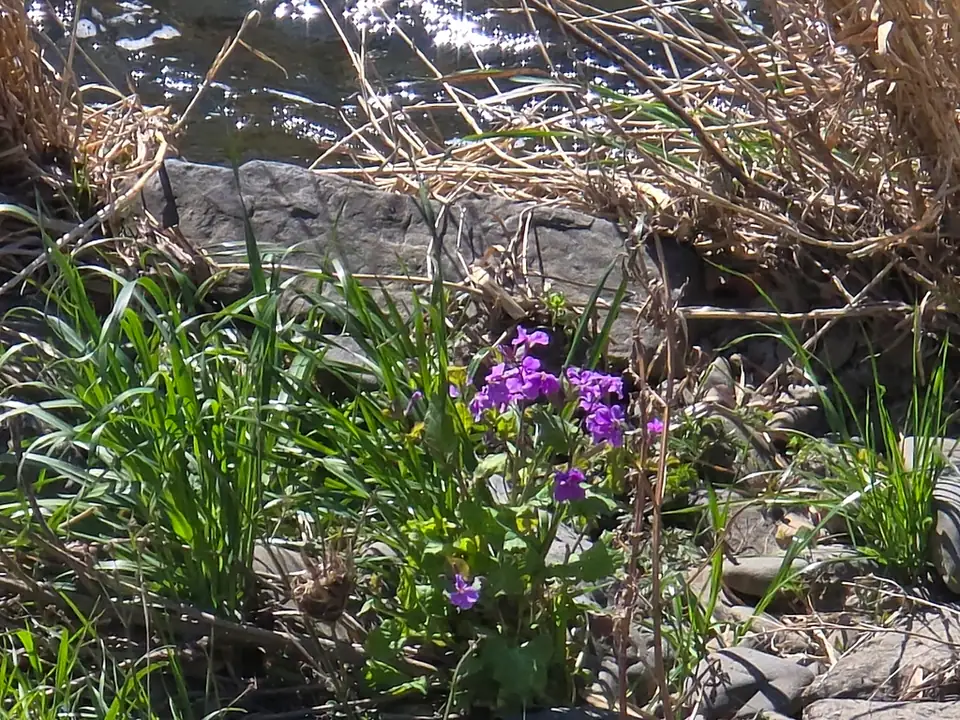
How to Grow and Care for Orychophragmus violaceus
Orychophragmus violaceus
Written by Emilio Marruso · last checked
At a glance
Give this plant full sun and soil that drains well, and it pays you back twice: its young leaves can be cooked like spinach or tossed into salads, and its edible flowers come thick and fast from late February to May, depending on the weather. Sow the seeds right where you want them to grow, and it will even sow itself.
- Sun
Full sun
What the sources say (1)
Light: Full sun
Succeeds in a fertile well-drained soil in a sunny position
— Orychophragmus violaceus - Useful Temperate Plants [1] - Water
Moderate watering: keep the soil lightly moist
What the sources say (1)
Watering: Mesic (moderate moisture)
General Plant Information ( Edit ) | Water Preferences: | Mesic | Pollinators: | Various insects
— Orychophragmus (Orychophragmus violaceus) - Garden.org [6] - Soil
Soil that drains well
What the sources say (1)
Watering notes: Well-drained soil
Succeeds in a fertile well-drained soil in a sunny position
— Orychophragmus violaceus - Useful Temperate Plants [1] - Harvest
Cook young leaves like spinach or add them to salads; the flowers are edible too, late February to May
- Pests
The usual cabbage-family pests can attack it badly; it recovers in fall
- Sowing
Sow the seeds right where they will grow; it also sows itself
What the sources say (2)
Propagation: Seed, sown in situ; self-seeds
Propagation Seed - sow in situ in spring or early summer.
— Orychophragmus violaceus - Useful Temperate Plants [1] Alys told me that it’s an annual/biennial that should self-seed around and become one of those “once you’ve got it, you’ve got it” items
— February orchid: edible, incredible — Jane Perrone [4]
Overview
Chinese violet cress is an annual or biennial herb of the cabbage family from eastern China and Korea, with purple to white flowers in spring. [1][2] It succeeds in fertile, well-drained soil in a sunny position and is not very cold-tolerant. [1] It is grown both as an ornamental and as a vegetable, and has escaped from gardens as a weed in Japan. [5][3]
This record is incomplete: the sources we read do not cover every field yet.
Not yet covered by our sources: Hardiness, coldest zone, Hardiness, warmest zone, Pruning
Orychophragmus violaceus care
How to water Orychophragmus violaceus
Watering
Mesic (moderate moisture)
What the sources say (1)
General Plant Information ( Edit ) | Water Preferences: | Mesic
| Pollinators: | Various insectsWatering notes
Well-drained soil
What the sources say (1)
Succeeds in a fertile well-drained soil in a sunny positionHow much light Orychophragmus violaceus needs
Full sun
What the sources say (1)
Succeeds in a fertile well-drained soil in a sunny positionHow much cold Orychophragmus violaceus can take
Hardiness, coldest zone
Not stated in the sources we read.
Hardiness, warmest zone
Not stated in the sources we read.
How to propagate Orychophragmus violaceus
Seed, sown in situ; self-seeds
What the sources say (2)
Propagation
Seed - sow in situ in spring or early summer.Alys told me that it’s an annual/biennial that should self-seed around and become one of those “once you’ve got it, you’ve got it” itemsOrychophragmus violaceus pests and problems
Brassica pests
Symptom: Plants badly attacked by the usual pests of brassicas, recovering in autumn
What the sources say (1)
It was also badly attacked by the usual pests of Brassicas, but it bounced back with masses of shoots from the roots in the autumn when the pest pressure was released.
— The Edible Japanese Bluebell! – Edimentals ! [5]
Remedies
The sources we checked give no remedies for this plant.
Calendar
Sowing
The sources give different values depending on region, zone or growing conditions.
What each source says
According to Useful Temperate Plants: Spring or early summer, in situ
According to Jane Perrone: Midsummer to autumn
Chengdu: September
What the sources say (3)
According to Useful Temperate Plants: Propagation
Seed - sow in situ in spring or early summer.According to Jane Perrone: they really are easy to grow yourself from a midsummer to autumn sowing for a crop next year.Chengdu: When O. violaceus was sown in September in Chengdu, it had a yield of flower stalks about 14,200 kg/hectare, which was a good yield.Pruning
Not stated in the sources we read.
Months as given by the sources, which are mostly from the United States (northern hemisphere). In the southern hemisphere they shift by about six months.
Edibility
Reported by the source, quoted verbatim. Do not eat a plant on the basis of this page alone: identification mistakes can be dangerous.
## Edible Uses Young leaves - cooked[ 105 Title Tanaka's Cyclopedia of Edible Plants of the World.
[1]You can treat the leaves like spinach and sauté in a little it of butter, or shred them and add them to a salad.
[4]The flowers are edible, pretty, and they come thick and fast between the end of February and May, depending on the weather.
[4]It hadn’t grown particularly well in my garden, but it did manage to flower and I used them in various salads during those two years
[5]It has numerous branches, from which flower stalks with your flower buds can be collected as a vegetable
[7]
Indicative values
Values from a secondary source, not checked word for word like the rest of this page. Use them as a starting point.
- Life cycle
- Herbaceous PerennialIndicative value, adapt it to your climate · Secondary source
- Mature height
- 30.5-61 cm (1-2 ft)Indicative value, adapt it to your climate · Secondary source
- Hours of sun
- 2-4 hoursIndicative value, adapt it to your climate · Secondary source
- Drought tolerant
- yesIndicative value, adapt it to your climate · Secondary source
- Soil pH
- 6-7.5Indicative value, adapt it to your climate · Secondary source
- USDA hardiness zones
- 7-10 [winter low −17.8 to 4.4 °C (0 to 40 °F)]Indicative value, adapt it to your climate · Secondary source
- Care level
- MediumIndicative value, adapt it to your climate · Secondary source
- Growth rate
- LowIndicative value, adapt it to your climate · Secondary source
- Pruning
- March, April, MayIndicative value, adapt it to your climate · Secondary source
Similar plants
- Abies grandis Abies grandis
- Abraham Trachystemon orientalis
- Abyssinian banana Ensete ventricosum
- Acacia longifolia Acacia longifolia
- Acanthus hungaricus Acanthus hungaricus
- Aconite Aconitum napellus
- Adam's Needle Yucca flaccida
- Adriatic lizard orchid Himantoglossum adriaticum
Sources
Every value above is quoted from these documents. Links lead to the original publisher.
- Orychophragmus violaceus - Useful Temperate Plants · temperate.theferns.info, consulted
- 诸葛菜 Orychophragmus violaceus | Nature Library · naturelib.net, consulted
- Chinese violet cress · hosho.ees.hokudai.ac.jp, consulted
- February orchid: edible, incredible — Jane Perrone · janeperrone.com, consulted
- The Edible Japanese Bluebell! – Edimentals ! · edimentals.com, consulted
- Orychophragmus (Orychophragmus violaceus) - Garden.org · garden.org, consulted
- A study on exploitation of new vegetable germplasm Orychophragmus violaceus O.E. Schulz, a member of Brassicaceae · agris.fao.org, consulted
Written by Emilio Marruso · last checked