
How to Grow and Care for European hop-hornbeam
Ostrya carpinifolia
Written by Emilio Marruso · last checked
At a glance
The European hop hornbeam is a stately tree that can reach up to 82 feet (25 m) tall, happy in full sun or partial shade. It handles a wide range of moisture and asks only for moderate, regular watering, which makes it an easygoing giant for the garden. Just plant it away from spots where summers turn dry.
- Sun
Full sun to partial shade
What the sources say (3)
Light: Full sun to semi-shade
It succeeds in full sun or semi-shade[ 188 Title The RHS Gardener's Encyclopedia of Plants and Flowers Publication Author Brickell.
— Ostrya carpinifolia - Useful Temperate Plants [5] Recommended Temperature Zone: Sunset: 3-9,14-17,31-35.37.39 Sun Exposure: Light shade to full sun
— European Hop Hornbeam (Ostrya carpinifolia) [4] It is light-demanding but can grow in shady, humid conditions.
— Ostrya carpinifolia - EUFORGEN European forest genetic resources programme [1] - Water
Moderate, regular watering; avoid places with dry summers
What the sources say (3)
Watering: Moderate to regular water
Sun Exposure: Light shade to full sun Growth Habits: Deciduous tree, slow growing up to 40 feet tall (12 m.), dark green leaves Watering Needs: Moderate water to regular water
— European Hop Hornbeam (Ostrya carpinifolia) [4] Watering notes: Wide tolerance to moisture but avoids areas with summer drought
wide tolerance limits to moisture but avoids areas with summer drought
— Ostrya carpinifolia - EUFORGEN European forest genetic resources programme [1] This hop-hornbeam is a stenohydric plant8, which means that it shows rather constant transpiration and osmotic pressure values also under moderate drought stress conditions
— Ostrya carpinifolia [2] - Pests
Oak bark beetle; diseases can cause branch dieback, twig blight and cankers
What the sources say (3)
Pests: European oak bark beetle (Scolytus intricatus)
The tree is also vulnerable to the European oak bark beetle (Scolytus intricatus)
— Ostrya carpinifolia [2] Diseases: Botryosphaeria dothidea dieback, Cryphonectria parasitica twig blight and canker
The fungi Botryosphaeria dothidea and Cryphonectria parasytica cause the most serious damage to the European hop hornbeam.
— Ostrya carpinifolia [2] It is affected by several fungal diseases like twig blight and canker, caused by Cryphonectria parasytica (Murr.) Barr.
— Ostrya carpinifolia [2] - Size
Up to 82 ft (25 m) tall
What the sources say (1)
Mature height: up to 2500 cm (25 m)
is a small to medium-sized broadleaved deciduous tree that can reach up to 25 m.
— Ostrya carpinifolia [2]
Overview
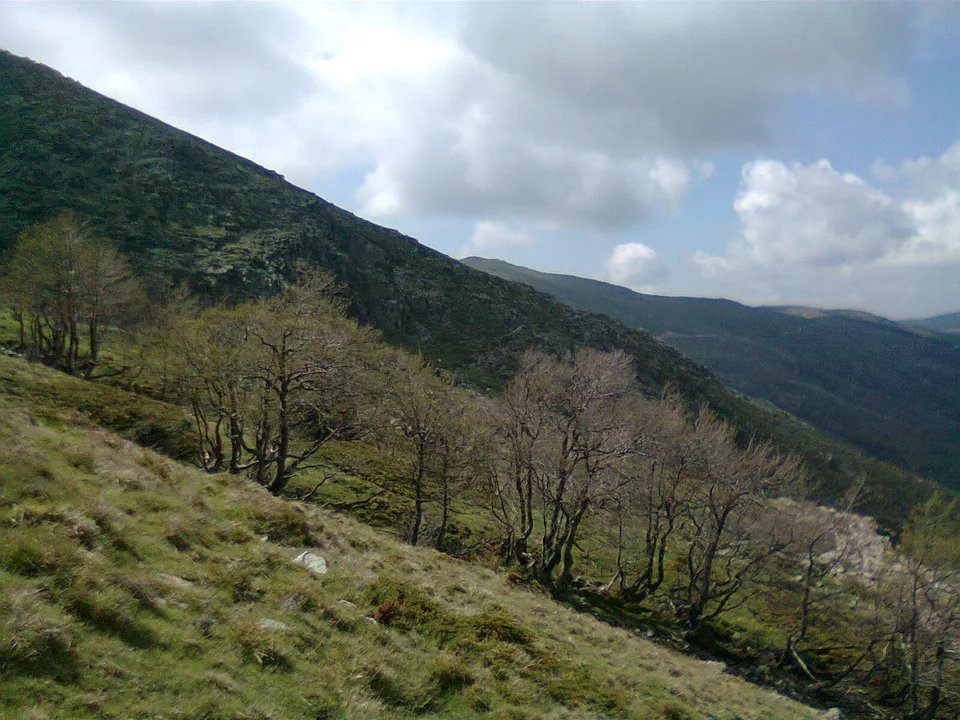
European hop-hornbeam is used to form hedges and as an ornamental tree along roadsides. [2] It succeeds in full sun or semi-shade and grows well on chalk. [5] It often grows on sunny hillsides and on shallow and poor limestone soils. [1]
This record is incomplete: the sources we read do not cover every field yet.
Not yet covered by our sources: Hardiness, coldest zone, Hardiness, warmest zone, Pruning, Propagation
European hop-hornbeam care
How to water European hop-hornbeam
Watering
Moderate to regular water
What the sources say (1)
Sun Exposure: Light shade to full sun
Growth Habits: Deciduous tree, slow growing up to 40 feet tall (12 m.), dark green leaves
Watering Needs: Moderate water to regular waterWatering notes
Wide tolerance to moisture but avoids areas with summer drought
What the sources say (2)
wide tolerance limits to moisture but avoids areas with summer droughtThis hop-hornbeam is a stenohydric plant8, which means that it shows rather constant transpiration and osmotic pressure values also under moderate drought stress conditionsHow much light European hop-hornbeam needs
Full sun to semi-shade
What the sources say (3)
It succeeds in full sun or semi-shade[ 188 Title
The RHS Gardener's Encyclopedia of Plants and Flowers
Publication
Author
Brickell.Recommended Temperature Zone:
Sunset: 3-9,14-17,31-35.37.39
Sun Exposure: Light shade to full sunIt is light-demanding but can grow in shady, humid conditions.How much cold European hop-hornbeam can take
Hardiness, coldest zone
Not stated in the sources we read.
Hardiness, warmest zone
Not stated in the sources we read.
How to propagate European hop-hornbeam
Not stated in the sources we read.
How to grow European hop-hornbeam
The plant
Mature height
up to 2500 cm (25 m)
What the sources say (1)
is a small to medium-sized broadleaved deciduous tree that can reach up to 25 m.Pests and diseases
Pests
European oak bark beetle (Scolytus intricatus)
What the sources say (1)
The tree is also vulnerable to the European oak bark beetle (Scolytus intricatus)Diseases
Botryosphaeria dothidea dieback, Cryphonectria parasitica twig blight and canker
What the sources say (2)
The fungi Botryosphaeria dothidea and Cryphonectria parasytica cause the most serious damage to the European hop hornbeam.It is affected by several fungal diseases like twig blight and canker, caused by Cryphonectria parasytica (Murr.) Barr.European hop-hornbeam pests and problems
Botryosphaeria dothidea dieback
Symptom: Unusual and extensive dieback caused by the fungus has been observed in western Slovenia and northern Italy.
What the sources say (1)
The fungi Botryosphaeria dothidea and Cryphonectria parasytica cause the most serious damage to the European hop hornbeam.
— Ostrya carpinifolia [2]
Remedies
The sources we checked give no remedies for this plant.
Calendar
Pruning
Not stated in the sources we read.
Months as given by the sources, which are mostly from the United States (northern hemisphere). In the southern hemisphere they shift by about six months.
Similar plants
- American Hop-hornbeam Ostrya virginiana
- Abies grandis Abies grandis
- Abraham Trachystemon orientalis
- Abyssinian banana Ensete ventricosum
- Acacia longifolia Acacia longifolia
- Acanthus hungaricus Acanthus hungaricus
- Aconite Aconitum napellus
- Adam's Needle Yucca flaccida
Sources
Every value above is quoted from these documents. Links lead to the original publisher.
- Ostrya carpinifolia - EUFORGEN European forest genetic resources programme · euforgen.org, consulted
- Ostrya carpinifolia · forest.jrc.ec.europa.eu, consulted
- Ostrya - Trees and Shrubs Online · treesandshrubsonline.org, consulted
- European Hop Hornbeam (Ostrya carpinifolia) · desert-tropicals.com, consulted
- Ostrya carpinifolia - Useful Temperate Plants · temperate.theferns.info, consulted
- Bean's Trees and Shrubs · beanstreesandshrubs.org, consulted
Written by Emilio Marruso · last checked