
How to Grow and Care for Marsh grass of Parnassus
Parnassia palustris
Written by Emilio Marruso · last checked
At a glance
This perennial loves wet feet: it thrives in moist, peaty soil or even in a spongy bog, so it's perfect for that soggy corner of your garden. It stays compact at 1 ft tall and comes back year after year. Plant it in late spring or early summer, after the last frosts, or sow fresh seed in late fall.
- Water
Keep it wet: it likes soil that stays moist, even boggy
What the sources say (1)
Watering notes: Succeeds in moist peaty soils or in spongy bogs
Succeeds in moist peaty soils or in spongy bogs
— Parnassia palustris - Useful Temperate Plants [1] - Soil
Moist, peaty soil or a spongy bog
What the sources say (1)
Watering notes: Succeeds in moist peaty soils or in spongy bogs
Succeeds in moist peaty soils or in spongy bogs
— Parnassia palustris - Useful Temperate Plants [1] - Planting
Plant in late spring or early summer, after the last frosts
What the sources say (1)
Planting: Late spring or early summer, after the last expected frosts
Plant them out into their permanent positions in late spring or early summer, after the last expected frosts.
— Parnassia palustris - Useful Temperate Plants [1] - Size
1 ft tall
What the sources say (1)
Mature height: 30 cm (1 ft)
The erect flowering stems grow up to a foot tall and are surmounted by a single flower.
— Northern Grass of Parnassus [2] - Propagation
Grow new plants from seed, or divide clumps in spring
What the sources say (2)
Propagation: Seed; division in spring
Seed - sow as soon as it is ripe in late autumn in a cold frame in pots of soil that are standing in shallow water.
— Parnassia palustris - Useful Temperate Plants [1] after the last expected frosts. Division in spring.
— Parnassia palustris - Useful Temperate Plants [1] - Sowing
Sow as soon as the seed is ripe, in late fall, in a cold frame
What the sources say (1)
Sowing: Sow as soon as the seed is ripe, in late autumn, in a cold frame
sow as soon as it is ripe in late autumn in a cold frame in pots of soil that are standing in shallow water
— Parnassia palustris - Useful Temperate Plants [1]
Overview
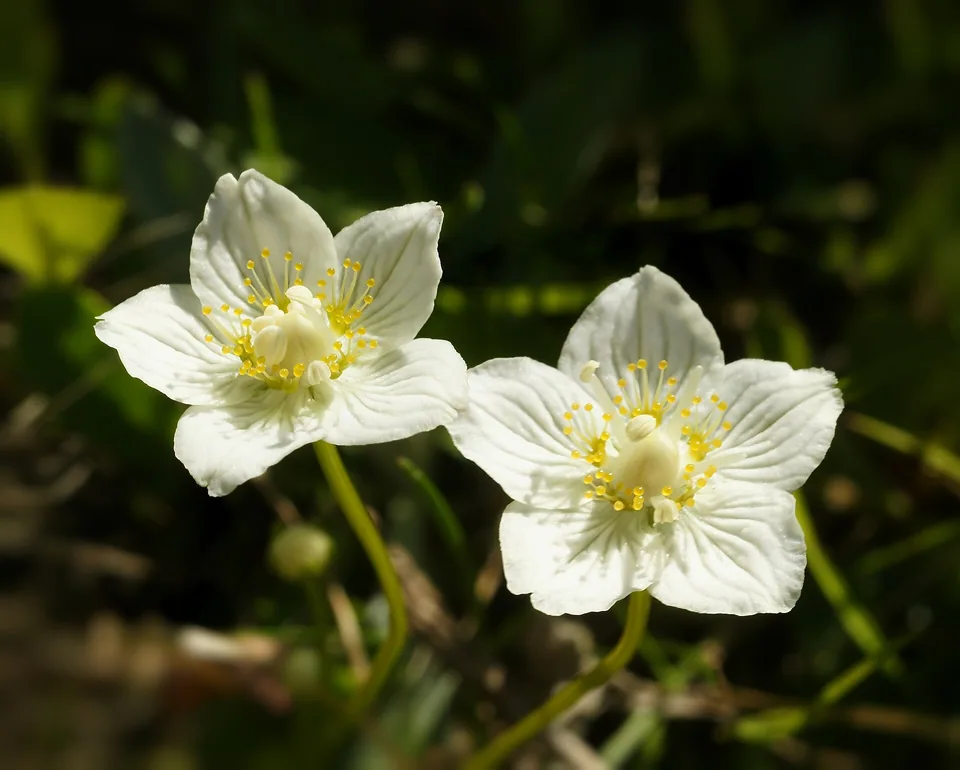
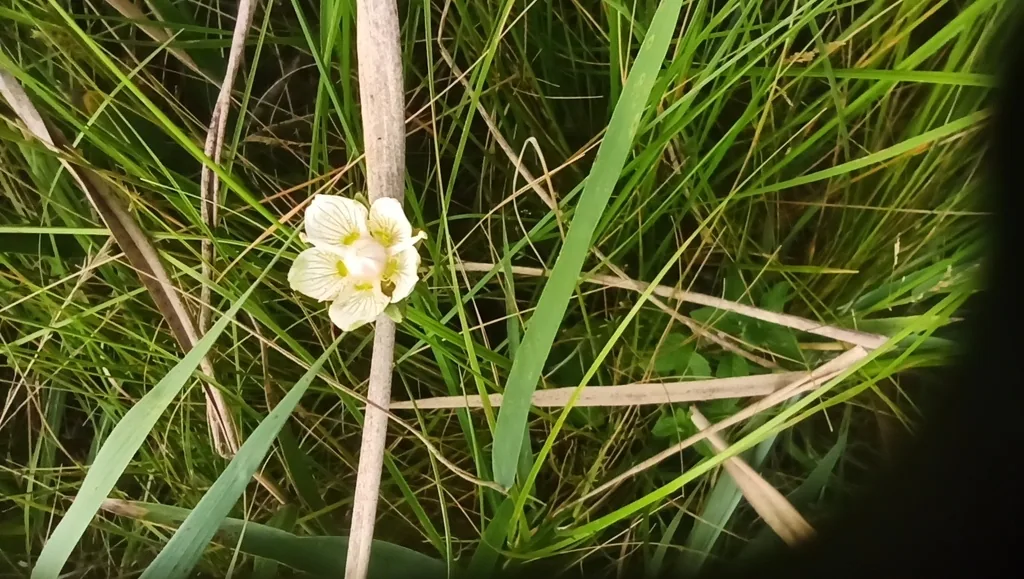
Parnassia palustris is a perennial of wet habitats with white green-striped flowers and heart-shaped basal leaves. [4] A listed source says it succeeds in moist peaty soils or spongy bogs and is propagated by seed or by division in spring. [1]
This record is incomplete: the sources we read do not cover every field yet.
Not yet covered by our sources: Watering, Light, Hardiness, coldest zone, Hardiness, warmest zone, Pruning
Marsh grass of Parnassus care
How to water Marsh grass of Parnassus
Watering
Not stated in the sources we read.
Watering notes
Succeeds in moist peaty soils or in spongy bogs
What the sources say (1)
Succeeds in moist peaty soils or in spongy bogsHow much light Marsh grass of Parnassus needs
Not stated in the sources we read.
How much cold Marsh grass of Parnassus can take
Hardiness, coldest zone
Not stated in the sources we read.
Hardiness, warmest zone
Not stated in the sources we read.
How to propagate Marsh grass of Parnassus
Seed; division in spring
How to grow Marsh grass of Parnassus
The plant
Life cycle
perennial
What the sources say (1)
This plant is perennial and flowers from late June to August depending on its location.Mature height
30 cm (1 ft)
What the sources say (1)
The erect flowering stems grow up to a foot tall and are surmounted by a single flower.Remedies
The sources we checked give no remedies for this plant.
Calendar
Sowing
Sow as soon as the seed is ripe, in late autumn, in a cold frame
What the sources say (1)
sow as soon as it is ripe in late autumn in a cold frame in pots of soil that are standing in shallow waterPlanting
Late spring or early summer, after the last expected frosts
What the sources say (1)
Plant them out into their permanent positions in late spring or early summer, after the last expected frosts.Pruning
Not stated in the sources we read.
Months as given by the sources, which are mostly from the United States (northern hemisphere). In the southern hemisphere they shift by about six months.
Similar plants
- Aaron's Beard Hypericum calycinum
- Abies grandis Abies grandis
- Abraham Trachystemon orientalis
- Abyssinian banana Ensete ventricosum
- Acacia longifolia Acacia longifolia
- Acacia retinodes Acacia retinodes
- Acanthus hungaricus Acanthus hungaricus
- Achlys triphylla Achlys triphylla
Sources
Every value above is quoted from these documents. Links lead to the original publisher.
- Parnassia palustris - Useful Temperate Plants · temperate.theferns.info, consulted
- Northern Grass of Parnassus · fs.usda.gov, consulted
- BSBI: Parnassia palustris · fermanagh.bsbi.org, consulted
- Grass-of-parnassus | IUCN UK Peatland Programme · iucn-uk-peatlandprogramme.org, consulted
- Ethnobotanical Plant Parnassia palustris | Dr. Duke's Phytochemical and Ethnobotanical Databases · phytochem.nal.usda.gov, consulted
- Minnesota Seasons - marsh grass of Parnassus · minnesotaseasons.com, consulted
Written by Emilio Marruso · last checked