
How to Grow and Care for Elephant grass
Pennisetum purpureum
Written by Emilio Marruso · last checked
At a glance
Elephant grass is a perennial that loves full sun and accepts a wide range of soils, from pH 4.5 to 8.2. Plant a few stem cuttings or divide a clump, and the first cut comes 120 days later, then again every 30–85 days. It is grown mainly as forage for livestock, so give it room and keep an eye on its spread.
- Sun
Full sun
What the sources say (1)
Light: Full sun
Sun: | full sun | Water: | low water requirement drought-tolerant
— Napier Grass | Herbaceous Plant Finder | Comprehensive Landscape Plant Directory | Plant Finders | TTU Plant Database | Texas Tech [2] - Soil
Grows in acidic to alkaline soil, pH 4.5–8.2
- Harvest
Livestock forage: first cut 120 days after planting, then every 30–85 days
What the sources say (1)
Harvest: First cut about 120 days after planting, then at intervals of 30-85 days
First cut can be made about 120 days after planting and thereafter it may be cut at intervals of 30-85 days.
— View crop [3] - Pests
Stunt disease: yellow, small leaves and short, crowded clumps
- Watch out
It spreads by seed, short runners and fallen stems that take root
- Propagation
From stem cuttings or by dividing clumps
What the sources say (1)
Propagation: Stem cuttings (setts), division of clumps
Vegetative propagation is either by dividing clumps of roots and stubble, or by stem cuttings consisting of at least three nodes, two of which are buried.
— Pennisetum purpureum (PROSEA) - Pl@ntUse [4]
Overview
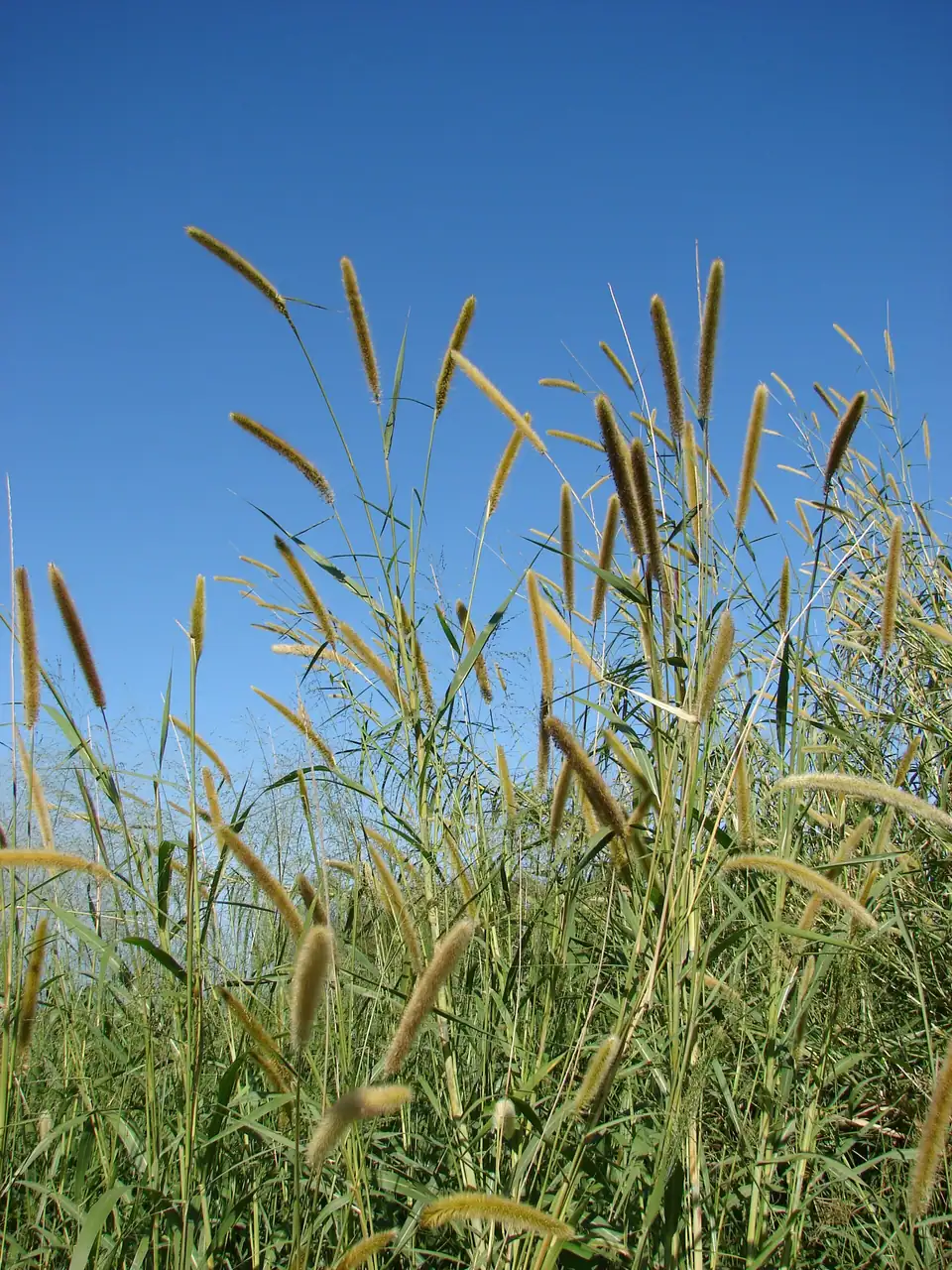
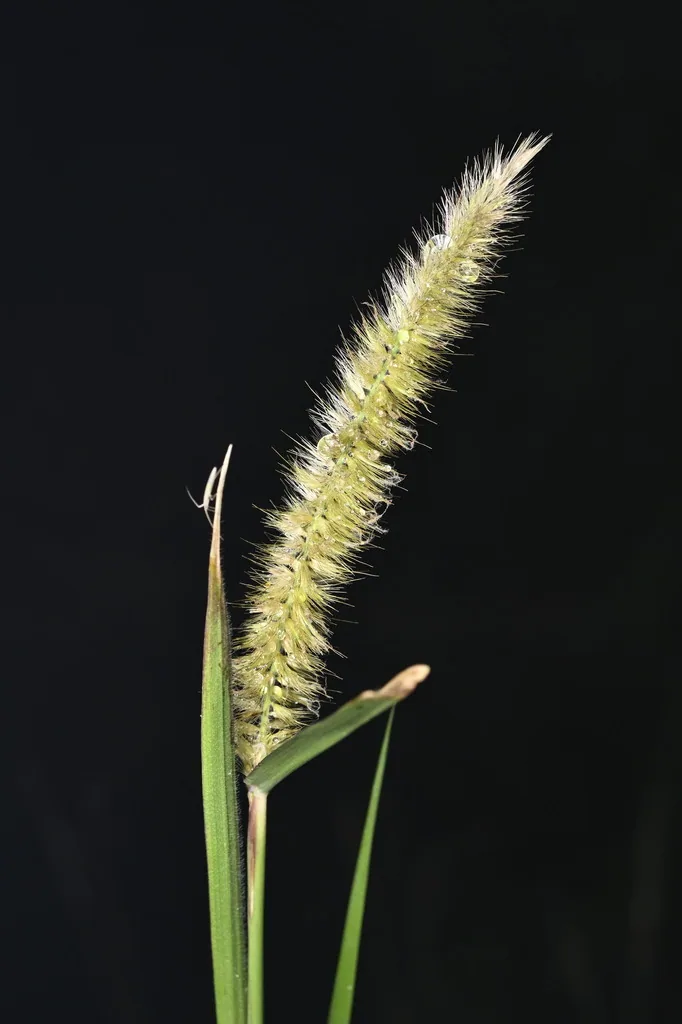
Napier grass is a tall, robust, deep-rooting, erect perennial with short rhizomes. [4] A Texas Tech listing gives full sun and a low water requirement. [2] It is listed as an invasive species in the Pacific Islands and Florida. [5]
This record is incomplete: the sources we read do not cover every field yet.
Not yet covered by our sources: Watering, Hardiness, coldest zone, Hardiness, warmest zone, Pruning
Elephant grass care
Measurements in square brackets are our conversion into the other unit system; the quoted text is unchanged.
How to water Elephant grass
Not stated in the sources we read.
How much light Elephant grass needs
Full sun
What the sources say (1)
Sun:
| full sun
| Water:
| low water requirement
drought-tolerantHow much cold Elephant grass can take
Hardiness, coldest zone
Not stated in the sources we read.
Hardiness, warmest zone
Not stated in the sources we read.
Best soil for Elephant grass
Soil pH, minimum
4.5
What the sources say (1)
pH of 4.5‒8.2 (mean 6.2) provided fertility is adequate.Soil pH, maximum
8.2
What the sources say (1)
pH of 4.5‒8.2 (mean 6.2) provided fertility is adequate.Where to grow Elephant grass
The sources give different values depending on region, zone or growing conditions.
What each source says
According to PROSEA: 50-100 cm [20–39 in] within rows
According to Tropical Forages: 30-100 cm (0.3-1 m) within rows
What the sources say (2)
According to PROSEA: Row width ranges from 50-200 cm, the greater distances being preferred in drier regions. Distance within rows varies from 50-100 cm.According to Tropical Forages: Normally planted in rows 0.5–2 m apart, and 0.3–1 m apart within rows, depending on rainfall and cutting management.How to propagate Elephant grass
Stem cuttings (setts), division of clumps
What the sources say (1)
Vegetative propagation is either by dividing clumps of roots and stubble, or by stem cuttings consisting of at least three nodes, two of which are buried.How to grow Elephant grass
The plant
Life cycle
perennial
What the sources say (1)
HABIT Perennial. Stolons present. Culms erect, or geniculately ascending; robust;Elephant grass pests and problems
Napier grass stunt disease
Symptom: Foliar yellowing, small leaves, proliferation of tillers, and shortening of internodes with severely stunted clumps.
What the sources say (1)
Both cause foliar yellowing, small leaves, proliferation of tillers, and shortening of internodes with severely stunted clumps.
— Cenchrus purpureus & hybrids - Tropical Forages [5] Spread beyond the planting
Symptom: Spreads by seed, usually into disturbed areas, but mostly by short rhizomes and tall stems that fall and root at the nodes.
What the sources say (1)
Spreads by seed, usually into disturbed areas, but mostly by short rhizomes and tall stems that fall and root at the nodes.
— Cenchrus purpureus & hybrids - Tropical Forages [5]
Remedies
Each remedy shows what official sources say about it; traditional remedies without an official source are marked as such. Harmful ones are listed so you know to avoid them.
Treating the plant
smut
uprooting diseased stools Not verified
Traditional remedy, not verified by an official source.
How: Farmers with head smut disease uprooted the diseased stools or removed only the diseased tillers.
Getting rid of it
invasive spread
tilling (seedlings only) Partly works
can actually cause larger infestations of napiergrass by breaking mature plants into pieces and distributing them throughout the field.
— plant-directory.ifas.ufl.edu [6] How: Tilling controls seedling plants; it is not to be used on mature plants.
Tilling can be used to effectively control seedling napiergrass plants. However, because of the ability of napiergrass to spread from vegetative cuttings and rhizomes, it should not be used to control mature plants
— plant-directory.ifas.ufl.edu [6] What the evidence says Tilling can be used to effectively control seedling napiergrass plants. However, because of the ability of napiergrass to spread from vegetative cuttings and rhizomes, it should not be used to control mature plants
— plant-directory.ifas.ufl.edu [6]
Calendar
Harvest
First cut about 120 days after planting, then at intervals of 30-85 days
What the sources say (1)
First cut can be made about 120 days after planting and thereafter it may be cut at intervals of 30-85 days.Pruning
Not stated in the sources we read.
Months as given by the sources, which are mostly from the United States (northern hemisphere). In the southern hemisphere they shift by about six months.
Edibility
Reported by the source, quoted verbatim. Do not eat a plant on the basis of this page alone: identification mistakes can be dangerous.
The main use of elephant grass is as a forage for ruminants.
[4]
Indicative values
Values from a secondary source, not checked word for word like the rest of this page. Use them as a starting point.
- Mature height
- 121.9-182.9 cm (4-6 ft)Indicative value, adapt it to your climate · Secondary source
- Watering
- AverageIndicative value, adapt it to your climate · Secondary source
- USDA hardiness zones
- 8-10 [winter low −12.2 to 4.4 °C (10 to 40 °F)]Indicative value, adapt it to your climate · Secondary source
- Care level
- MediumIndicative value, adapt it to your climate · Secondary source
- Growth rate
- HighIndicative value, adapt it to your climate · Secondary source
- Pruning
- March, April, May, June, July, August, September, December, January, February, March, April, May, June, July, August, March, April, MayIndicative value, adapt it to your climate · Secondary source
Similar plants
- Abies grandis Abies grandis
- Abraham Trachystemon orientalis
- Abyssinian banana Ensete ventricosum
- Acacia longifolia Acacia longifolia
- Acanthus hungaricus Acanthus hungaricus
- Aconite Aconitum napellus
- Adam's Needle Yucca flaccida
- Adriatic lizard orchid Himantoglossum adriaticum
Sources
Every value above is quoted from these documents. Links lead to the original publisher.
- RBG Kew: GrassBase - Pennisetum purpureum Description · kew.org, consulted
- Napier Grass | Herbaceous Plant Finder | Comprehensive Landscape Plant Directory | Plant Finders | TTU Plant Database | Texas Tech · depts.ttu.edu, consulted
- View crop · ecocrop.apps.fao.org, consulted
- Pennisetum purpureum (PROSEA) - Pl@ntUse · uses.plantnet-project.org, consulted
- Cenchrus purpureus & hybrids - Tropical Forages · tropicalforages.info, consulted
- plant-directory.ifas.ufl.edu · plant-directory.ifas.ufl.edu
Written by Emilio Marruso · last checked