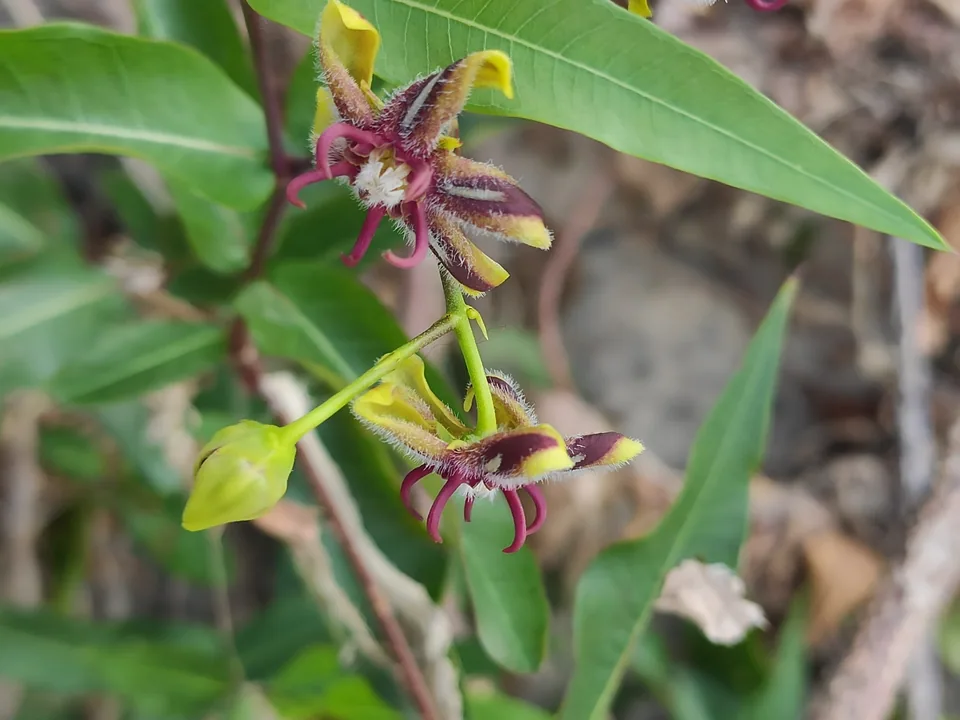
How to Grow and Care for Silkvine
Periploca graeca
Written by Emilio Marruso · last checked
Toxic to: Animals, People · Why
At a glance
Periploca graeca is a vigorous plant that can reach 33 feet, made for a sunny, open spot. It asks only for moderate watering and grows happily in a planter with a tall climbing frame, which also keeps its roots in check. You can start it from seed in spring, or from cuttings, layering or root division.
- Sun
Full sun in an open spot
- Water
Moderate watering
What the sources say (1)
Watering: Moderate
Shade tolerance no shade Water moderate Hardiness Zone 6+
— Silk Vine (Periploca graeca) — Practical Plants [3] - Cold
Survives winters down to −10 °F (−23.3 °C)
Very hardy · USDA 6 · RHS H7 · Z6
What the sources say (1)
Hardiness, coldest zone: 6 [winter low −23.3 to −17.8 °C (−10 to 0 °F)]
Light full sun Shade tolerance no shade Water moderate Hardiness Zone 6+
— Silk Vine (Periploca graeca) — Practical Plants [3] - Planting
Plant seedlings out in late spring or early summer, after the last frosts
What the sources say (1)
Planting: Late spring or early summer, after the last expected frosts (seedlings)
Plant them out into their permanent positions in late spring or early summer, after the last expected frosts.
— Silk Vine (Periploca graeca) — Practical Plants [3] - Watch out
Spreads too much in the ground; grow it in a planter set on a paving stone
- Size
Up to 33 ft tall
What the sources say (1)
Mature height: 1000 cm (10 m)
is a deciduous, twining climber, which reaches heights of 10m
— Periploca graeca - Cambridge University Botanic Garden [1] - Propagation
By seed, root division in spring, half-ripe cuttings or layering
What the sources say (5)
Propagation: Seed; root division in spring; half-ripe cuttings; layering
Seed - sow spring in a cold frame [4] .
— Silk Vine (Periploca graeca) — Practical Plants [3] Division of roots in the spring as soon as new growth commences
— Periploca graeca - Useful Temperate Plants [2] Cuttings of half-ripe wood, 5 - 10cm at a node or preferably with a heel
— Periploca graeca - Useful Temperate Plants [2] Layering in September/early autumn. Takes 6 months. High percentage
— Periploca graeca - Useful Temperate Plants [2] Best propagated by division of the root in spring.
— Periploca graeca - Trees and Shrubs Online [4] - Sowing
Sow in spring in a cold frame
What the sources say (1)
Sowing: Spring (in a cold frame)
Seed - sow spring in a cold frame [4] .
— Silk Vine (Periploca graeca) — Practical Plants [3] - Containers
Grows well in a planter with a tall climbing frame
What the sources say (1)
In containers: Yes
Best grown in a planter with a tall climbing frame, stood on a paving stone to stop the roots invading the ground through the bottom of the pot.
— Asclepiadaceae: Periploca [7] - Safety
The milky sap and the fruit are poisonous to people and likely to animals
Overview
Periploca graeca is a deciduous, twining climber reaching 10 m [32.8 ft] that grows in full sun and well-drained, fertile soil. [1] Its sap and fruit are poisonous. [3][4] It can outgrow its welcome in the ground and is best grown in a planter with a tall climbing frame. [7]
This record is incomplete: the sources we read do not cover every field yet.
Not yet covered by our sources: Hardiness, warmest zone, Pruning
Silkvine care
Measurements in square brackets are our conversion into the other unit system; the quoted text is unchanged.
How to water Silkvine
Moderate
What the sources say (1)
Shade tolerance
no shade
Water
moderate
Hardiness
Zone 6+How much light Silkvine needs
How much cold Silkvine can take
Hardiness, coldest zone
6 [winter low −23.3 to −17.8 °C (−10 to 0 °F)]
What the sources say (1)
Light
full sun
Shade tolerance
no shade
Water
moderate
Hardiness
Zone 6+Hardiness, warmest zone
Not stated in the sources we read.
Where to grow Silkvine
Yes
What the sources say (1)
Best grown in a planter with a tall climbing frame, stood on a paving stone to stop the roots invading the ground through the bottom of the pot.How to propagate Silkvine
Seed; root division in spring; half-ripe cuttings; layering
What the sources say (5)
Seed - sow spring in a cold frame [4] .Division of roots in the spring as soon as new growth commencesCuttings of half-ripe wood, 5 - 10cm at a node or preferably with a heelLayering in September/early autumn. Takes 6 months. High percentageBest propagated by division of the root in spring.How to grow Silkvine
The plant
Family
Apocynaceae
What the sources say (1)
A member of the Apocynaceae, or milkweed, family, the damaged stems exude a milky sap typical of all milkweeds.Mature height
1000 cm (10 m)
What the sources say (1)
is a deciduous, twining climber, which reaches heights of 10mSilkvine pests and problems
Vigorous, invasive growth
Symptom: Liable to outgrow its welcome if planted in the ground; roots may invade the ground through the bottom of a pot.
What to do: Grow in a planter with a tall climbing frame, stood on a paving stone.
What the sources say (2)
is perhaps too undemanding as it is liable to outgrow its welcome if planted in the ground
— Asclepiadaceae: Periploca [7] Best grown in a planter with a tall climbing frame, stood on a paving stone to stop the roots invading the ground through the bottom of the pot.
— Asclepiadaceae: Periploca [7] Cold damage
Symptom: Can suffer in prolonged cold spells.
What to do: None given in the saved documents.
What the sources say (1)
although generally considered hardy, it can suffer in prolonged cold spells
— Periploca graeca - Cambridge University Botanic Garden [1]
Remedies
The sources we checked give no remedies for this plant.
Is Silkvine toxic to pets?
Reported by the source, quoted verbatim. This is not medical or veterinary advice: if a person or an animal may have eaten this plant, contact a poison control centre or a veterinarian.
Animals
Sap and fruit contain cardiotoxic steroids (cardenolides), some of which have shown activity as anti-cancer agents. In Eastern countries, the acrid sap is used as a wolf poison and presumably toxic to other animals.
[7]- Toxic principle
Sap and fruit contain cardiotoxic steroids (cardenolides), some of which have shown activity as anti-cancer agents.
[7]
People
This section contains historical Plants For A Future notes marked noncommercial . The sap and the fruit is poisonous
[3]- Poisonous parts
This section contains historical Plants For A Future notes marked noncommercial . The sap and the fruit is poisonous
[3]
The milk that exudes from the broken stems is poisonous, and in the south of Europe it is believed to be injurious to health to inhale the heavy odour of the flowers.
[4]- Poisonous parts
The milk that exudes from the broken stems is poisonous, and in the south of Europe it is believed to be injurious to health to inhale the heavy odour of the flowers.
[4]
Calendar
Sowing
Spring (in a cold frame)
What the sources say (1)
Seed - sow spring in a cold frame [4] .Planting
Late spring or early summer, after the last expected frosts (seedlings)
What the sources say (1)
Plant them out into their permanent positions in late spring or early summer, after the last expected frosts.Pruning
Not stated in the sources we read.
Months as given by the sources, which are mostly from the United States (northern hemisphere). In the southern hemisphere they shift by about six months.
Similar plants
- Allamanda Allamanda cathartica
- Asiatic Jasmine Trachelospermum asiaticum
- Bladderflower Araujia sericifera
- Blue Star Amsonia ciliata
- Blue Star Amsonia hubrichtii
- Butterfly Weed Asclepias tuberosa
- Clasping Milkweed Asclepias amplexicaulis
- Desert Rose Adenium obesum
Sources
Every value above is quoted from these documents. Links lead to the original publisher.
- Periploca graeca - Cambridge University Botanic Garden · botanic.cam.ac.uk, consulted
- Periploca graeca - Useful Temperate Plants · temperate.theferns.info, consulted
- Silk Vine (Periploca graeca) — Practical Plants · practicalplants.org, consulted
- Periploca graeca - Trees and Shrubs Online · treesandshrubsonline.org, consulted
- Türkiyebitkileri.com - Periploca graeca - Türkiyebitkileri.com · turkiyebitkileri.com, consulted
- 66 · dergipark.org.tr, consulted
- Asclepiadaceae: Periploca · succulent-plant.com, consulted
Written by Emilio Marruso · last checked