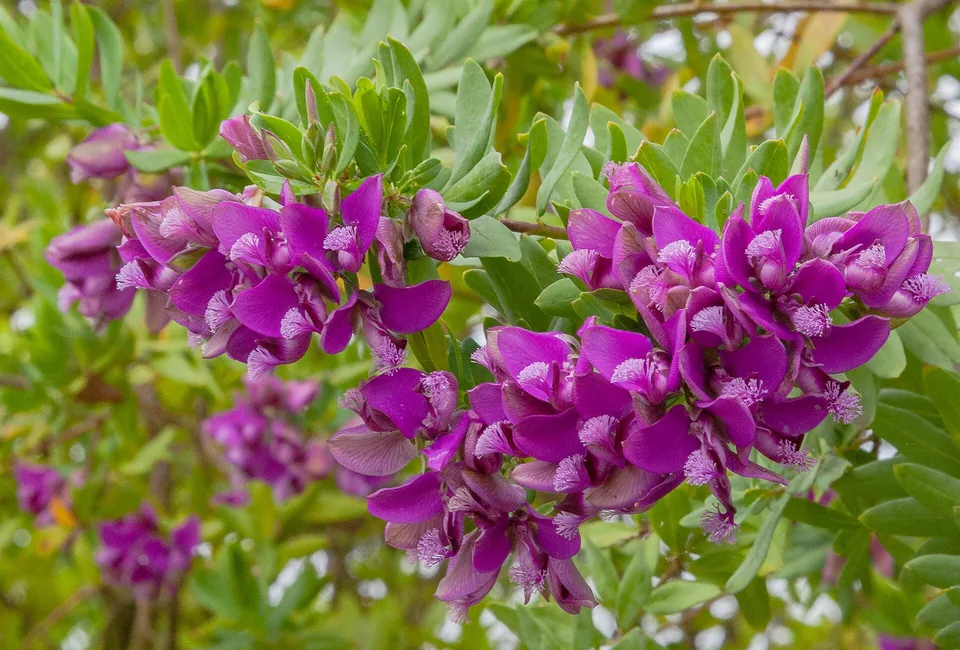
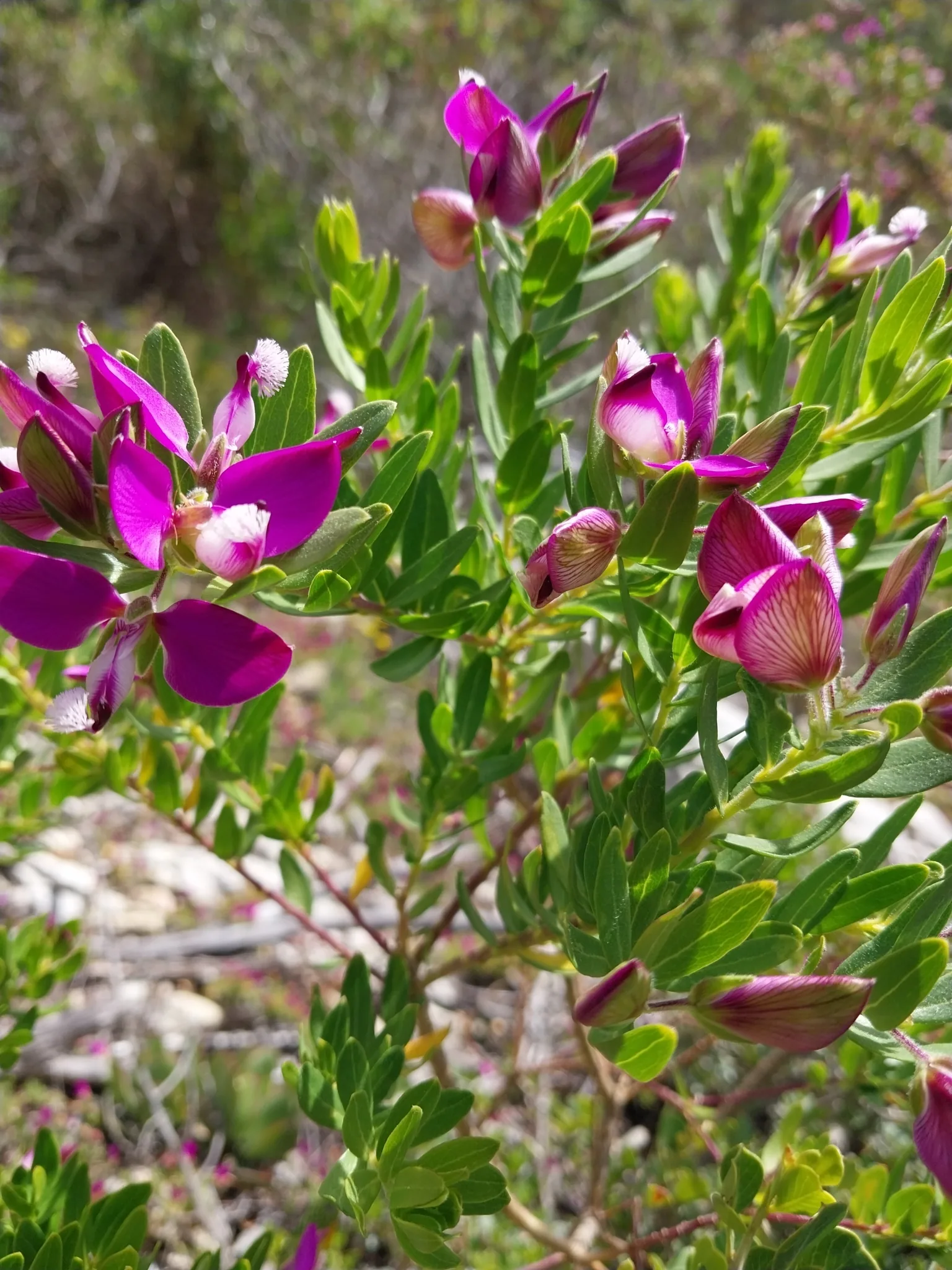

How to Grow and Care for Myrtle-leaf milkwort
Polygala myrtifolia
Written by Emilio Marruso · last checked
At a glance
Polygala thrives anywhere from full sun to semi-shade, though it blooms most generously in the sun. It stands up to drought, grows happily in a pot, and you can start new plants from seeds or cuttings in spring. Just water it generously in summer, let the soil dry between waterings, and never leave its roots sitting in water.
- Sun
Full sun to partial shade; fewer flowers in shade
What the sources say (1)
Light: Full sun to semi-shade (fewer flowers in shade)
Polygala myrtifolia needs a very sunny exposure , although it can live in semi-shade (it will produce fewer flowers).
— Polygala myrtifolia or September bush | Care and Growing [3] - Water
Water generously in summer, less the rest of the year; let the soil dry between waterings
What the sources say (4)
Watering: Water abundantly in summer (never flood) and moderately the rest of the year, waiting for the substrate to dry
According to Italian gardening magazine (pot-grown): Le annaffiature devono essere eseguite solo quando il substrato risulta completamente asciutto nei primi strati.
— Come prendersi cura della Poligala nelle zone vicino al mare - Cose di Casa [7] Water abundantly in summer (never flood) and moderately the rest of the year (wait for the substrate to dry).
— Polygala myrtifolia or September bush | Care and Growing [3] Watering notes: Very sensitive to waterlogging, the main cause of root rot; drought resistant, but regular watering is better for potted plants
Questa specie botanica dimostra una notevole resistenza alla siccità , ma per gli esemplari coltivati in vaso è meglio regolarizzare le irrigazioni.
— Come prendersi cura della Poligala nelle zone vicino al mare - Cose di Casa [7] poiché la pianta è estremamente sensibile ai ristagni d’acqua , principale causa del marciume radicale.
— Come prendersi cura della Poligala nelle zone vicino al mare - Cose di Casa [7] - Pests
Whiteflies under glass and scale insects; too much humidity brings powdery and downy mildew
- Watch out
Hates soggy soil: standing water rots the roots
What the sources say (2)
Watering notes: Very sensitive to waterlogging, the main cause of root rot; drought resistant, but regular watering is better for potted plants
Questa specie botanica dimostra una notevole resistenza alla siccità , ma per gli esemplari coltivati in vaso è meglio regolarizzare le irrigazioni.
— Come prendersi cura della Poligala nelle zone vicino al mare - Cose di Casa [7] poiché la pianta è estremamente sensibile ai ristagni d’acqua , principale causa del marciume radicale.
— Come prendersi cura della Poligala nelle zone vicino al mare - Cose di Casa [7] - Propagation
Cuttings in spring and fall, rooted in a sandy mix kept gently warm from below
What the sources say (1)
Propagation: Seed sown in spring; tip cuttings in spring and autumn; softwood or semi-ripe cuttings in a sandy mix with gentle bottom heat
Propagate through seed in the spring or by softwood or semi-ripe cuttings in a sandy propagating mix with a gentle bottom heat.
— World Plants [2] - Sowing
Sow seeds in spring
What the sources say (2)
Sowing: Spring
September bush is easily propagated by seeds sown in spring and by cuttings in spring or fall.
— Polygala myrtifolia or September bush | Care and Growing [3] Propagation: Seed sown in spring; tip cuttings in spring and autumn; softwood or semi-ripe cuttings in a sandy mix with gentle bottom heat
Propagate through seed in the spring or by softwood or semi-ripe cuttings in a sandy propagating mix with a gentle bottom heat.
— World Plants [2] - Containers
Grows well in a pot; water only when the top of the soil is completely dry
What the sources say (3)
In containers: Yes
September bush is used to form bushy groups, as isolated specimens and in pots.
— Polygala myrtifolia or September bush | Care and Growing [3] Watering: Water abundantly in summer (never flood) and moderately the rest of the year, waiting for the substrate to dry
According to Italian gardening magazine (pot-grown): Le annaffiature devono essere eseguite solo quando il substrato risulta completamente asciutto nei primi strati.
— Come prendersi cura della Poligala nelle zone vicino al mare - Cose di Casa [7] Water abundantly in summer (never flood) and moderately the rest of the year (wait for the substrate to dry).
— Polygala myrtifolia or September bush | Care and Growing [3]
Overview
September bush is an evergreen shrub from South Africa grown for purple flowers borne for much of the year. [4] It needs full sun to semi-shade and well-drained soil, and is sensitive to waterlogging. [3][7]
This record is incomplete: the sources we read do not cover every field yet.
Not yet covered by our sources: Hardiness, coldest zone, Hardiness, warmest zone
Myrtle-leaf milkwort care
How to water Myrtle-leaf milkwort
Watering
Water abundantly in summer (never flood) and moderately the rest of the year, waiting for the substrate to dry
What each source says
According to Italian gardening magazine (pot-grown): Water only when the top layers of the substrate are completely dry
What the sources say (2)
According to Italian gardening magazine (pot-grown): Le annaffiature devono essere eseguite solo quando il substrato risulta completamente asciutto nei primi strati.Water abundantly in summer (never flood) and moderately the rest of the year (wait for the substrate to dry).Watering notes
Very sensitive to waterlogging, the main cause of root rot; drought resistant, but regular watering is better for potted plants
What the sources say (2)
Questa specie botanica dimostra una notevole resistenza alla siccità , ma per gli esemplari coltivati in vaso è meglio regolarizzare le irrigazioni.poiché la pianta è estremamente sensibile ai ristagni d’acqua , principale causa del marciume radicale.How much light Myrtle-leaf milkwort needs
Full sun to semi-shade (fewer flowers in shade)
What the sources say (1)
Polygala myrtifolia needs a very sunny exposure , although it can live in semi-shade (it will produce fewer flowers).How much cold Myrtle-leaf milkwort can take
Hardiness, coldest zone
Not stated in the sources we read.
Hardiness, warmest zone
Not stated in the sources we read.
Where to grow Myrtle-leaf milkwort
Yes
What the sources say (1)
September bush is used to form bushy groups, as isolated specimens and in pots.How to propagate Myrtle-leaf milkwort
Seed sown in spring; tip cuttings in spring and autumn; softwood or semi-ripe cuttings in a sandy mix with gentle bottom heat
What the sources say (1)
Propagate through seed in the spring or by softwood or semi-ripe cuttings in a sandy propagating mix with a gentle bottom heat.How to grow Myrtle-leaf milkwort
The plant
Mature height
The sources give different values depending on region, zone or growing conditions.
What each source says
cultivar 'Chapman Field' article: height 125-200 cm (1.25 to 2 m):
What the sources say (1)
cultivar 'Chapman Field' article: height 125-200 cm (1.25 to 2 m): It reaches a height of 1.25 to 2 m, and maintains a tight, spherical canopy and is reportedly hardy to 5o C.Myrtle-leaf milkwort pests and problems
Whitefly
Symptom: Pest when grown under glass
What to do: Not stated
What the sources say (1)
Whitefly may be a problem pest when the plants are grown under glass.
— World Plants [2] Scale insects and mildews
Symptom: Attacks of cottony and armoured scale; excess humidity can attract powdery and downy mildew
What to do: Not stated
What the sources say (1)
Inoltre, l’eccesso di umidità ambientale o radicale può attirare il mal bianco (oidio) e la peronospora .
— Come prendersi cura della Poligala nelle zone vicino al mare - Cose di Casa [7]
Remedies
Each remedy shows what official sources say about it; traditional remedies without an official source are marked as such. Harmful ones are listed so you know to avoid them.
Getting rid of it
invasive shrub
hand pulling seedlings and cutting larger plants at the base Not verified
Traditional remedy, not verified by an official source.
How: Seedlings are hand pulled. Larger plants can often be hand pulled, but are better cut at the base, from which they rarely regrow; this creates less soil disturbance and less seed germination than pulling larger plants.
Calendar
Sowing
Spring
What the sources say (1)
September bush is easily propagated by seeds sown in spring and by cuttings in spring or fall.Pruning
The sources give different values depending on region, zone or growing conditions.
What each source says
According to Consulta Plantas: Late winter
According to Cose di Casa: Late winter or early spring
According to The Plant Library (South Africa): Autumn, so as not to affect flowering
What the sources say (3)
According to Consulta Plantas: Myrtle-leaf milkwort can be pruned in late winter to keep it compact and to control growth.According to Cose di Casa: La potatura di contenimento e di riordino geometrico va effettuata a fine inverno o all’inizio della primavera, eliminando i rami secchi, danneggiati o disordinatiAccording to The Plant Library (South Africa): Trim (in autumn so as not to affect flowering) to maintain a neat shape alongside a pathway or in a narrow space.Months as given by the sources, which are mostly from the United States (northern hemisphere). In the southern hemisphere they shift by about six months.
Similar plants
- Abies grandis Abies grandis
- Abraham Trachystemon orientalis
- Abyssinian banana Ensete ventricosum
- Acacia longifolia Acacia longifolia
- Acanthus hungaricus Acanthus hungaricus
- Aconite Aconitum napellus
- Adam's Needle Yucca flaccida
- Adriatic lizard orchid Himantoglossum adriaticum
Sources
Every value above is quoted from these documents. Links lead to the original publisher.
- Publication : USDA ARS · ars.usda.gov, consulted
- World Plants · worldplants.ca, consulted
- Polygala myrtifolia or September bush | Care and Growing · consultaplantas.com, consulted
- Polygala myrtifolia (September bush) - Plantinfo · plantinfo.co.za, consulted
- Polygala myrtifolia · theplantlibrary.co.za, consulted
- How to Grow Polygala - Milkwort · harvesttotable.com, consulted
- Come prendersi cura della Poligala nelle zone vicino al mare - Cose di Casa · cosedicasa.com, consulted
Written by Emilio Marruso · last checked