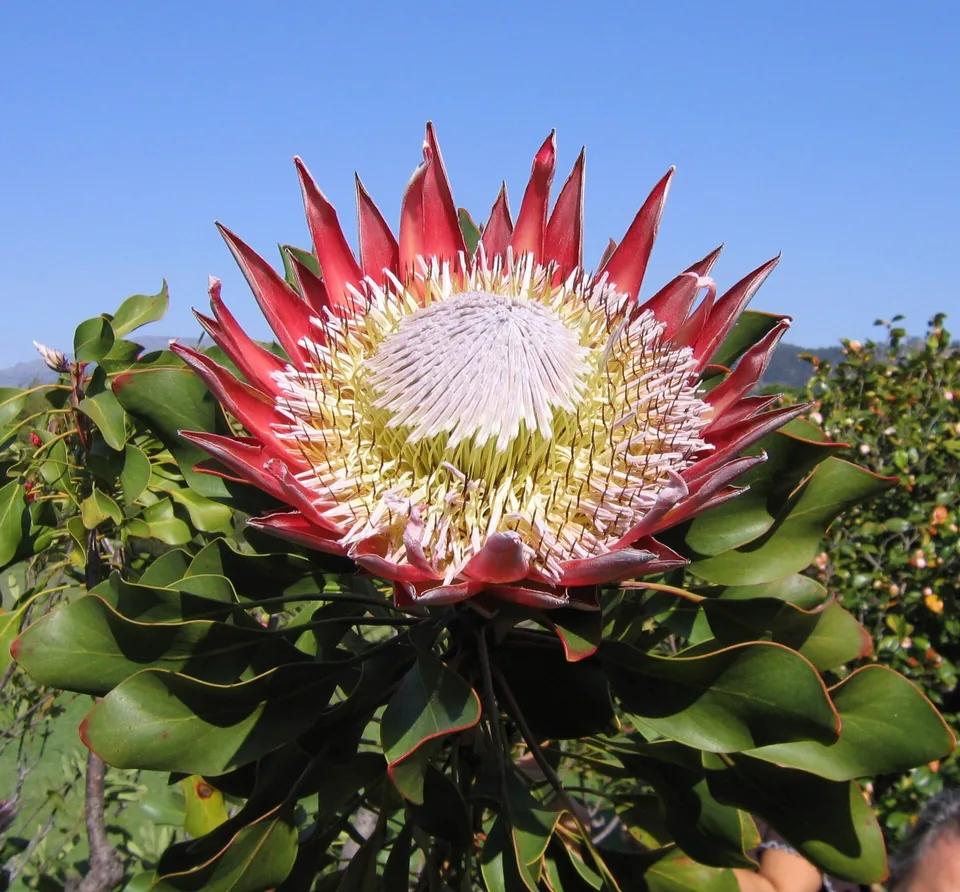
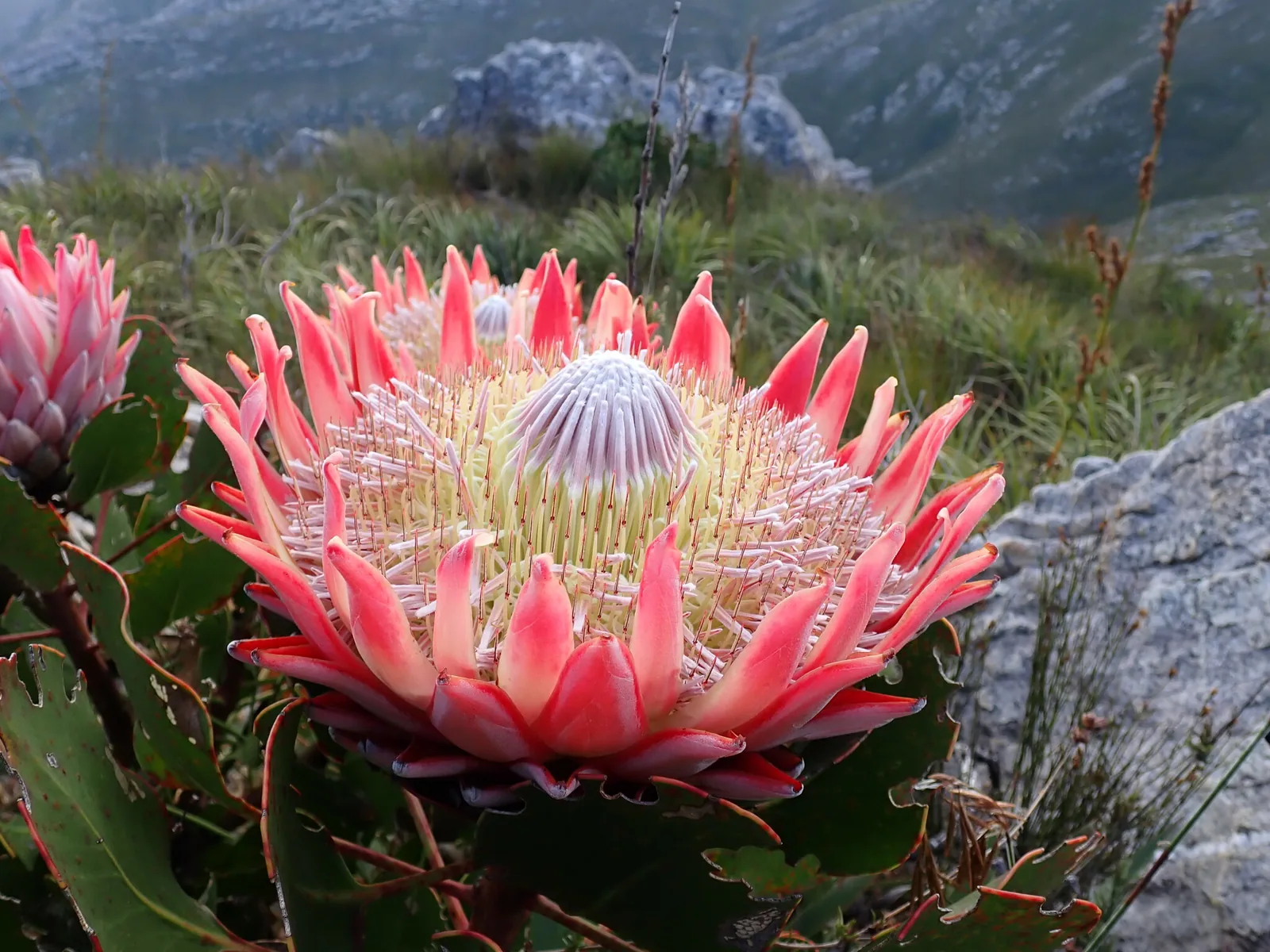

How to Grow and Care for King Protea
Protea cynaroides
Written by Emilio Marruso · last checked
Toxic to: People · Why
At a glance
Growing this protea is a lovely adventure: give it sunlight and it rewards you with flowers. It likes soil with a pH no higher than 6.5, and you can grow it from seed. Go easy on feeding: phosphates and nitrates can harm it even at moderate levels, so skip phosphate fertilizer and use a little dried blood instead.
- Sun
Needs sunlight to flower
What the sources say (1)
Light: Needs sunlight to flower
To flower, it needs sunlight. It grows in poor, acidic soil (so no limestone).
— Protea cynaroides 1 - Jardin exotique & botanique de Roscoff [2] - Cold
Survives winters down to 20 °F (−6.7 °C)
Hardy in average winters · USDA 9 · RHS H4 · Z9
What the sources say (2)
Hardiness, coldest zone: 9 [winter low −6.7 to −1.1 °C (20 to 30 °F)]
About plant names... Range: Zones 9-12: About this map
— Protea cynaroides (King protea) [5] Hardiness, warmest zone: 12 [winter low 10 to 15.6 °C (50 to 60 °F)]
About plant names... Range: Zones 9-12: About this map
— Protea cynaroides (King protea) [5] - Soil
Soil with a pH no higher than 6.5
What the sources say (1)
Soil pH, maximum: 6.5
Requires a pH of 6.5 or lower[ 200 Title The New RHS Dictionary of Gardening. 1992. Publication Author Huxley. A. Publisher MacMillan Press Year 1992 ISBN 0-333-47494-5 Description
— Protea cynaroides - Useful Temperate Plants [1] - Feeding
No phosphate fertilizer: phosphates and nitrates can harm it; a little dried blood is fine
- Harvest
Gathered from the wild for local use as food
- Propagation
Grow new plants from seed
What the sources say (1)
Propagation: Seed
Increasingly, named varieties of proteas are based on cuttings from ‘improved’ forms of selected species grown from seed. The only important protea still grown from seed is P. cynaroides .
— Growing proteas | Agriculture and Food [4] - Safety
No known hazards
Overview
King protea is a South African shrub whose cultivars are sold as cut flowers or garden plants. [3][2] It needs sunlight to flower and grows in poor, acidic soil. [2][1]
This record is incomplete: the sources we read do not cover every field yet.
Not yet covered by our sources: Watering, Pruning
King Protea care
How to water King Protea
Not stated in the sources we read.
How much light King Protea needs
Needs sunlight to flower
What the sources say (1)
To flower, it needs sunlight. It grows in poor, acidic soil (so no limestone).How much cold King Protea can take
Hardiness, coldest zone
9 [winter low −6.7 to −1.1 °C (20 to 30 °F)]
What the sources say (1)
About plant names...
Range: Zones 9-12:
About this mapHardiness, warmest zone
12 [winter low 10 to 15.6 °C (50 to 60 °F)]
What the sources say (1)
About plant names...
Range: Zones 9-12:
About this mapBest soil for King Protea
6.5
What the sources say (1)
Requires a pH of 6.5 or lower[ 200 Title
The New RHS Dictionary of Gardening. 1992.
Publication
Author
Huxley. A.
Publisher
MacMillan Press
Year
1992
ISBN
0-333-47494-5
DescriptionHow to propagate King Protea
Seed
What the sources say (1)
Increasingly, named varieties of proteas are based on cuttings from ‘improved’ forms of selected species grown from seed. The only important protea still grown from seed is P. cynaroides .King Protea pests and problems
Sensitivity to phosphates and nitrates
Symptom: Nitrates and phosphates in the soil can prove toxic to the plant even at moderate levels
What to do: Does not tolerate phosphate fertilizer; dried blood can be added
What the sources say (2)
they are sensitive to nitrates and phosphates in the soil, these can prove toxic even at moderate levels
— Protea cynaroides - Useful Temperate Plants [1] It does not tolerate phosphate fertilizer, but dried blood can be added.
— Protea cynaroides 1 - Jardin exotique & botanique de Roscoff [2]
Remedies
Each remedy shows what official sources say about it; traditional remedies without an official source are marked as such. Harmful ones are listed so you know to avoid them.
Treating the plant
witches broom
strict sanitation and mite control Not verified
Traditional remedy, not verified by an official source.
How: Control is by controlling the mite Aceria proteae and by strict sanitation.
Is King Protea poisonous?
Reported by the source, quoted verbatim. This is not medical or veterinary advice: if a person or an animal may have eaten this plant, contact a poison control centre or a veterinarian.
It is harvested from the wild for local use as a food. ## Known Hazards None known
[1]
Calendar
Pruning
Not stated in the sources we read.
Months as given by the sources, which are mostly from the United States (northern hemisphere). In the southern hemisphere they shift by about six months.
Edibility
Reported by the source, quoted verbatim. Do not eat a plant on the basis of this page alone: identification mistakes can be dangerous.
It is harvested from the wild for local use as a food. ## Known Hazards None known
[1]
Indicative values
Values from a secondary source, not checked word for word like the rest of this page. Use them as a starting point.
- Life cycle
- PerennialIndicative value, adapt it to your climate · Secondary source
- Mature height
- 91.4-121.9 cm (3-4 ft)Indicative value, adapt it to your climate · Secondary source
- Hours of sun
- 6-8 hoursIndicative value, adapt it to your climate · Secondary source
- Watering
- AverageIndicative value, adapt it to your climate · Secondary source
- Drought tolerant
- yesIndicative value, adapt it to your climate · Secondary source
- Growth rate
- LowIndicative value, adapt it to your climate · Secondary source
- Pruning
- February, March, AprilIndicative value, adapt it to your climate · Secondary source
Similar plants
- Aaron's Beard Hypericum calycinum
- Abies grandis Abies grandis
- Abraham Trachystemon orientalis
- Abyssinian banana Ensete ventricosum
- Acacia longifolia Acacia longifolia
- Acacia retinodes Acacia retinodes
- Acanthus hungaricus Acanthus hungaricus
- Achlys triphylla Achlys triphylla
Sources
Every value above is quoted from these documents. Links lead to the original publisher.
- Protea cynaroides - Useful Temperate Plants · temperate.theferns.info, consulted
- Protea cynaroides 1 - Jardin exotique & botanique de Roscoff · jardinexotiqueroscoff.com, consulted
- Protea cynaroides - Botany Brisbane · botanybrisbane.com, consulted
- Growing proteas | Agriculture and Food · agric.wa.gov.au, consulted
- Protea cynaroides (King protea) · florafinder.com, consulted
Written by Emilio Marruso · last checked