
How to Grow and Care for Mexican plum
Prunus mexicana
Written by Emilio Marruso · last checked
At a glance
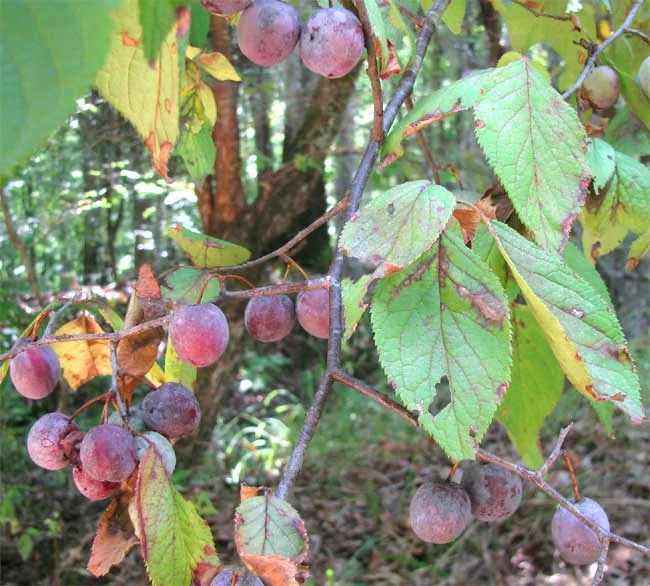
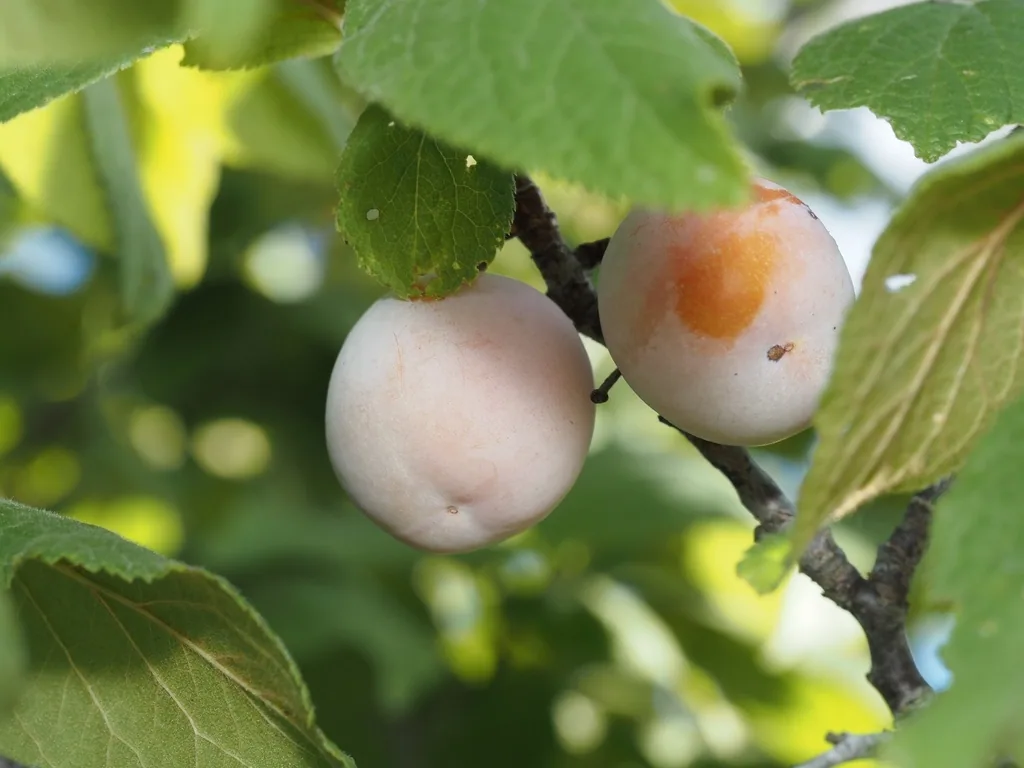
Mexican plum is a generous tree for sun or part shade, growing 15–35 ft tall. In mid to late summer it gives edible plums you can eat fresh or turn into preserves, and birds and mammals love them too. Water young trees once a week for up to two years; after that, it handles drought on its own.
- Sun
Sun to part shade
- Water
Water young trees once a week for up to two years; then it handles drought
What the sources say (2)
Watering: Drought tolerant once established; young trees need supplemental water once a week for up to two years
Drought tolerant once established. Young, newly planted trees need supplemental water once a week, up to two years.
— Prunus mexicana - Native Plant Society of Texas [4] is tolerant of a wide array of soil types and is quite drought tolerant.
— Prunus Mexicana: Mexican Plum [1] - Harvest
Edible plums in mid to late summer, eaten fresh or made into preserves
- Pests
Borers can attack stressed trees; insects sometimes eat the leaves
- Size
15 to 35 ft tall
What the sources say (1)
Mature height: 457.2-1066.8 cm (15-35 ft)
Wild plum or Mexican plum, a member of the rose family, is a single trunked, small, round-headed, twiggy tree growing 15-35 feet
— Prunus Mexicana: Mexican Plum [1] - Propagation
Stem or root cuttings, or seed after a cold period
What the sources say (2)
Propagation: Softwood, semi-hardwood, hardwood or root cuttings; seed after after-ripening and cold stratification
Prunus species may be rooted from dormant hardwood, softwood, semi-hardwood, or root cuttings.
— Lady Bird Johnson Wildflower Center - The University of Texas at Austin [2] Seeds of P. mexicana require a period of after-ripening followed by cold stratification.
— Lady Bird Johnson Wildflower Center - The University of Texas at Austin [2]
Overview
Mexican plum is a single-trunked, non-suckering deciduous tree 10-35 ft [3–10.7 m] tall with fragrant white flowers before the leaves appear. [2] It grows in sun or part shade and is drought tolerant once established. [2][4] The plums ripen from July through September and are eaten fresh or made into preserves. [2]
This record is incomplete: the sources we read do not cover every field yet.
Not yet covered by our sources: Hardiness, coldest zone, Hardiness, warmest zone, Pruning
Mexican plum care
Measurements in square brackets are our conversion into the other unit system; the quoted text is unchanged.
How to water Mexican plum
Drought tolerant once established; young trees need supplemental water once a week for up to two years
How much light Mexican plum needs
How much cold Mexican plum can take
Hardiness, coldest zone
Not stated in the sources we read.
Hardiness, warmest zone
Not stated in the sources we read.
How to propagate Mexican plum
Softwood, semi-hardwood, hardwood or root cuttings; seed after after-ripening and cold stratification
What the sources say (2)
Prunus species may be rooted from dormant hardwood, softwood, semi-hardwood, or root cuttings.Seeds of P. mexicana require a period of after-ripening followed by cold stratification.How to grow Mexican plum
The plant
Family
Rosaceae
What the sources say (1)
Mexican plum Rosaceae Prunus
mexicana S. Watson
symbol: PRMEMature height
457.2-1066.8 cm (15-35 ft)
What the sources say (1)
Wild plum or Mexican plum, a member of the rose family, is a single trunked, small,
round-headed, twiggy tree growing 15-35 feetMexican plum pests and problems
Borers and leaf feeding
Symptom: Can develop problems with borers when stressed; insects occasionally eat the leaves
What the sources say (1)
it can develop problems with bores when stressed. Insects also occasionally eat its leaves.
— Mexican Plum [5]
Remedies
Each remedy shows what official sources say about it; traditional remedies without an official source are marked as such. Harmful ones are listed so you know to avoid them.
Treating the plant
black knot
pruning out the knots Official source, not independently tested
How: Cut off the knots several inches back of the knot before budbreak and remove them from the premises.
When dealing with only a few infected trees, it is probably best to cut off the knots and remove them from the premises, making sure to cut several inches back of the knot to insure against leaving any
— portal.ct.gov [6]
brown rot
removing mummified fruit and cankered twigs Official source, not independently tested
How: Remove and destroy mummified fruit left on the tree, and prune and remove all dead and cankered twigs from the vicinity of the tree.
As is the case of peach, sanitation is essential for controlling brown rot. Mummified fruit that remains on the tree should be removed and destroyed, and all dead and cankered twigs should
— portal.ct.gov [6]
aphids
insecticidal soap spray Works
How: Spray thoroughly with insecticidal soap during outbreaks.
Outbreaks of these aphids on plum can be controlled by spraying thoroughly with diazinon, malathion, or insecticidal soap,
— portal.ct.gov [6] What the evidence says Outbreaks of these aphids on plum can be controlled by spraying thoroughly with diazinon, malathion, or insecticidal soap,
— portal.ct.gov [6]
scale insects
dormant horticultural oil spray Works
How: A dormant spray of horticultural oil provides control of European fruit lecanium.
A dormant spray of horticultural oil provides control. These convex scales are considerably larger than San Jose or Forbes scales.
— portal.ct.gov [6] What the evidence says A dormant spray of horticultural oil provides control. These convex scales are considerably larger than San Jose or Forbes scales.
— portal.ct.gov [6]
tent caterpillars
removing and destroying the tents Official source, not independently tested
How: In urban settings, tents containing caterpillars can be manually removed and destroyed.
In urban settings, tents containing caterpillars can be manually removed and destroyed.
— tfsweb.tamu.edu [7]
Calendar
Pruning
Not stated in the sources we read.
Months as given by the sources, which are mostly from the United States (northern hemisphere). In the southern hemisphere they shift by about six months.
Edibility
Reported by the source, quoted verbatim. Do not eat a plant on the basis of this page alone: identification mistakes can be dangerous.
Indicative values
Values from a secondary source, not checked word for word like the rest of this page. Use them as a starting point.
- Life cycle
- PerennialIndicative value, adapt it to your climate · Secondary source
- Drought tolerant
- yesIndicative value, adapt it to your climate · Secondary source
- Soil pH
- 6-7.5Indicative value, adapt it to your climate · Secondary source
- USDA hardiness zones
- 6-8 [winter low −23.3 to −6.7 °C (−10 to 20 °F)]Indicative value, adapt it to your climate · Secondary source
- Care level
- MediumIndicative value, adapt it to your climate · Secondary source
- Growth rate
- LowIndicative value, adapt it to your climate · Secondary source
- Pruning
- February, March, AprilIndicative value, adapt it to your climate · Secondary source
Similar plants
- American Plum Prunus americana
- Amur chokecherry Prunus maackii
- Black Cherry Prunus serotina
- Carolina Cherry Laurel Prunus caroliniana
- Chickasaw Plum Prunus angustifolia
- Chinese Plum Prunus glandulosa
- Flatwoods Plum Prunus umbellata
- Hybrid cherry Prunus yedoensis
Sources
Every value above is quoted from these documents. Links lead to the original publisher.
- Prunus Mexicana: Mexican Plum · uaex.uada.edu, consulted
- Lady Bird Johnson Wildflower Center - The University of Texas at Austin · wildflower.org, consulted
- Virginia Tech Dendrology Fact Sheet · dendro.cnre.vt.edu, consulted
- Prunus mexicana - Native Plant Society of Texas · npsot.org, consulted
- Mexican Plum · txsmartscape.com, consulted
- portal.ct.gov · portal.ct.gov
- tfsweb.tamu.edu · tfsweb.tamu.edu
Written by Emilio Marruso · last checked