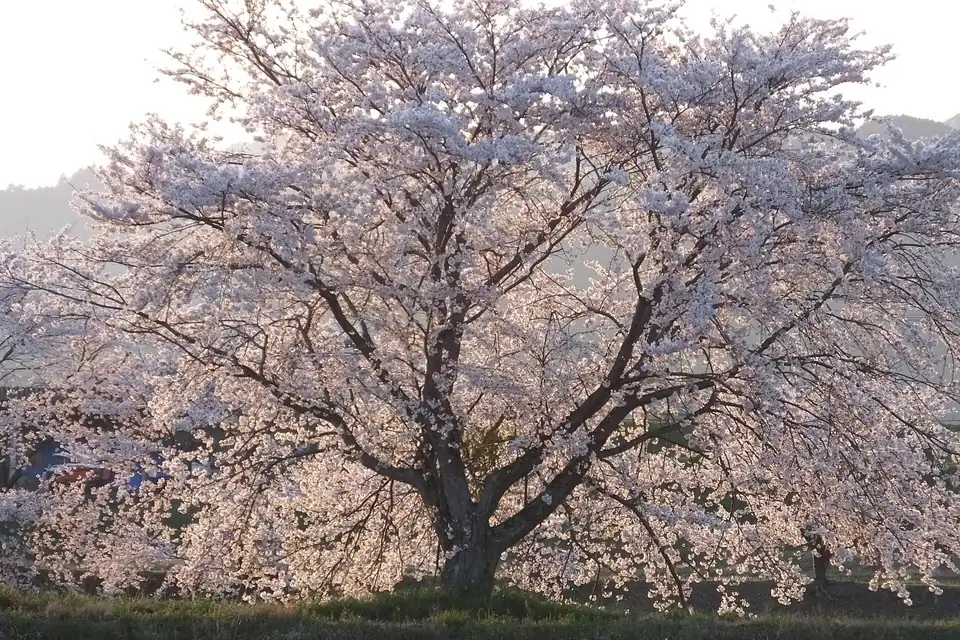

How to Grow and Care for Hybrid cherry
Prunus yedoensis
Written by Emilio Marruso · last checked
Toxic to: Cats, Dogs, Horses · Why
At a glance
The Yoshino cherry is grown for its flowers, and it brings charm to a garden in full sun or partial shade. Keep it well watered during dry spells, since it dislikes drought, and you can even grow it in a container. Its fruit is edible too, a small bonus from a tree loved for its blossoms.
- Sun
Full sun to partial shade
What the sources say (2)
Light: Full sun to partial shade
Light: Full sun (6 or more hours of direct sunlight a day) Partial Shade (Direct sunlight only part of the day, 2-6 hours)
— Yoshino Cherry - Prunus x yedoensis | North Carolina Extension Gardener Plant Toolbox [1] Prefers full sun, moisture, and well drained soils.
— Cherry, Yoshino | TreeBrowser | USU [3] - Water
Water well in dry spells; it dislikes drought, so avoid spots by streets or parking lots
What the sources say (2)
Watering: Keep trees well watered during dry periods
By keeping trees well watered during dry periods and minimizing trunk injury borer problems can be reduced.
— Yoshino Cherry [2] Watering notes: Sensitive to drought; avoid planting near streets and parking lots
Avoid planting near streets and parking lots because it is sensitive to drought.
— Cherry, Yoshino | TreeBrowser | USU [3] - Harvest
The fruit is edible, but the tree is grown for its flowers
- Pests
Aphids, borers, scale and spider mites; against borers, water in dry spells and avoid trunk wounds
What the sources say (4)
Pests: aphids, borers, scale, spider mites
Liabilities - aphids - borers - scale - spider mites - witch's broom
— Plant Database [5] This plant has viral and fungal disease problems, and is susceptible to borers and scale.
— Yoshino Cherry - Prunus x yedoensis | North Carolina Extension Gardener Plant Toolbox [1] Diseases: witch's broom, viral and fungal diseases
Liabilities - aphids - borers - scale - spider mites - witch's broom
— Plant Database [5] This plant has viral and fungal disease problems, and is susceptible to borers and scale.
— Yoshino Cherry - Prunus x yedoensis | North Carolina Extension Gardener Plant Toolbox [1] - Watch out
Deer often damage this tree
- Propagation
Grow new plants from cuttings
What the sources say (1)
Propagation: Cuttings
horizontal lenticels on bark - round, black fruit Propagation - cuttings
— Plant Database [5] - Containers
Grows in containers too
What the sources say (1)
In containers: Yes
Landscape Use - specimen - container planting - buffer strip - for flowering effect - patio plant
— Plant Database [5] - Safety
Harmful to dogs, cats and horses
Overview
Yoshino cherry is a small deciduous flowering cherry tree native to Japan, grown for its showy spring flowers. [1][2] It needs full sun and fertile, well-drained soil, and is sensitive to drought. [2][3] Borers are the most serious pest, and the tree is also susceptible to scale and frequently damaged by deer. [1][2]
This record is incomplete: the sources we read do not cover every field yet.
Not yet covered by our sources: Hardiness, coldest zone, Pruning
Hybrid cherry care
How to water Hybrid cherry
Watering
Keep trees well watered during dry periods
What the sources say (1)
By keeping trees well watered during dry periods and minimizing trunk
injury borer problems can be reduced.Watering notes
Sensitive to drought; avoid planting near streets and parking lots
What the sources say (1)
Avoid planting near streets and parking lots because it is sensitive to drought.How much light Hybrid cherry needs
Full sun to partial shade
What the sources say (2)
Light:
Full sun (6 or more hours of direct sunlight a day)
Partial Shade (Direct sunlight only part of the day, 2-6 hours)Prefers full sun, moisture, and well drained soils.How much cold Hybrid cherry can take
Hardiness, coldest zone
Not stated in the sources we read.
Hardiness, warmest zone
8b [winter low −9.4 to −6.7 °C (15 to 20 °F)]
What the sources say (1)
USDA Plant Hardiness Zone:
5a, 5b, 6a, 6b, 7a, 7b, 8a, 8bWhere to grow Hybrid cherry
Yes
What the sources say (1)
Landscape
Use
- specimen
- container planting
- buffer strip
- for flowering effect
- patio plantHow to propagate Hybrid cherry
Cuttings
What the sources say (1)
horizontal lenticels on bark
- round, black fruit
Propagation
- cuttingsHow to grow Hybrid cherry
The plant
Family
Rosaceae
What the sources say (1)
Family: Rosaceae Genus: Prunus Synonyms: Prunus yedoensis Type: BroadleafPests and diseases
Pests
aphids, borers, scale, spider mites
Diseases
witch's broom, viral and fungal diseases
Hybrid cherry pests and problems
Borers
What to do: Keep trees well watered during dry periods and minimize trunk injury.
What the sources say (1)
By keeping trees well watered during dry periods and minimizing trunk injury borer problems can be reduced.
— Yoshino Cherry [2] Deer damage
Symptom: Tree is frequently damaged by deer.
What the sources say (1)
This plant has viral and fungal disease problems, and is susceptible to borers and scale. This tree is frequently damaged by deer.
— Yoshino Cherry - Prunus x yedoensis | North Carolina Extension Gardener Plant Toolbox [1]
Remedies
Each remedy shows what official sources say about it; traditional remedies without an official source are marked as such. Harmful ones are listed so you know to avoid them.
Treating the plant
aphids
soapy water spray Not verified
Traditional remedy, not verified by an official source.
How: Use a strong flow of soapy water to remove aphids without hurting the plant.
cherry leaf spot
raking fallen leaves Works
How: Rake up and destroy fallen infected leaves before spring winds and rains spread the spores.
Control includes raking and burning the fallen leaves before spring winds and rains can spread the fungal spores.
— gardenguides.com [7] What the evidence says Rake up and destroy infected leaves. Leaves may be composted if completely decayed before spring.
— pnwhandbooks.org [8]
black knot
pruning out infected branches Not verified
Traditional remedy, not verified by an official source.
How: Prune out infected areas as soon as possible.
witch's broom
pruning out the brooms Not verified
Traditional remedy, not verified by an official source.
How: Control is achieved only by pruning out the witch's broom.
Is Hybrid cherry toxic to pets?
Reported by the source, quoted verbatim. This is not medical or veterinary advice: if a person or an animal may have eaten this plant, contact a poison control centre or a veterinarian.
#problem for dogs #problem for horses #problem for cats
[1]The source flags the risk for this animal but does not explain why.
Calendar
Pruning
Not stated in the sources we read.
Months as given by the sources, which are mostly from the United States (northern hemisphere). In the southern hemisphere they shift by about six months.
Edibility
Reported by the source, quoted verbatim. Do not eat a plant on the basis of this page alone: identification mistakes can be dangerous.
While the fruit are edible, Yoshino cherries are grown for their flowers.
[2]
Indicative values
Values from a secondary source, not checked word for word like the rest of this page. Use them as a starting point.
- Life cycle
- AnnualIndicative value, adapt it to your climate · Secondary source
- Drought tolerant
- yesIndicative value, adapt it to your climate · Secondary source
- Soil pH
- 6-7Indicative value, adapt it to your climate · Secondary source
- Growth rate
- LowIndicative value, adapt it to your climate · Secondary source
- Pruning
- February, March, AprilIndicative value, adapt it to your climate · Secondary source
Similar plants
- Afghan Cherry Prunus jacquemontii
- American Plum Prunus americana
- Amur chokecherry Prunus maackii
- Apricot Prunus armeniaca
- Black Cherry Prunus serotina
- Carolina Cherry Laurel Prunus caroliniana
- Cherry Laurel Prunus laurocerasus
- Chickasaw Plum Prunus angustifolia
Sources
Every value above is quoted from these documents. Links lead to the original publisher.
- Yoshino Cherry - Prunus x yedoensis | North Carolina Extension Gardener Plant Toolbox · plants.ces.ncsu.edu, consulted
- Yoshino Cherry · uaex.uada.edu, consulted
- Cherry, Yoshino | TreeBrowser | USU · extension.usu.edu, consulted
- Prunus × yedoensis | Landscape Plants | Oregon State University · landscapeplants.oregonstate.edu, consulted
- Plant Database · plantdatabase.uconn.edu, consulted
- Bean's Trees and Shrubs · beanstreesandshrubs.org, consulted
- gardenguides.com · gardenguides.com
- pnwhandbooks.org · pnwhandbooks.org
Written by Emilio Marruso · last checked