
How to Grow and Care for Flowering plum
Prunus triloba
Written by Emilio Marruso · last checked
Toxic to: People · Why
At a glance
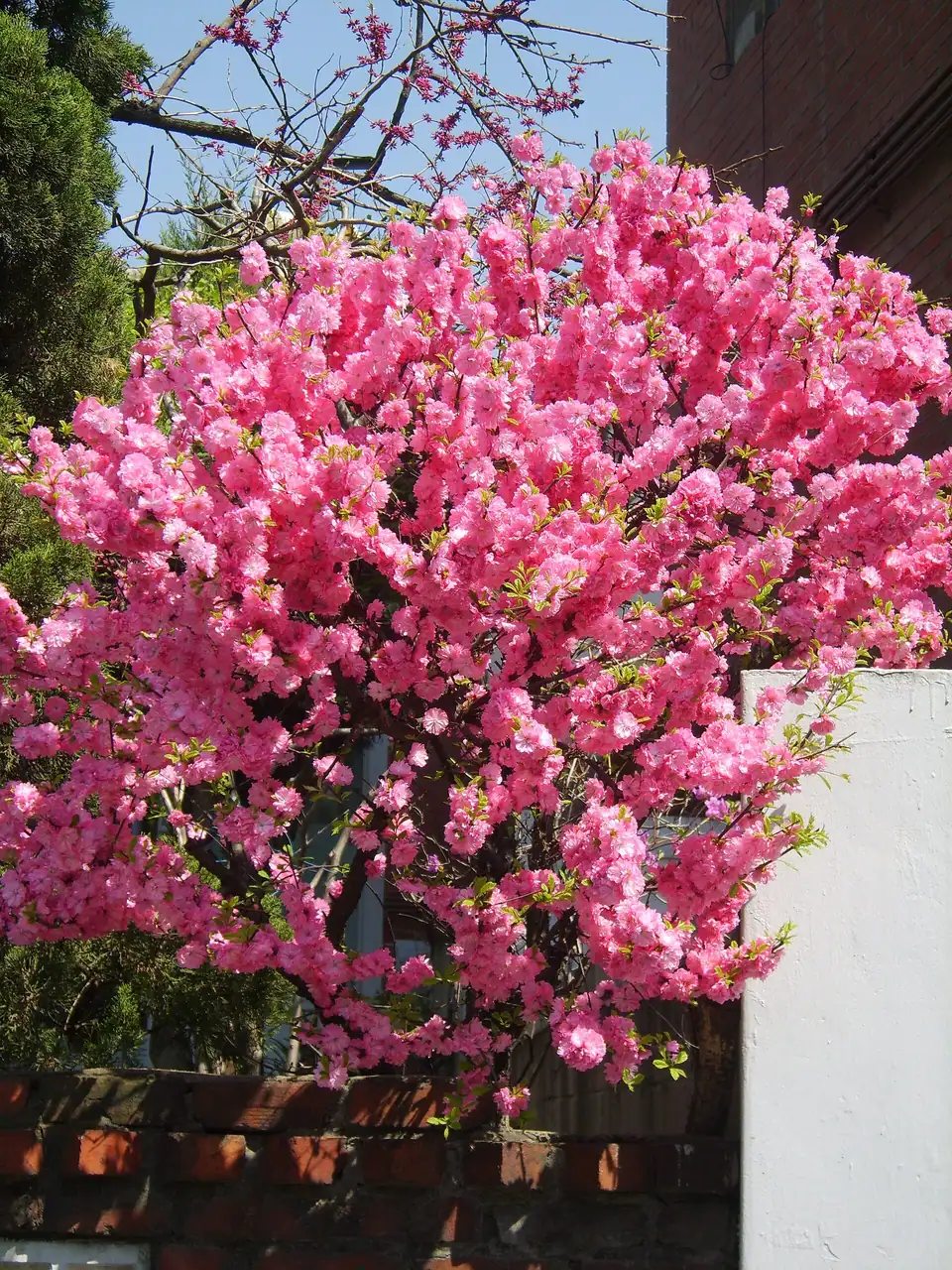
Flowering almond is an easygoing plant that fits almost any garden: it grows in sun, partial sun or shade, and it handles dry spells well. It also grows happily in a container, so even a small patio has room for one. Just trim it soon after it finishes flowering and keep an eye out for aphids and scale.
- Sun
Sun, partial sun or shade: it grows in all of them
What the sources say (1)
Light: Sun, partial sun or shade
This Prunus may be planted in sun, partial sun, or shade in a variety of soils, with the exception of overly saturated conditions.
— Flowering Pink Almond - How To Care For Growing Flowering Almonds | Gardening Know How [3] - Water
Drought tolerant: it needs little watering
What the sources say (1)
Watering: Drought tolerant
This non-native can be grown through USDA zones 4-8. The flowering almond is drought tolerant with a moderate growth rate.
— Flowering Pink Almond - How To Care For Growing Flowering Almonds | Gardening Know How [3] - Cold
Survives winters down to −30 °F (−34.4 °C)
Very hardy · USDA 4 · RHS H7 · Z4
What the sources say (2)
Hardiness, coldest zone: 4 [winter low −34.4 to −28.9 °C (−30 to −20 °F)]
This non-native can be grown through USDA zones 4-8. The flowering almond is drought tolerant with a moderate growth rate.
— Flowering Pink Almond - How To Care For Growing Flowering Almonds | Gardening Know How [3] Hardiness, warmest zone: 8 [winter low −12.2 to −6.7 °C (10 to 20 °F)]
This non-native can be grown through USDA zones 4-8. The flowering almond is drought tolerant with a moderate growth rate.
— Flowering Pink Almond - How To Care For Growing Flowering Almonds | Gardening Know How [3] - Pruning
Prune soon after it finishes flowering
What the sources say (2)
Pruning: Soon after flowering
Any pruning is best done soon after the plant has flowered, to within 4 - 5 buds of the previous years wood.
— Prunus triloba - Useful Temperate Plants [1] It is seen at its best against a south wall, where it should be pruned once a year as soon as ever the flowers are faded
— Prunus triloba - Trees and Shrubs Online [2] - Pests
Aphids curl the leaves; also watch for scale, borers and tent caterpillars
- Containers
Grows in containers too
What the sources say (1)
In containers: Yes
It is even tolerant of heavy pruning, so it makes for a terrific container plant that can be molded into a bonsai
— Flowering Pink Almond - How To Care For Growing Flowering Almonds | Gardening Know How [3] - Safety
Don't eat it: once swallowed, the plant can release cyanide in the stomach
Overview
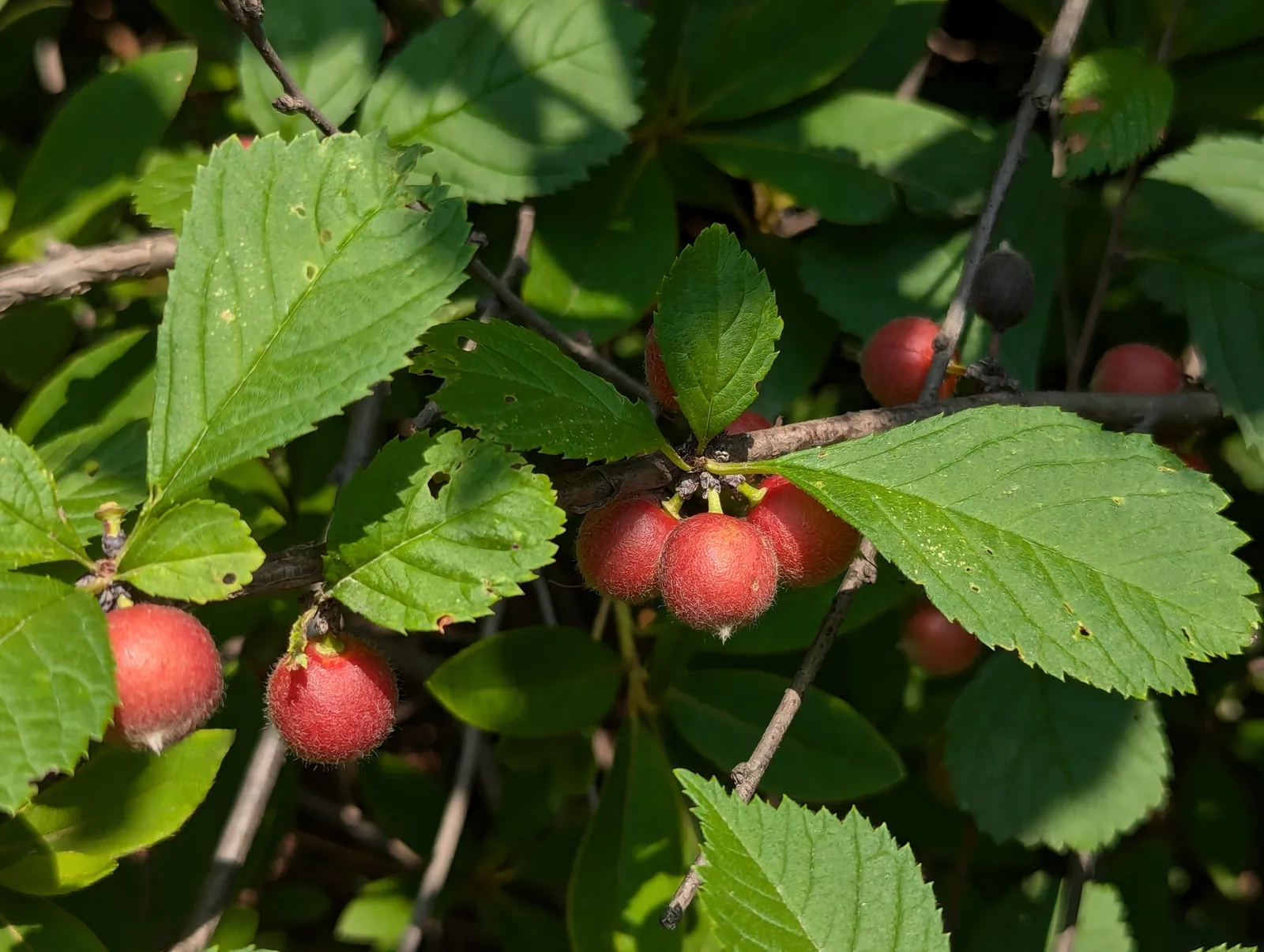
Prunus triloba, the flowering almond, is a deciduous shrub or small tree grown for its spring flowers. [3] It can be planted in sun, partial sun or shade, and pruning is best done soon after flowering. [3][1] The plant contains cyanogenic glycosides, especially in the seed and young shoots. [1]
This record is incomplete: the sources we read do not cover every field yet.
Not yet covered by our sources: Propagation
Flowering plum care
How to water Flowering plum
Drought tolerant
What the sources say (1)
This non-native can be grown through USDA zones 4-8. The flowering almond is drought tolerant with a moderate growth rate.How much light Flowering plum needs
Sun, partial sun or shade
What the sources say (1)
This Prunus may be planted in sun, partial sun, or shade in a variety of soils, with the exception of overly saturated conditions.How much cold Flowering plum can take
Hardiness, coldest zone
4 [winter low −34.4 to −28.9 °C (−30 to −20 °F)]
What the sources say (1)
This non-native can be grown through USDA zones 4-8. The flowering almond is drought tolerant with a moderate growth rate.Hardiness, warmest zone
8 [winter low −12.2 to −6.7 °C (10 to 20 °F)]
What the sources say (1)
This non-native can be grown through USDA zones 4-8. The flowering almond is drought tolerant with a moderate growth rate.Where to grow Flowering plum
Yes
What the sources say (1)
It is even tolerant of heavy pruning, so it makes for a terrific container plant that can be molded into a bonsaiHow to propagate Flowering plum
Not stated in the sources we read.
Flowering plum pests and problems
Aphids, borers, scale, tent caterpillars
Symptom: Aphids can cause leaf distortion; borers attack trees already in stress
What to do: Horticultural oil during dormancy for scale; Bacillus thuringiensis for tent caterpillars
What the sources say (1)
Aphids can cause leaf distortion. Borers attack trees already in stress, so be sure to maintain a regular irrigation application and fertilizing schedule.
— Flowering Pink Almond - How To Care For Growing Flowering Almonds | Gardening Know How [3]
Remedies
The sources we checked give no remedies for this plant.
Is Flowering plum poisonous?
Reported by the source, quoted verbatim. This is not medical or veterinary advice: if a person or an animal may have eaten this plant, contact a poison control centre or a veterinarian.
When injested, these compounds break down in the digestive tract to release cyanide.
[1]- Poisonous parts
The plant (especially the seed and young shoots) contains cyanogenic glycosides, especially amygdalin and prunasin.
[1]- Toxic principle
The plant (especially the seed and young shoots) contains cyanogenic glycosides, especially amygdalin and prunasin.
[1]- Symptoms
cyanide can cause gasping, weakness, excitement, pupil dilation, spasms, convulsions, coma and respiratory failure leading to death
[1]
Calendar
Pruning
Soon after flowering
What the sources say (2)
Any pruning is best done soon after the plant has flowered, to within 4 - 5 buds of the previous years wood.It is seen at its best against a south wall, where it should be pruned once a year as soon as ever the flowers are fadedMonths as given by the sources, which are mostly from the United States (northern hemisphere). In the southern hemisphere they shift by about six months.
Edibility
Reported by the source, quoted verbatim. Do not eat a plant on the basis of this page alone: identification mistakes can be dangerous.
The plant is harvested from the wild for local use as a food.
[1]
Indicative values
Values from a secondary source, not checked word for word like the rest of this page. Use them as a starting point.
- Life cycle
- PerennialIndicative value, adapt it to your climate · Secondary source
- Mature height
- 304.8-457.2 cm (10-15 ft)Indicative value, adapt it to your climate · Secondary source
- Soil pH
- 6-7.5Indicative value, adapt it to your climate · Secondary source
- Care level
- MediumIndicative value, adapt it to your climate · Secondary source
- Growth rate
- LowIndicative value, adapt it to your climate · Secondary source
- Propagation
- Seed Propagation, Cutting, Grafting Propagation, Layering PropagationIndicative value, adapt it to your climate · Secondary source
Similar plants
- American Plum Prunus americana
- Amur chokecherry Prunus maackii
- Black Cherry Prunus serotina
- Briançon Apricot Prunus brigantina
- Carolina Cherry Laurel Prunus caroliniana
- Cherry Plum Prunus cerasifera
- Chickasaw Plum Prunus angustifolia
- Chinese Plum Prunus glandulosa
Sources
Every value above is quoted from these documents. Links lead to the original publisher.
- Prunus triloba - Useful Temperate Plants · temperate.theferns.info, consulted
- Prunus triloba - Trees and Shrubs Online · treesandshrubsonline.org, consulted
- Flowering Pink Almond - How To Care For Growing Flowering Almonds | Gardening Know How · gardeningknowhow.com, consulted
- How to Grow Prunus - Flowering Cherry and Plum Trees · harvesttotable.com, consulted
Written by Emilio Marruso · last checked