
How to Grow and Care for Rehmannia glutinosa
Rehmannia glutinosa
Written by Emilio Marruso · last checked
At a glance
Rehmannia is a plant you can grow and eat: in China its roots and leaves are cooked, and the leaves can even be powdered and mixed with juice from the root. Sow it in a greenhouse in fall or spring, plant the seedlings out in late spring or early summer, and dig the roots in fall or early winter. Just keep its softly hairy leaves away from damp.
- Planting
Plant greenhouse seedlings out in late spring or early summer
What the sources say (1)
Planting: Late spring or early summer (seedlings raised in a greenhouse)
Plant them out in late spring or early summer.
— Rehmannia glutinosa - Useful Temperate Plants [1] - Harvest
Dig the roots in fall or early winter; roots and leaves are eaten cooked
What the sources say (3)
Harvest: Roots of cultivated plants: autumn or early winter; roots of wild plants: early spring
cultivated plants: The roots of cultivated plants are harvested in the autumn or early winter, whilst wild plants are harvested in early spring
— Rehmannia glutinosa - Useful Temperate Plants [1] wild plants: The roots of cultivated plants are harvested in the autumn or early winter, whilst wild plants are harvested in early spring
— Rehmannia glutinosa - Useful Temperate Plants [1] The roots of cultivated plants are harvested in the autumn or early winter, whilst wild plants are harvested in early spring
— Rehmannia glutinosa - Useful Temperate Plants [1] - Pests
Prone to fungus in damp conditions; the hairy leaves rot in warm, wet winters
- Propagation
Seed, root cuttings in winter, division in spring, or base cuttings in late spring or early summer
What the sources say (3)
Propagation: Seed; root cuttings (winter); division (spring); basal cuttings (late spring or early summer)
Root cuttings in winter[ 200 Title The New RHS Dictionary of Gardening. 1992.
— Rehmannia glutinosa - Useful Temperate Plants [1] Division in spring[ 238 Title Encyclopaedia of Herbs and their Uses.
— Rehmannia glutinosa - Useful Temperate Plants [1] Harvest the shoots with plenty of underground stem when they are about 8 - 10cm above the ground.
— Rehmannia glutinosa - Useful Temperate Plants [1] - Sowing
Sow in a greenhouse in fall or spring
What the sources say (1)
Sowing: Autumn or spring (in a greenhouse)
Seed - sow autumn or spring in a greenhouse
— Rehmannia glutinosa - Useful Temperate Plants [1]
Overview
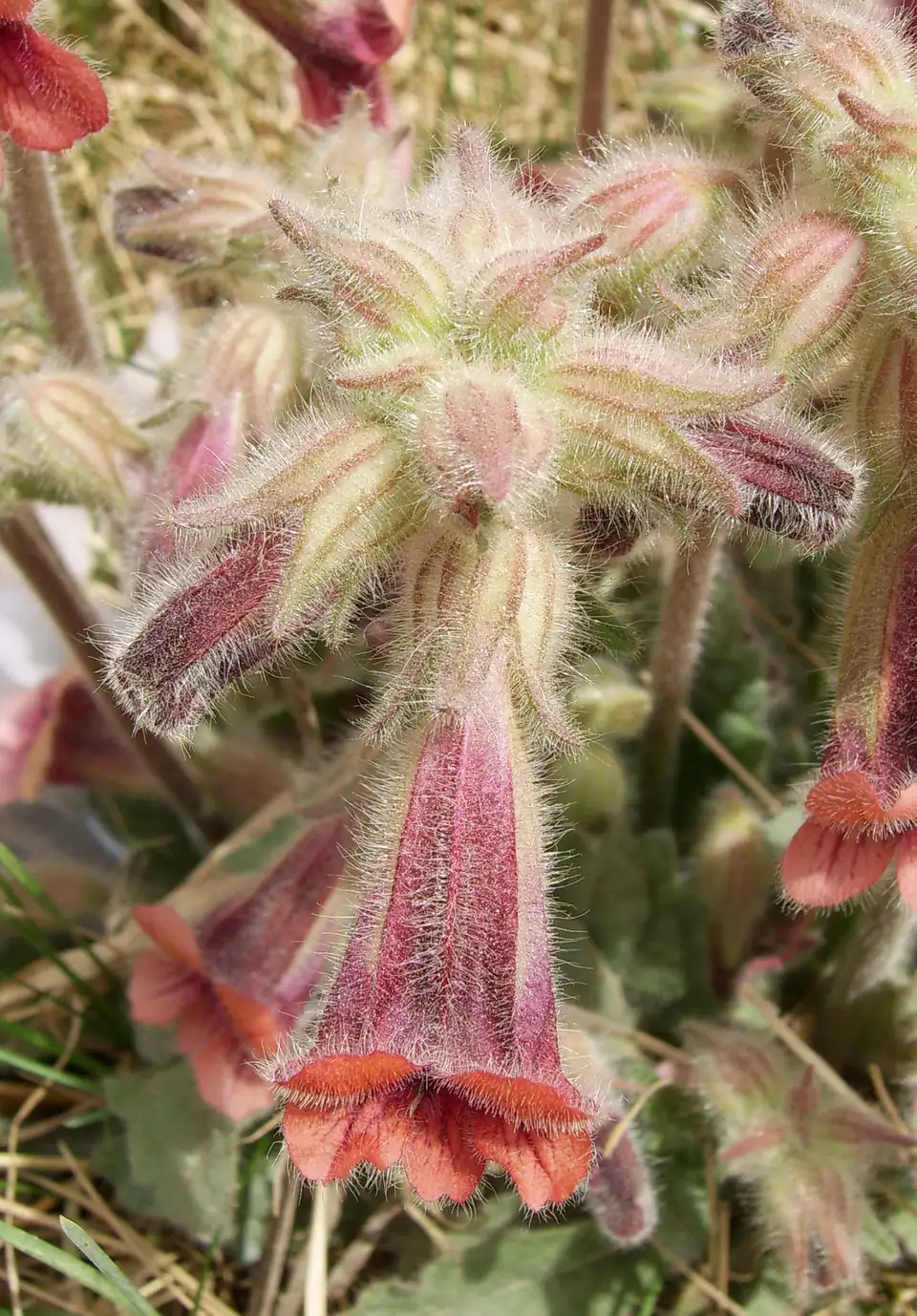
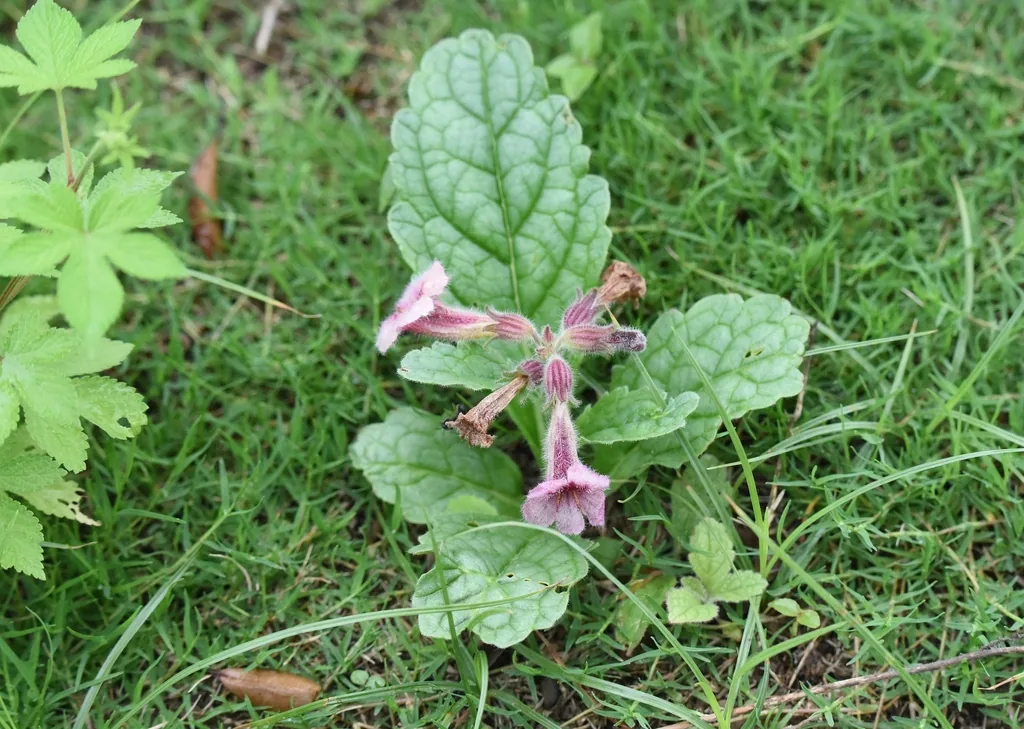
Chinese foxglove is a herbaceous perennial from a rhizomatous rootstock, widely cultivated in China for its medicinal rhizomes and also grown as an ornamental. [1] It needs a freely-draining humus-rich loam and its leaves are susceptible to rot in warm damp winters. [1]
This record is incomplete: the sources we read do not cover every field yet.
Not yet covered by our sources: Watering, Light, Hardiness, coldest zone, Hardiness, warmest zone, Pruning
Rehmannia glutinosa care
How to water Rehmannia glutinosa
Not stated in the sources we read.
How much light Rehmannia glutinosa needs
Not stated in the sources we read.
How much cold Rehmannia glutinosa can take
Hardiness, coldest zone
Not stated in the sources we read.
Hardiness, warmest zone
Not stated in the sources we read.
How to propagate Rehmannia glutinosa
Seed; root cuttings (winter); division (spring); basal cuttings (late spring or early summer)
What the sources say (3)
Root cuttings in winter[ 200 Title
The New RHS Dictionary of Gardening. 1992.Division in spring[ 238 Title
Encyclopaedia of Herbs and their Uses.Harvest the shoots with plenty of underground stem when they are about 8 - 10cm above the ground.How to grow Rehmannia glutinosa
Rehmannia glutinosa pests and problems
Fungal infections
Symptom: Plants are prone to fungal infections, especially in damp conditions; softly hairy leaves rot in warm damp winters
What the sources say (1)
The plants are prone to fungal infections, especially when grown in damp conditions
— Rehmannia glutinosa - Useful Temperate Plants [1]
Remedies
Each remedy shows what official sources say about it; traditional remedies without an official source are marked as such. Harmful ones are listed so you know to avoid them.
Treating the plant
root rot and leaf spot diseases
crop rotation with wheat and corn Not verified
Traditional remedy, not verified by an official source.
How: Reduce the nutrient sources of pathogenic fungi through crop rotations with wheat and corn.
Calendar
Sowing
Autumn or spring (in a greenhouse)
What the sources say (1)
Seed - sow autumn or spring in a greenhousePlanting
Late spring or early summer (seedlings raised in a greenhouse)
What the sources say (1)
Plant them out in late spring or early summer.Harvest
Roots of cultivated plants: autumn or early winter; roots of wild plants: early spring
What each source says
cultivated plants: Autumn or early winter
wild plants: Early spring
What the sources say (3)
cultivated plants: The roots of cultivated plants are harvested in the autumn or early winter, whilst wild plants are harvested in early springwild plants: The roots of cultivated plants are harvested in the autumn or early winter, whilst wild plants are harvested in early springThe roots of cultivated plants are harvested in the autumn or early winter, whilst wild plants are harvested in early springPruning
Not stated in the sources we read.
Months as given by the sources, which are mostly from the United States (northern hemisphere). In the southern hemisphere they shift by about six months.
Edibility
Reported by the source, quoted verbatim. Do not eat a plant on the basis of this page alone: identification mistakes can be dangerous.
Indicative values
Values from a secondary source, not checked word for word like the rest of this page. Use them as a starting point.
- Life cycle
- Herbaceous PerennialIndicative value, adapt it to your climate · Secondary source
- Mature height
- 15.2-30.5 cm (0.5-1 ft)Indicative value, adapt it to your climate · Secondary source
- Light
- Full sunIndicative value, adapt it to your climate · Secondary source
- Watering
- AverageIndicative value, adapt it to your climate · Secondary source
- Soil pH
- 6-7.5Indicative value, adapt it to your climate · Secondary source
- USDA hardiness zones
- 7-10 [winter low −17.8 to 4.4 °C (0 to 40 °F)]Indicative value, adapt it to your climate · Secondary source
- Care level
- MediumIndicative value, adapt it to your climate · Secondary source
- Growth rate
- LowIndicative value, adapt it to your climate · Secondary source
- Pruning
- February, March, AprilIndicative value, adapt it to your climate · Secondary source
Similar plants
- Aaron's Beard Hypericum calycinum
- Abies grandis Abies grandis
- Abraham Trachystemon orientalis
- Abyssinian banana Ensete ventricosum
- Acacia longifolia Acacia longifolia
- Acacia retinodes Acacia retinodes
- Acanthus hungaricus Acanthus hungaricus
- Achlys triphylla Achlys triphylla
Sources
Every value above is quoted from these documents. Links lead to the original publisher.
- Rehmannia glutinosa - Useful Temperate Plants · temperate.theferns.info, consulted
- Rehmannia glutinosa | Purdue University Famine Foods · purdue.edu, consulted
- Ethnobotanical Plant Rehmannia glutinosa | Dr. Duke's Phytochemical and Ethnobotanical Databases · phytochem.nal.usda.gov, consulted
- Rehmannia glutinosa (REMGL)[Overview]| EPPO Global Database · gd.eppo.int, consulted
Written by Emilio Marruso · last checked