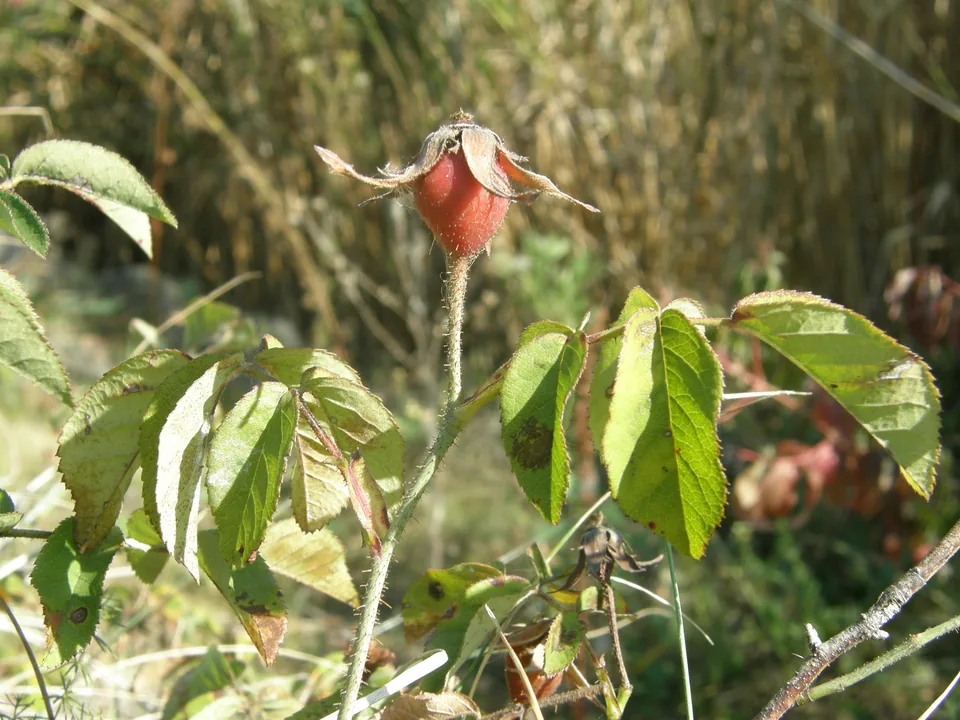
How to Grow and Care for French rose
Rosa gallica
Written by Emilio Marruso · last checked
Toxic to: People · Why
At a glance
Rosa gallica is a rose you can enjoy twice: in the garden and in the kitchen, since its petals can be eaten raw or cooked and turned into jam. Give it full sun, plant it in late spring and feed it once a year in early spring. You can even start new plants from seed, cuttings, suckers or layering.
- Sun
Full sun
What the sources say (1)
Light: Full sun
Light: Full sun Soil: Fertile, consistently moist, well-drained
— Plants of Ancient Pompeii: Gallic Rose (Rosa gallica) – KarensGardenTips.com [7] - Cold
Survives winters down to −20 °F (−28.9 °C)
Very hardy · USDA 5 · RHS H7 · Z5
What the sources say (2)
Hardiness, coldest zone: 5 [winter low −28.9 to −23.3 °C (−20 to −10 °F)]
Hardiness : Zones 5-9 Photo Credit Wikipedia ##
— Plants of Ancient Pompeii: Gallic Rose (Rosa gallica) – KarensGardenTips.com [7] Hardiness, warmest zone: 9 [winter low −6.7 to −1.1 °C (20 to 30 °F)]
Hardiness : Zones 5-9 Photo Credit Wikipedia ##
— Plants of Ancient Pompeii: Gallic Rose (Rosa gallica) – KarensGardenTips.com [7] - Planting
Plant in late spring; seedlings taller than 10 in can go out in summer
- Feeding
All-purpose fertilizer once a year in early spring; no high-nitrogen feed in late summer
What the sources say (7)
When: Early spring, before growth starts
as an alternative, in fall: Roses can be fall fertilized after the plants have gone dormant. Applying fertilizer at this time will not encourage growth but will be available as the plants start to grow in the spring.
— [8] If you decide to fertilize, the best time to fertilize roses is in the early spring before growth starts to appear.
— [9] For species roses, a spring application of general-purpose fertilizer is usually adequate for the season.
— [8] How often: Once a year, in spring
For species roses, a spring application of general-purpose fertilizer is usually adequate for the season.
— [8] Mineral fertilizers: General-purpose fertilizer such as 10-10-10 or 12-12-12, 119 to 237 mL per plant
For species roses, a spring application of general-purpose fertilizer is usually adequate for the season. General-purpose fertilizers such as 10-10-10 or 12-12-12 are used at about one-half to one cup per plant.
— [8] Avoid: High-nitrogen fertilizer late in summer; stop fertilizing in late summer as the plants go dormant
Be careful not to fertilize your roses with high nitrogen formulas late in the summer (end of August/September).
— [9] You can fertilize every four to six weeks during the growing season, but stop fertilization in late summer (late August or early September) as the roses begin to go dormant.
— [10] - Harvest
The petals are edible raw or cooked, and make a lovely jam
- Propagation
New plants from seed, cuttings, dividing suckers or layering
What the sources say (5)
Propagation: Seed; cuttings of half-ripe wood; cuttings of mature wood; division of suckers; layering
Cuttings of half-ripe wood with a heel, July in a shaded frame.
— Rosa gallica - Useful Temperate Plants [2] Cuttings of mature wood of the current seasons growth.
— Rosa gallica - Useful Temperate Plants [2] Division of suckers in the dormant season. Plant
— Rosa gallica - Useful Temperate Plants [2] Layering. Takes 12 months[ 11 Title Trees and
— Rosa gallica - Useful Temperate Plants [2] Seed. Rose seed often takes two years to germinate.
— Rosa gallica - Useful Temperate Plants [2] - Sowing
Sow fresh seed as soon as it ripens, in a cold frame; stored seed as early in the year as you can
What the sources say (2)
Sowing: As soon as the seed is ripe (cold frame); stored seed as early in the year as possible
Seed sown as soon as it is ripe in a cold frame sometimes germinates in spring
— Rosa gallica - Useful Temperate Plants [2] Stored seed can be sown as early in the year as possible
— Rosa gallica - Useful Temperate Plants [2] - Safety
Its hairs can irritate the mouth and stomach if swallowed
Overview
Rosa gallica is a suckering, deciduous shrub producing a cluster of prickly stems. [2] It is native to southern and central Europe and is grown in full sun. [7] The seed hairs beneath the flesh of the fruit can irritate the mouth and digestive tract. [2]
This record is incomplete: the sources we read do not cover every field yet.
Not yet covered by our sources: Watering, Pruning
French rose care
How to water French rose
Not stated in the sources we read.
How much light French rose needs
Full sun
What the sources say (1)
Light: Full sun
Soil: Fertile, consistently moist, well-drainedHow much cold French rose can take
Hardiness, coldest zone
5 [winter low −28.9 to −23.3 °C (−20 to −10 °F)]
What the sources say (1)
Hardiness : Zones 5-9
Photo Credit Wikipedia
##Hardiness, warmest zone
9 [winter low −6.7 to −1.1 °C (20 to 30 °F)]
What the sources say (1)
Hardiness : Zones 5-9
Photo Credit Wikipedia
##How to propagate French rose
Seed; cuttings of half-ripe wood; cuttings of mature wood; division of suckers; layering
What the sources say (5)
Cuttings of half-ripe wood with a heel, July in a shaded frame.Cuttings of mature wood of the current seasons growth.Division of suckers in the dormant season. PlantLayering. Takes 12 months[ 11 Title
Trees andSeed. Rose seed often takes two years to germinate.How to grow French rose
Fertilizing
When
Early spring, before growth starts
What each source says
as an alternative, in fall: After the plants have gone dormant; the nutrients are available when growth resumes in spring
What the sources say (3)
as an alternative, in fall: Roses can be fall fertilized after the plants have gone dormant. Applying fertilizer at this time will not encourage growth but will be available as the plants start to grow in the spring.If you decide to fertilize, the best time to fertilize roses is in the early spring before growth starts to appear.For species roses, a spring application of general-purpose fertilizer is usually adequate for the season.How often
Once a year, in spring
What the sources say (1)
For species roses, a spring application of general-purpose fertilizer is usually adequate for the season.Mineral fertilizers
General-purpose fertilizer such as 10-10-10 or 12-12-12, 119 to 237 mL per plant
What the sources say (1)
For species roses, a spring application of general-purpose fertilizer is usually adequate for the season. General-purpose fertilizers such as 10-10-10 or 12-12-12 are used at about one-half to one cup per plant.Avoid
High-nitrogen fertilizer late in summer; stop fertilizing in late summer as the plants go dormant
What the sources say (2)
Be careful not to fertilize your roses with high nitrogen formulas late in the summer (end of August/September).You can fertilize every four to six weeks during the growing season, but stop fertilization in late summer (late August or early September) as the roses begin to go dormant.Remedies
The sources we checked give no remedies for this plant.
Is French rose poisonous?
Reported by the source, quoted verbatim. This is not medical or veterinary advice: if a person or an animal may have eaten this plant, contact a poison control centre or a veterinarian.
Calendar
Sowing
As soon as the seed is ripe (cold frame); stored seed as early in the year as possible
Planting
Late spring
What each source says
seedlings more than 25 cm tall: Summer
Pruning
Not stated in the sources we read.
Months as given by the sources, which are mostly from the United States (northern hemisphere). In the southern hemisphere they shift by about six months.
Edibility
Reported by the source, quoted verbatim. Do not eat a plant on the basis of this page alone: identification mistakes can be dangerous.
Petals - raw or cooked. They are used for making jam
[2]
Similar plants
- Apple Rose Rosa villosa
- Burnet Rose Rosa spinosissima
- Carolina Rose Rosa carolina
- Cherokee Rose Rosa laevigata
- Climbing Prairie Rose Rosa setigera
- Dog rose Rosa canina
- Lady Banks Rosa banksiae
- Memorial Rose Rosa lucieae
Sources
Every value above is quoted from these documents. Links lead to the original publisher.
- World Plants · worldplants.ca, consulted
- Rosa gallica - Useful Temperate Plants · temperate.theferns.info, consulted
- Results · optima-bot.org, consulted
- Rosa gallica (French rose): Go Botany · gobotany.nativeplanttrust.org, consulted
- Rosa Plant Growing & Care Guide for Gardeners · gardenershq.com, consulted
- Old Garden Roses: Types, Fragrance & Growing Tips | The Old Farmer's Almanac · almanac.com, consulted
- Plants of Ancient Pompeii: Gallic Rose (Rosa gallica) – KarensGardenTips.com · karensgardentips.com, consulted
- extension.illinois.edu · extension.illinois.edu
- ask.extension.org · ask.extension.org
- extension.oregonstate.edu · extension.oregonstate.edu
Written by Emilio Marruso · last checked