
How to Grow and Care for Rosa glauca
Rosa glauca
Written by Emilio Marruso · last checked
At a glance
This rose grows 5–7 feet tall and is happy in full sun or partial shade. Give it moist, well-drained soil, plant it between September and November, and prune it in March. Its fruit can be eaten raw or cooked, and the seeds can be ground and mixed with flour for a boost of vitamin E.
- Sun
Full sun to partial shade
- Water
Keep the soil moist but never soggy; it does not like drought
What the sources say (4)
Watering: Moist, well-drained soil is best
Full sun to partial shade; moist, well-drained soil is best.
— Redleaf Rose | Drush Site-Install [1] For best results grow Rosa glauca in fertile, moist but well-drained soil in sun to partial shade.
— Rosa glauca | BBC Gardeners World Magazine [4] Watering notes: Dislikes waterlogged soils; intolerant of drought
Grows well in heavy clay soils. Dislikes water-logged soils [6] .
— Red-Leafed Rose (Rosa glauca) — Practical Plants [6] Drainage well drained Tolerates Nutritionally Poor Soil No Drought intolerant
— Red-Leafed Rose (Rosa glauca) — Practical Plants [6] - Cold
Survives winters down to −50 °F (−45.6 °C)
Very hardy · USDA 2 · RHS H7 · Z2
- Planting
Plant from September to November
What the sources say (1)
Planting: September to November
| Plant | | | | | | | | | yes | yes | yes |
— Rosa glauca | BBC Gardeners World Magazine [4] - Feeding
Once a year in early spring, ½–1 cup of all-purpose fertilizer; no high-nitrogen feed in late summer
What the sources say (7)
When: Early spring, before growth starts
as an alternative, in fall: Roses can be fall fertilized after the plants have gone dormant. Applying fertilizer at this time will not encourage growth but will be available as the plants start to grow in the spring.
— [7] If you decide to fertilize, the best time to fertilize roses is in the early spring before growth starts to appear.
— [8] For species roses, a spring application of general-purpose fertilizer is usually adequate for the season.
— [7] How often: Once a year, in spring
For species roses, a spring application of general-purpose fertilizer is usually adequate for the season.
— [7] Mineral fertilizers: General-purpose fertilizer such as 10-10-10 or 12-12-12, 119 to 237 mL per plant
For species roses, a spring application of general-purpose fertilizer is usually adequate for the season. General-purpose fertilizers such as 10-10-10 or 12-12-12 are used at about one-half to one cup per plant.
— [7] Avoid: High-nitrogen fertilizer late in summer; stop fertilizing in late summer as the plants go dormant
Be careful not to fertilize your roses with high nitrogen formulas late in the summer (end of August/September).
— [8] You can fertilize every four to six weeks during the growing season, but stop fertilization in late summer (late August or early September) as the roses begin to go dormant.
— [9] - Pruning
Prune in March
What the sources say (1)
Pruning: March
| Prune | | | yes |
— Rosa glauca | BBC Gardeners World Magazine [4] - Harvest
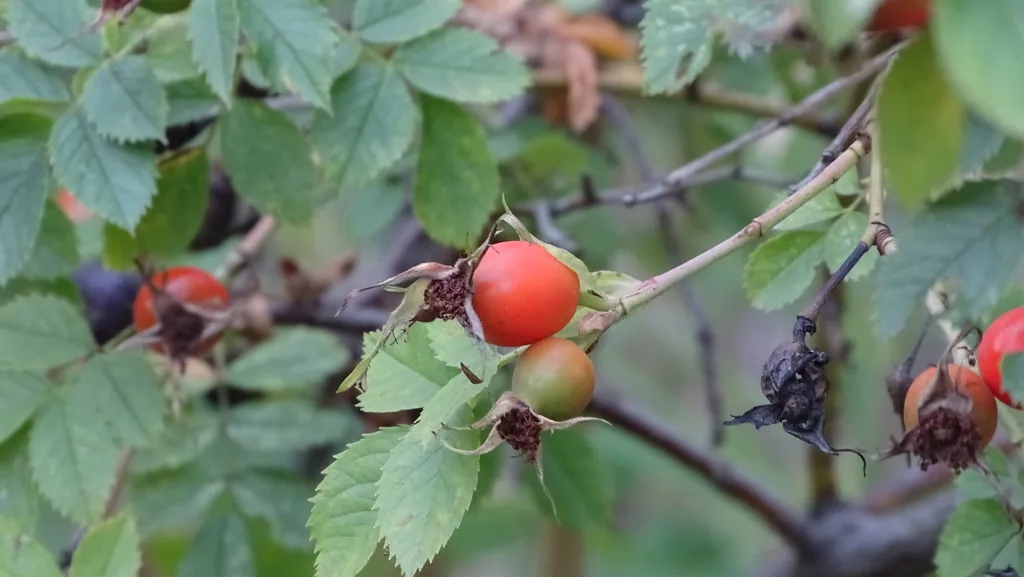
The fruit is edible raw or cooked, though tough; the seeds can be ground into flour
- Pests
Watch for spider mites, Japanese beetles, voles, powdery mildew and black spot
What the sources say (2)
Pests: voles, twospotted spidermite, Japanese beetle
Dieback/Canker Voles Twospotted Spidermite [Ornamentals] Cankers on Rose Japanese Beetle
— Redleaf Rose | Drush Site-Install [1] Diseases: powdery mildew, black spot, crown gall, gray mold, wood rots and decays, dieback/canker
Powdery Mildew [Shrubs and Trees] Black Spot Crown Gall Gray Mold [Trees and Shrubs] Wood Rots and Decays Dieback/Canker
— Redleaf Rose | Drush Site-Install [1] - Size
5 to 7 ft tall
What the sources say (1)
Mature height: 152.4-213.36 cm (5-7 ft)
Maximum Height Height Value 7.00 Height Unit Feet
— Redleaf Rose | Drush Site-Install [1] - Propagation
From seed, cuttings, layering or by dividing the suckers
What the sources say (3)
Propagation: Seed, cuttings, division of suckers, layering
Propagation - by seed - by cuttings
— Plant Database [3] Division of suckers in the dormant season. Plant them out direct into their permanent positions.
— Red-Leafed Rose (Rosa glauca) — Practical Plants [6] Layering. Takes 12 months [2] .
— Red-Leafed Rose (Rosa glauca) — Practical Plants [6] - Sowing
Sow seeds as soon as ripe in a cold frame; they can take 18 months to sprout
What the sources say (1)
Sowing: Sown as soon as ripe in a cold frame; may take 18 months to germinate
Seed sown as soon as it is ripe in a cold frame sometimes germinates in spring though it may take 18 months.
— Red-Leafed Rose (Rosa glauca) — Practical Plants [6]
Overview
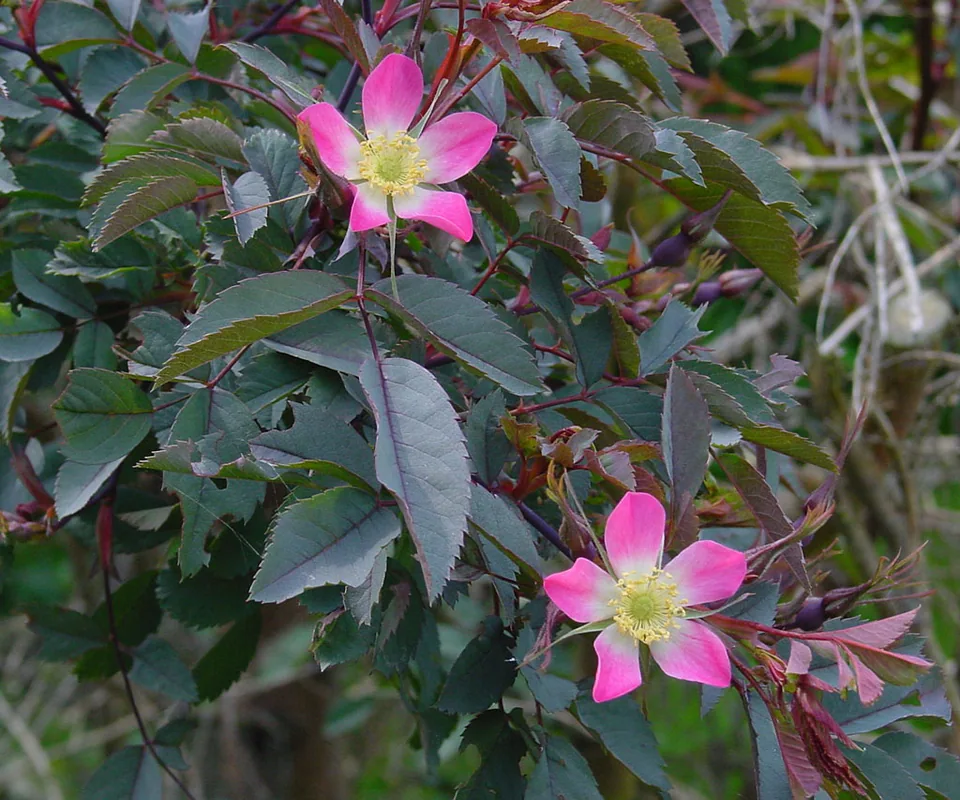
Rosa glauca is a deciduous shrub grown more for its foliage and hips than for its flowers. [1] It is grown in full sun to partial shade in moist, well-drained soil. [1] It is native to the mountains of Europe and can naturalize outside its range. [2]
This record is incomplete: the sources we read do not cover every field yet.
Not yet covered by our sources: Hardiness, warmest zone
Rosa glauca care
How to water Rosa glauca
Watering
Moist, well-drained soil is best
Watering notes
Dislikes waterlogged soils; intolerant of drought
How much light Rosa glauca needs
How much cold Rosa glauca can take
Hardiness, coldest zone
2 [winter low −45.6 to −40 °C (−50 to −40 °F)]
Hardiness, warmest zone
Not stated in the sources we read.
How to propagate Rosa glauca
Seed, cuttings, division of suckers, layering
What the sources say (3)
Propagation
- by seed
- by cuttingsDivision of suckers in the dormant season. Plant them out direct into their permanent positions.Layering. Takes 12 months [2] .How to grow Rosa glauca
The plant
Mature height
152.4-213.36 cm (5-7 ft)
What the sources say (1)
Maximum Height
Height Value
7.00
Height Unit
FeetPests and diseases
Pests
voles, twospotted spidermite, Japanese beetle
What the sources say (1)
Dieback/Canker
Voles
Twospotted Spidermite [Ornamentals]
Cankers on Rose
Japanese BeetleDiseases
powdery mildew, black spot, crown gall, gray mold, wood rots and decays, dieback/canker
What the sources say (1)
Powdery Mildew [Shrubs and Trees]
Black Spot
Crown Gall
Gray Mold [Trees and Shrubs]
Wood Rots and Decays
Dieback/CankerFertilizing
When
Early spring, before growth starts
What each source says
as an alternative, in fall: After the plants have gone dormant; the nutrients are available when growth resumes in spring
What the sources say (3)
as an alternative, in fall: Roses can be fall fertilized after the plants have gone dormant. Applying fertilizer at this time will not encourage growth but will be available as the plants start to grow in the spring.If you decide to fertilize, the best time to fertilize roses is in the early spring before growth starts to appear.For species roses, a spring application of general-purpose fertilizer is usually adequate for the season.How often
Once a year, in spring
What the sources say (1)
For species roses, a spring application of general-purpose fertilizer is usually adequate for the season.Mineral fertilizers
General-purpose fertilizer such as 10-10-10 or 12-12-12, 119 to 237 mL per plant
What the sources say (1)
For species roses, a spring application of general-purpose fertilizer is usually adequate for the season. General-purpose fertilizers such as 10-10-10 or 12-12-12 are used at about one-half to one cup per plant.Avoid
High-nitrogen fertilizer late in summer; stop fertilizing in late summer as the plants go dormant
What the sources say (2)
Be careful not to fertilize your roses with high nitrogen formulas late in the summer (end of August/September).You can fertilize every four to six weeks during the growing season, but stop fertilization in late summer (late August or early September) as the roses begin to go dormant.Remedies
The sources we checked give no remedies for this plant.
Calendar
Sown as soon as ripe in a cold frame; may take 18 months to germinate
What the sources say (1)
Seed sown as soon as it is ripe in a cold frame sometimes germinates in spring though it may take 18 months.September to November
What the sources say (1)
| Plant | | | | | | | | | yes | yes | yes |March
What the sources say (1)
| Prune | | | yes |Months as given by the sources, which are mostly from the United States (northern hemisphere). In the southern hemisphere they shift by about six months.
Edibility
Reported by the source, quoted verbatim. Do not eat a plant on the basis of this page alone: identification mistakes can be dangerous.
Similar plants
- Apple Rose Rosa villosa
- Burnet Rose Rosa spinosissima
- Carolina Rose Rosa carolina
- Cherokee Rose Rosa laevigata
- Climbing Prairie Rose Rosa setigera
- Dog rose Rosa canina
- French rose Rosa gallica
- Lady Banks Rosa banksiae
Sources
Every value above is quoted from these documents. Links lead to the original publisher.
- Redleaf Rose | Drush Site-Install · selectors.extension.illinois.edu, consulted
- Rosa glauca - FNA · floranorthamerica.org, consulted
- Plant Database · plantdatabase.uconn.edu, consulted
- Rosa glauca | BBC Gardeners World Magazine · gardenersworld.com, consulted
- Rosa glauca - Useful Temperate Plants · temperate.theferns.info, consulted
- Red-Leafed Rose (Rosa glauca) — Practical Plants · practicalplants.org, consulted
- extension.illinois.edu · extension.illinois.edu
- ask.extension.org · ask.extension.org
- extension.oregonstate.edu · extension.oregonstate.edu
Written by Emilio Marruso · last checked