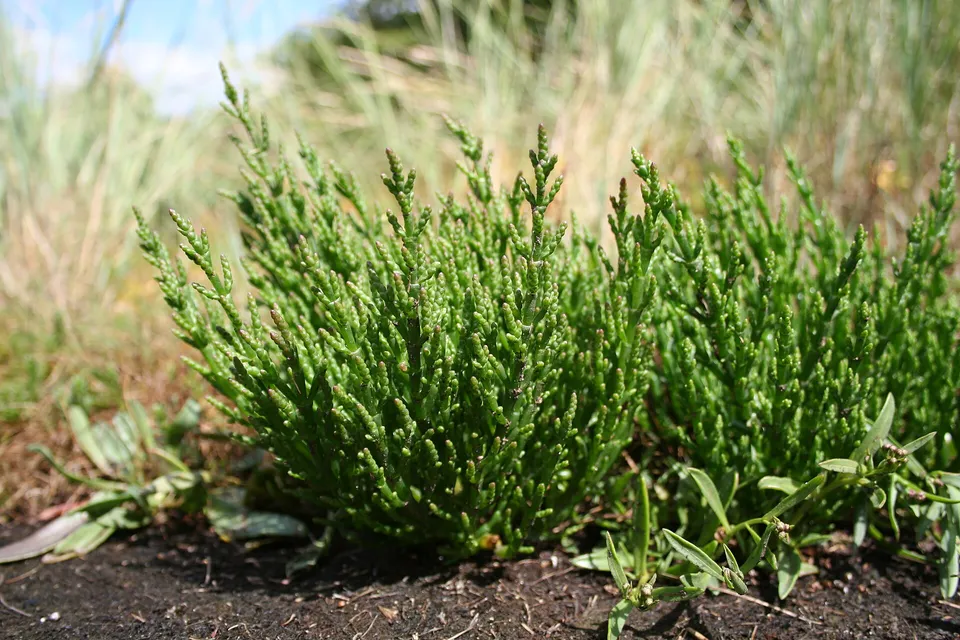
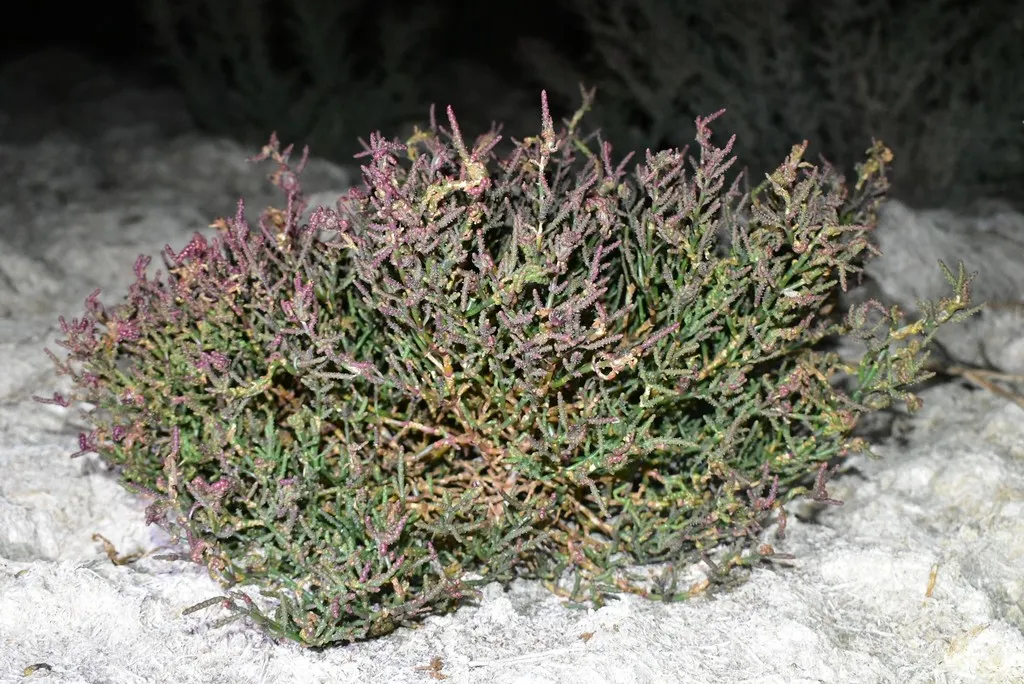

How to Grow and Care for Glasswort
Salicornia europaea
Written by Emilio Marruso · last checked
At a glance
Glasswort is a small annual succulent from sandy coasts and salt marshes. Its young stems taste salty and can be eaten raw, cooked or pickled, and they are lovely with fish. Give it full sun and sandy soil that drains well, and sow it in autumn.
- Sun
Full sun
What the sources say (1)
Light: Full sun
| Light Preference | Full Sun
— NParks | Salicornia europaea [1] - Water
Moderate, regular watering; sandy, well-drained soil, salt is fine
- Harvest
Pick the shoots in late summer at 6 inches tall; eat them raw, cooked or pickled
What the sources say (2)
Harvest: Late summer; shoots when about 15 cm [5.9 in] tall
The plant is at its best for eating in late summer
— Glasswort (Salicornia europaea) — Practical Plants [4] They are ideally harvested at 15 cm tall and can be repeatedly harvested by removing only the upper 10 cm
— NParks | Salicornia europaea [1] - Propagation
From seed, given a cold spell before sowing
What the sources say (2)
- Sowing
Sow in autumn, as soon as the seed is ripe
What the sources say (1)
Sowing: Autumn, as soon as the seed is ripe
it can succeed in gardens if sown as soon as the seed is ripe in the autumn in a well-drained soil
— Salicornia europaea - Useful Temperate Plants [3] - Containers
Grows in containers too
What the sources say (1)
In containers: Yes
| Landscape Uses | Coastal Plant, Container Planting
— NParks | Salicornia europaea [1]
Overview
Salicornia europaea is an annual succulent of sandy coasts, salt marshes and mudflats of Western Europe. [3][1] Its young stems are eaten raw or lightly cooked and have a salty flavour. [1] It is difficult to grow in cultivation, but it can succeed in gardens if sown when the seed is ripe in autumn. [3]
This record is incomplete: the sources we read do not cover every field yet.
Not yet covered by our sources: Spacing
Glasswort care
Measurements in square brackets are our conversion into the other unit system; the quoted text is unchanged.
How to water Glasswort
Watering
Moderate, regular watering
Watering notes
Well-drained, sandy soil; tolerates saline soils and salt spray
How much light Glasswort needs
Full sun
What the sources say (1)
| Light Preference
| Full SunWhere to grow Glasswort
In containers
Yes
What the sources say (1)
| Landscape Uses
| Coastal Plant, Container PlantingSpacing
Not stated in the sources we read.
How to propagate Glasswort
Seed (cold stratification before sowing)
Remedies
The sources we checked give no remedies for this plant.
Calendar
Sowing
Autumn, as soon as the seed is ripe
What the sources say (1)
it can succeed in gardens if sown as soon as the seed is ripe in the autumn in a well-drained soilHarvest
Late summer; shoots when about 15 cm [5.9 in] tall
Months as given by the sources, which are mostly from the United States (northern hemisphere). In the southern hemisphere they shift by about six months.
Edibility
Reported by the source, quoted verbatim. Do not eat a plant on the basis of this page alone: identification mistakes can be dangerous.
Similar plants
- Abyssinian banana Ensete ventricosum
- Agretti Soda inermis
- Alexanders Smyrnium olusatrum
- Allium triquetrum Allium triquetrum
- Alpine dock Rumex alpinus
- Amaranth pigweed Amaranthus hybridus
- American hogpeanut Amphicarpaea bracteata
- American Yellow Rocket Barbarea orthoceras
Sources
Every value above is quoted from these documents. Links lead to the original publisher.
- NParks | Salicornia europaea · nparks.gov.sg, consulted
- Author: Daryl Gunning · vliz.be, consulted
- Salicornia europaea - Useful Temperate Plants · temperate.theferns.info, consulted
- Glasswort (Salicornia europaea) — Practical Plants · practicalplants.org, consulted
- Growing Samphire | Allotment Online · allotmentonline.co.uk, consulted
- Salivitae – Salicornia Production Unit | EU CAP Network · eu-cap-network.ec.europa.eu, consulted
Written by Emilio Marruso · last checked