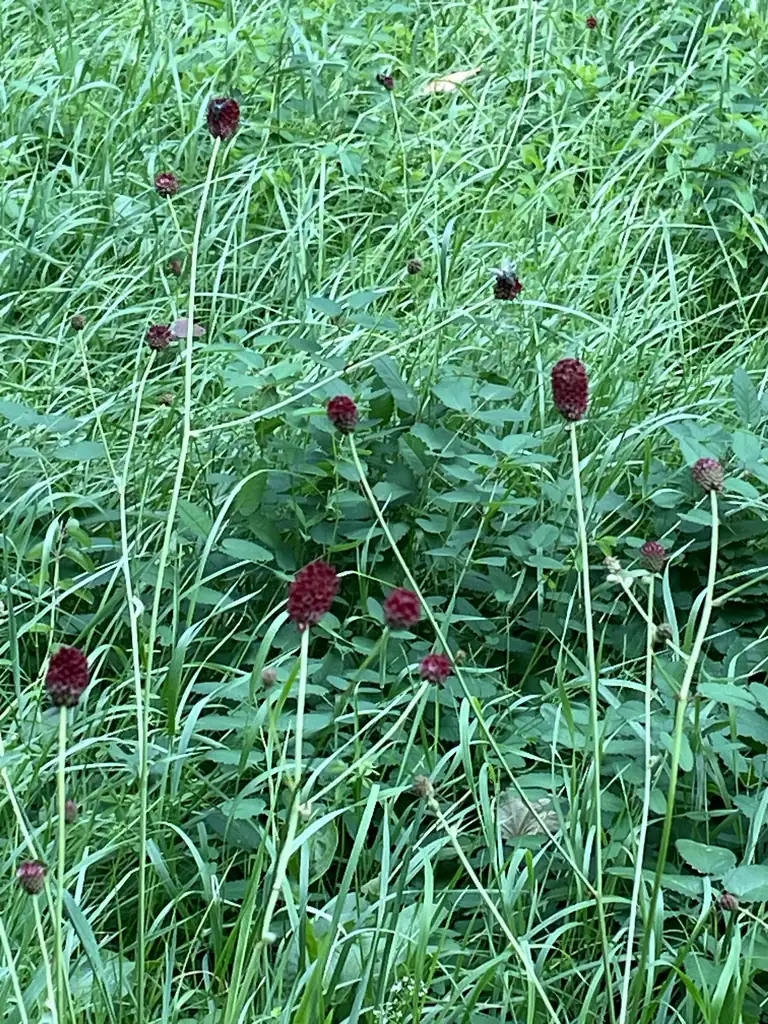
How to Grow and Care for Great Burnet
Sanguisorba officinalis
Written by Emilio Marruso · last checked
At a glance
Great burnet is a traditional herb-garden plant that's easy to love. Its young leaves add good flavor to soups, salads and sandwiches, and the fresh or dried leaves make a tea. Give it full sun or partial shade, grow it in the ground or in a container, and pick the leaves in spring before it flowers.
- Sun
Full sun to partial shade
What the sources say (3)
Light: Full sun to partial shade
Prefers a good moist soil that does not dry out in the summer, in sun or partial shade
— Sanguisorba officinalis - Useful Temperate Plants [2] It prefers sun or semi-shade with moist or wet soil.
— Sanguisorba officinalis [1] Site great burnet in full sun and average soil with good drainage.
— Sanguisorba officinalis, or Great Burnet, in the Garden - Horticulture [3] - Cold
Survives winters down to −30 °F (−34.4 °C)
Very hardy · USDA 4 · RHS H7 · Z4
What the sources say (2)
Hardiness, coldest zone: 4 [winter low −34.4 to −28.9 °C (−30 to −20 °F)]
It may require staking, but you might avoid the need for this by planting it amid sturdy perennials through which its thin flowering stems can grow. USDA Zones 4–8.
— Sanguisorba officinalis, or Great Burnet, in the Garden - Horticulture [3] Hardiness, warmest zone: 8 [winter low −12.2 to −6.7 °C (10 to 20 °F)]
It may require staking, but you might avoid the need for this by planting it amid sturdy perennials through which its thin flowering stems can grow. USDA Zones 4–8.
— Sanguisorba officinalis, or Great Burnet, in the Garden - Horticulture [3] - Planting
Plant outdoors once the risk of frost is over
What the sources say (1)
Planting: Outdoors when the risk of frost is over
The pots can be placed in an unheated greenhouse, or outside when the risk of frost is over. When fully rooted in the pots, plant outside in field.
— Sanguisorba officinalis [1] - Harvest
Pick young leaves in spring before flowering for salads, soups and tea
What the sources say (4)
Harvest: Young leaves in spring before flowering; seeds ripen August-September
According to Useful Temperate Plants (Ken Fern), leaves: They should be harvested in the spring before the plant comes into flower
— Sanguisorba officinalis - Useful Temperate Plants [2] According to NordGen, seeds: The seeds will normally ripen in August/September. Always harvest in dry conditions, and harvest when both the inflorescence and the stem underneath are brownish and dry.
— Sanguisorba officinalis [1] They should be harvested in the spring before the plant comes into flower
— Sanguisorba officinalis - Useful Temperate Plants [2] The seeds will normally ripen in August/September. Always harvest in dry conditions, and harvest when both the inflorescence and the stem underneath are brownish and dry.
— Sanguisorba officinalis [1] - Watch out
Its roots spread and it self-seeds: choose the spot with care and remove faded flowers
What the sources say (1)
Suckers: Rhizomes can spread readily and become a nuisance; site with care.
The rhizomes can spread readily and have the potential to become a nuisance , so site with care
— [6] - Propagation
From seed, or divide the plant in spring or fall
What the sources say (2)
Propagation: Seed; division in spring or autumn
Seed - sow spring or autumn in a cold frame. When they are large enough to handle, prick the seedlings out into individual pots
— Sanguisorba officinalis - Useful Temperate Plants [2] Division in the spring or in autumn
— Sanguisorba officinalis - Useful Temperate Plants [2] - Sowing
Sow in spring or fall
What the sources say (3)
Sowing: Spring or autumn
According to Useful Temperate Plants (Ken Fern), cold frame: Seed - sow spring or autumn in a cold frame. When they are large enough to handle, prick the seedlings out into individual pots
— Sanguisorba officinalis - Useful Temperate Plants [2] According to NordGen, trays under light at 20-23 °C: Start cultivation in April/May in a broadcast tray under light conditions, approximately 20-23 °C.
— Sanguisorba officinalis [1] Seed - sow spring or autumn in a cold frame. When they are large enough to handle, prick the seedlings out into individual pots
— Sanguisorba officinalis - Useful Temperate Plants [2] - Containers
Grows in containers too
What the sources say (1)
In containers: Yes
In nature you can find Sanguisorba officinalis in meadows and bog-like areas, but it is also a beloved ornamental growing outside in pots or field.
— Sanguisorba officinalis [1]
Overview
Great burnet is a self-fertile perennial native to Europe, northern Asia and North America, reaching 60-100 cm [24–39 in] and flowering from June to August with dark red flowers. [1] It grows in meadows and wet grassy places and suits meadow gardens, naturalistic plantings and herb gardens. [2][3] It is grown in sun or partial shade and is propagated by seed or by division. [1][2]
This record is incomplete: the sources we read do not cover every field yet.
Not yet covered by our sources: Pruning
Great Burnet care
Measurements in square brackets are our conversion into the other unit system; the quoted text is unchanged.
How to water Great Burnet
The sources give different values depending on region, zone or growing conditions.
What each source says
According to Horticulture magazine: Tolerates some drought once established
According to Useful Temperate Plants (Ken Fern): Moist soil that does not dry out in summer
According to NordGen: Moist or wet soil
What the sources say (3)
According to Horticulture magazine: Site great burnet in full sun and average soil with good drainage. Once it is established it can tolerate some drought.According to Useful Temperate Plants (Ken Fern): Prefers a good moist soil that does not dry out in the summer, in sun or partial shadeAccording to NordGen: It prefers sun or semi-shade with moist or wet soil.How much light Great Burnet needs
Full sun to partial shade
What the sources say (3)
Prefers a good moist soil that does not dry out in the summer, in sun or partial shadeIt prefers sun or semi-shade with moist or wet soil.Site great burnet in full sun and average soil with good drainage.How much cold Great Burnet can take
Hardiness, coldest zone
4 [winter low −34.4 to −28.9 °C (−30 to −20 °F)]
What the sources say (1)
It may require staking, but you might avoid the need for this by planting it amid sturdy perennials through which its thin flowering stems can grow. USDA Zones 4–8.Hardiness, warmest zone
8 [winter low −12.2 to −6.7 °C (10 to 20 °F)]
What the sources say (1)
It may require staking, but you might avoid the need for this by planting it amid sturdy perennials through which its thin flowering stems can grow. USDA Zones 4–8.Where to grow Great Burnet
Yes
What the sources say (1)
In nature you can find Sanguisorba officinalis in meadows and bog-like areas, but it is also a beloved ornamental growing outside in pots or field.How to propagate Great Burnet
Seed; division in spring or autumn
How to grow Great Burnet
Roots
Suckers
Rhizomes can spread readily and become a nuisance; site with care.
What the sources say (1)
The rhizomes can spread readily and have the potential to become a nuisance , so site with careGreat Burnet pests and problems
Self-seeding
Symptom: Seedlings appear around the garden
What to do: Remove spent flowers before they go to seed
What the sources say (1)
Sanguisorba officinalis can seed itself around, so if you do not want seedlings remove the spent flowers before they go to seed.
— Sanguisorba officinalis, or Great Burnet, in the Garden - Horticulture [3] Floppy flowering stems
Symptom: Thin flowering stems may need support
What to do: Stake, or plant amid sturdy perennials
What the sources say (1)
It may require staking, but you might avoid the need for this by planting it amid sturdy perennials through which its thin flowering stems can grow.
— Sanguisorba officinalis, or Great Burnet, in the Garden - Horticulture [3]
Remedies
Each remedy shows what official sources say about it; traditional remedies without an official source are marked as such. Harmful ones are listed so you know to avoid them.
Treating the plant
self-seeding
removing spent flowers Not verified
Traditional remedy, not verified by an official source.
How: If you do not want seedlings, remove the spent flowers before they go to seed.
floppy stems
planting amid sturdy perennials Not verified
Traditional remedy, not verified by an official source.
How: Instead of staking, plant it amid sturdy perennials through which its thin flowering stems can grow.
Calendar
Sowing
Spring or autumn
What each source says
According to Useful Temperate Plants (Ken Fern), cold frame: Spring or autumn
According to NordGen, trays under light at 20-23 °C: April-May
What the sources say (3)
According to Useful Temperate Plants (Ken Fern), cold frame: Seed - sow spring or autumn in a cold frame. When they are large enough to handle, prick the seedlings out into individual potsAccording to NordGen, trays under light at 20-23 °C: Start cultivation in April/May in a broadcast tray under light conditions, approximately 20-23 °C.Seed - sow spring or autumn in a cold frame. When they are large enough to handle, prick the seedlings out into individual potsPlanting
Outdoors when the risk of frost is over
What the sources say (1)
The pots can be placed in an unheated greenhouse, or outside when the risk of frost is over. When fully rooted in the pots, plant outside in field.Harvest
Young leaves in spring before flowering; seeds ripen August-September
What each source says
According to Useful Temperate Plants (Ken Fern), leaves: Spring, before flowering
According to NordGen, seeds: August-September
What the sources say (4)
According to Useful Temperate Plants (Ken Fern), leaves: They should be harvested in the spring before the plant comes into flowerAccording to NordGen, seeds: The seeds will normally ripen in August/September. Always harvest in dry conditions, and harvest when both the inflorescence and the stem underneath are brownish and dry.They should be harvested in the spring before the plant comes into flowerThe seeds will normally ripen in August/September. Always harvest in dry conditions, and harvest when both the inflorescence and the stem underneath are brownish and dry.Pruning
Not stated in the sources we read.
Months as given by the sources, which are mostly from the United States (northern hemisphere). In the southern hemisphere they shift by about six months.
Edibility
Reported by the source, quoted verbatim. Do not eat a plant on the basis of this page alone: identification mistakes can be dangerous.
Similar plants
- Burnet Sanguisorba minor
- Abies grandis Abies grandis
- Abraham Trachystemon orientalis
- Abyssinian banana Ensete ventricosum
- Acacia longifolia Acacia longifolia
- Acanthus hungaricus Acanthus hungaricus
- Achlys triphylla Achlys triphylla
- Aconite Aconitum napellus
Sources
Every value above is quoted from these documents. Links lead to the original publisher.
- Sanguisorba officinalis · publication.nordgen.org, consulted
- Sanguisorba officinalis - Useful Temperate Plants · temperate.theferns.info, consulted
- Sanguisorba officinalis, or Great Burnet, in the Garden - Horticulture · hortmag.com, consulted
- Sanguisorba officinalis (great burnet): Go Botany · gobotany.nativeplanttrust.org, consulted
- Perfect meadow plants that look great in naturalistic planting schemes: here's how to grow sanguisorba | Gardens Illustrated · gardensillustrated.com, consulted
- rhs.org.uk · rhs.org.uk
Written by Emilio Marruso · last checked