
How to Grow and Care for Cutleaf vipergrass
Scorzonera laciniata
Written by Emilio Marruso · last checked
At a glance
Cutleaf vipergrass is a compact plant, just 4 to 18 inches tall, that lives for two years. Give it a sunny spot and it becomes a vegetable you can enjoy almost whole: the leaves, stems and roots of young plants are all eaten. It is a small plant with a lot to offer, and it fits right into a sunny corner of the garden.
- Sun
Full sun
What the sources say (1)
Light: Full sun
S. laciniata was planted for erosion control and can be found in disturbed areas such as old fields and along roadsides. It prefers full sun.
— cutleaf vipergrass (Scorzonera laciniata L.) - EDDMapS [4] - Harvest
Eat the leaves, stems and roots of young plants as a vegetable
- Size
4 to 18 inches tall; lives for two years
What the sources say (2)
Mature height: 10-45 cm [4–18 in]
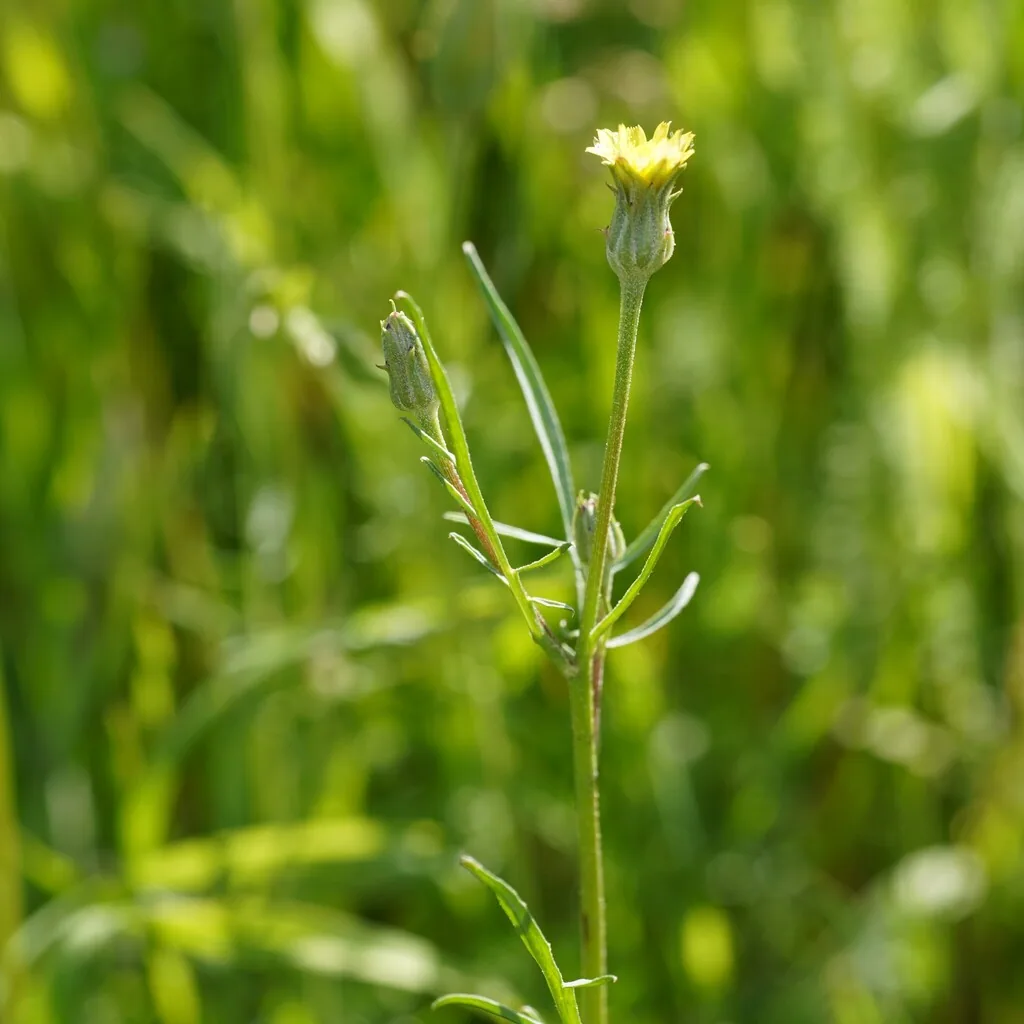
Height: 10-45 cm. Plant whitish-green. - Stem erect, leafy, branched, rarely simple, glabrous,
— Scorzonera laciniata [1] Life cycle: biennial
Leaves, stems and roots are eaten as a vegetable. Latex in leaves and roots. - Biological type: biennial.
— Scorzonera laciniata [1]
Overview
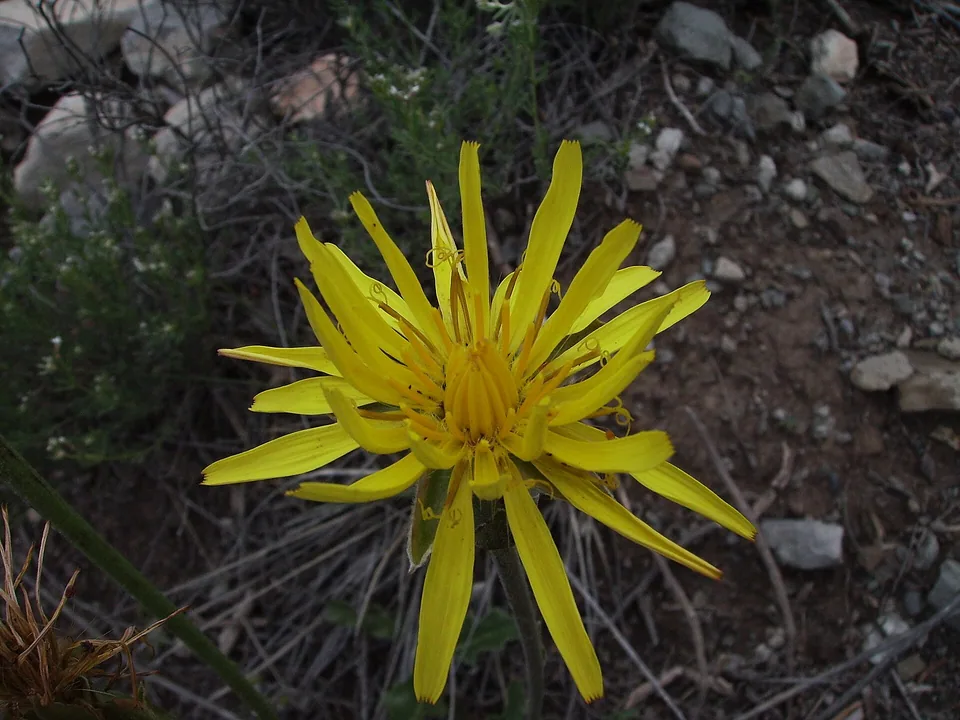
It is a biennial 10-45 cm [4–18 in] tall whose leaves, stems and roots are eaten as a vegetable. [1] It occurs in disturbed areas such as old fields and roadsides and prefers full sun. [4] It is a biennial that grows to about 2 ft [61 cm] tall and has yellow flowers that open for only a few hours in sunlight. [6]
This record is incomplete: the sources we read do not cover every field yet.
Not yet covered by our sources: Watering, Sowing / Planting, Harvest, Spacing, Propagation
Cutleaf vipergrass care
Measurements in square brackets are our conversion into the other unit system; the quoted text is unchanged.
How to water Cutleaf vipergrass
Not stated in the sources we read.
How much light Cutleaf vipergrass needs
Full sun
What the sources say (1)
S. laciniata was planted for erosion control and can be found in disturbed areas such as old fields and along roadsides. It prefers full sun.Where to grow Cutleaf vipergrass
Not stated in the sources we read.
How to propagate Cutleaf vipergrass
Not stated in the sources we read.
How to grow Cutleaf vipergrass
The plant
Life cycle
biennial
What the sources say (1)
Leaves, stems and roots are eaten as a vegetable.
Latex in leaves and roots.
- Biological type: biennial.Family
Asteraceae (Compositae)
What the sources say (1)
Family:
COMPOSITAE (ASTERACEAE)
Genus:
Podospermum
Sinònims:
Scorzonera laciniata L.Mature height
10-45 cm [4–18 in]
What the sources say (1)
Height: 10-45 cm. Plant whitish-green.
- Stem erect, leafy, branched, rarely simple, glabrous,Remedies
Each remedy shows what official sources say about it; traditional remedies without an official source are marked as such. Harmful ones are listed so you know to avoid them.
Getting rid of it
weeds
hand-pulling Works
How: Since the plant has a taproot, pull it by hand before seeds are formed.
Since this plant has a taproot, a great control strategy is hand-pulling before seeds are formed.
— montana.edu [9] What the evidence says Since this plant has a taproot, a great control strategy is hand-pulling before seeds are formed.
— montana.edu [9] mowing before seed set Partly works
How: Mow before the plant goes to seed; it may still flower and set seed rapidly after mowing in lawns.
Mowing cutleaf vipergrass before it goes to seed is also a management possibility, though it does seem to flower and set seed relatively rapidly after mowing in lawns.
— montana.edu [9] What the evidence says Mowing cutleaf vipergrass before it goes to seed is also a management possibility, though it does seem to flower and set seed relatively rapidly after mowing in lawns.
— montana.edu [9]
Calendar
Sowing
Not stated in the sources we read.
Planting
Not stated in the sources we read.
Harvest
Not stated in the sources we read.
Months as given by the sources, which are mostly from the United States (northern hemisphere). In the southern hemisphere they shift by about six months.
Edibility
Reported by the source, quoted verbatim. Do not eat a plant on the basis of this page alone: identification mistakes can be dangerous.
Similar plants
- Scorzonera humilis Scorzonera humilis
- Abraham Trachystemon orientalis
- Abyssinian banana Ensete ventricosum
- Acacia longifolia Acacia longifolia
- African Blue Lily Agapanthus praecox
- African lily Dietes bicolor
- African lovegrass Eragrostis curvula
- African tuliptree Spathodea campanulata
Sources
Every value above is quoted from these documents. Links lead to the original publisher.
- Scorzonera laciniata · www2.dijon.inrae.fr, consulted
- European Wild Plant: Scorzonera laciniata Cut-leaved Viper's-grass · ukwildflowers.com, consulted
- VicFlora: Scorzonera laciniata · vicflora.rbg.vic.gov.au, consulted
- cutleaf vipergrass (Scorzonera laciniata L.) - EDDMapS · eddmaps.org, consulted
- Podospermum laciniatum (L.) DC. - Herbari Virtual del Mediterrani Occidental · herbarivirtual.uib.cat, consulted
- Cutleaf Vipergrass - Health Department | SLCo · slco.org, consulted
- Plants of South Eastern New South Wales · apps.lucidcentral.org, consulted
- Scorzonera laciniata - wild in Provence · wildflowersprovence.fr, consulted
- montana.edu · montana.edu
Written by Emilio Marruso · last checked