
How to Grow and Care for ʻIlima
Sida fallax
Written by Emilio Marruso · last checked
At a glance
This plant blooms year-round, and its delicate flowers are edible; a single lei takes hundreds of them, so every plant counts. Give it full sun and go easy on the water: too much brings lush leaves but fewer flowers. It grows happily in containers too, and you can start it from seeds soaked for 24 hours.
- Sun
Full sun
What the sources say (1)
Light: Full sun
This species can handle fertilizers and does best in full sun. This shrub can be planted in a variety of soils – sand, cinder, organics, and coral.
— Sida fallax | Plant Pono [2] - Water
Water sparingly: too much gives lush leaves but fewer flowers
What the sources say (2)
Watering notes: Not suited near automated sprinklers (risk of fungal rot and sooty mold); excess watering gives lush foliage but fewer flowers
ʻIlima do not do well near automated sprinklers as they are high risk for fungal rot and black sooty mold.
— Sida fallax | Plant Pono [2] Excess watering can produce lush foliage, but fewer flowers.
— Sida fallax | Plant Pono [2] - Harvest
Edible flowers all year round; they don't last long once picked
- Pests
Keep it away from sprinklers: they bring rot and sooty mold
What the sources say (2)
Watering notes: Not suited near automated sprinklers (risk of fungal rot and sooty mold); excess watering gives lush foliage but fewer flowers
ʻIlima do not do well near automated sprinklers as they are high risk for fungal rot and black sooty mold.
— Sida fallax | Plant Pono [2] Excess watering can produce lush foliage, but fewer flowers.
— Sida fallax | Plant Pono [2] - Propagation
From seed: soak clean seeds for 24 hours or nick the seed coat
What the sources say (1)
Propagation: Seed (cleaned seeds soaked for 24 hours or scarified)
To propagate, Sida fallax grows easiest from seed. For better success, cleaned seeds can be soaked for 24 hours or scarified.
— Sida fallax | Plant Pono [2] - Containers
Grows in containers too
What the sources say (1)
In containers: Yes
## Plant Uses: - Container plant - Cultural significance - Edible - Erosion control
— Sida fallax | Plant Pono [2]
Overview
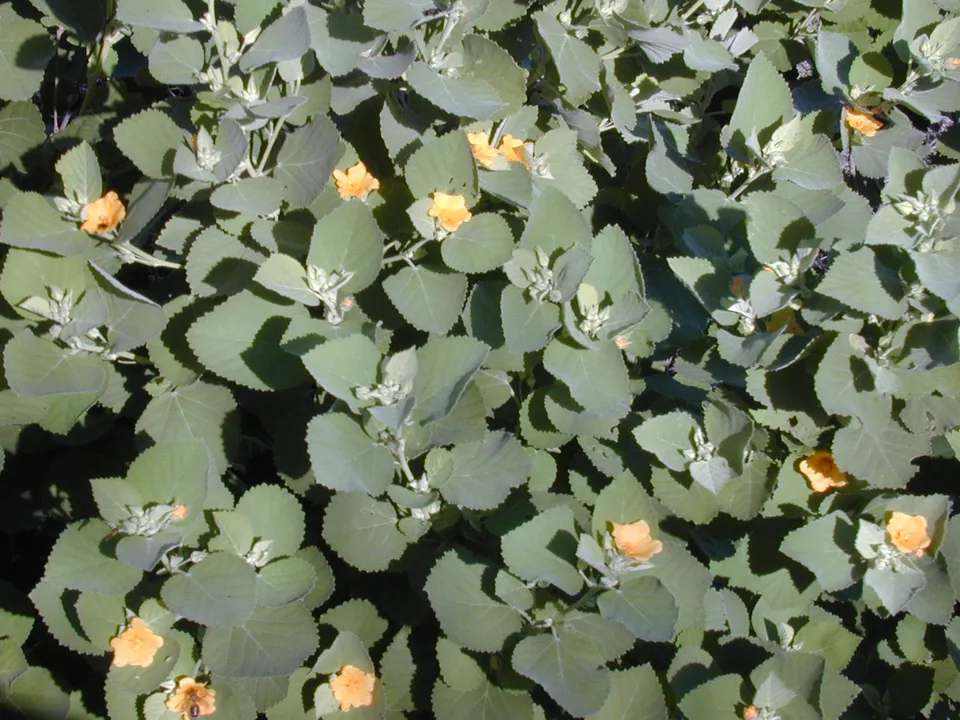
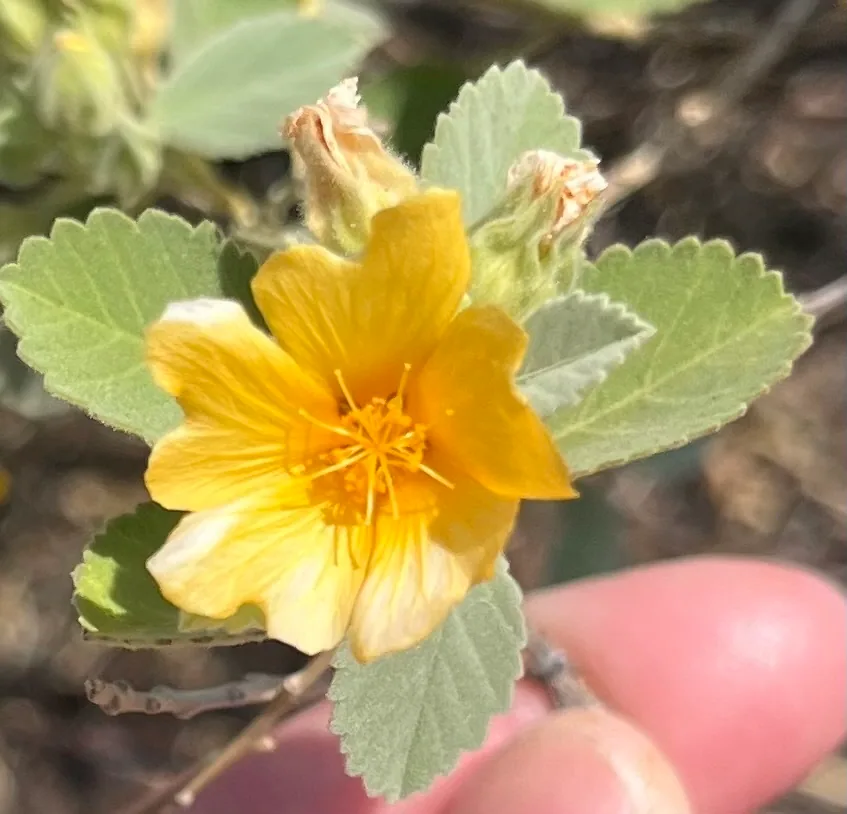
Sida fallax, known as ʻilima, is a shrub indigenous to Hawaiʻi that takes different forms. [2] It ranges in habit from prostrate to an erect shrub and is extremely variable. [1] It does best in full sun and is easiest to propagate from seed. [2]
This record is incomplete: the sources we read do not cover every field yet.
Not yet covered by our sources: Watering, Hardiness, coldest zone, Hardiness, warmest zone, Pruning
ʻIlima care
How to water ʻIlima
Watering
Not stated in the sources we read.
Watering notes
Not suited near automated sprinklers (risk of fungal rot and sooty mold); excess watering gives lush foliage but fewer flowers
How much light ʻIlima needs
Full sun
What the sources say (1)
This species can handle fertilizers and does best in full sun. This shrub can be planted in a variety of soils – sand, cinder, organics, and coral.How much cold ʻIlima can take
Hardiness, coldest zone
Not stated in the sources we read.
Hardiness, warmest zone
Not stated in the sources we read.
Where to grow ʻIlima
Yes
What the sources say (1)
## Plant Uses:
- Container plant
- Cultural significance
- Edible
- Erosion controlHow to propagate ʻIlima
Seed (cleaned seeds soaked for 24 hours or scarified)
What the sources say (1)
To propagate, Sida fallax grows easiest from seed. For better success, cleaned seeds can be soaked for 24 hours or scarified.Remedies
The sources we checked give no remedies for this plant.
Calendar
Pruning
Not stated in the sources we read.
Months as given by the sources, which are mostly from the United States (northern hemisphere). In the southern hemisphere they shift by about six months.
Edibility
Reported by the source, quoted verbatim. Do not eat a plant on the basis of this page alone: identification mistakes can be dangerous.
a single lei requires hundreds of delicate flowers that do not last very long once plucked. They bloom year-round and are edible.
[2]
Indicative values
Values from a secondary source, not checked word for word like the rest of this page. Use them as a starting point.
- Life cycle
- PerennialIndicative value, adapt it to your climate · Secondary source
- Mature height
- 30.5-304.8 cm (1-10 ft)Indicative value, adapt it to your climate · Secondary source
- Hours of sun
- 6-8 hoursIndicative value, adapt it to your climate · Secondary source
- Watering
- MinimumIndicative value, adapt it to your climate · Secondary source
- Drought tolerant
- yesIndicative value, adapt it to your climate · Secondary source
- Soil pH
- 6-7.5Indicative value, adapt it to your climate · Secondary source
- USDA hardiness zones
- 10-11 [winter low −1.1 to 10 °C (30 to 50 °F)]Indicative value, adapt it to your climate · Secondary source
- Care level
- MediumIndicative value, adapt it to your climate · Secondary source
- Growth rate
- LowIndicative value, adapt it to your climate · Secondary source
- Pruning
- February, March, AprilIndicative value, adapt it to your climate · Secondary source
Similar plants
- Abies grandis Abies grandis
- Abraham Trachystemon orientalis
- Abyssinian banana Ensete ventricosum
- Acacia longifolia Acacia longifolia
- Acanthus hungaricus Acanthus hungaricus
- Aconite Aconitum napellus
- Adam's Needle Yucca flaccida
- Adriatic lizard orchid Himantoglossum adriaticum
Sources
Every value above is quoted from these documents. Links lead to the original publisher.
- Sida fallax - Plant Detail - Tropical Plants Database - NTBG Database · ntbg.org, consulted
- Sida fallax | Plant Pono · plantpono.org, consulted
Written by Emilio Marruso · last checked