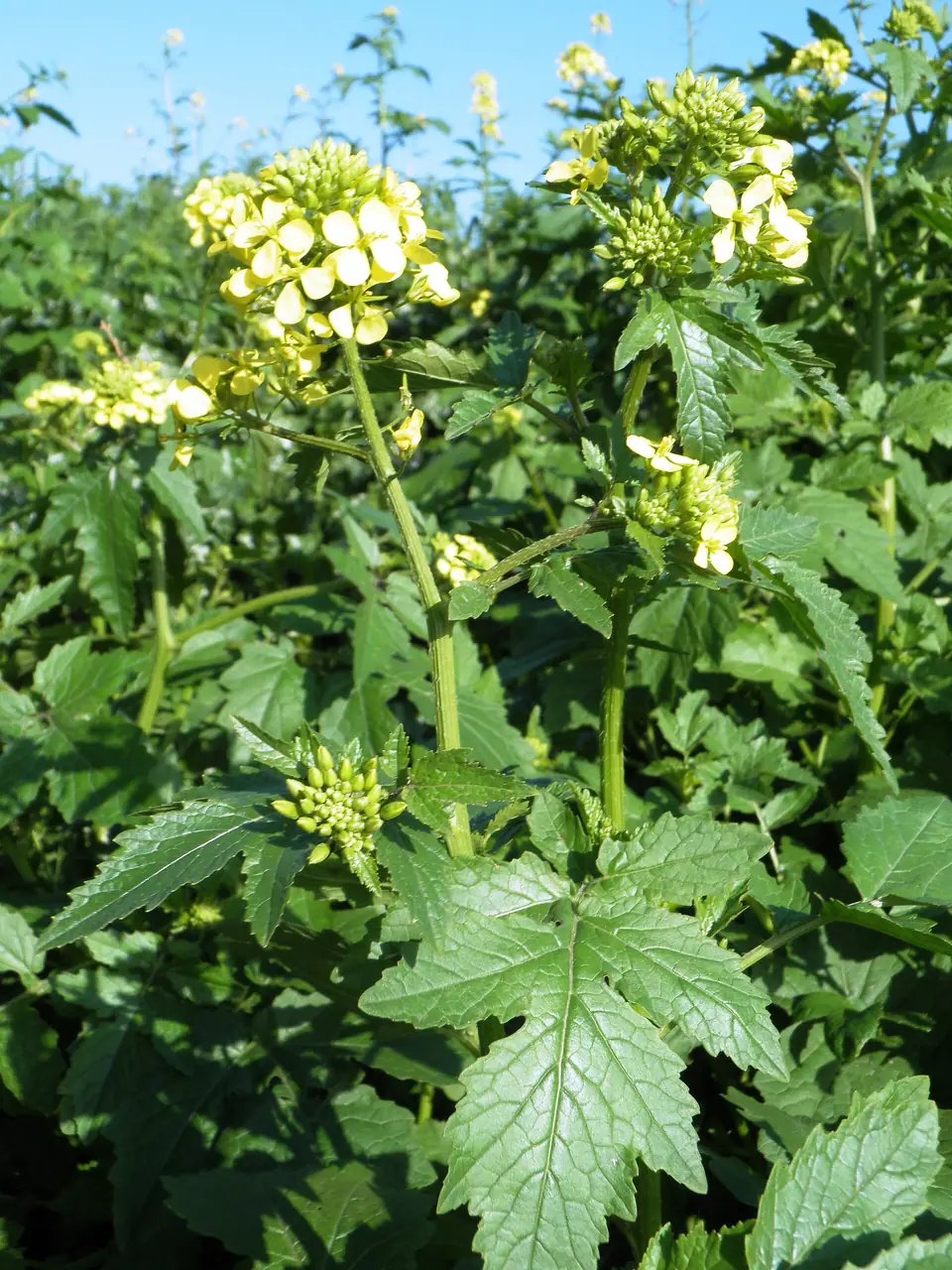
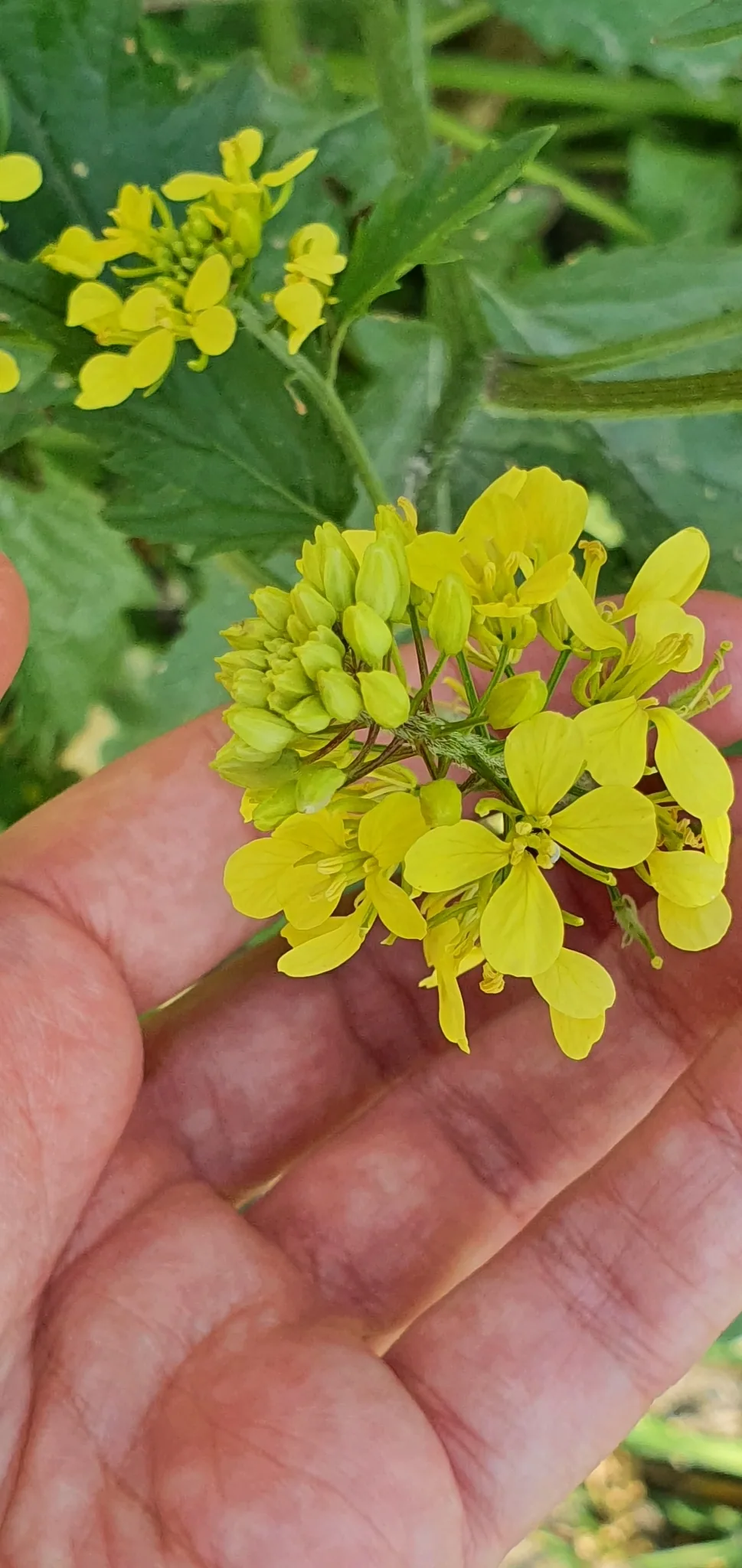

How to Grow and Care for White mustard
Sinapis alba
Written by Emilio Marruso · last checked
At a glance
White mustard starts simply from seed: just sow it in rows or scatter it over the soil. It isn't fussy about soil and grows anywhere from pH 5.5 to 8.3. Keep the soil moist all season, because a thirsty plant flowers early and stays small, and give it nitrogen early so it can outgrow the weeds.
- Water
Keep the soil moist all season; a thirsty plant flowers early and stays small
What the sources say (2)
Watering: Maintain adequate soil moisture throughout the growing season
To attain maximum benefits, maintain adequate soil moisture throughout growing season.
— MUSTARD GREEN MANURES [2] Watering notes: Water stress initiates flowering and limits biomass production
Stress will initiate flowering and limit biomass production.
— MUSTARD GREEN MANURES [2] - Soil
Not fussy: grows in soil from pH 5.5 to 8.3
- Feeding
Feed with nitrogen early in the season, after a soil test, plus some sulfur; it helps beat the weeds
What the sources say (3)
When: Early in the season, after a soil test for residual nitrate; early nitrogen helps the crop compete with weeds
Fertilization Test soil to determine residual soil nitrate available to crop.
— MUSTARD GREEN MANURES [2] For optimum growth, 120 lb available nitrogen per acre total (100–140 range) is needed over the season, with sulfur at 6:1 nitrogen-to-sulfur ratio. Early applied nitrogen will help the mustard compete with weeds and volunteer wheat.
— MUSTARD GREEN MANURES [2] Micronutrients: Sulfur, at a 6:1 nitrogen-to-sulfur ratio
For optimum growth, 120 lb available nitrogen per acre total (100–140 range) is needed over the season, with sulfur at 6:1 nitrogen-to-sulfur ratio. Early applied nitrogen will help the mustard compete with weeds and volunteer wheat.
— MUSTARD GREEN MANURES [2] - Propagation
Grows from seed, sown in rows or scattered over the soil
What the sources say (1)
Propagation: Seed, drilled or broadcast
Drilled. Drill 8–10 lb seed per acre through wheat straw using a minimum or no-till drill, or a drill with offset, double-disk openers.
— MUSTARD GREEN MANURES [2]
Overview
White mustard (Sinapis alba) is grown as a green manure in irrigated cropping systems. [2] Extension sources describe a late-summer sowing, with plants killed by freezing in cold-winter areas. [1][2]
This record is incomplete: the sources we read do not cover every field yet.
Not yet covered by our sources: Light, Harvest
White mustard care
How to water White mustard
Watering
Maintain adequate soil moisture throughout the growing season
What the sources say (1)
To attain maximum benefits, maintain adequate soil moisture throughout growing season.Watering notes
Water stress initiates flowering and limits biomass production
What the sources say (1)
Stress will initiate flowering and limit biomass production.How much light White mustard needs
Not stated in the sources we read.
Best soil for White mustard
Soil pH, minimum
5.5
What the sources say (1)
Mustards tolerate saline soils as well as barley and grow in soils with pH 5.5–8.3.Soil pH, maximum
8.3
What the sources say (1)
Mustards tolerate saline soils as well as barley and grow in soils with pH 5.5–8.3.How to propagate White mustard
Seed, drilled or broadcast
What the sources say (1)
Drilled. Drill 8–10 lb seed per acre through wheat straw using a minimum or no-till drill, or a drill with offset, double-disk openers.How to grow White mustard
Fertilizing
When
Early in the season, after a soil test for residual nitrate; early nitrogen helps the crop compete with weeds
What the sources say (2)
Fertilization Test soil to determine residual soil nitrate available to crop.For optimum growth, 120 lb available nitrogen per acre total (100–140 range) is needed over the season, with sulfur at 6:1 nitrogen-to-sulfur ratio. Early applied nitrogen will help the mustard compete with weeds and volunteer wheat.Mineral fertilizers
135 kg [297.6 lb]/ha of available nitrogen in total over the season (112 to 157 kg [246.9–346.1 lb]/ha), counting residual soil nitrate
What the sources say (2)
For optimum growth, 120 lb available nitrogen per acre total (100–140 range) is needed over the season, with sulfur at 6:1 nitrogen-to-sulfur ratio. Early applied nitrogen will help the mustard compete with weeds and volunteer wheat.Fertilization Test soil to determine residual soil nitrate available to crop.Micronutrients
Sulfur, at a 6:1 nitrogen-to-sulfur ratio
What the sources say (1)
For optimum growth, 120 lb available nitrogen per acre total (100–140 range) is needed over the season, with sulfur at 6:1 nitrogen-to-sulfur ratio. Early applied nitrogen will help the mustard compete with weeds and volunteer wheat.Remedies
The sources we checked give no remedies for this plant.
Calendar
Sowing
The sources give different values depending on region, zone or growing conditions.
What each source says
Washington State, irrigated Columbia Basin: Second week of August to end of August
According to UMass Extension: Mid to late August
What the sources say (2)
Washington State, irrigated Columbia Basin: The optimal seeding time is during the second week of August; otherwise, up to the end of August is appropriate.According to UMass Extension: Planted in mid to late August, white mustard emerges quickly and produces a large amount of biomass before succumbing to freezing temperatures.Planting
Not stated in the sources we read.
Harvest
Not stated in the sources we read.
Months as given by the sources, which are mostly from the United States (northern hemisphere). In the southern hemisphere they shift by about six months.
Similar plants
- Aji Capsicum chinense
- Alexanders Smyrnium olusatrum
- American pepper Schinus molle
- Angelica Angelica archangelica
- Anise burnet saxifrage Pimpinella anisum
- Bayrumtree Pimenta racemosa
- Bitter orange Citrus × aurantium
- Black caraway Nigella sativa
Sources
Every value above is quoted from these documents. Links lead to the original publisher.
- Cover Crops, Brassicas : Vegetable : Center for Agriculture, Food, and the Environment (CAFE) at UMass Amherst · umass.edu, consulted
- MUSTARD GREEN MANURES · wpcdn.web.wsu.edu, consulted
Written by Emilio Marruso · last checked