
How to Grow and Care for Sisyrinchium striatum
Sisyrinchium striatum
Written by Emilio Marruso · last checked
Toxic to: Cats, Dogs, Horses, People · Why
At a glance
This plant is an easygoing choice for full sun or partial shade. Water it moderately and let the soil dry out completely between waterings; once settled in, it handles drought with ease. Trim it after flowering, divide it in spring for new plants, and grow it worry-free: no toxic effects are reported for people, cats, dogs or horses.
- Sun
Full sun to partial shade
What the sources say (2)
Light: Full sun to semi-shade
For best results, grow Sisyrinchium striatum in full sun in moist, well-drained soil.
— Sisyrinchium striatum (Pale Yellow-Eyed Grass) | BBC Gardeners World Magazine [1] Sisyrinchium striatum grows in full sun and semi-shade exposures . It is frost resistant if the substrate is dry.
— Sisyrinchium striatum or Pale yellow-eyed grass | Care and Growing [4] - Water
Water moderately and let the soil dry out completely; once settled, it handles drought
What the sources say (1)
Watering: Water moderately, letting the substrate dry completely; established plants resist drought
Always water moderately, waiting for the substrate to dry completely. Settled plants resist drought well.
— Sisyrinchium striatum or Pale yellow-eyed grass | Care and Growing [4] - Cold
Survives winters down to −30 °F (−34.4 °C)
Very hardy · USDA 4 · RHS H7 · Z4
What the sources say (2)
Hardiness, coldest zone: 4 [winter low −34.4 to −28.9 °C (−30 to −20 °F)]
Light: Full sun Soil: Average, consistently moist, very well-drained Hardiness: Zones 4-8
— Plant Profile: Argentine Blue-eyed Grass (Sisyrinchium striatum) – KarensGardenTips.com [3] Hardiness, warmest zone: 8 [winter low −12.2 to −6.7 °C (10 to 20 °F)]
Light: Full sun Soil: Average, consistently moist, very well-drained Hardiness: Zones 4-8
— Plant Profile: Argentine Blue-eyed Grass (Sisyrinchium striatum) – KarensGardenTips.com [3] - Soil
Moist soil that drains well
What the sources say (1)
Watering notes: Moist, well-drained soil
For best results, grow Sisyrinchium striatum in full sun in moist, well-drained soil.
— Sisyrinchium striatum (Pale Yellow-Eyed Grass) | BBC Gardeners World Magazine [1] - Pruning
Prune after flowering
What the sources say (1)
Pruning: After flowering
Prune after flowering to remove dry leaves and faded flowers.
— Sisyrinchium striatum or Pale yellow-eyed grass | Care and Growing [4] - Propagation
Divide the clumps in spring, or grow it from seed
What the sources say (1)
Propagation: Division in spring; seed
Pale yellow-eyed grass is easily propagated by division in the spring and from spring sown seed.
— Sisyrinchium striatum or Pale yellow-eyed grass | Care and Growing [4] - Sowing
Sow in spring
What the sources say (1)
Sowing: Spring
Pale yellow-eyed grass is easily propagated by division in the spring and from spring sown seed.
— Sisyrinchium striatum or Pale yellow-eyed grass | Care and Growing [4] - Safety
No toxic effects reported for people, cats, dogs or horses
Overview
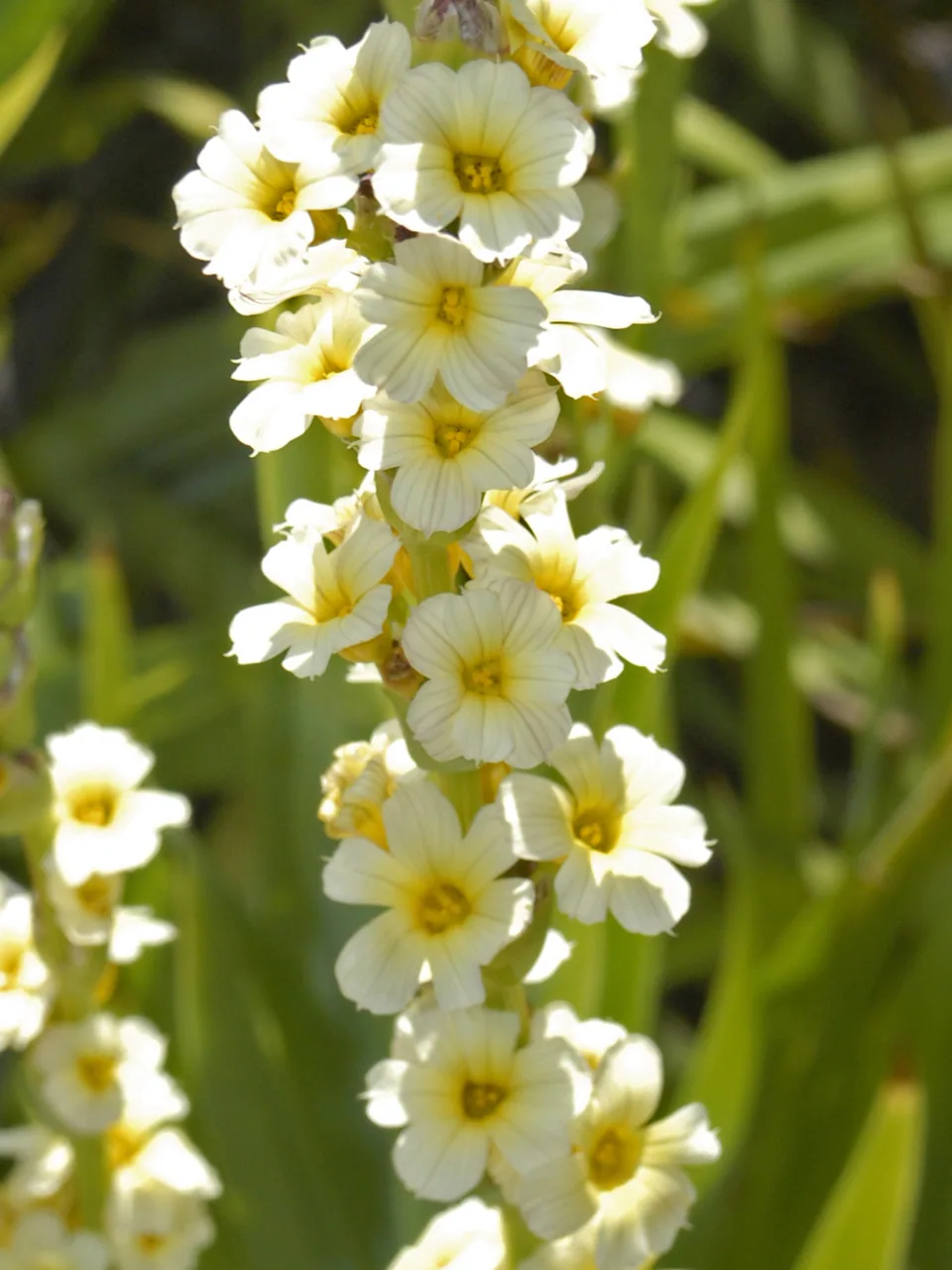
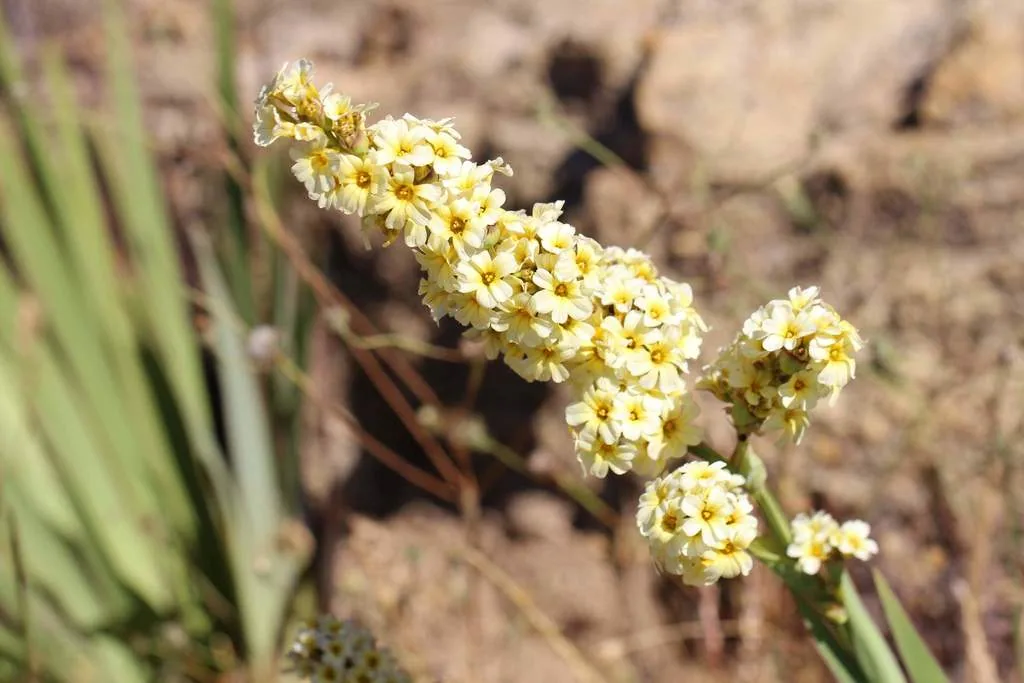
Pale yellow-eyed grass is a clump-forming perennial with iris-like foliage and pale yellow flowers in June and July. [1] It is native to Argentina and Chile. [3] It grows best in full sun in moist, well-drained soil and self-seeds. [1]
Sisyrinchium striatum care
How to water Sisyrinchium striatum
Watering
Water moderately, letting the substrate dry completely; established plants resist drought
What the sources say (1)
Always water moderately, waiting for the substrate to dry completely. Settled plants resist drought well.Watering notes
Moist, well-drained soil
What the sources say (1)
For best results, grow Sisyrinchium striatum in full sun in moist, well-drained soil.How much light Sisyrinchium striatum needs
Full sun to semi-shade
What the sources say (2)
For best results, grow Sisyrinchium striatum in full sun in moist, well-drained soil.Sisyrinchium striatum grows in full sun and semi-shade exposures . It is frost resistant if the substrate is dry.How much cold Sisyrinchium striatum can take
Hardiness, coldest zone
4 [winter low −34.4 to −28.9 °C (−30 to −20 °F)]
What the sources say (1)
Light: Full sun
Soil: Average, consistently moist, very well-drained
Hardiness: Zones 4-8Hardiness, warmest zone
8 [winter low −12.2 to −6.7 °C (10 to 20 °F)]
What the sources say (1)
Light: Full sun
Soil: Average, consistently moist, very well-drained
Hardiness: Zones 4-8How to propagate Sisyrinchium striatum
Division in spring; seed
What the sources say (1)
Pale yellow-eyed grass is easily propagated by division in the spring and from spring sown seed.Remedies
The sources we checked give no remedies for this plant.
Is Sisyrinchium striatum toxic to pets?
Reported by the source, quoted verbatim. This is not medical or veterinary advice: if a person or an animal may have eaten this plant, contact a poison control centre or a veterinarian.
Sisyrinchium ‘striatum’ has no toxic effects reported. No reported toxicity to:
[1]The source flags the risk for this animal but does not explain why.
Calendar
Sowing
Spring
What the sources say (1)
Pale yellow-eyed grass is easily propagated by division in the spring and from spring sown seed.Pruning
After flowering
What the sources say (1)
Prune after flowering to remove dry leaves and faded flowers.Months as given by the sources, which are mostly from the United States (northern hemisphere). In the southern hemisphere they shift by about six months.
Indicative values
Values from a secondary source, not checked word for word like the rest of this page. Use them as a starting point.
- Life cycle
- Herbaceous PerennialIndicative value, adapt it to your climate · Secondary source
- Mature height
- 30.5-61 cm (1-2 ft)Indicative value, adapt it to your climate · Secondary source
- Drought tolerant
- yesIndicative value, adapt it to your climate · Secondary source
- Soil pH
- 6-7.5Indicative value, adapt it to your climate · Secondary source
- Care level
- MediumIndicative value, adapt it to your climate · Secondary source
- Growth rate
- LowIndicative value, adapt it to your climate · Secondary source
Similar plants
- Blue-eyed Grass Sisyrinchium angustifolium
- Abies grandis Abies grandis
- Abraham Trachystemon orientalis
- Abyssinian banana Ensete ventricosum
- Acacia longifolia Acacia longifolia
- Acanthus hungaricus Acanthus hungaricus
- Aconite Aconitum napellus
- Adam's Needle Yucca flaccida
Sources
Every value above is quoted from these documents. Links lead to the original publisher.
- Sisyrinchium striatum (Pale Yellow-Eyed Grass) | BBC Gardeners World Magazine · gardenersworld.com, consulted
- Flora of New Zealand | Taxon Profile | Sisyrinchium striatum · nzflora.info, consulted
- Plant Profile: Argentine Blue-eyed Grass (Sisyrinchium striatum) – KarensGardenTips.com · karensgardentips.com, consulted
- Sisyrinchium striatum or Pale yellow-eyed grass | Care and Growing · consultaplantas.com, consulted
Written by Emilio Marruso · last checked