
How to Grow and Care for Indian Mahogany
Toona ciliata
Written by Emilio Marruso · last checked
Toxic to: People · Why
At a glance
This tree grows with you: shade it from direct sun while it is young, and watch its hunger for light grow as it matures. Give it rich, deep soil that holds water yet drains well, and never let the seedlings dry out. You can start it from fresh seed, cuttings or stumps, and in Southeast Asia its leaves are even eaten as a vegetable.
- Sun
Shade young trees from direct sun; they want more light as they grow older
What the sources say (1)
Light: Young trees need protection from direct sun; light demand increases as they grow older
Young trees require some protection from direct sun, but become more light demanding as they grow older
— Toona ciliata - Useful Tropical Plants [2] - Water
Don't let seedlings dry out, but avoid soggy soil: too much water harms the roots
What the sources say (2)
Watering notes: Seedlings are sensitive to lack of water (drought); good drainage is needed because excessive moisture restricts root development
Seedlings are sensitive to lack of water (drought), fire and weed competition.
— Toona ciliata - Growing Native Plants [5] Good drainage is necessary for optimum development of the seedlings, as excessive moisture restricts root development.
— Agroforestree Species profile [1] - Soil
Rich, deep soil that holds water but drains well; pH 4.5–7.5
What the sources say (3)
Watering: Rich, deep, water-retentive soil
Prefers a rich, deep, water-retentive soil
— Toona ciliata - Useful Tropical Plants [2] Soil pH, minimum: 4.5
Prefers a pH in the range 5.5 - 6.5, tolerating 4.5 - 7.5
— Toona ciliata - Useful Tropical Plants [2] Soil pH, maximum: 7.5
Prefers a pH in the range 5.5 - 6.5, tolerating 4.5 - 7.5
— Toona ciliata - Useful Tropical Plants [2] - Harvest
In Southeast Asia the leaves are eaten as a vegetable
- Pests
A moth whose caterpillar eats the inside of new shoots, making young trees branch too early
- Propagation
From seed, cuttings or 2-season-old stumps
What the sources say (3)
Propagation: Seed; cuttings; 2-season-old stumps
Seeds should be fresh to maximise recruitment success.
— Toona ciliata - Growing Native Plants [5] Cuttings can be taken and propagated.
— Toona ciliata - Growing Native Plants [5] It is best propagated artificially by planting 2-season-old stumps.
— Agroforestree Species profile [1] - Sowing
Sow soon after collecting the seed, in raised, shaded seedbeds
What the sources say (1)
Sowing: Soon after seed collection, on raised and shaded nursery beds
It should be broadcast thinly on raised and shaded nursery beds soon after collection
— Toona ciliata - Useful Tropical Plants [2] - Safety
Sawdust from the wood can cause a skin rash in some people
Overview
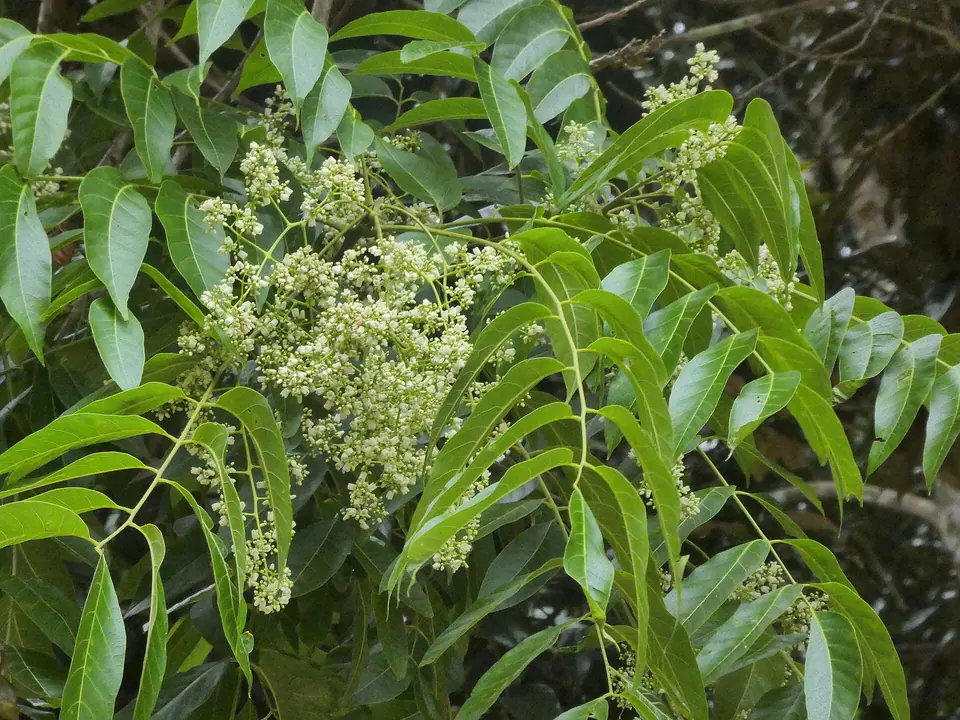
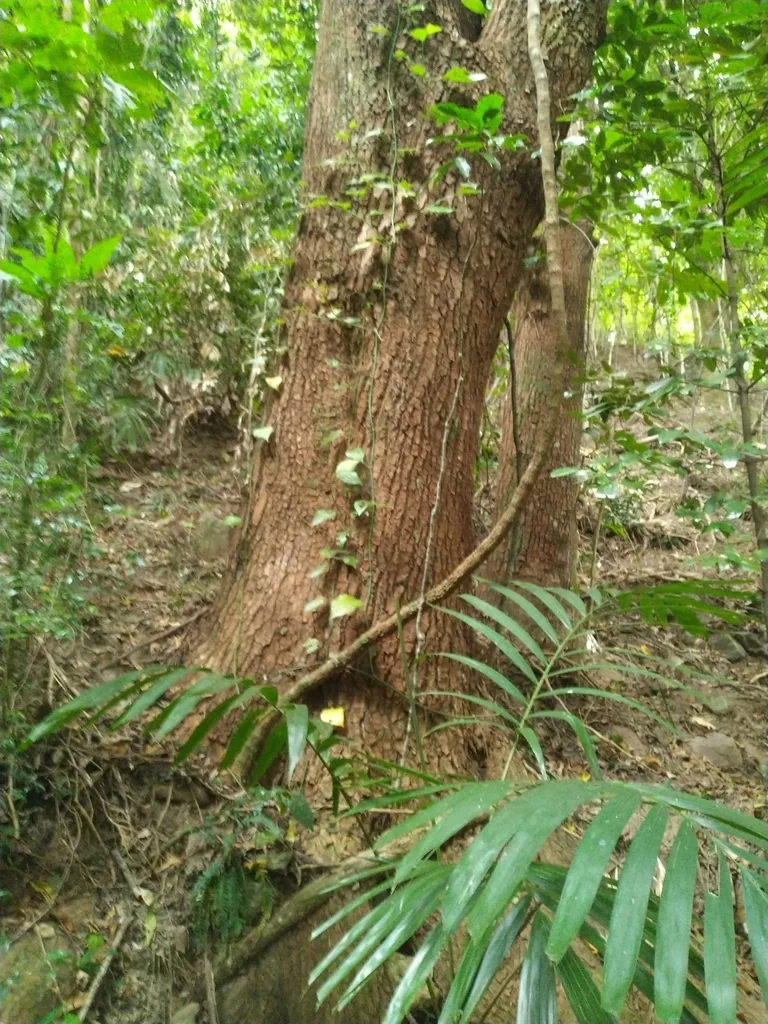
Toona ciliata is a large deciduous tree, native from southern Asia to Australia and valued mainly for its timber. [1][5] It needs rich, deep, water-retentive soil, and young trees need protection from direct sun. [2]
This record is incomplete: the sources we read do not cover every field yet.
Not yet covered by our sources: Hardiness, coldest zone, Hardiness, warmest zone, Pruning
Indian Mahogany care
How to water Indian Mahogany
Watering
Rich, deep, water-retentive soil
What the sources say (1)
Prefers a rich, deep, water-retentive soilWatering notes
Seedlings are sensitive to lack of water (drought); good drainage is needed because excessive moisture restricts root development
How much light Indian Mahogany needs
Young trees need protection from direct sun; light demand increases as they grow older
What the sources say (1)
Young trees require some protection from direct sun, but become more light demanding as they grow olderHow much cold Indian Mahogany can take
Hardiness, coldest zone
Not stated in the sources we read.
Hardiness, warmest zone
Not stated in the sources we read.
Best soil for Indian Mahogany
Soil pH, minimum
4.5
What the sources say (1)
Prefers a pH in the range 5.5 - 6.5, tolerating 4.5 - 7.5Soil pH, maximum
7.5
What the sources say (1)
Prefers a pH in the range 5.5 - 6.5, tolerating 4.5 - 7.5How to propagate Indian Mahogany
Seed; cuttings; 2-season-old stumps
What the sources say (3)
Seeds should be fresh to maximise recruitment success.Cuttings can be taken and propagated.It is best propagated artificially by planting 2-season-old stumps.Indian Mahogany pests and problems
Cedar tip moth
Symptom: The larva eats out the pith of new shoots, causing premature branching on juvenile trees
What the sources say (1)
The Cedar tip moth, or shoot-borer, Hypsipyla robusta , is a pest which eats out the new shoots pith.
— Toona ciliata - Growing Native Plants [5]
Remedies
The sources we checked give no remedies for this plant.
Is Indian Mahogany poisonous?
Reported by the source, quoted verbatim. This is not medical or veterinary advice: if a person or an animal may have eaten this plant, contact a poison control centre or a veterinarian.
Calendar
Sowing
Soon after seed collection, on raised and shaded nursery beds
What the sources say (1)
It should be broadcast thinly on raised and shaded nursery beds soon after collectionPruning
Not stated in the sources we read.
Months as given by the sources, which are mostly from the United States (northern hemisphere). In the southern hemisphere they shift by about six months.
Edibility
Reported by the source, quoted verbatim. Do not eat a plant on the basis of this page alone: identification mistakes can be dangerous.
In Southeast Asia the leaves are used as a vegetable.
[1]
Indicative values
Values from a secondary source, not checked word for word like the rest of this page. Use them as a starting point.
- Life cycle
- PerennialIndicative value, adapt it to your climate · Secondary source
- Mature height
- 1981.2-3048 cm (65-100 ft)Indicative value, adapt it to your climate · Secondary source
- Hours of sun
- 8-10 hoursIndicative value, adapt it to your climate · Secondary source
- USDA hardiness zones
- 9-12 [winter low −6.7 to 15.6 °C (20 to 60 °F)]Indicative value, adapt it to your climate · Secondary source
- Care level
- MediumIndicative value, adapt it to your climate · Secondary source
- Growth rate
- HighIndicative value, adapt it to your climate · Secondary source
- Pruning
- March, April, May, June, July, August, September, February, March, April, June, July, AugustIndicative value, adapt it to your climate · Secondary source
Similar plants
- Chinese Toon Toona sinensis
- Aaron's Beard Hypericum calycinum
- Abies grandis Abies grandis
- Abraham Trachystemon orientalis
- Abyssinian banana Ensete ventricosum
- Acacia longifolia Acacia longifolia
- Acacia retinodes Acacia retinodes
- Acanthus hungaricus Acanthus hungaricus
Sources
Every value above is quoted from these documents. Links lead to the original publisher.
- Agroforestree Species profile · apps.worldagroforestry.org, consulted
- Toona ciliata - Useful Tropical Plants · tropical.theferns.info, consulted
- Toona ciliata | Tropical Restoration Library · restoration.elti.yale.edu, consulted
- HortFlora · hortflora.rbg.vic.gov.au, consulted
- Toona ciliata - Growing Native Plants · anbg.gov.au, consulted
Written by Emilio Marruso · last checked