
How to Grow and Care for Western Hemlock
Tsuga heterophylla
Written by Emilio Marruso · last checked
At a glance
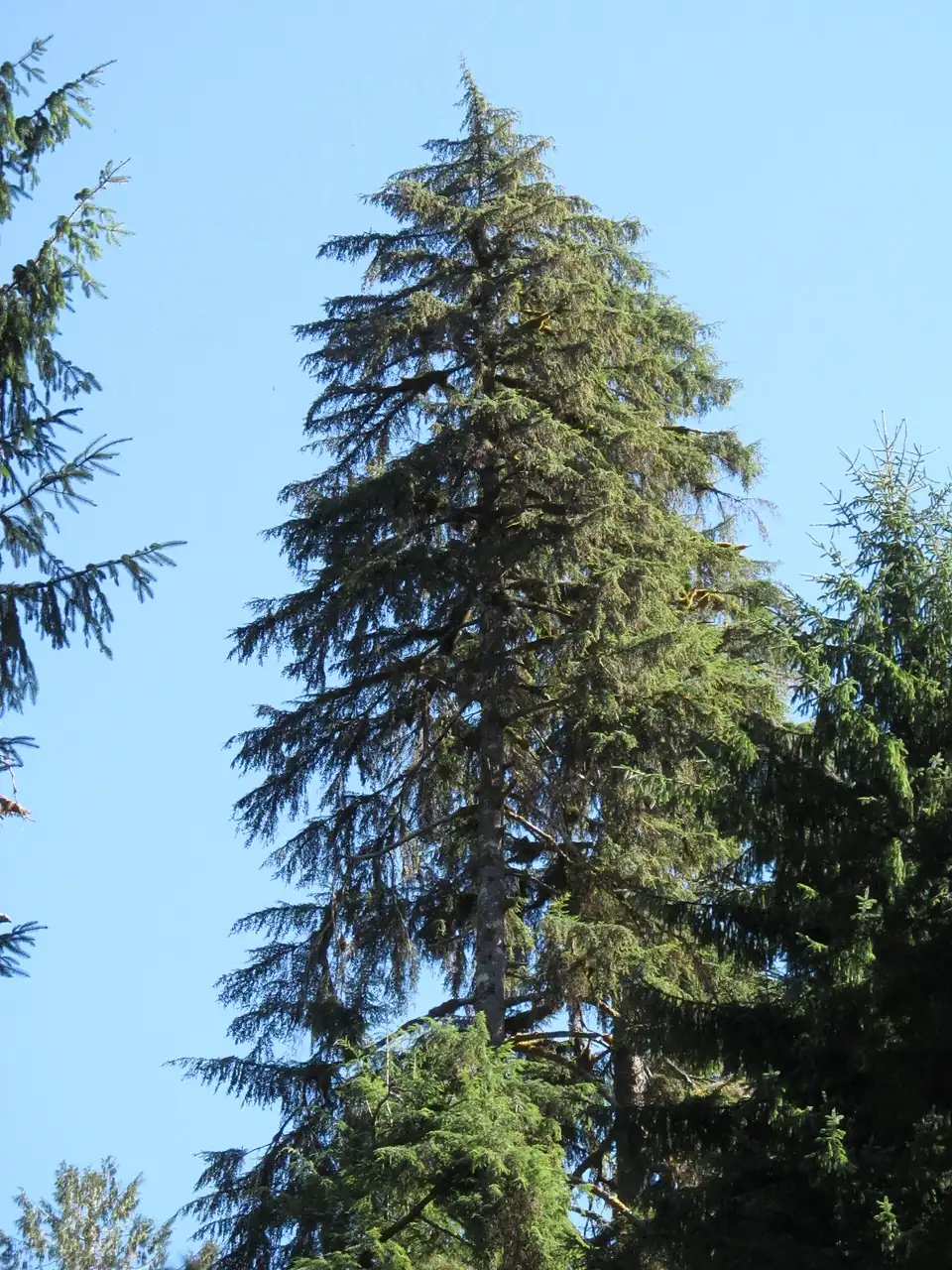
Western hemlock is a majestic tree that can grow 60 to 240 feet tall, a true giant for a big garden. It is easygoing about light, growing in full sun yet happy in partial or even full shade. Give it moist, acidic soil with good drainage, never let it dry out, and you will enjoy a truly impressive tree.
- Sun
Full sun is best, but it also grows in partial or full shade
What the sources say (1)
Light: Full sun, tolerates partial shade to full shade
Western hemlock prefers full sun but is tolerant of partial shade to full shade.
— Tsuga heterophylla (Pacific Hemlock, West Coast Hemlock, Western Hemlock) | North Carolina Extension Gardener Plant Toolbox [1] - Water
Keep the soil moist to wet; it does not tolerate drought
What the sources say (1)
Watering: Needs moist to wet soils with good drainage; intolerant to drought
It grows well in acidic soils and needs moist to wet soils with good drainage and is intolerant to drought.
— Tsuga heterophylla (Pacific Hemlock, West Coast Hemlock, Western Hemlock) | North Carolina Extension Gardener Plant Toolbox [1] - Cold
Survives winters down to −20 °F (−28.9 °C)
Very hardy · USDA 5a · RHS H7 · Z5
What the sources say (2)
Hardiness, coldest zone: 5a [winter low −28.9 to −26.1 °C (−20 to −15 °F)]
USDA Plant Hardiness Zone: 5a, 5b, 6a, 6b, 7a, 7b, 8a, 8b
— Tsuga heterophylla (Pacific Hemlock, West Coast Hemlock, Western Hemlock) | North Carolina Extension Gardener Plant Toolbox [1] Hardiness, warmest zone: 8b [winter low −9.4 to −6.7 °C (15 to 20 °F)]
USDA Plant Hardiness Zone: 5a, 5b, 6a, 6b, 7a, 7b, 8a, 8b
— Tsuga heterophylla (Pacific Hemlock, West Coast Hemlock, Western Hemlock) | North Carolina Extension Gardener Plant Toolbox [1] - Soil
Acidic soil with good drainage, pH 6.0 or lower
What the sources say (2)
Soil pH, maximum: 6.0
Soil Texture: High Organic Matter Soil pH: Acid (<6.0)
— Tsuga heterophylla (Pacific Hemlock, West Coast Hemlock, Western Hemlock) | North Carolina Extension Gardener Plant Toolbox [1] Watering: Needs moist to wet soils with good drainage; intolerant to drought
It grows well in acidic soils and needs moist to wet soils with good drainage and is intolerant to drought.
— Tsuga heterophylla (Pacific Hemlock, West Coast Hemlock, Western Hemlock) | North Carolina Extension Gardener Plant Toolbox [1] - Pests
Woolly adelgids (white tufts under branches) and leaf-eating caterpillars, which can kill it; also mistletoe
What the sources say (4)
Pests: hemlock woolly adelgid, hemlock looper larvae, silver-spotted tiger moth larvae, hemlock sawfly larvae, hemlock rust mite, elongate hemlock scale, hemlock dwarf mistletoe
Hemlock wooly adelgids may be found on the foliage and suck the sap from the tree.
— Tsuga heterophylla (Pacific Hemlock, West Coast Hemlock, Western Hemlock) | North Carolina Extension Gardener Plant Toolbox [1] These insects include hemlock looper larvae, silver-spotted tiger moth larvae and hemlock sawfly larvae. Hemlock rust mite and elongate hemlock scale are also a concern.
— Tsuga heterophylla (Pacific Hemlock, West Coast Hemlock, Western Hemlock) | North Carolina Extension Gardener Plant Toolbox [1] Parasites such as hemlock dwarf mistletoe can rob the tree of nutrients.
— Tsuga heterophylla (Pacific Hemlock, West Coast Hemlock, Western Hemlock) | North Carolina Extension Gardener Plant Toolbox [1] Diseases: bracket fungi (conks)
Bracket fungi or conks cause the wood to decay.
— Tsuga heterophylla (Pacific Hemlock, West Coast Hemlock, Western Hemlock) | North Carolina Extension Gardener Plant Toolbox [1] - Watch out
Its roots are shallow, so strong winds can damage it
- Size
60 to 240 ft tall and 12 to 40 ft wide
What the sources say (2)
Mature height: 1829-7315 cm (60-240 ft)
A mature tree can reach a height of 60 to 240 feet and a width of 12 to 40 feet.
— Tsuga heterophylla (Pacific Hemlock, West Coast Hemlock, Western Hemlock) | North Carolina Extension Gardener Plant Toolbox [1] Mature width: 366-1219 cm (12-40 ft)
A mature tree can reach a height of 60 to 240 feet and a width of 12 to 40 feet.
— Tsuga heterophylla (Pacific Hemlock, West Coast Hemlock, Western Hemlock) | North Carolina Extension Gardener Plant Toolbox [1] - Propagation
From seed that needs a cold period first, by layering or by stem cuttings
What the sources say (2)
Propagation: Seed (requires cold stratification), layering and stem cuttings
The western hemlock may also germinate on the surface of the soil and requires cold stratification. Propagation by layering and cuttings have also been reported.
— Tsuga heterophylla (Pacific Hemlock, West Coast Hemlock, Western Hemlock) | North Carolina Extension Gardener Plant Toolbox [1] Recommended Propagation Strategy: Layering Seed Stem Cutting Country Or Region Of Origin:
— Tsuga heterophylla (Pacific Hemlock, West Coast Hemlock, Western Hemlock) | North Carolina Extension Gardener Plant Toolbox [1]
Overview
Western hemlock is a large, fine-textured evergreen conifer in the pine family, native from southern Alaska to northern California. [1] It prefers full sun but tolerates partial to full shade, and needs moist to wet, well-drained, acidic soil; it is intolerant to drought. [1] It can be used in a woodland garden as a specimen, hedge or screen. [1]
This record is incomplete: the sources we read do not cover every field yet.
Not yet covered by our sources: Pruning
Western Hemlock care
How to water Western Hemlock
Needs moist to wet soils with good drainage; intolerant to drought
What the sources say (1)
It grows well in acidic soils and needs moist to wet soils with good drainage and is intolerant to drought.How much light Western Hemlock needs
Full sun, tolerates partial shade to full shade
What the sources say (1)
Western hemlock prefers full sun but is tolerant of partial shade to full shade.How much cold Western Hemlock can take
Hardiness, coldest zone
5a [winter low −28.9 to −26.1 °C (−20 to −15 °F)]
What the sources say (1)
USDA Plant Hardiness Zone:
5a, 5b, 6a, 6b, 7a, 7b, 8a, 8bHardiness, warmest zone
8b [winter low −9.4 to −6.7 °C (15 to 20 °F)]
What the sources say (1)
USDA Plant Hardiness Zone:
5a, 5b, 6a, 6b, 7a, 7b, 8a, 8bBest soil for Western Hemlock
6.0
What the sources say (1)
Soil Texture:
High Organic Matter
Soil pH:
Acid (<6.0)How to propagate Western Hemlock
Seed (requires cold stratification), layering and stem cuttings
What the sources say (2)
The western hemlock may also germinate on the surface of the soil and requires cold stratification. Propagation by layering and cuttings have also been reported.Recommended Propagation Strategy:
Layering
Seed
Stem Cutting
Country Or Region Of Origin:How to grow Western Hemlock
The plant
Family
Pinaceae
What the sources say (1)
Western hemlock is a large, fine-textured needled evergreen coniferous tree in the pine family (Pinaceae).Mature height
1829-7315 cm (60-240 ft)
What the sources say (1)
A mature tree can reach a height of 60 to 240 feet and a width of 12 to 40 feet.Mature width
366-1219 cm (12-40 ft)
What the sources say (1)
A mature tree can reach a height of 60 to 240 feet and a width of 12 to 40 feet.Pests and diseases
Pests
hemlock woolly adelgid, hemlock looper larvae, silver-spotted tiger moth larvae, hemlock sawfly larvae, hemlock rust mite, elongate hemlock scale, hemlock dwarf mistletoe
What the sources say (3)
Hemlock wooly adelgids may be found on the foliage and suck the sap from the tree.These insects include hemlock looper larvae, silver-spotted tiger moth larvae and hemlock sawfly larvae. Hemlock rust mite and elongate hemlock scale are also a concern.Parasites such as hemlock dwarf mistletoe can rob the tree of nutrients.Diseases
bracket fungi (conks)
What the sources say (1)
Bracket fungi or conks cause the wood to decay.Western Hemlock pests and problems
Hemlock woolly adelgid
Symptom: Small white nodes on the underside of the branches; the insects suck sap from the tree.
What to do: Not stated in the source.
What the sources say (1)
Hemlock wooly adelgids may be found on the foliage and suck the sap from the tree. They appear as small white nodes on the underside of the branches.
— Tsuga heterophylla (Pacific Hemlock, West Coast Hemlock, Western Hemlock) | North Carolina Extension Gardener Plant Toolbox [1] Defoliating insects
Symptom: Larvae of hemlock looper, silver-spotted tiger moth and hemlock sawfly may kill the tree if the damage is severe.
What to do: Not stated in the source.
What the sources say (1)
Defoliating insects such as the larvae from caterpillars may kill the tree if the damage is severe.
— Tsuga heterophylla (Pacific Hemlock, West Coast Hemlock, Western Hemlock) | North Carolina Extension Gardener Plant Toolbox [1] Wind damage
Symptom: The tree has a shallow root system and can be prone to wind damage.
What to do: Not stated in the source.
What the sources say (1)
The tree has a shallow root system and can be prone to wind damage
— Tsuga heterophylla (Pacific Hemlock, West Coast Hemlock, Western Hemlock) | North Carolina Extension Gardener Plant Toolbox [1]
Remedies
Each remedy shows what official sources say about it; traditional remedies without an official source are marked as such. Harmful ones are listed so you know to avoid them.
Treating the plant
hemlock woolly adelgid
insecticidal soap spray Partly works
Treating at other times of year will result in poor control and may result in foliage burn.
— extension.psu.edu [5] How: Use a 2 percent solution (2.6 ounces of spray material per gallon); spray until runoff, drenching the entire tree including the undersides and tops of all limbs; trees will likely require repeated treatments.
For either product, use a 2 percent solution (2.6 ounces of spray material per gallon).
— extension.psu.edu [5] What the evidence says Oils and soaps are the safest insecticides for controlling HWA. They are not toxic but kill the insect by smothering it, dissolving its exoskeleton, and/or disrupting cell membranes as the spray dries on the pest.
— extension.psu.edu [5] horticultural oil spray Partly works
Be sure oils stay well mixed with the water carrier during application.
— extension.psu.edu [5] Treating at other times of year will result in poor control and may result in foliage burn.
— extension.psu.edu [5] How: Use a 2 percent solution (2.6 ounces of spray material per gallon); apply in late March to early April or early September to October; spray until runoff.
Applications are most effective during two treatment windows when crawler stages of HWA with no protective wool covering are active.
— extension.psu.edu [5] What the evidence says If trees are already in decline due to HWA, spray as much of the tree as possible with either horticultural oil or insecticidal soap to kill as many HWA as possible.
— extension.psu.edu [5]
Calendar
Pruning
Not stated in the sources we read.
Months as given by the sources, which are mostly from the United States (northern hemisphere). In the southern hemisphere they shift by about six months.
Indicative values
Values from a secondary source, not checked word for word like the rest of this page. Use them as a starting point.
- Life cycle
- PerennialIndicative value, adapt it to your climate · Secondary source · Data for the variety Tsuga heterophylla 'Thorsen's Weeping'
- Hours of sun
- 4-6 hoursIndicative value, adapt it to your climate · Secondary source · Data for the variety Tsuga heterophylla 'Thorsen's Weeping'
- Drought tolerant
- yesIndicative value, adapt it to your climate · Secondary source · Data for the variety Tsuga heterophylla 'Thorsen's Weeping'
- Soil
- LoamyIndicative value, adapt it to your climate · Secondary source · Data for the variety Tsuga heterophylla 'Thorsen's Weeping'
- Care level
- MediumIndicative value, adapt it to your climate · Secondary source · Data for the variety Tsuga heterophylla 'Thorsen's Weeping'
- Growth rate
- ModerateIndicative value, adapt it to your climate · Secondary source · Data for the variety Tsuga heterophylla 'Thorsen's Weeping'
- Pruning
- February, March, AprilIndicative value, adapt it to your climate · Secondary source · Data for the variety Tsuga heterophylla 'Thorsen's Weeping'
Similar plants
- Eastern Hemlock Tsuga canadensis
- Mountain Hemlock Tsuga mertensiana
- Southern Japanese Hemlock Tsuga sieboldii
- Carolina Hemlock Tsuga caroliniana
- Abies grandis Abies grandis
- Aleppo Pine Pinus halepensis
- Alpine Fir Abies lasiocarpa
- Armand Pine Pinus armandi
Sources
Every value above is quoted from these documents. Links lead to the original publisher.
- Tsuga heterophylla (Pacific Hemlock, West Coast Hemlock, Western Hemlock) | North Carolina Extension Gardener Plant Toolbox · plants.ces.ncsu.edu, consulted
- Western Hemlock - Tsuga heterophylla | North Carolina Extension Gardener Plant Toolbox · plants.ces.ncsu.edu, consulted
- West Coast Hemlock - Tsuga heterophylla | North Carolina Extension Gardener Plant Toolbox · plants.ces.ncsu.edu, consulted
- Pacific Hemlock - Tsuga heterophylla | North Carolina Extension Gardener Plant Toolbox · plants.ces.ncsu.edu, consulted
- extension.psu.edu · extension.psu.edu
Written by Emilio Marruso · last checked