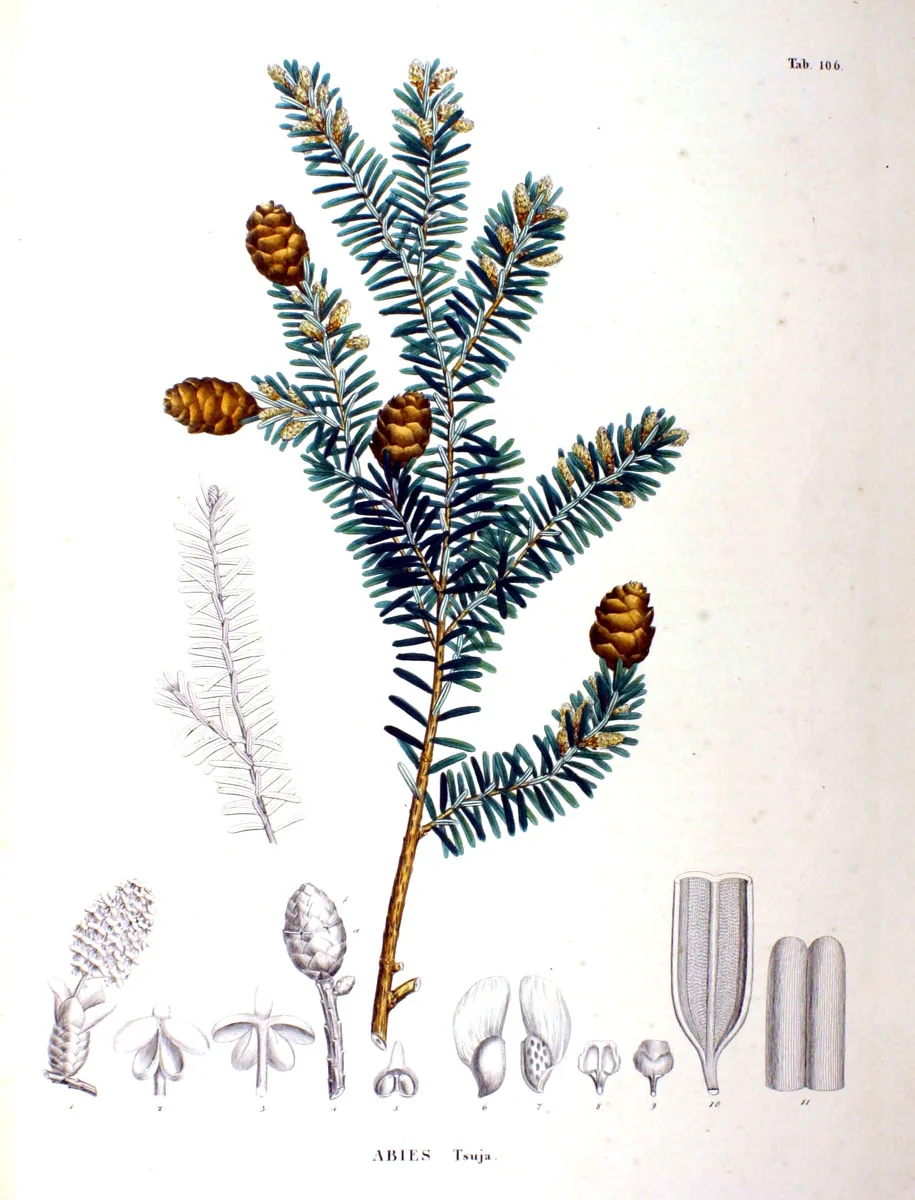


How to Grow and Care for Southern Japanese Hemlock
Tsuga sieboldii
Written by Emilio Marruso · last checked
Not toxic to cats and dogs, according to the sources · Sources
At a glance
This stately hemlock is a tree for the long haul, reaching 50 feet in gardens and up to 100 feet tall. It is happy in full sun or partial shade and asks only for moist, well-drained soil. Even better, it is safe around cats, dogs and horses, so the whole family can enjoy it worry-free for years to come.
- Sun
Full sun to partial shade
What the sources say (1)
Light: Full sun to partial shade
Light: Full sun (6 or more hours of direct sunlight a day) Partial Shade (Direct sunlight only part of the day, 2-6 hours)
— Tsuga sieboldii (Southern Japanese Hemlock) | North Carolina Extension Gardener Plant Toolbox [1] - Water
Keep the soil moist, but make sure it drains well
What the sources say (1)
Watering notes: Prefers moist, well-drained soil
Like other hemlocks, southern Japanese hemlock prefers moist well-drained soil and is adaptable to various soil types.
— Tsuga sieboldii (Southern Japanese Hemlock) | North Carolina Extension Gardener Plant Toolbox [1] - Cold
Survives winters down to −10 °F (−23.3 °C)
Very hardy · USDA 6a · RHS H7 · Z6
What the sources say (2)
Hardiness, coldest zone: 6a [winter low −23.3 to −20.6 °C (−10 to −5 °F)]
USDA Plant Hardiness Zone: 6a, 6b, 7a, 7b, 8a, 8b
— Tsuga sieboldii (Southern Japanese Hemlock) | North Carolina Extension Gardener Plant Toolbox [1] Hardiness, warmest zone: 8b [winter low −9.4 to −6.7 °C (15 to 20 °F)]
USDA Plant Hardiness Zone: 6a, 6b, 7a, 7b, 8a, 8b
— Tsuga sieboldii (Southern Japanese Hemlock) | North Carolina Extension Gardener Plant Toolbox [1] - Pests
Scale insects, mites and hemlock woolly adelgid can attack it
What the sources say (1)
Pests: scales, mites, hemlock woolly adelgid
Susceptible to scales, mites and hemlock wooly adelgid, but less so than T. caroliniana.
— Tsuga sieboldii (Southern Japanese Hemlock) | North Carolina Extension Gardener Plant Toolbox [1] - Size
50 ft tall in gardens, up to 100 ft
What the sources say (1)
Mature height: 1524 cm (50 ft) in cultivation; up to 3048 (100 ft)
It can grow up to 100 feet tall but usually reaches 50 feet in cultivation.
— Tsuga sieboldii (Southern Japanese Hemlock) | North Carolina Extension Gardener Plant Toolbox [1] - Safety
Not toxic to cats, dogs or horses
Overview
Southern Japanese hemlock is a fine-needled evergreen tree in the pine family, native to Japan. [1] It grows best in acid to neutral soil in sun or partial shade and is rather slow growing. [1]
This record is incomplete: the sources we read do not cover every field yet.
Not yet covered by our sources: Watering, Pruning, Propagation
Southern Japanese Hemlock care
How to water Southern Japanese Hemlock
Watering
Not stated in the sources we read.
Watering notes
Prefers moist, well-drained soil
What the sources say (1)
Like other hemlocks, southern Japanese hemlock prefers moist well-drained soil and is adaptable to various soil types.How much light Southern Japanese Hemlock needs
Full sun to partial shade
What the sources say (1)
Light:
Full sun (6 or more hours of direct sunlight a day)
Partial Shade (Direct sunlight only part of the day, 2-6 hours)How much cold Southern Japanese Hemlock can take
Hardiness, coldest zone
6a [winter low −23.3 to −20.6 °C (−10 to −5 °F)]
What the sources say (1)
USDA Plant Hardiness Zone:
6a, 6b, 7a, 7b, 8a, 8bHardiness, warmest zone
8b [winter low −9.4 to −6.7 °C (15 to 20 °F)]
What the sources say (1)
USDA Plant Hardiness Zone:
6a, 6b, 7a, 7b, 8a, 8bHow to propagate Southern Japanese Hemlock
Not stated in the sources we read.
How to grow Southern Japanese Hemlock
The plant
Family
Pinaceae
What the sources say (1)
Southern Japanese hemlock is a fine-needled evergreen tree in the pine family (Pinaceae) and native to Japan.Mature height
1524 cm (50 ft) in cultivation; up to 3048 (100 ft)
What the sources say (1)
It can grow up to 100 feet tall but usually reaches 50 feet in cultivation.Pests and diseases
Pests
scales, mites, hemlock woolly adelgid
What the sources say (1)
Susceptible to scales, mites and hemlock wooly adelgid, but less so than T. caroliniana.Southern Japanese Hemlock pests and problems
Scales, mites and hemlock woolly adelgid
Symptom: Susceptible, but less so than T. caroliniana
What the sources say (1)
Susceptible to scales, mites and hemlock wooly adelgid, but less so than T. caroliniana.
— Tsuga sieboldii (Southern Japanese Hemlock) | North Carolina Extension Gardener Plant Toolbox [1]
Remedies
Each remedy shows what official sources say about it; traditional remedies without an official source are marked as such. Harmful ones are listed so you know to avoid them.
Treating the plant
hemlock woolly adelgid
insecticidal soap spray Works
Do not spray during the heat of summer as this can “burn” the needles.
— ung.edu [2] How: Spray small trees, whose every branch can be reached, upward along the bottoms of boughs from April through mid-May, thoroughly coating the adelgids; repeat in spring or fall if the adelgid is still visible.
Spray small trees, whose every branch can be reached. Spray upward along the bottoms of boughs April through mid-May. Thoroughly coat the adelgids.
— ung.edu [2] What the evidence says Summer oil and insecticidal soap have been found to provide excellent control with one application, provided complete coverage is made in this time period.
— ipm.cahnr.uconn.edu [3] dormant oil spray Works
Do not spray during the heat of summer as this can “burn” the needles.
— ung.edu [2] How: Spray small trees, whose every branch can be reached, upward along the bottoms of boughs from April through mid-May, thoroughly coating the adelgids; repeat in spring or fall if the adelgid is still visible.
Spray small trees, whose every branch can be reached. Spray upward along the bottoms of boughs April through mid-May. Thoroughly coat the adelgids.
— ung.edu [2] What the evidence says Dormant oil is effective for HWA control when applied in April to mid-May. It will also control scale insects and mites at the same time.
— ipm.cahnr.uconn.edu [3]
hemlock scale
dormant oil spray Works
Consult the labels for dosage rates and safety precautions.
— portal.ct.gov [4] How: Control hemlock scales in ornamental plantings with a dormant horticultural oil spray in the spring, or ultrafine horticultural oil applied during the growing season.
Control of these scales is not possible in forests, but both can be controlled in ornamental plantings with a dormant horticultural oil spray in the spring or ultrafine horticultural oil applied during the growing season.
— portal.ct.gov [4] What the evidence says Dormant oil is effective for HWA control when applied in April to mid-May. It will also control scale insects and mites at the same time.
— ipm.cahnr.uconn.edu [3]
hemlock rust mites
insecticidal soap spray Partly works
How: Spray with thorough coverage of ultrafine horticultural oil or insecticidal soap to reduce the population.
Thorough coverage with ultrafine horticultural oil or insecticidal soap, which are among the compounds registered for control of this pest in Connecticut, will reduce the population.
— portal.ct.gov [4] What the evidence says Summer oil and insecticidal soap have been found to provide excellent control with one application, provided complete coverage is made in this time period.
— ipm.cahnr.uconn.edu [3]
Is Southern Japanese Hemlock poisonous?
Reported by the source, quoted verbatim. This is not medical or veterinary advice: if a person or an animal may have eaten this plant, contact a poison control centre or a veterinarian.
#non-toxic for cats #non-toxic for horses #non-toxic for dogs
[1]The source flags the risk for this animal but does not explain why.
Calendar
Pruning
Not stated in the sources we read.
Months as given by the sources, which are mostly from the United States (northern hemisphere). In the southern hemisphere they shift by about six months.
Similar plants
- Eastern Hemlock Tsuga canadensis
- Mountain Hemlock Tsuga mertensiana
- Western Hemlock Tsuga heterophylla
- Carolina Hemlock Tsuga caroliniana
- Abies grandis Abies grandis
- Aleppo Pine Pinus halepensis
- Alpine Fir Abies lasiocarpa
- Armand Pine Pinus armandi
Sources
Every value above is quoted from these documents. Links lead to the original publisher.
- Tsuga sieboldii (Southern Japanese Hemlock) | North Carolina Extension Gardener Plant Toolbox · plants.ces.ncsu.edu, consulted
- ung.edu · ung.edu
- ipm.cahnr.uconn.edu · ipm.cahnr.uconn.edu
- portal.ct.gov · portal.ct.gov
Written by Emilio Marruso · last checked