
How to Grow and Care for Common gorse
Ulex europaeus
Written by Emilio Marruso · last checked
Toxic to: People · Why
At a glance
Gorse is a tough, sun-loving shrub that asks for little: give it full sun, water it well until it settles in, and then it shrugs off drought. You can plant it any time of year and watch it grow up to 10 ft tall. As a bonus, its flower buds can be pickled in vinegar and used like capers in salads.
- Sun
Full sun
What the sources say (2)
- Water
Water well until it settles in; after that it handles drought
What the sources say (2)
Watering: Drought tolerant once established
Very tolerant of maritime exposure and, once established, drought[ 75
— Ulex europaeus - Useful Temperate Plants [4] Watering notes: Keep well watered until established
Plant gorse at any time of year and keep well watered until established. Gorse
— Ulex europaeus (Common Gorse) | BBC Gardeners World Magazine [3] - Cold
Survives winters down to −10 °F (−23.3 °C)
Very hardy · USDA 6 · RHS H7 · Z6
What the sources say (2)
Hardiness, coldest zone: 6 [winter low −23.3 to −17.8 °C (−10 to 0 °F)]
USDA Hardiness Zone  6-9 RHS Hardiness Rating  H6 Conservation status  Least concern
— Ulex europaeus - Trees and Shrubs Online [7] Hardiness, warmest zone: 9 [winter low −6.7 to −1.1 °C (20 to 30 °F)]
USDA Hardiness Zone  6-9 RHS Hardiness Rating  H6 Conservation status  Least concern
— Ulex europaeus - Trees and Shrubs Online [7] - Planting
Any time of year; bare-root plants from November to March
What the sources say (2)
Planting: Any time of year (bare-root plants November to March)
Plant gorse at any time of year and keep well watered until established. Gorse
— Ulex europaeus (Common Gorse) | BBC Gardeners World Magazine [3] bare-root gorse will need to be planted during the dormant season between November and
— Ulex europaeus (Common Gorse) | BBC Gardeners World Magazine [3] - Pruning
Prune after flowering, in late spring or early summer
What the sources say (1)
Pruning: After flowering, late spring or early summer
Prune after flowering in late spring or early summer, checking thoroughly for
— Ulex europaeus (Common Gorse) | BBC Gardeners World Magazine [3] - Harvest
Pickle the flower buds in vinegar and use them like capers in salads
- Size
Up to 10 ft tall
What the sources say (1)
Mature height: up to 305 cm (10 ft)
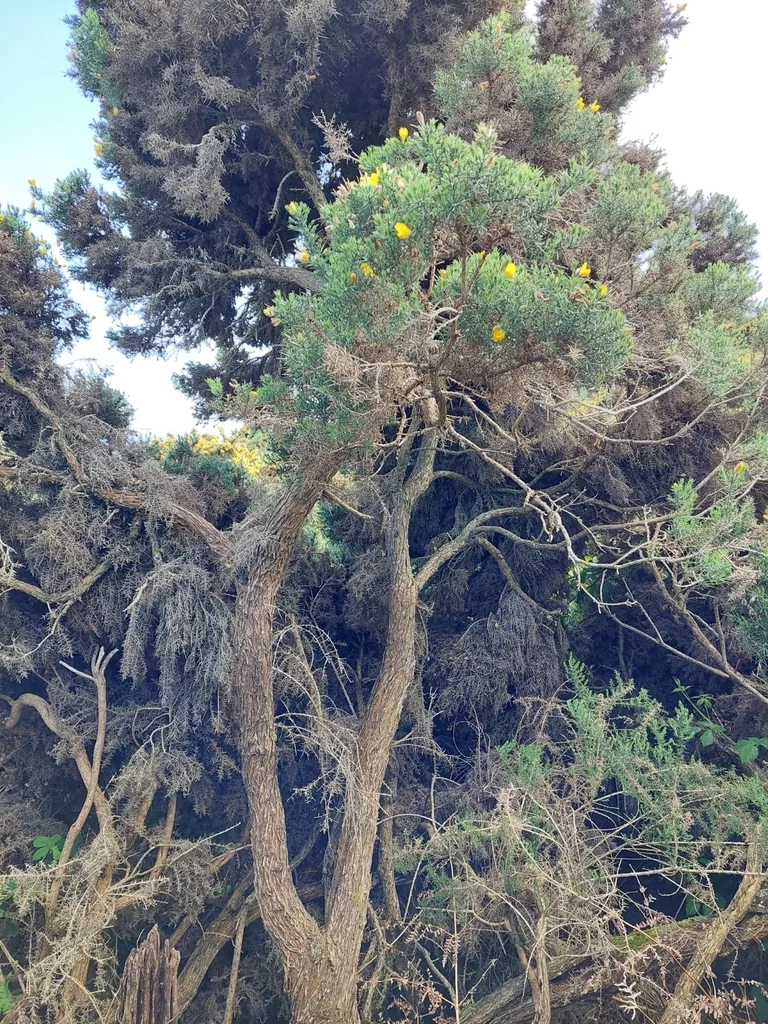
Form: A dense, thicket-forming shrub up to 10 feet tall. A gorse thicket is practically impenetrable.
— Virginia Tech Dendrology Fact Sheet [2] - Propagation
From seed or semi-ripe cuttings
What the sources say (2)
- Sowing
Sow in pots under glass, from late winter to early spring
What the sources say (1)
Sowing: Late winter to early spring (pots under glass)
The seed can be pre-soaked for 24 hours in hot water that is allowed to cool and then either sown in situ or sown in individual pots in a greenhouse
— Ulex europaeus - Useful Temperate Plants [4] - Safety
No known hazards for people
Overview
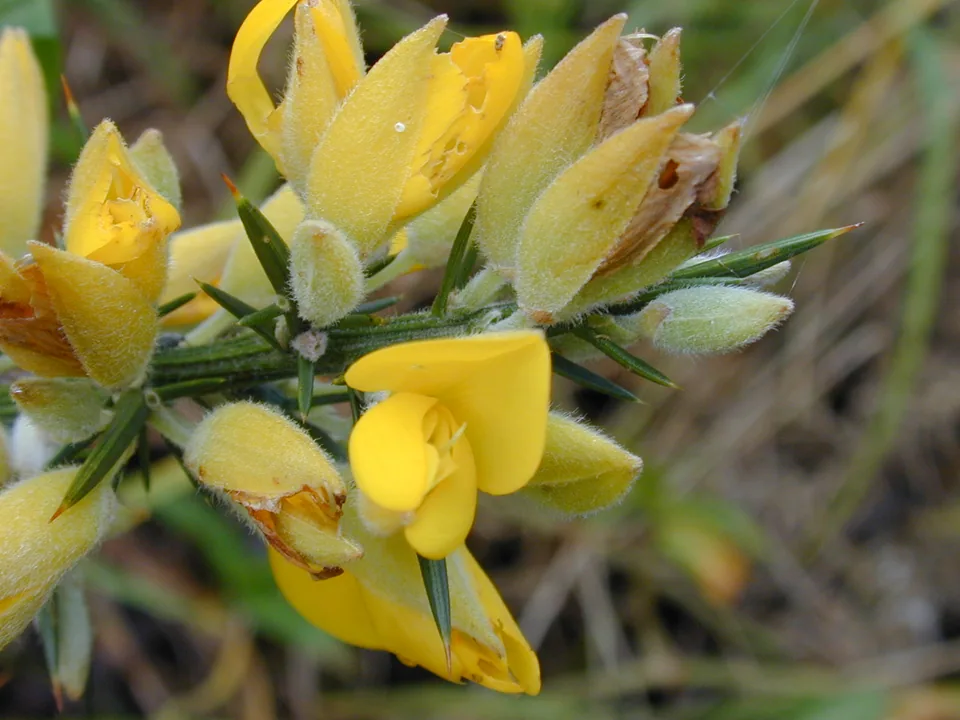
Gorse is an evergreen, spiny shrub suited to poor, well-drained soil in sunny, exposed sites. [3] It is tolerant of drought once established and is pruned after flowering. [4][3] Outside its native range it is an invasive weed that outcompetes native plants. [1]
Common gorse care
How to water Common gorse
Watering
Drought tolerant once established
What the sources say (1)
Very tolerant of maritime exposure and, once established, drought[ 75Watering notes
Keep well watered until established
What the sources say (1)
Plant gorse at any time of year and keep well watered until established. GorseHow much light Common gorse needs
Full sun
How much cold Common gorse can take
Hardiness, coldest zone
6 [winter low −23.3 to −17.8 °C (−10 to 0 °F)]
What the sources say (1)
USDA Hardiness Zone  6-9 RHS Hardiness Rating  H6 Conservation status  Least concernHardiness, warmest zone
9 [winter low −6.7 to −1.1 °C (20 to 30 °F)]
What the sources say (1)
USDA Hardiness Zone  6-9 RHS Hardiness Rating  H6 Conservation status  Least concernHow to propagate Common gorse
Seed; half-ripe (semi-hardwood) cuttings
How to grow Common gorse
The plant
Mature height
up to 305 cm (10 ft)
What the sources say (1)
Form: A dense, thicket-forming shrub up to 10 feet tall. A gorse thicket is practically impenetrable.Remedies
Each remedy shows what official sources say about it; traditional remedies without an official source are marked as such. Harmful ones are listed so you know to avoid them.
Getting rid of it
gorse infestation
manual removal (digging out) Works
Wear thick gloves, clothing, and shoes to protect yourself from gorse thorns.
— solvepestproblems.oregonstate.edu [8] How: Dig out individual plants and small patches, removing the roots; monitoring and follow-up are needed.
Dig out individual plants and small patches. Remove the roots. This may not kill the plants if not all the roots are removed. Control requires monitoring and follow-up.
— solvepestproblems.oregonstate.edu [8] What the evidence says Manual removal of gorse is effective but labor intensive. Use a [nome commerciale] or similar tool.
— solvepestproblems.oregonstate.edu [8] cutting stems near the ground Official source, not independently tested
Wear thick gloves, clothing, and shoes to protect yourself from gorse thorns.
— solvepestproblems.oregonstate.edu [8] How: Cut large plants near the ground; regrowth from the stem below the cut needs further action.
Control large gorse plants by cutting stems near the ground. Expect regrowth from the stem below the cut. Plan further action to kill the new shoots.
— solvepestproblems.oregonstate.edu [8]
gorse seedlings
pulling plants out in moist soil Official source, not independently tested
Wear thick gloves, clothing, and shoes to protect yourself from gorse thorns.
— solvepestproblems.oregonstate.edu [8] How: Dig or pull out plants when the soil is moist; soil disturbance encourages seed to germinate, so return and kill seedlings.
Dig or pull out plants when the soil is moist. Soil disturbance encourages seed to germinate.
— solvepestproblems.oregonstate.edu [8]
gorse regrowth
goat grazing Partly works
How: Goats eat gorse seedlings and tender foliage; use as part of an overall strategy and follow up with other controls.
Grazing is an effective way to reduce gorse canopy and keep it from flowering. For best results, follow up with other control activities.
— solvepestproblems.oregonstate.edu [8] What the evidence says Gorse plants will sprout new stems following grazing. Follow up with other control actions.
— solvepestproblems.oregonstate.edu [8]
cut gorse material
composting cut branches in place Official source, not independently tested
How: Cut the branches with loppers or a saw so they lie flat and pile them in place.
Use loppers or a saw to cut the branches so they lie flat, and make a pile with the branches.
— solvepestproblems.oregonstate.edu [8]
Is Common gorse poisonous?
Reported by the source, quoted verbatim. This is not medical or veterinary advice: if a person or an animal may have eaten this plant, contact a poison control centre or a veterinarian.
Known Hazards None known
[4]
Calendar
Late winter to early spring (pots under glass)
What the sources say (1)
The seed can be pre-soaked for 24 hours in hot water that is allowed to cool and then either sown in situ or sown in individual pots in a greenhouseAny time of year (bare-root plants November to March)
What the sources say (2)
Plant gorse at any time of year and keep well watered until established. Gorsebare-root gorse will need to be planted during the dormant season between November andAfter flowering, late spring or early summer
What the sources say (1)
Prune after flowering in late spring or early summer, checking thoroughly forMonths as given by the sources, which are mostly from the United States (northern hemisphere). In the southern hemisphere they shift by about six months.
Edibility
Reported by the source, quoted verbatim. Do not eat a plant on the basis of this page alone: identification mistakes can be dangerous.
The flower buds are pickled in vinegar and then used like capers in salads
[5]
Similar plants
- Abies grandis Abies grandis
- Abraham Trachystemon orientalis
- Abyssinian banana Ensete ventricosum
- Acacia longifolia Acacia longifolia
- Acanthus hungaricus Acanthus hungaricus
- Aconite Aconitum napellus
- Adam's Needle Yucca flaccida
- Adriatic lizard orchid Himantoglossum adriaticum
Sources
Every value above is quoted from these documents. Links lead to the original publisher.
- Ulex europaeus Profile – California Invasive Plant Council · cal-ipc.org, consulted
- Virginia Tech Dendrology Fact Sheet · dendro.cnre.vt.edu, consulted
- Ulex europaeus (Common Gorse) | BBC Gardeners World Magazine · gardenersworld.com, consulted
- Ulex europaeus - Useful Temperate Plants · temperate.theferns.info, consulted
- Gorse (Ulex europaeus) — Practical Plants · practicalplants.org, consulted
- Gorse – Flora – Jardim Gulbenkian · gulbenkian.pt, consulted
- Ulex europaeus - Trees and Shrubs Online · treesandshrubsonline.org, consulted
- solvepestproblems.oregonstate.edu · solvepestproblems.oregonstate.edu
Written by Emilio Marruso · last checked