
How to Grow and Care for Umbilicus rupestris
Umbilicus rupestris
Written by Emilio Marruso · last checked
At a glance
Wall pennywort is a tough little succulent perennial that grows from a tuber and thrives in sun or light shade. Its juicy young leaves are edible raw or cooked, with a mild flavor in winter and early spring and a stronger taste in summer. Give it soil that holds moisture yet drains well, and never let it dry out.
- Sun
Sun to light shade
What the sources say (1)
Light: Sun to light shade
succeeding in any near neutral, gritty, moisture retentive but well-drained soil in sun or light shade
— Pennywort (Umbilicus rupestris) — Practical Plants [8] - Water
Moderate watering; it does not tolerate drought, so don't let it dry out
What the sources say (4)
Watering: Moderate; moisture retentive but well-drained soil
Shade tolerance light shade Water moderate
— Pennywort (Umbilicus rupestris) — Practical Plants [8] moisture retentive but well-drained soil in sun or light shade
— Pennywort (Umbilicus rupestris) — Practical Plants [8] Water Preferences: | Mesic
— Navelwort (Umbilicus rupestris) - Garden.org [6] Watering notes: Drought intolerant
Tolerates Nutritionally Poor Soil No Drought intolerant
— Pennywort (Umbilicus rupestris) — Practical Plants [8] - Cold
Survives winters down to 0 °F (−17.8 °C)
Hardy in very cold winters · USDA 7 · RHS H6 · Z7
What the sources say (1)
Hardiness, coldest zone: 7 [winter low −17.8 to −12.2 °C (0 to 10 °F)]
Water moderate Hardiness Zone 7+
— Pennywort (Umbilicus rupestris) — Practical Plants [8] - Soil
Soil that holds moisture but drains well
What the sources say (3)
Watering: Moderate; moisture retentive but well-drained soil
Shade tolerance light shade Water moderate
— Pennywort (Umbilicus rupestris) — Practical Plants [8] moisture retentive but well-drained soil in sun or light shade
— Pennywort (Umbilicus rupestris) — Practical Plants [8] Water Preferences: | Mesic
— Navelwort (Umbilicus rupestris) - Garden.org [6] - Planting
Plant out pot-grown seedlings in early summer
What the sources say (1)
Planting: Early summer (seedlings raised in pots)
plant them out in early summer
— Pennywort (Umbilicus rupestris) — Practical Plants [8] - Harvest
Young leaves are edible raw or cooked; mildest in winter and early spring, stronger in summer
What the sources say (2)
Harvest: Winter and early spring (mild flavour); stronger-tasting in summer
A very acceptable mild flavour in the winter and early spring, they can be used in quantity in salads at this time
— Pennywort (Umbilicus rupestris) — Practical Plants [8] The leaves become rather stronger-tasting in the summer and are not so pleasant then
— Pennywort (Umbilicus rupestris) — Practical Plants [8] - Size
4 to 20 inches tall
What the sources say (1)
Mature height: 10-50 cm [4–20 in]
10-50 cm hoch, meist unverzweigt, kahl. Blätter fleischig, rundlich-schildförmig , mit wenigen Einkerbungen, in der Mitte gestielt und nabelartig eingesenkt.
— Umbilicus rupestris (Salisb.) Dandy [5] - Propagation
By seed, by dividing the plant in spring, or from leaf cuttings
What the sources say (3)
Propagation: Seed; division in spring; leaf cuttings
Seed - sow spring in a cold frame and only just cover the seed.
— Pennywort (Umbilicus rupestris) — Practical Plants [8] Division in spring. Very easy
— Pennywort (Umbilicus rupestris) — Practical Plants [8] permanent positions. Leaf cuttings
— Pennywort (Umbilicus rupestris) — Practical Plants [8] - Sowing
Sow in spring in a cold frame
What the sources say (1)
Sowing: Spring (cold frame)
Seed - sow spring in a cold frame and only just cover the seed.
— Pennywort (Umbilicus rupestris) — Practical Plants [8]
Overview
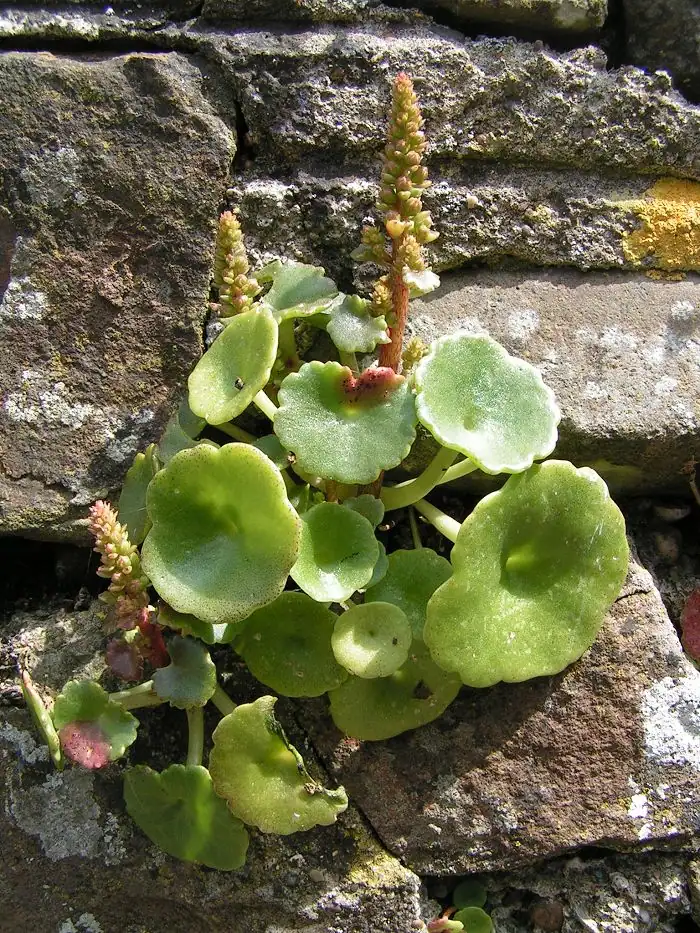
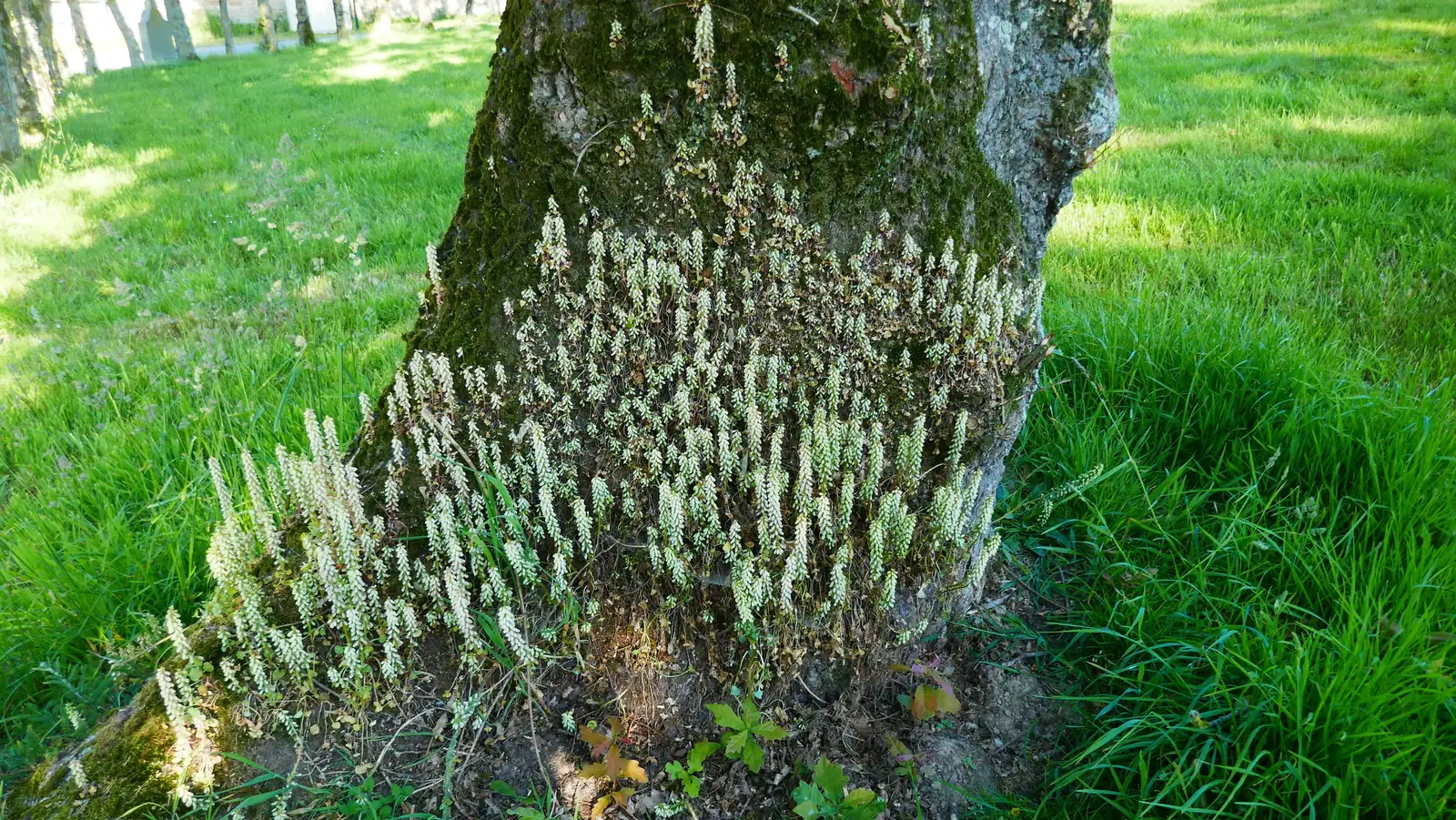
It grows in rock crevices and on old walls. [4] In cultivation it succeeds in gritty, moisture retentive but well-drained soil in sun or light shade. [8] The leaves are eaten raw or cooked. [8]
This record is incomplete: the sources we read do not cover every field yet.
Not yet covered by our sources: Hardiness, warmest zone, Pruning
Umbilicus rupestris care
How to water Umbilicus rupestris
Watering
Moderate; moisture retentive but well-drained soil
What the sources say (3)
Shade tolerance
light shade
Water
moderatemoisture retentive but well-drained soil in sun or light shadeWater Preferences:
| MesicWatering notes
Drought intolerant
What the sources say (1)
Tolerates Nutritionally Poor Soil
No
Drought
intolerantHow much light Umbilicus rupestris needs
Sun to light shade
What the sources say (1)
succeeding in any near neutral, gritty, moisture retentive but well-drained soil in sun or light shadeHow much cold Umbilicus rupestris can take
Hardiness, coldest zone
7 [winter low −17.8 to −12.2 °C (0 to 10 °F)]
What the sources say (1)
Water
moderate
Hardiness
Zone 7+Hardiness, warmest zone
Not stated in the sources we read.
How to propagate Umbilicus rupestris
Seed; division in spring; leaf cuttings
What the sources say (3)
Seed - sow spring in a cold frame and only just cover the seed.Division in spring. Very easypermanent positions.
Leaf cuttingsHow to grow Umbilicus rupestris
The plant
Life cycle
perennial (succulent tuberous geophyte)
What the sources say (1)
The native range of this species is Macaronesia, W. Europe to Medit. and Arabian Peninsula, SW. India. It is a succulent tuberous geophyte and grows primarily in the temperate biome.Mature height
10-50 cm [4–20 in]
What the sources say (1)
10-50 cm hoch, meist unverzweigt, kahl. Blätter fleischig, rundlich-schildförmig , mit wenigen Einkerbungen, in der Mitte gestielt und nabelartig eingesenkt.Remedies
The sources we checked give no remedies for this plant.
Calendar
Sowing
Spring (cold frame)
What the sources say (1)
Seed - sow spring in a cold frame and only just cover the seed.Planting
Early summer (seedlings raised in pots)
What the sources say (1)
plant them out in early summerHarvest
Winter and early spring (mild flavour); stronger-tasting in summer
What the sources say (2)
A very acceptable mild flavour in the winter and early spring, they can be used in quantity in salads at this timeThe leaves become rather stronger-tasting in the summer and are not so pleasant thenPruning
Not stated in the sources we read.
Months as given by the sources, which are mostly from the United States (northern hemisphere). In the southern hemisphere they shift by about six months.
Edibility
Reported by the source, quoted verbatim. Do not eat a plant on the basis of this page alone: identification mistakes can be dangerous.
Similar plants
- Aaron's Beard Hypericum calycinum
- Abies grandis Abies grandis
- Abraham Trachystemon orientalis
- Abyssinian banana Ensete ventricosum
- Acacia longifolia Acacia longifolia
- Acacia retinodes Acacia retinodes
- Acanthus hungaricus Acanthus hungaricus
- Achlys triphylla Achlys triphylla
Sources
Every value above is quoted from these documents. Links lead to the original publisher.
- Umbilicus rupestris (Salisb.) Dandy - Herbari Virtual del Mediterrani Occidental · herbarivirtual.uib.cat, consulted
- Parque Nacional de Monfragüe · miteco.gob.es, consulted
- Umbilicus rupestris (Salisb.) Dandy | Plants of the World Online | Kew Science · powo.science.kew.org, consulted
- Umbilicus rupestris (Salisb.) Dandy - Portale della Flora di Roma · dryades.units.it, consulted
- Umbilicus rupestris (Salisb.) Dandy · infoflora.ch, consulted
- Navelwort (Umbilicus rupestris) - Garden.org · garden.org, consulted
- Umbilicus rupestris - Useful Temperate Plants · temperate.theferns.info, consulted
- Pennywort (Umbilicus rupestris) — Practical Plants · practicalplants.org, consulted
Written by Emilio Marruso · last checked