
How to Grow and Care for Vachellia farnesiana
Vachellia farnesiana
Written by Emilio Marruso · last checked
Toxic to: Dogs, People · Why
At a glance
Sweet acacia is a tough, sun-loving tree that grows 15–25 feet tall and asks for very little water once established: once or twice a month in the growing season is enough. It takes acidic to alkaline soil, from pH 5.0 to 8.0, and even grows in containers. Sow nicked seeds in early spring and watch them sprout in under two weeks.
- Sun
Full sun
- Water
Once established, water once or twice a month in the growing season; very dry soil makes leaves drop
What the sources say (3)
Watering: Water only occasionally once established; once or twice a month during the growing season
Once your tree is established, water only occasionally. Once or twice a month during the growing season is plenty.
— Sweet Acacia – Gardening Solutions [1] Watering notes: Highly drought tolerant; leaves drop if the soil is allowed to dry out, and it may defoliate in severe drought
the leaves will drop if the soil is allowed to dry out. This drought avoidance mechanism allows the plant to grow well with no irrigation, once established.
— ENH-164/ST005: Vachellia farnesiana var. farnesiana: Sweet Acacia [8] it may defoliate (lose its leaves) if the drought is severe enough.
— Sweet Acacia – Gardening Solutions [1] - Soil
Acidic to alkaline soil, pH 5.0–8.0
- Pests
Anthracnose sometimes attacks the leaves
What the sources say (1)
Diseases: anthracnose
No pests or diseases are of major concern. Occasionally anthracnose can infect leaves.
— ENH-164/ST005: Vachellia farnesiana var. farnesiana: Sweet Acacia [8] - Size
15–25 ft tall
What the sources say (1)
Mature height: 457.2-762 cm (15-25 ft)
Height: 15 to 25 feet Spread: 15 to 25 feet
— ENH-164/ST005: Vachellia farnesiana var. farnesiana: Sweet Acacia [8] - Propagation
From seed or cuttings; collect the pods once they turn from green to brown
What the sources say (4)
Propagation: Seed (scarified before sowing); cuttings
Seed is the preferred method of propagation.
— Sweet Acacia – Gardening Solutions [1] Propagation of sweet acacia is by seeds or cuttings.
— ENH-164/ST005: Vachellia farnesiana var. farnesiana: Sweet Acacia [8] Cuttings of half-ripe wood with a heel, mid summer in individual pots in a frame
— Vachellia farnesiana - Useful Temperate Plants [2] Saving seeds: Collect the fruit once the green pods turn brown.
Wait until the green pods turn brown to collect fruit.
— Sweet Acacia – Gardening Solutions [1] - Sowing
Nick the seeds and sow in early spring in a warm greenhouse; they sprout in under 2 weeks
What the sources say (5)
Sowing: Early spring (warm greenhouse)
Stored seed should be scarified, pre-soaked for 12 hours in warm water and then sown in a warm greenhouse in early spring.
— Vachellia farnesiana - Useful Temperate Plants [2] Propagation: Seed (scarified before sowing); cuttings
Seed is the preferred method of propagation.
— Sweet Acacia – Gardening Solutions [1] Propagation of sweet acacia is by seeds or cuttings.
— ENH-164/ST005: Vachellia farnesiana var. farnesiana: Sweet Acacia [8] Cuttings of half-ripe wood with a heel, mid summer in individual pots in a frame
— Vachellia farnesiana - Useful Temperate Plants [2] Days to germination: less than 14 (less than two weeks)
New plants will sprout in less than two weeks.
— Sweet Acacia – Gardening Solutions [1] - Containers
Grows in containers too
What the sources say (2)
- Safety
The seeds are poisonous to dogs; some people are allergic to the flower pollen
Overview
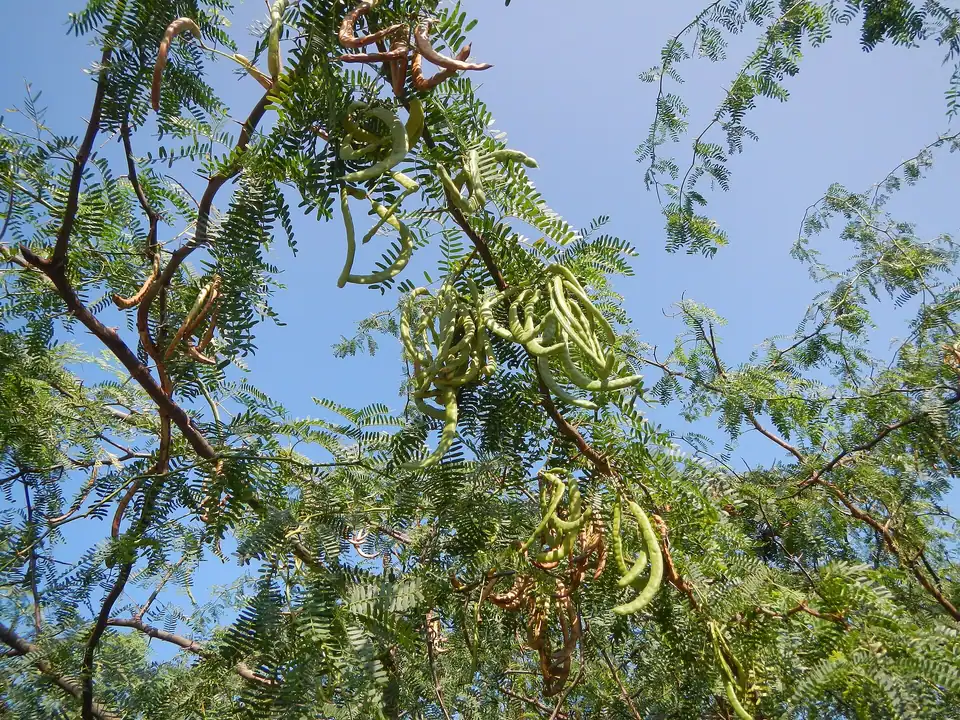
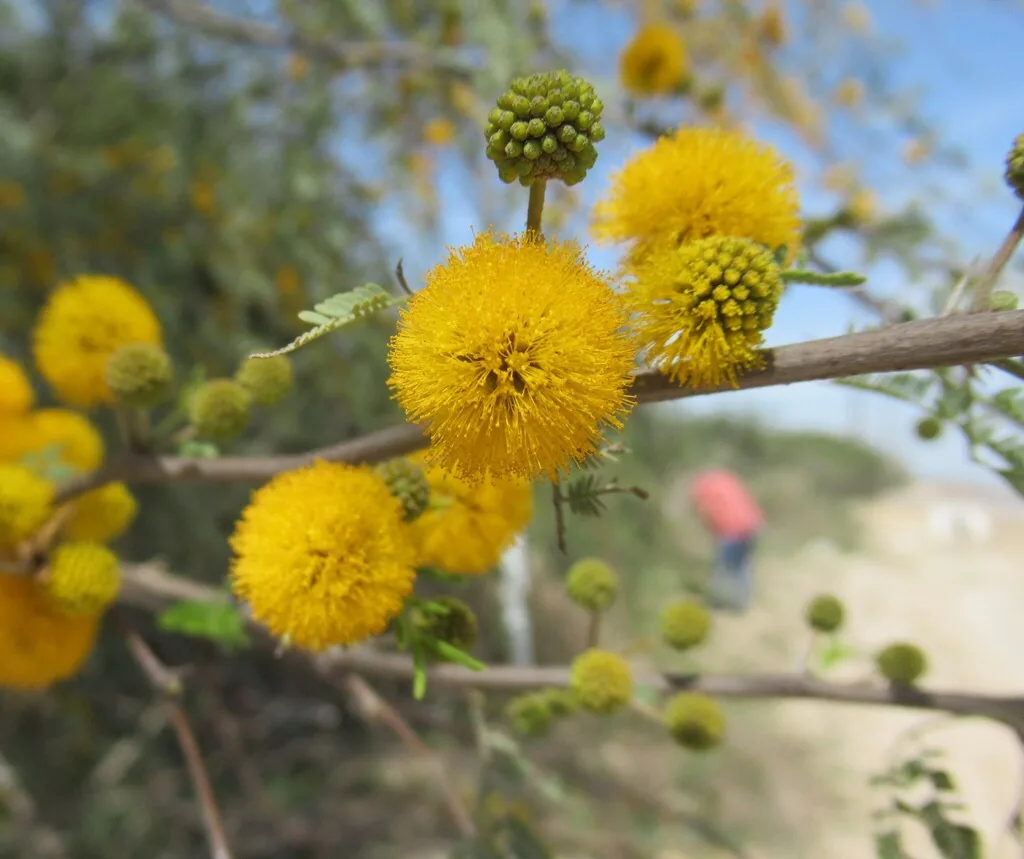
Sweet acacia is a thorny, semi-evergreen shrub or small tree with very fragrant yellow flowers, 15 to 25 feet [4.6–7.6 m] tall and wide. [8] It grows best in full sun and is highly drought tolerant once established. [8][1] Seed is the preferred method of propagation, after scarification of the seed coat. [1]
This record is incomplete: the sources we read do not cover every field yet.
Not yet covered by our sources: Pruning
Vachellia farnesiana care
Measurements in square brackets are our conversion into the other unit system; the quoted text is unchanged.
How to water Vachellia farnesiana
Watering
Water only occasionally once established; once or twice a month during the growing season
What the sources say (1)
Once your tree is established, water only occasionally. Once or twice a month during the growing season is plenty.Watering notes
Highly drought tolerant; leaves drop if the soil is allowed to dry out, and it may defoliate in severe drought
What the sources say (2)
the leaves will drop if the soil is allowed to dry out. This drought avoidance mechanism allows the plant to grow well with no irrigation, once established.it may defoliate (lose its leaves) if the drought is severe enough.How much light Vachellia farnesiana needs
How much cold Vachellia farnesiana can take
Hardiness, coldest zone
The sources give different values depending on region, zone or growing conditions.
What each source says
According to UF/IFAS Extension: 9a [winter low −6.7 to −3.9 °C (20 to 25 °F)]
arid zones only (Arizona State University): 8 [winter low −12.2 to −6.7 °C (10 to 20 °F)]
What the sources say (4)
According to UF/IFAS Extension: USDA hardiness zones: 9A through 11arid zones only (Arizona State University): USDA 8-10 (arid zones only)USDA hardiness zones: 9A through 11USDA 8-10 (arid zones only)Hardiness, warmest zone
The sources give different values depending on region, zone or growing conditions.
What each source says
According to UF/IFAS Extension: 11 [winter low 4.4 to 10 °C (40 to 50 °F)]
arid zones only (Arizona State University): 10 [winter low −1.1 to 4.4 °C (30 to 40 °F)]
What the sources say (4)
According to UF/IFAS Extension: USDA hardiness zones: 9A through 11arid zones only (Arizona State University): USDA 8-10 (arid zones only)USDA hardiness zones: 9A through 11USDA 8-10 (arid zones only)Best soil for Vachellia farnesiana
Soil pH, minimum
5.0
What the sources say (1)
Plants tolerate a pH range from 5.0 to 8.0Soil pH, maximum
8.0
What the sources say (1)
Plants tolerate a pH range from 5.0 to 8.0Where to grow Vachellia farnesiana
Yes
How to propagate Vachellia farnesiana
Seed (scarified before sowing); cuttings
What the sources say (3)
Seed is the preferred method of propagation.Propagation of sweet acacia is by seeds or cuttings.Cuttings of half-ripe wood with a heel, mid summer in individual pots in a frameHow to grow Vachellia farnesiana
The plant
Family
Fabaceae
What the sources say (1)
sweet acacia Fabaceae Vachellia
farnesiana (L.) Wight & Arn.Mature height
457.2-762 cm (15-25 ft)
What the sources say (1)
Height: 15 to 25 feet
Spread: 15 to 25 feetSowing and growth
Days to germination
less than 14 (less than two weeks)
What the sources say (1)
New plants will sprout in less than two weeks.Harvest and storage
Saving seeds
Collect the fruit once the green pods turn brown.
What the sources say (1)
Wait until the green pods turn brown to collect fruit.Pests and diseases
Diseases
anthracnose
What the sources say (1)
No pests or diseases are of major concern. Occasionally anthracnose can infect leaves.Vachellia farnesiana pests and problems
Anthracnose
Symptom: Occasionally infects leaves
What the sources say (1)
No pests or diseases are of major concern. Occasionally anthracnose can infect leaves.
— ENH-164/ST005: Vachellia farnesiana var. farnesiana: Sweet Acacia [8] Texas root rot
What the sources say (1)
Disease and Pests: Texas root rot
— [5]
Remedies
Each remedy shows what official sources say about it; traditional remedies without an official source are marked as such. Harmful ones are listed so you know to avoid them.
Getting rid of it
unwanted plant removal
hand pulling and digging out Official source, not independently tested
How: Hand-pull seedlings and dig out small plants, removing as much of the roots as possible.
Hand-pull seedlings and dig out small plants. Remove as much of the roots as possible.
— weeds.dpi.nsw.gov.au [9] machinery removal Partly works
How: Mechanical removal with machinery.
It is difficult to remove all of the root structure using machinery. Mimosa bush grows quickly meaning mechanical control needs to be repeated within a few years and this can be expensive.
— weeds.dpi.nsw.gov.au [9] What the evidence says It is difficult to remove all of the root structure using machinery. Mimosa bush grows quickly meaning mechanical control needs to be repeated within a few years and this can be expensive.
— weeds.dpi.nsw.gov.au [9]
Is Vachellia farnesiana toxic to pets?
Reported by the source, quoted verbatim. This is not medical or veterinary advice: if a person or an animal may have eaten this plant, contact a poison control centre or a veterinarian.
Animals
The seeds, containing an unnamed alkaloid, are used to kill rabid dogs in Brazil
[2]
People
Calendar
Sowing
Early spring (warm greenhouse)
What the sources say (1)
Stored seed should be scarified, pre-soaked for 12 hours in warm water and then sown in a warm greenhouse in early spring.Pruning
Not stated in the sources we read.
Months as given by the sources, which are mostly from the United States (northern hemisphere). In the southern hemisphere they shift by about six months.
Edibility
Reported by the source, quoted verbatim. Do not eat a plant on the basis of this page alone: identification mistakes can be dangerous.
Similar plants
- Afghan Redbud Cercis griffithii
- American hogpeanut Amphicarpaea bracteata
- Amur Maackia Maackia amurensis
- Bauhinia Bauhinia blakeana
- Bicolor Lespedeza Lespedeza bicolor
- Black Locust Robinia pseudoacacia
- Black Medick Medicago lupulina
- Blue False Indigo Baptisia australis
Sources
Every value above is quoted from these documents. Links lead to the original publisher.
- Sweet Acacia – Gardening Solutions · gardeningsolutions.ifas.ufl.edu, consulted
- Vachellia farnesiana - Useful Temperate Plants · temperate.theferns.info, consulted
- Virginia Tech Dendrology Fact Sheet · dendro.cnre.vt.edu, consulted
- Lady Bird Johnson Wildflower Center - The University of Texas at Austin · wildflower.org, consulted
- · asu.edu, consulted
- Vachellia farnesiana - Pl@ntUse · uses.plantnet-project.org, consulted
- ENH-164 · edis.ifas.ufl.edu, consulted
- ENH-164/ST005: Vachellia farnesiana var. farnesiana: Sweet Acacia · edis.ifas.ufl.edu, consulted
- weeds.dpi.nsw.gov.au · weeds.dpi.nsw.gov.au
Written by Emilio Marruso · last checked