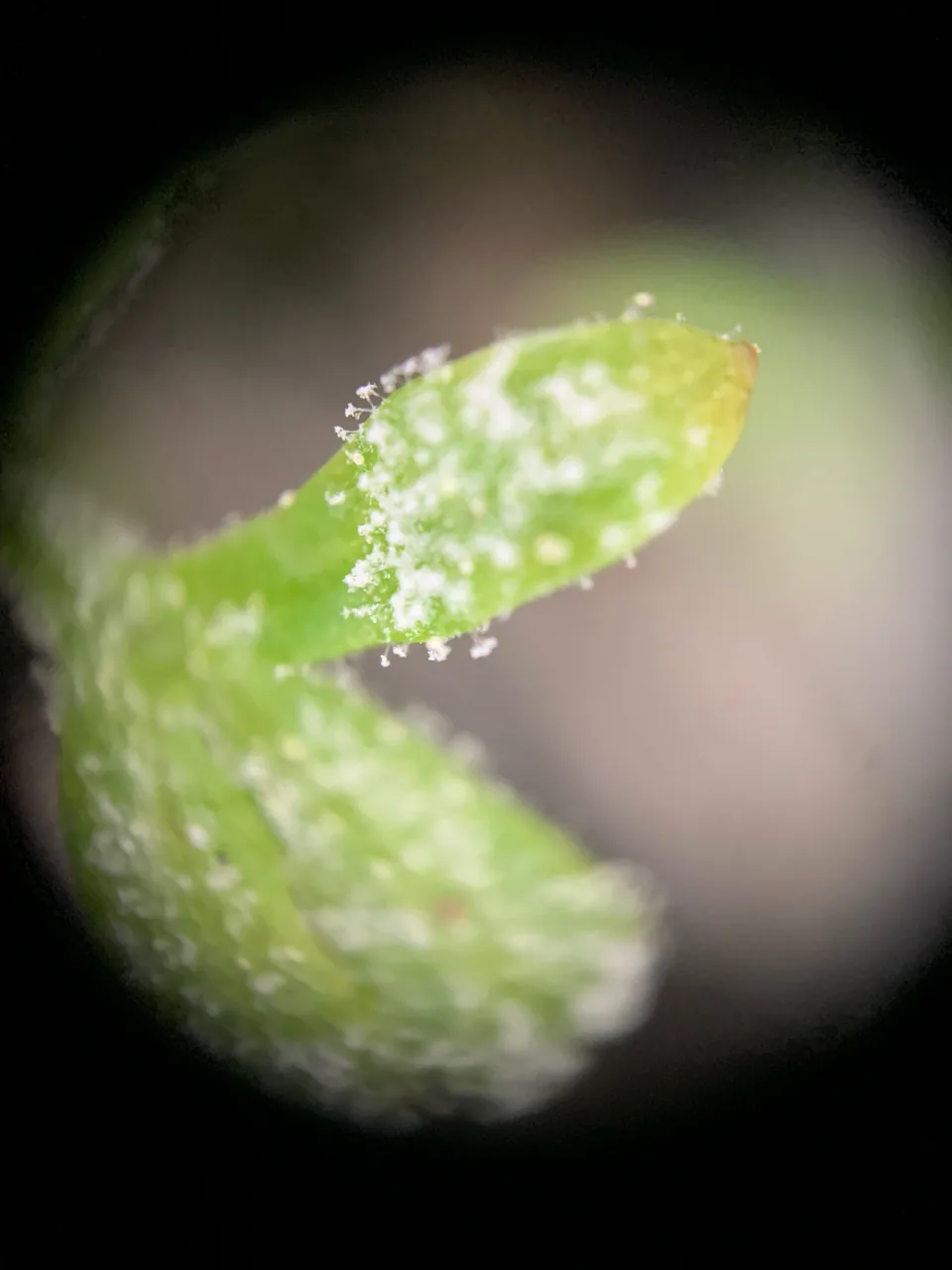
Water mould
Downy mildew
Peronosporaceae
Written by Emilio Marruso
Classification: Oomycota › Oomycetes › Peronosporales
Plants it attacks
Plants in our guide where this problem is reported. Open a plant to see the sources.
- Blue Globe Onion
Symptom: May be susceptible to downy mildew
- Chives
Symptom: Fungal disease that turns leaves light tan to brown; furry grayish violet growth may show on infected leaves in moist periods.
- Snapdragon
Symptom: Stunted plants with leaves that curl downward; gray to white fungus on leaf undersides; plants may fail to flower.
- Caucasian Rockcress
Symptom: Root rot, white rust, and downy mildew in overly moist or poorly drained soils.
- Fern-Leaf False Foxglove
Symptom: Disease problems to watch for.
- Cabbage
Symptom: Downy mildew can form where full sun is not provided.
- Quinoa
Symptom: The most common disease of quinoa in Utah, particularly in rainy years or when plants are seeded too closely and over-irrigated.
- Coleus
Symptom: Fungal disease problems.
- Rocketsalad
Symptom: Listed as the pest and disease of arugula.
- Common hop
Symptom: Common disease in wetter climates, a problem in April and May
- Impatiens
Symptom: Caused by the fungus-like organism Plasmopara obducens; fungicides used for fungal diseases will not work.
- Alyssum
Symptom: Listed as additional problems that may affect the plant.
Also reported on: Bitter Melon, Black-eyed Susan, Bloody Cranesbill Geranium, Coco yam, Late Figwort, Lily Leek, Nasturtium, Nodding Onion, Onion, Orange Butterfly Bush, Pearl millet, Perennial Wallrocket, Rosinweed, Siebold Viburnum, Spinach, Statice, Strawflower, Veronica
Remedies
What our plant sheets report, with the outcome checked against official sources. Traditional remedies without an official source are flagged.
Treat
clipping and removing infected leaves Works
How: improve air circulation, avoid overhead watering and remove infected leaves promptly
Reported for 1 plant: Perennial Wallrocket
disposing of diseased leaves Works
How: Remove and discard infected leaves promptly; water at soil level in the morning to keep foliage dry.
Reported for 1 plant: Nasturtium
drip irrigation without wetting leaves Works
How: Water using drip irrigation and avoid wetting the leaves close to sundown.
Reported for 1 plant: Statice
removing diseased shoots Works
How: remove diseased shoots that emerge later by hand and discard them as they appear
Reported for 1 plant: Common hop
avoid overhead irrigation and thin the canopy Partly works
How: Space plants to reduce canopy density and avoid overhead irrigation.
Reported for 1 plant: Bitter Melon
cleaning up plant refuse in the fall Partly works
How: Clean up plant refuse in the fall, space plants adequately for air circulation and water early in the day so the foliage can dry before nighttime.
Reported for 1 plant: Veronica
neem oil spray Partly works
How: Apply neem oil sprays at the first sign of infection and repeat after heavy rains.
Reported for 1 plant: Onion
remove affected leaves Partly works
How: In small plantings, remove the affected leaves from the field.
Reported for 1 plant: Bitter Melon
prompt removal of diseased plants and debris Official source, not independently tested
How: Promptly remove diseased plants and debris; reduce humidity by using proper plant spacing.
Reported for 1 plant: Late Figwort
raking and destroying fallen leaves Official source, not independently tested
How: Rake and destroy fallen leaves in the autumn and avoid overhead irrigation in the spring.
Reported for 1 plant: Siebold Viburnum
removing diseased plants and tillers Official source, not independently tested
How: Removal of diseased plants or tillers at the first sign of disease should minimise secondary spread.
Reported for 1 plant: Pearl millet
stripping lower leaves Official source, not independently tested
How: strip the lower 2 to 3 feet (61-91 cm) of foliage once the bines reach the top of the trellis, carefully so as not to damage the main stem
Reported for 1 plant: Common hop
neem oil Not verified
How: Treat outbreaks as soon as they appear to limit further spread.
Reported for 1 plant: Coco yam
picking off affected leaves Not verified
How: Pick off and dispose of affected leaves as soon as symptoms are seen, by burial, burning or council green waste.
Reported for 1 plant: Orange Butterfly Bush
water at soil level and remove affected foliage Not verified
How: Water at the soil level, remove and discard affected foliage, apply neem oil.
Reported for 1 plant: Lily Leek
watering at the base Not verified
How: Do not use overhead watering; water directly over the soil at the base of the plant.
Reported for 1 plant: Black-eyed Susan
watering at the base, removing infected bulbs Not verified
How: Water at the base of the plants rather than overhead; remove the entire affected bulb and destroy it.
Reported for 1 plant: Nodding Onion
watering only the soil Not verified
How: water early on sunny days and water just the soil to minimize foliage dampness
Reported for 1 plant: Bloody Cranesbill Geranium
Where it is found
No distribution data.