
How to Grow and Care for Sicilian fir
Abies nebrodensis
Written by Emilio Marruso · last checked
At a glance
This fir belongs to the pine family and can be grown from seed, with seedlings raised in a nursery, or by grafting. It rewards careful gardeners: it crosses easily with other firs, so plants sold under its name may be hybrids. Choosing a trustworthy source helps make sure your tree is the real thing.
- Watch out
It crosses easily with other firs: plants sold under this name may be hybrids
- Propagation
Grow it from seed, with seedlings raised in a nursery, or by grafting
What the sources say (2)
Propagation: Seed (nursery-raised seedlings); grafting
con i quali si può effettuare la coltivazione in vivaio a scopo di conservazione
— Abies nebrodensis: 30 alberi per salvare una specie — Italiano [5] A. nebrodensis is also conserved ex situ in a seed orchard (with grafts of the 29 remaining individuals of the species)
— Abies nebrodensis - EUFORGEN European forest genetic resources programme [1]
Overview
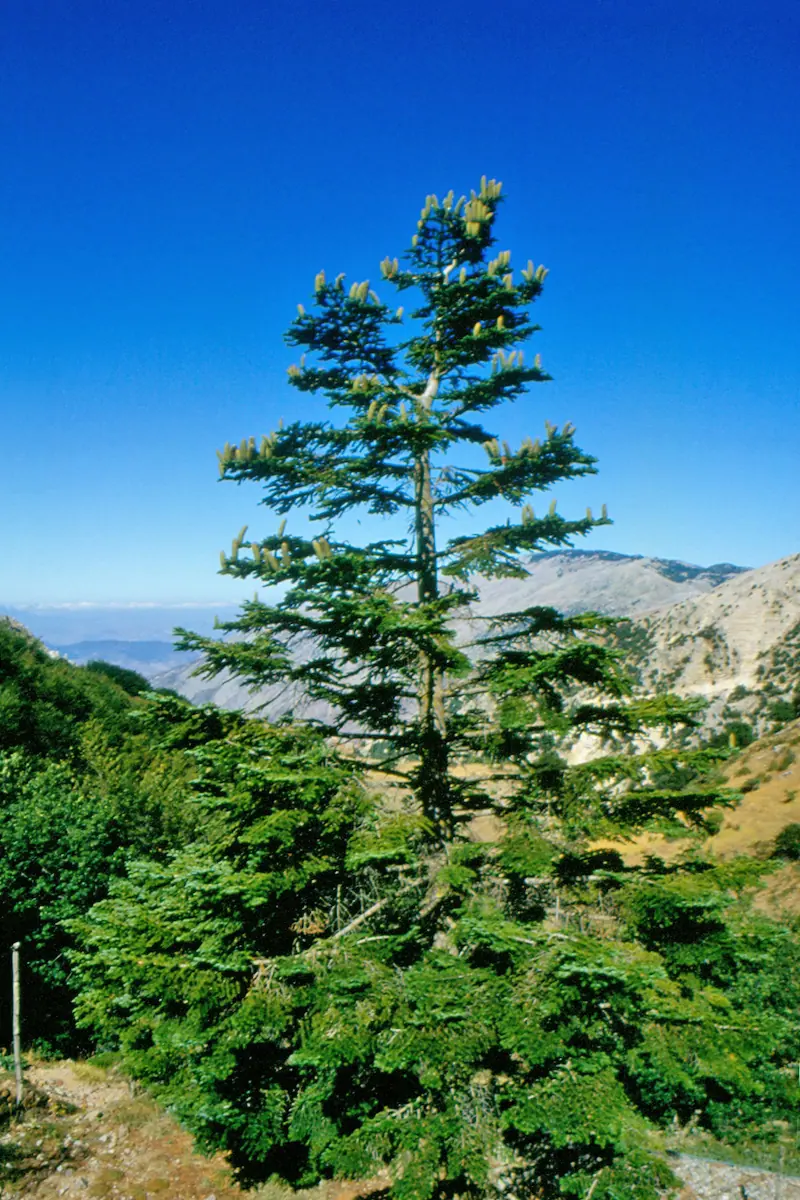
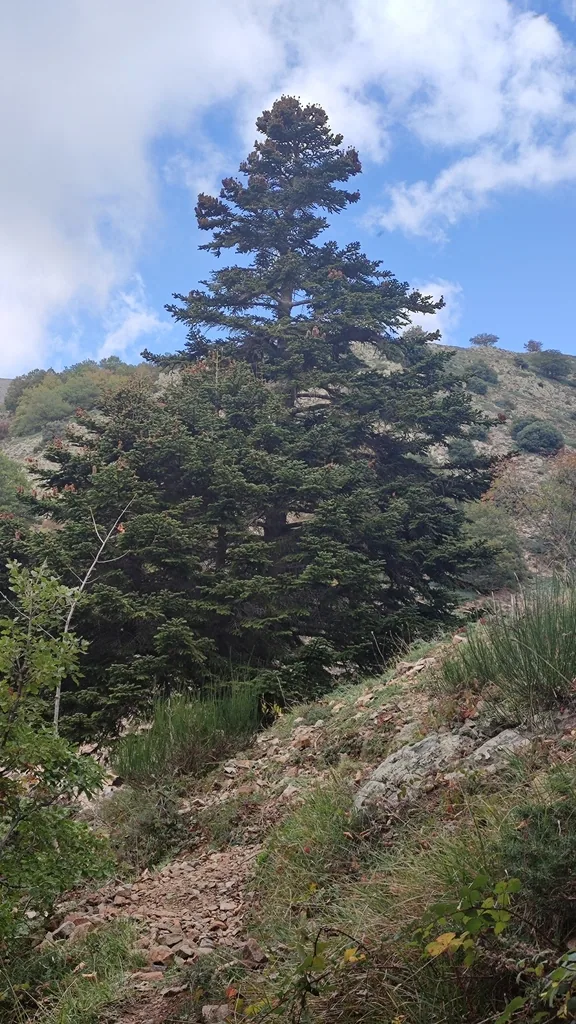
Sicilian fir is a critically endangered conifer endemic to northern Sicily, reaching up to 15 m [49.2 ft] in height in the wild. [1] The species is reasonably common in temperate zone arboreta and is used as an ornamental conifer. [6] Some wild trees produce fertile seed, which allows nursery cultivation for conservation. [5]
This record is incomplete: the sources we read do not cover every field yet.
Not yet covered by our sources: Watering, Light, Hardiness, warmest zone, Pruning
Sicilian fir care
Measurements in square brackets are our conversion into the other unit system; the quoted text is unchanged.
How to water Sicilian fir
Not stated in the sources we read.
How much light Sicilian fir needs
Not stated in the sources we read.
How much cold Sicilian fir can take
Hardiness, coldest zone
The sources give different values depending on region, zone or growing conditions.
What each source says
According to Trees and Shrubs Online: 5 [winter low −28.9 to −23.3 °C (−20 to −10 °F)]
According to Conifer Society: 7 [winter low −17.8 to −12.2 °C (0 to 10 °F)]
According to Gymnosperm Database: 7 [winter low −17.8 to −12.2 °C (0 to 10 °F)]
What the sources say (3)
According to Trees and Shrubs Online: USDA Hardiness Zone  5 RHS Hardiness Rating  H6According to Conifer Society: Hardy to USDA Zone 7, cold hardiness limit between 0º to 10ºF (-17.7° and -12.2°C).According to Gymnosperm Database: Hardy to Zone 7 (cold hardiness limit between -17.7°C and -12.2°C)Hardiness, warmest zone
Not stated in the sources we read.
How to propagate Sicilian fir
Seed (nursery-raised seedlings); grafting
What the sources say (2)
con i quali si può effettuare la coltivazione in vivaio a scopo di conservazioneA. nebrodensis is also conserved ex situ in a seed orchard (with grafts of the 29 remaining individuals of the species)How to grow Sicilian fir
The plant
Family
Pinaceae
What the sources say (1)
Abies nebrodensis (Lojac.) Mattei Family: Pinaceae Common name: Nebrodi fir An evergreen tree endemic to Sicily, reaching heights between 10 and 18 meters.Mature height
The sources disagree:
An evergreen tree endemic to Sicily, reaching heights between 10 and 18 meters. It has linear, rigid leaves and mature female cones that are upright and can be up to 20 cm long.
[2]growing in limestone soils at an altitude of 1 500 m above sea level and reaching up to 15 m in height (Frascella et al., 2022).
[1]
Sicilian fir pests and problems
Hybridisation with other firs
Symptom: Cultivated plants labelled as this species may be hybrids; the species hybridizes easily with other firs in section Abies.
What the sources say (1)
this is not a viable form of ex situ conservation due to the ease with which this species hybridizes with other firs in section Abies
— Abies nebrodensis (abete dei nebrodi) description [6]
Remedies
Each remedy shows what official sources say about it; traditional remedies without an official source are marked as such. Harmful ones are listed so you know to avoid them.
Treating the plant
adelgids
forceful water spray Works
How: A forceful stream of water directed at the cottony masses on conifers, especially on trunks, dislodges and kills many adelgids.
A forceful stream of water directed at the cottony masses on conifers, especially on trunks, dislodges and kills many adelgids.
— ipm.ucanr.edu [9] What the evidence says A forceful stream of water directed at the cottony masses on conifers, especially on trunks, dislodges and kills many adelgids.
— ipm.ucanr.edu [9] insecticidal soap Works
How: High adelgid populations, especially on young trees, can be controlled by applying insecticidal soap (potassium salts of fatty acids) in the spring when crawlers are abundant.
High adelgid populations, especially on young trees, can be controlled by applying horticultural or narrow-range oil , insecticidal soap (potassium salts of fatty acids), or certain other insecticides in the spring when crawlers are abundant.
— ipm.ucanr.edu [9] What the evidence says High adelgid populations, especially on young trees, can be controlled by applying horticultural or narrow-range oil , insecticidal soap (potassium salts of fatty acids), or certain other insecticides in the spring when crawlers are abundant.
— ipm.ucanr.edu [9] horticultural oil Works
Be aware that oil spray may remove the desirable bluish color from foliage of certain conifers (e.g., blue spruce), but this does not affect tree health.
— ipm.ucanr.edu [9] How: High adelgid populations, especially on young trees, can be controlled by applying horticultural or narrow-range oil in the spring when crawlers are abundant.
High adelgid populations, especially on young trees, can be controlled by applying horticultural or narrow-range oil , insecticidal soap (potassium salts of fatty acids), or certain other insecticides in the spring when crawlers are abundant.
— ipm.ucanr.edu [9] What the evidence says High adelgid populations, especially on young trees, can be controlled by applying horticultural or narrow-range oil , insecticidal soap (potassium salts of fatty acids), or certain other insecticides in the spring when crawlers are abundant.
— ipm.ucanr.edu [9]
Calendar
Pruning
Not stated in the sources we read.
Months as given by the sources, which are mostly from the United States (northern hemisphere). In the southern hemisphere they shift by about six months.
Similar plants
- Abies grandis Abies grandis
- Alpine Fir Abies lasiocarpa
- Balsam Fir Abies balsamea
- Fraser fir Abies fraseri
- Greek Fir Abies cephalonica
- Korean Fir Abies koreana
- Momi Fir Abies firma
- Noble Fir Abies procera
Sources
Every value above is quoted from these documents. Links lead to the original publisher.
- Abies nebrodensis - EUFORGEN European forest genetic resources programme · euforgen.org, consulted
- Orto Botanico di Napoli - Abies nebrodensis · ortobotaniconapoli.it, consulted
- Conifer Database - nebrodensis · conifersociety.org, consulted
- Abies nebrodensis - Trees and Shrubs Online · treesandshrubsonline.org, consulted
- Abies nebrodensis: 30 alberi per salvare una specie — Italiano · isprambiente.gov.it, consulted
- Abies nebrodensis (abete dei nebrodi) description · conifers.org, consulted
- Archiv - Pflanzenportraits - Unser Garten - Botanischer Garten der Universität Potsdam - Universität Potsdam · uni-potsdam.de, consulted
- L'albero di Natale più raro del mondo è in Sicilia: per ammirarlo si va sulle Madonie · balarm.it, consulted
- ipm.ucanr.edu · ipm.ucanr.edu
Written by Emilio Marruso · last checked